
A loggerhead shrike or a northern shrike? How to tell the difference.
Publié leavril 7, 2021parJane Spero|La pie-grièche migratrice de l'Est, Pie-grièche migratrice, Actualités et événements, Espèces menacées
Qu'est-ce que le Programme de rétablissement de la pie-grièche migratrice de l'Est? Après une chute précipitée de la population sauvage de pie-grièche migratrice de l'Est dans les années 1990, Environnement Canada a invité Conservation de la faune au Canada à se joindre à l'effort de rétablissement multi-partenaires en 2001. Depuis, la taille de la population sauvage a fluctué. Des études ont montré que bien que l'effort de rétablissement ait empêché l'espèce de disparaître du Canada, plus de travail est nécessaire pour identifier et aborder les causes du déclin de l'espèce. CFC travaille pour empêcher la pie-grièche migratrice de l'Est de disparaître en renforçant la population sauvage en Ontario, et en étudiant l'espèce pour en apprendre davantage sur les menaces qu'elle fait face.
In case you missed our story on Instagram last week, the Loggerhead Shrike team was out in full force last Wednesday to follow up on a report of a returning loggerhead shrike! Eastern loggerhead shrikes are among the first migratory songbirds to return to their breeding grounds in the early spring, so the team was not surprised when they received a report that a shrike had been spotted in the Carden alvar.

Eastern Loggerhead Shrike Recovery Program Lead Biologist Hazel Wheeler surveying the Carden landscape. This is Wheeler’s ninth season looking for shrike and we know she is outstanding in her field!
The team came prepared with all the necessary field gear, which included binoculars, a scope, a GPS unit, a notebook to record times and observations, and (very essential for this muddy time of year) rubber boots!

Lead Biologist Hazel Wheeler enjoying the squelch of the season.
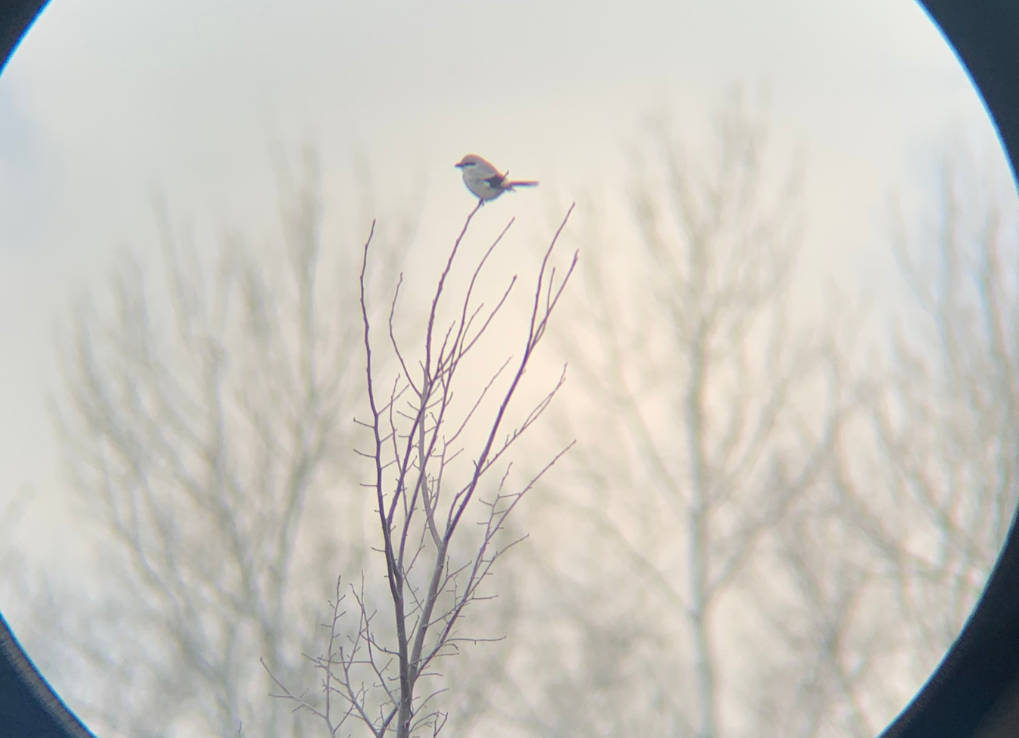
After three hours of surveying the patch where the shrike was reported, the team did manage to spot a shrike, but found it a little difficult to determine with confidence whether or not it was a loggerhead or a northern shrike.
In the very early spring season northern shrikes may still occupy loggerhead shrike breeding habitats, which can make it difficult when undertaking early spring surveys to confirm shrike sightings. If a shrike is spotted in alvar habitat in early spring, field teams will look for small clues that might indicate whether the bird they’re observing is a loggerhead or a northern Shrike.

Loggerhead shrikes in spring:

Northern shrikes in spring:
The team managed to snap a couple pictures of their sighting through the scope. Which species do you think it is?
With migratory season in full swing, loggerhead shrikes are due back in eastern Canada any time now! If you see a shrike, we’d love to know about it. Send your sightings to birds@wildlifepreservation.ca!
Jane holds a Master’s degree in Animal Biosciences from the University of Guelph, where she studied building collision injuries in migratory songbird species. Jane worked as a rehabilitation supervisor, where she was responsible for the care, treatment, and reintroduction of injured and orphaned wildlife, including many species at risk.

Sorry, no posts matched your criteria
Nous avons besoin de votre aide