
Rien trouvé
Sorry, no posts matched your criteria
Qu'est-ce que le programme Prochain Noé du Canada ? Depuis 1988, le programme Prochain Noé du Canada offre aux biologistes de la conservation au Canada une opportunité unique. Chaque année, CFC sélectionne un biologiste dévoué parmi des candidats à travers le Canada pour entreprendre un cours de 3 mois à la Durrell Conservation Academy au Royaume-Uni, suivi d'un stage de 6 mois sur l'île Maurice dans l'Océan Indien. C'est une occasion unique pour les jeunes Canadiens d'apprendre directement comment fonctionnent les programmes de rétablissement de la faune les plus réussis au monde, et de ramener ces connaissances et cette expérience pour renforcer la capacité de conservation du Canada.
Pour la toute première fois, CFC propose ce stage à deux biologistes. Nos Noé 2026 sont Jenna Kissel – la 35e Noé du Canada de CFC, et Daryn Farrant – la 36e Noé du Canada de CFC. Les deux biologistes partagent leurs expériences et comment ils les appliqueront à leur retour au Canada. Merci à la Fondation Alan & Patricia Koval pour leurs nombreuses années de soutien au programme Prochain Noé du Canada et pour avoir donné tant d'efforts pour soutenir deux stages de Noé de la Fondation Koval en 2026.
The dodo is one of the most famous examples of a species driven to extinction by humans. Lost from the island of Mauritius in the 1600s, the dodo was a large, flightless species of pigeon. Dodos were hunted to extinction within 100 years of the arrival of Dutch sailors to Mauritius, both by the sailors and the invasive mammalian predators they brought with them.
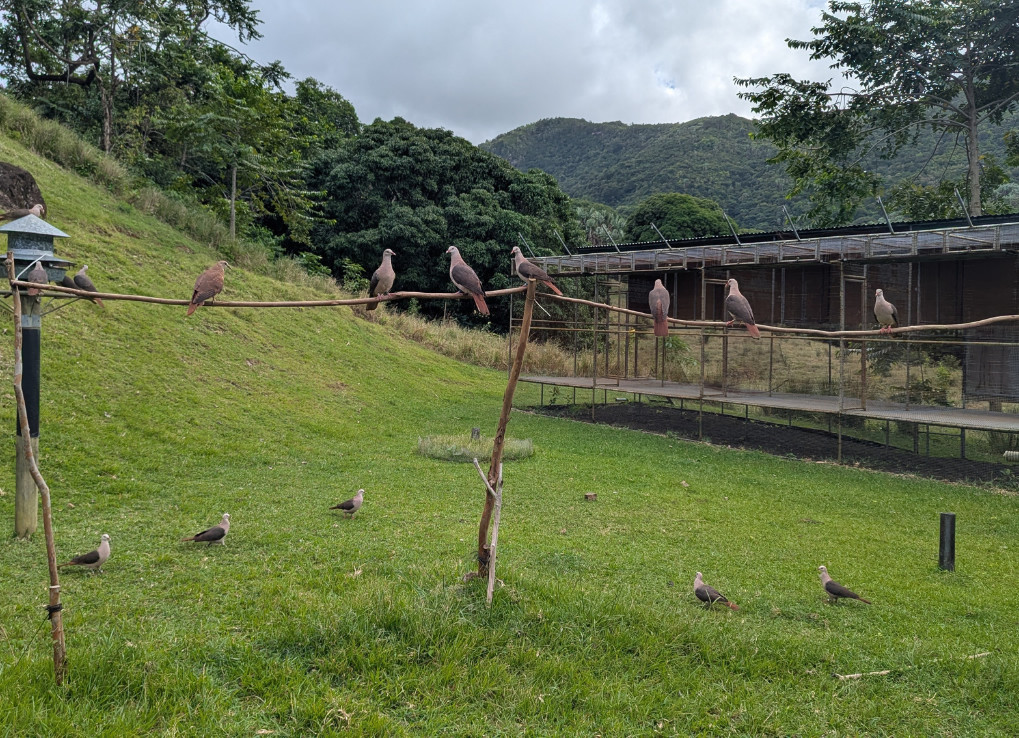
The pink pigeon (Nesoenas mayeri), another endemic species to Mauritius, almost followed the same fate as its larger cousin. Down to fewer than 10 known individuals in the wild by the 1990s, the pink pigeon population is now more than 600 birds thanks to captive breeding, reintroduction, and wild population management. Despite being a conservation success story, the species is still considered conservation-reliant, requiring constant management for them to survive.
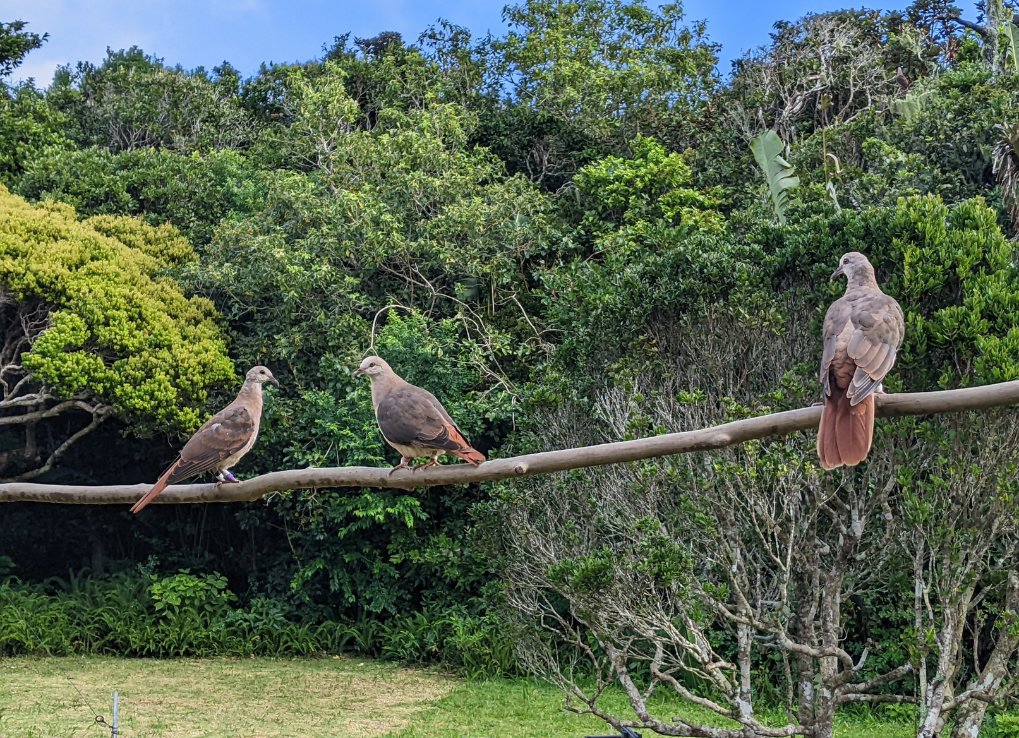
Three pink pigeons on a branch between hoppers at Camp. Photo by J. Kissel.
Since my arrival in Mauritius, I’ve been volunteering with the Mauritian Wildlife Foundation’s (MWF) pink pigeon team. During the week I’m living at a field site in the Black River Gorges National Park, where most of the pink pigeon population remains. Captive breeding of pink pigeons was a major factor in bringing this species back from the brink, but MWF now focuses on wild population management. Part of that management includes searching for pigeon pair territories and monitoring nests in a Conservation Management Area called Brise Fer. Once a pigeon nest is found, it’s monitored daily until the pair either successfully fledges offspring… or it fails. While pigeons won’t win any awards for their parenting skills, they are not solely to blame for low reproductive success when they are facing threats they have not evolved to handle, namely, invasive mammalian predators.
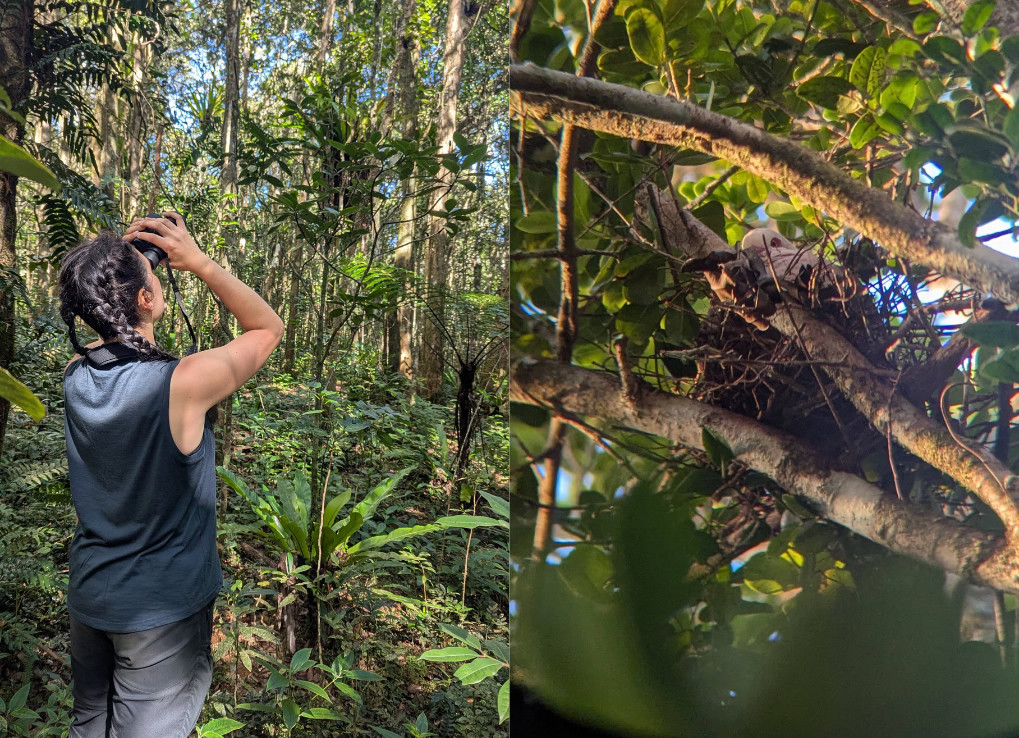
Jenna monitoring a pink pigeon nest (left) and a pink pigeon on a nest (photo taken through binoculars). Photo by V. Ramsamy.
Predator control is also a major part of pink pigeon population management. Invasive predators, predominantly rats, still threaten pink pigeons as they raid pigeon nests for eggs and chicks. A “rat index” is also conducted monthly, where chew cubes made of chocolate and wax are placed. They’re collected the following day and checked for bite marks to learn more about the presence of rats.
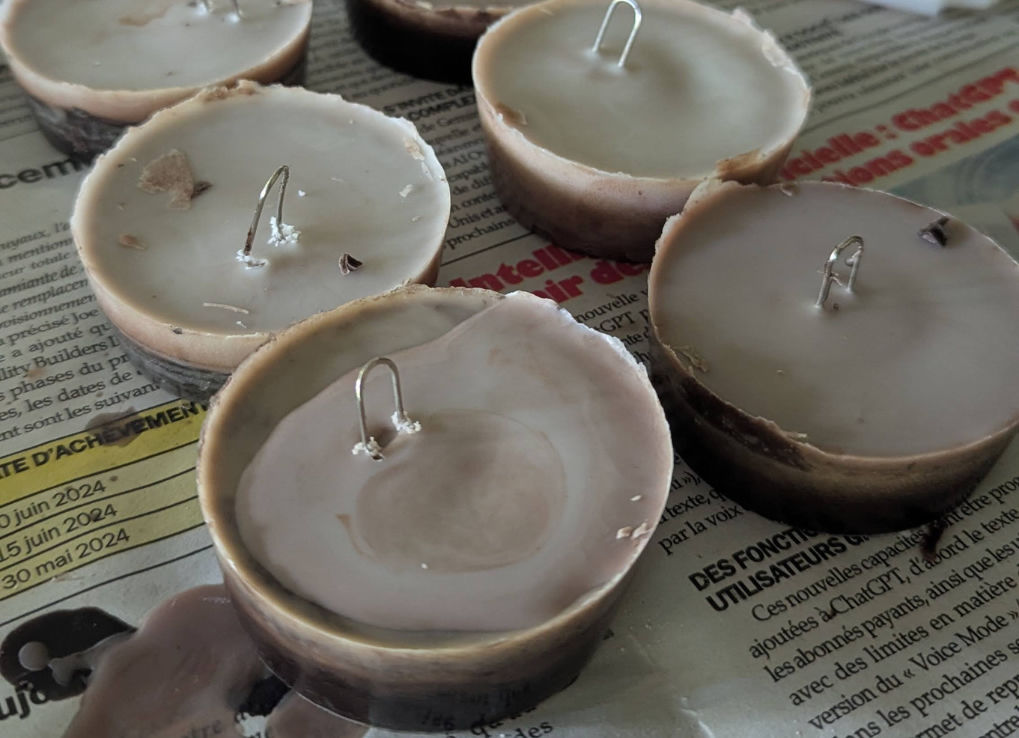
The chew cubes used to determine rat presence. Photo J. Kissel.
Monitoring the pink pigeon population also involves maintaining supplemental feeding stations and observing the feeders to record which pigeons show up. At each field site pigeons are banded (or “ringed” as they say here) with a metal ID band and a unique colour band combination so they can be identified individually. The supplemental feeding stations are crucial not only for monitoring the population, but to provide the pigeons with a much-needed food source. Less than 2% of Mauritius’ native forest is left, and without supplemental food the remaining forest wouldn’t be able to sustain the recovering pigeon population.
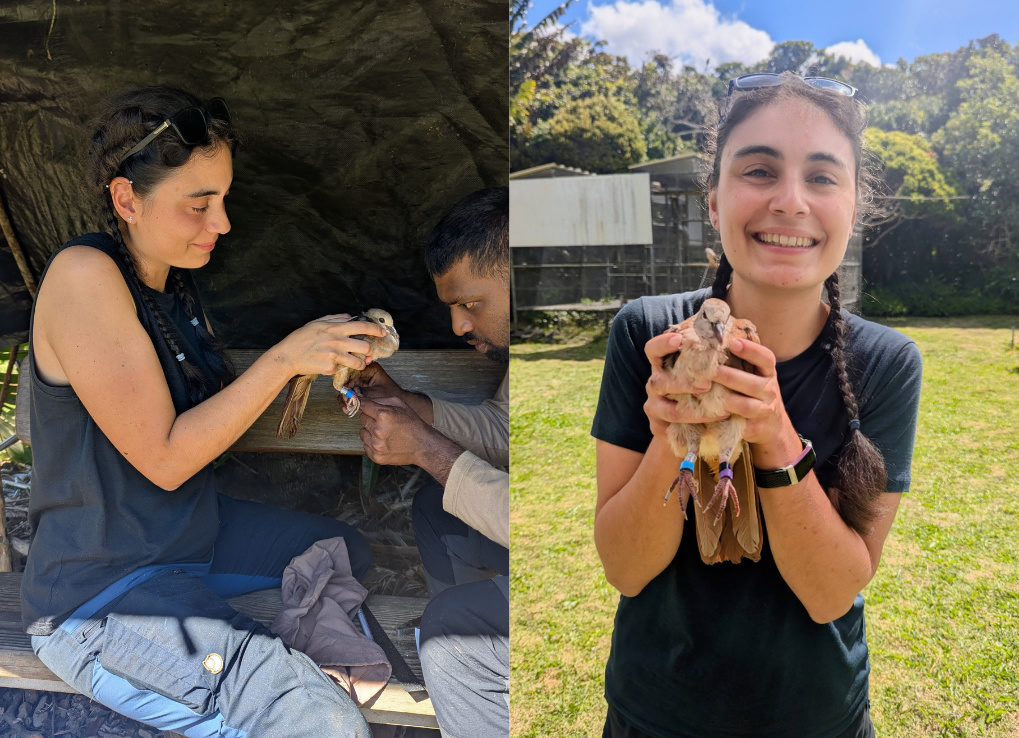
Jenna handling a pink pigeon (left) and Jenna with a pink pigeon before releasing it after being banded. Photos by UNK and V. Ramsamy.
The conservation success stories out of Mauritius, including the pink pigeon and Mauritius kestrel, are reminders to never give up on endangered species recovery, even when it seems all hope is lost. Though I’ve only been here for a small chapter in the story, it is rewarding to be a part of the team working to keep the pink pigeon from going the way of the dodo.
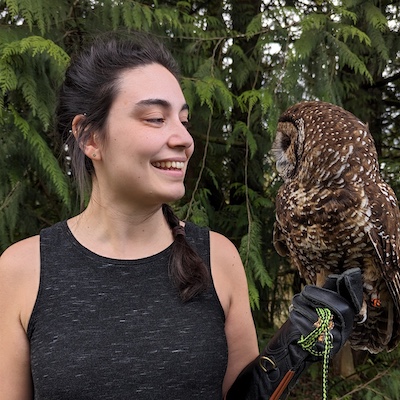
Jenna est gardienne de zoo et conservationniste de la faune passionnée par le rétablissement des espèces menacées. Elle a obtenu un baccalauréat spécialisé en biologie et conservation de la faune de l'Université de Guelph avant de se déplacer en Colombie-Britannique pour travailler avec les chouette tachetée du Nord. Elle a une formation dans le domaine de la conservation des rapaces, avec une spécialisation dans l'élevage et la reproduction en captivité. Elle a eu la chance de travailler avec de nombreuses espèces différentes et programmes de conservation au cours des 8 dernières années et a hâte de continuer ce travail avec les compétences qu'elle gagnera du programme Prochain Noé.
Sorry, no posts matched your criteria
Nous avons besoin de votre aide