Rien trouvé
Sorry, no posts matched your criteria
Qu'est-ce que le Programme de rétablissement des bourdons? Depuis les années 1990, les populations de bourdons sont en chute libre, ce qui représente une véritable catastrophe écologique. Quatre-vingt-dix pour cent de toutes les plantes à fleurs — y compris la plupart des fruits et légumes dans votre réfrigérateur — ont besoin de ces pollinisateurs pour se reproduire.
Jusqu'à ce que les causes de ces déclins puissent être inversées, l'élevage de conservation et la réintroduction sont la seule façon de protéger les bourdons en péril. Aujourd'hui, CFC est la seule organisation au Canada à reconstruire les populations d'abeilles sauvages grâce à l'élevage de conservation. Grâce à des percées récentes, nous avons trouvé comment augmenter considérablement le nombre de reines que nous produisons. Une fois relâchées dans la nature, elles peuvent établir leurs propres colonies, produisant des centaines de pollinisateurs pour soutenir les écosystèmes qui les entourent.
Have you heard the term “community science”? Community science gives everyone an opportunity to participate in science and conservation. Community scientists help researchers simply by getting outside and observing the natural world, all the while collecting valuable data that result in greater numbers of species records across larger geographical areas than can be accomplished by researchers and conservation practitioners alone.
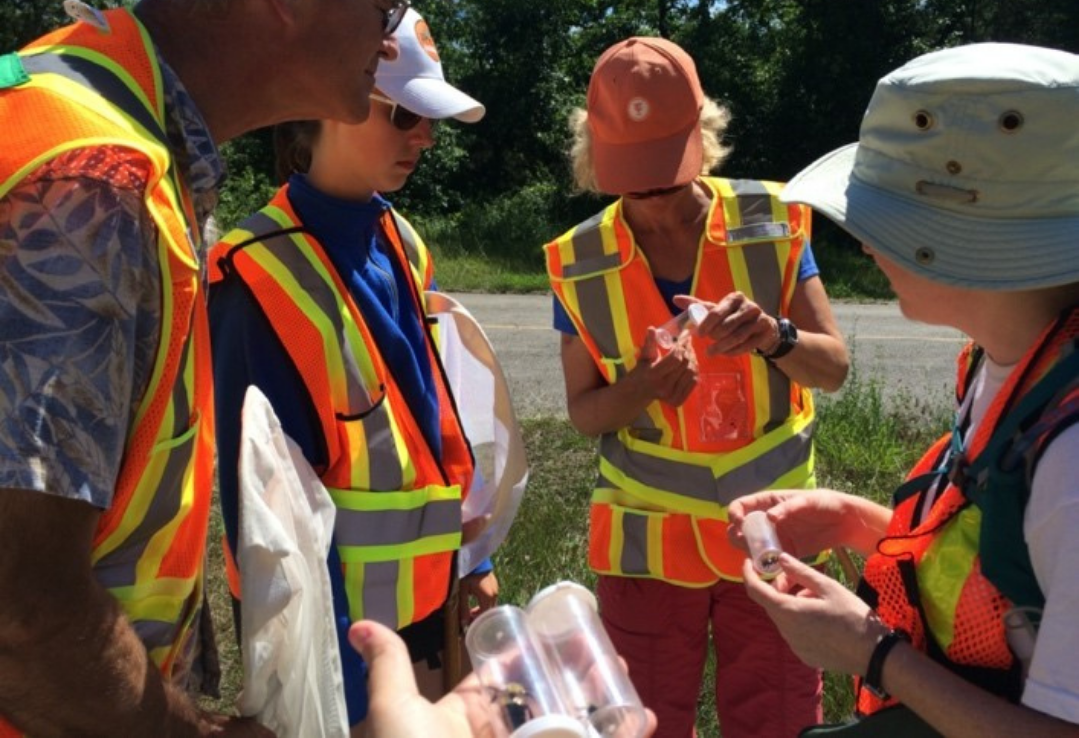
Staff from Wildlife Preservation Canada train community science volunteers how to undertake bumble bee surveys at Pinery Provincial Park © Hayley Tompkins
Pinery Provincial Park, commonly referred to as The Pinery, is in Ontario, near the southern tip of Lake Huron. Covering over 25 square kilometers (almost 10 square miles), the park contains a variety of ecosystems—including rare oak savanna, coastal dunes, and a provincially significant wetland—and since 2015, it has been the site of Wildlife Preservation Canada’s hands-on Bumble Bee Watch community science survey program.
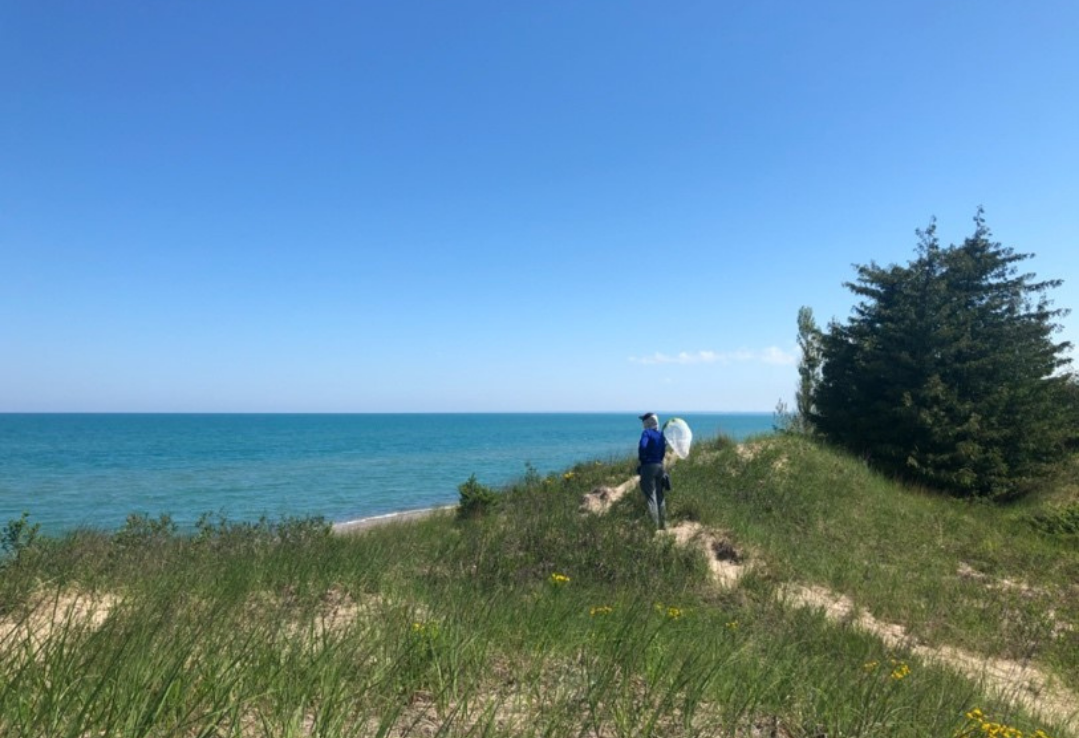
Genevieve Rowe, former Lead Biologist, surveying for bumble bees in the coastal dunes at Pinery Provincial Park © Hayley Tompkins
This program engages participants in bumble bee conservation by teaching them the same bumble bee survey techniques that professional researchers use, and by providing them with the equipment and know-how to independently monitor native bumble bees at The Pinery. Over the last six years, not only have our community scientists been able to enjoy the beauty of The Pinery, but they have also helped us create a robust long-term dataset by contributing nearly two thousand species-specific bumble bee observations to Bumble Bee Watch. Check out our bumble bee observations in this StoryMap to see just what we mean!
Datasets like these that monitor a single location to this extent are rarely accomplished without dedicated volunteers like ours, and we are lucky that they have managed to capture rare species observations that would have otherwise been missed during a single visit or single survey year. To read more about this program and our results to-date, check out this guest blog that Genevieve and Hayley wrote for the Xerces Society.
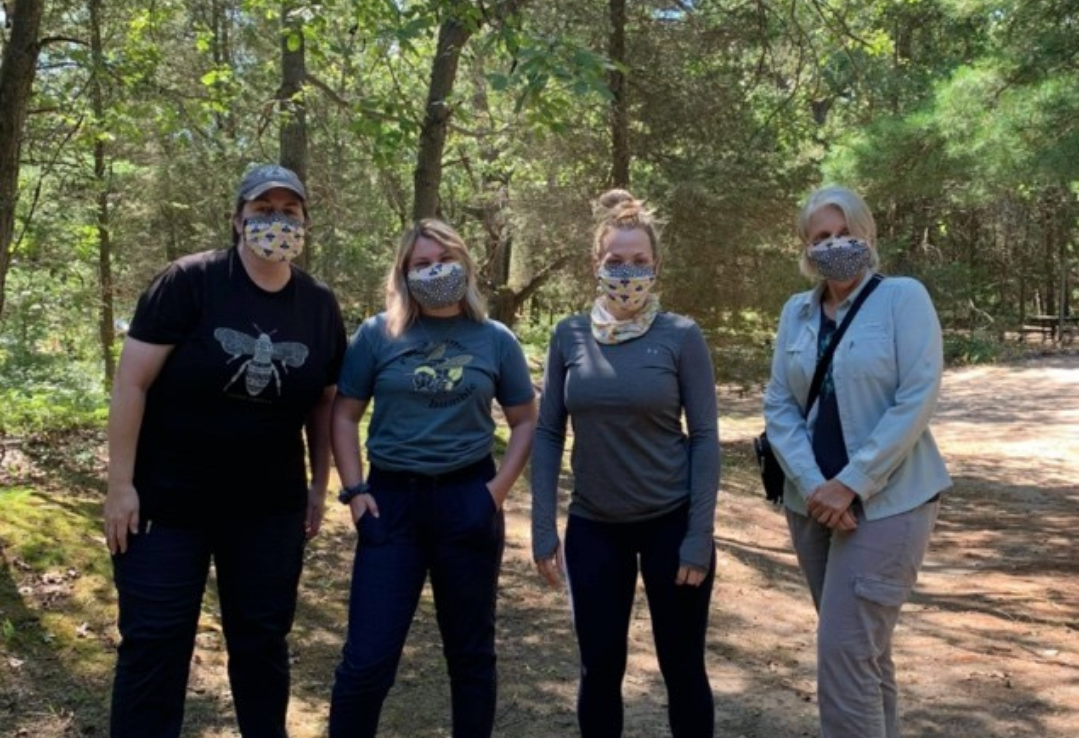
From left to right, Sarah (volunteer), Hayley (staff), Genevieve (staff) and Trish (volunteer). Thank you to our dedicated volunteers and staff – we could not do it without you! © Amy Hall
Sorry, no posts matched your criteria
Nous avons besoin de votre aide