
Where are shrikes spending their winter holidays?
Publié lejanvier 21, 2021parJane Spero|Blogs, La pie-grièche migratrice de l'Est
Qu'est-ce que le Programme de rétablissement de la pie-grièche migratrice de l'Est? Après une chute précipitée de la population sauvage de pie-grièche migratrice de l'Est dans les années 1990, Environnement Canada a invité Conservation de la faune au Canada à se joindre à l'effort de rétablissement multi-partenaires en 2001. Depuis, la taille de la population sauvage a fluctué. Des études ont montré que bien que l'effort de rétablissement ait empêché l'espèce de disparaître du Canada, plus de travail est nécessaire pour identifier et aborder les causes du déclin de l'espèce. CFC travaille pour empêcher la pie-grièche migratrice de l'Est de disparaître en renforçant la population sauvage en Ontario, et en étudiant l'espèce pour en apprendre davantage sur les menaces qu'elle fait face.
As 2020 comes to a close, the Eastern Loggerhead Shrike recovery team is looking back at a year filled with exciting developments, despite several unexpected complications. One development in particular was especially notable: results from last season’s radio tag deployments are in, and it looks as though we are one step closer to uncovering the mystery of where Eastern Loggerhead Shrikes go during the winter!
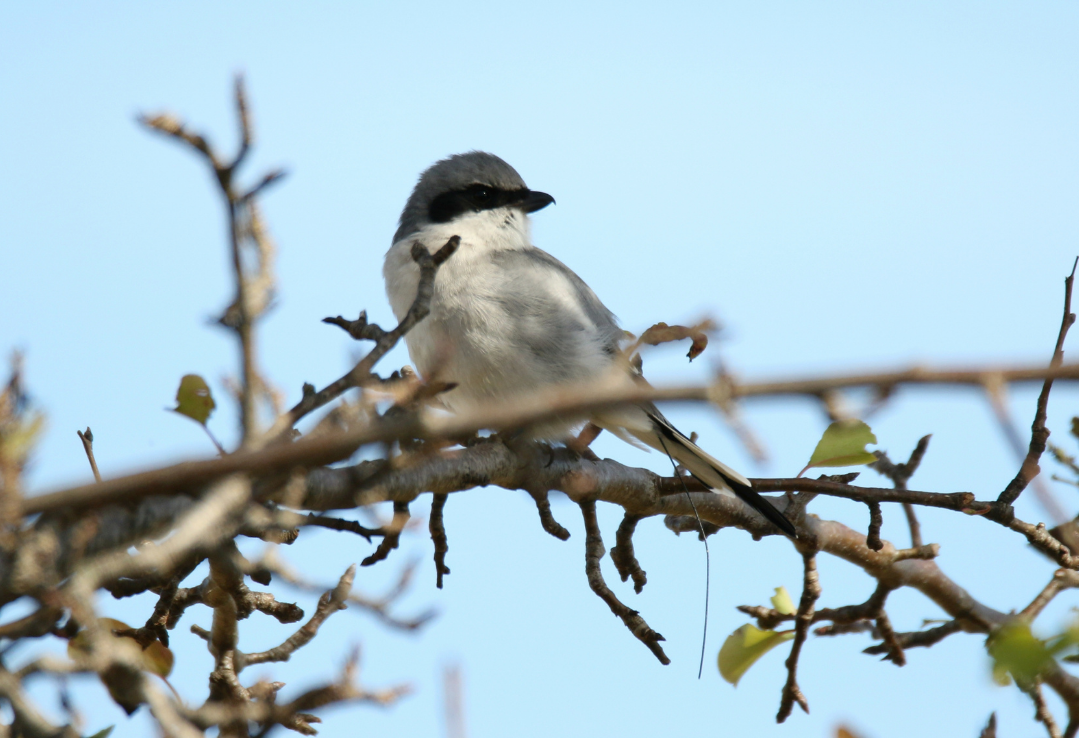
A wild loggerhead shrike sporting a radio tag (antenna seen extending past tail feathers). Photo courtesy of G. Schultz
Very little is known about shrike migration and overwintering behaviour, but it appears as though the biggest causes behind Eastern Loggerhead Shrike declines are occurring outside Canada.
To begin addressing these declines we need to uncover where our birds spend the winter and how they get there, which is why a subset of our conservation-bred fledglings are released with radio tag harnesses that are tracked through the Motus Wildlife Tracking System.
If a tagged bird passes within a certain range of a Motus tower, its unique radio signal will be detected and recorded. The growing network of Motus towers is expanding rapidly across northeastern North America; there are nearly 100 towers in Ontario alone.
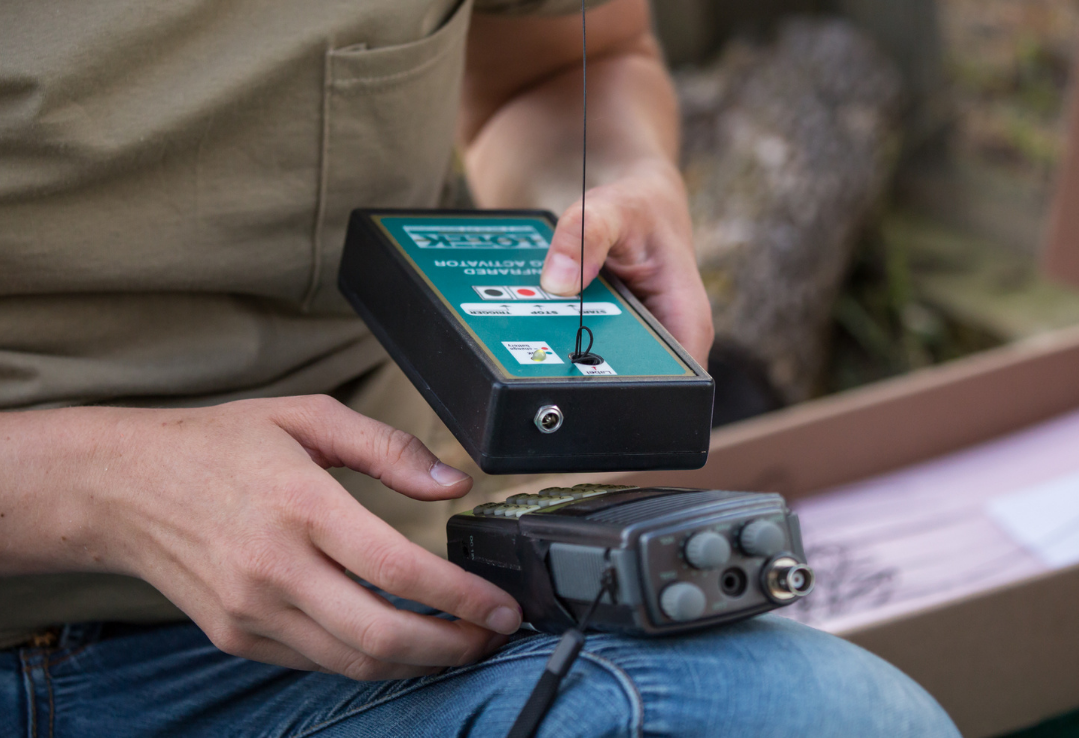
Lead Biologist Hazel Wheeler checking a radio tag’s signal before deployment. Photo by V. Luk/Evermaven, courtesy of the Nature Conservancy of Canada
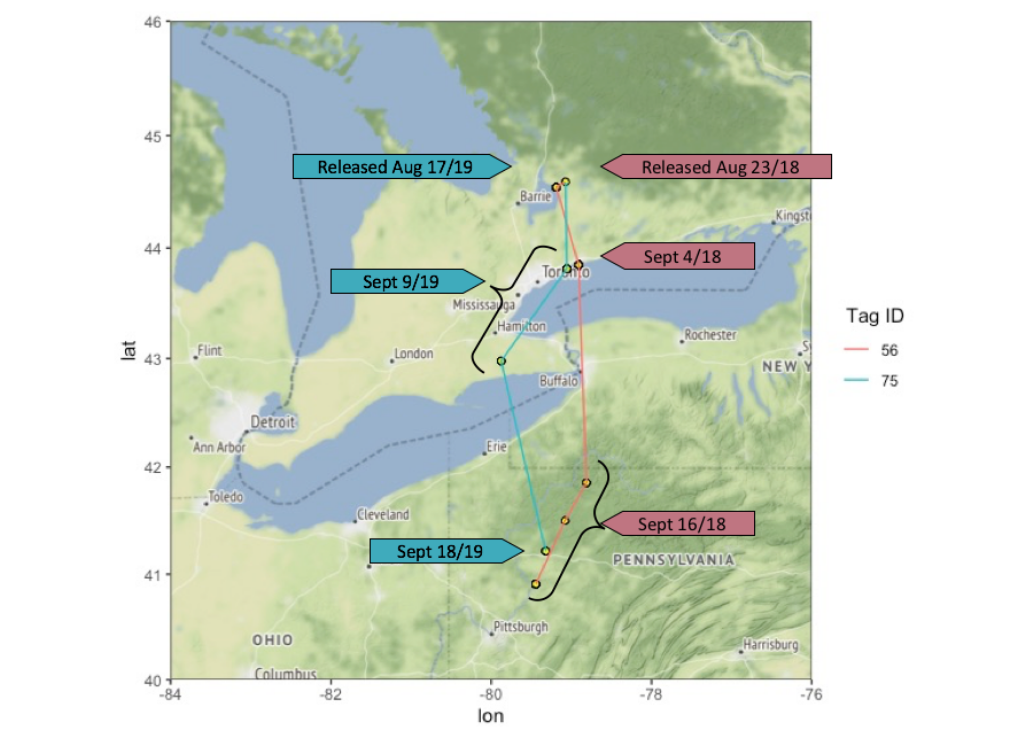
Results from last season’s Motus tower hits are in: four of the 10 birds released with radio tags in 2019 were detected by Motus towers in the fall. Though three of the birds were only detected on towers in Ontario, the fourth bird was picked up on a tower in Pennsylvania roughly one month after being released. This is the second year in a row that birds are being detected in Pennsylvania, and all detections appear to follow a similar path.
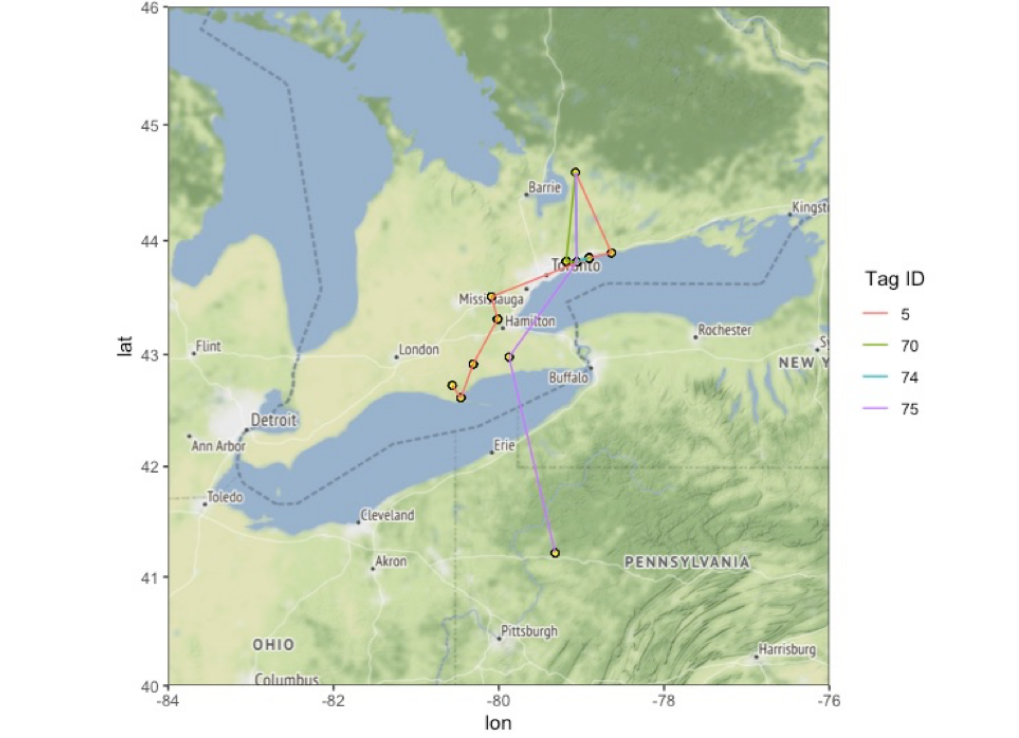
Fall 2019 Motus tower detections for birds released that year.
All U.S. tag detections to-date. Release and detection dates are indicated in the colour of the corresponding tag path
This information gives us stronger evidence of possible overwintering destinations and flight paths taken by our loggerhead shrike population, which will allow us to identify and confront threats outside the summer breeding season to reverse population declines.
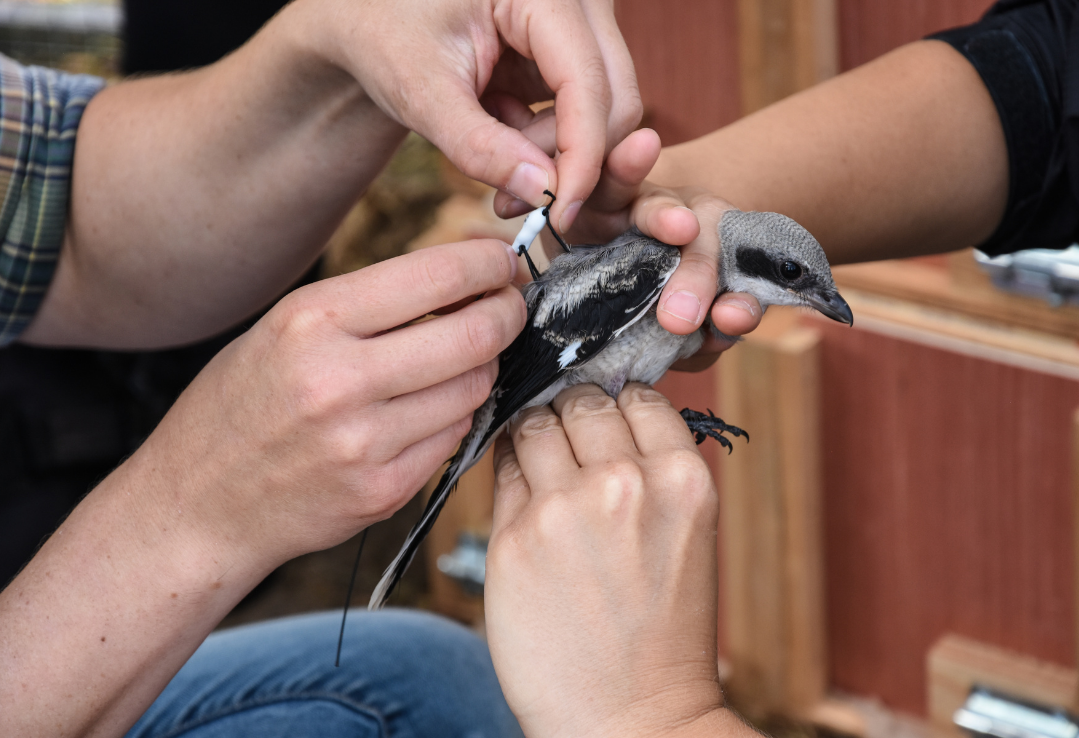
Though we weren’t able to release any birds with radio tags this year (as pictured above, radio-tagging requires very close contact between biologists), we are excited to release as many tagged birds as we can in the upcoming field season, so that we can continue to uncover the mystery of where these birds like to go over the winter.
Jane holds a Master’s degree in Animal Biosciences from the University of Guelph, where she studied building collision injuries in migratory songbird species. Jane worked as a rehabilitation supervisor, where she was responsible for the care, treatment, and reintroduction of injured and orphaned wildlife, including many species at risk.

Sorry, no posts matched your criteria
Nous avons besoin de votre aide