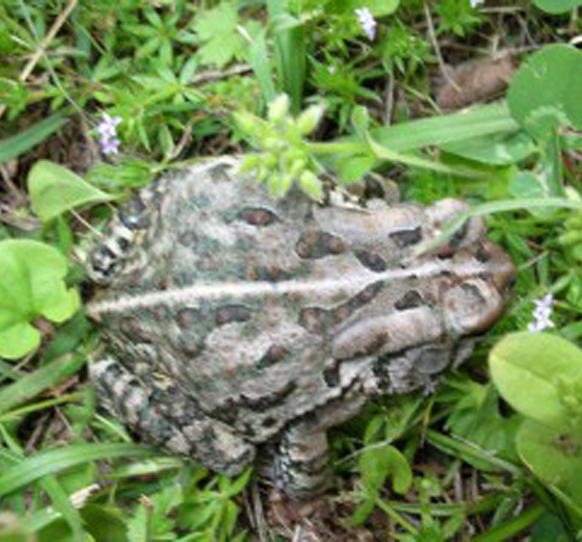
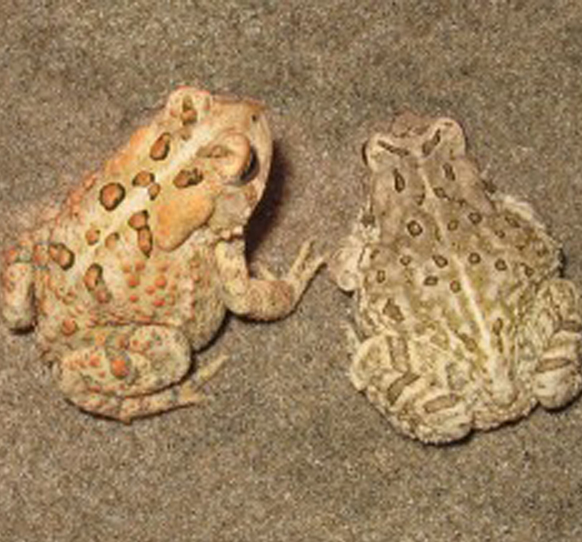
Le crapaud de Fowler (Anaxyrus fowleri) est un crapaud de petite à moyenne taille mesurant entre 5 et 9,5 cm. On peut le repérer lors des nuits chaudes et humides au printemps et en été alors qu'il émerge de ses terriers souterrains pour chasser les insectes près des sources de lumière ou dans les zones humides. Sa caractéristique la plus distinctive est son odeur, qui rappelle les arachides non grillées. Son corps a des taches sombres à bords noirs couvrant le dos, et une rayure jaunâtre qui court le long du centre du dos. La marque de terrain la plus fiable est la présence de trois verrues ou plus dans chaque tache sombre. Le ventre est crème pâle ou blanc et reste presque complètement sans taches.
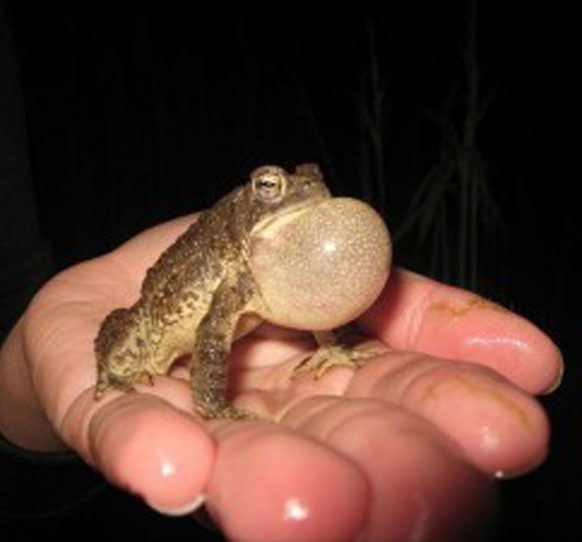
Les mâles sont plus petits que les femelles et sont généralement plus foncés dans l'ensemble avec une gorge noire, particulièrement visible pendant la saison de reproduction quand ils chantent. Les femelles restent plus claires et n'ont pas la gorge noire distinctive. Vous pouvez également identifier les mâles par leur appel d'accouplement particulièrement aigu quand ils se rassemblent aux sites de reproduction aquatiques à la fin du printemps.
L'âge de maturité sexuelle est atteint dans 1 à 3 ans et le crapaud de Fowler vivra environ 5 ans dans la nature. La reproduction se produit de mai à août quand les mâles migrent vers des zones humides peu profondes et produisent leur appel distinctif, un son qui ressemble au cri d’un mouton en détresse. Quand un mâle localise une femelle, il la saisit par le derrière en amplexus (position d'accouplement) et féconde jusqu'à 10 000 œufs au fur et à mesure qu'ils sont libérés. Les femelles déposent leurs œufs en longues cordes gélatineuses, qui restent attachées à la végétation aquatique dans les eaux peu profondes. Les œufs éclosent en 3 à 4 jours, produisant de minuscules têtards qui subissent une métamorphose rapide 5 à 10 semaines après l'éclosion, se transformant en grenouillettes de taille adulte entre la fin juillet et le début septembre. Il n'y a pas de soins parentaux, les grenouillettes sont indépendantes dès le moment de leur métamorphose.
Au Canada, les crapauds de Fowlers sont en grave danger d'extinction. La plus grande menace est la perte et la dégradation des habitats de plages et de dunes côtières. L'un des problèmes majeurs est la propagation du roseau commun envahissant (Phragmites australis). Il forme des peuplements denses et abaisse les niveaux d'eau, asséchant éventuellement les zones humides.
Les autres facteurs en cause comprennent l'aménagement du littoral et les projets de stabilisation artificielle des côtes, notamment la construction de digues, de routes, de parkings, de jetées et d'épis. Les activités d'entretien des plages telles que le nivellement, le lissage et l'élimination des algues à l'aide de machines de lissage ou de bulldozers, posent également de gros problèmes, tandis que la circulation et l'utilisation récréative des plages et des dunes augmentent la perte d'habitat. Enfin, le ruissellement agricole, la pollution industrielle et d'autres espèces envahissantes comme la moule zébrée représentent des menaces importantes.
La stratégie de rétablissement de l'Ontario recommande un certain nombre de mesures, notamment l'amélioration de l'habitat, l'évaluation de la faisabilité de la réintroduction du crapaud de Fowler dans des zones appropriées, et le rétablissement des populations lorsque cela est possible. L'une des éléments clés pour réintroduire le crapaud de Fowler est de comprendre comment augmenter les populations de jeunes crapauds à partir des sites de reproduction existants.
Protégez et restaurez les habitats de zones humides, en particulier les étangs temporaires et semi-permanents qui servent de sites de reproduction. Maintenez la végétation autour des plans d'eau. Ralentissez en conduisant la nuit pendant la saison de reproduction (avril à août), particulièrement après de fortes pluies — de nombreux crapauds sont tués en traversant les routes pour atteindre les sites de reproduction. Créez de petits bassins d'eau peu profonde dans votre jardin si vous vivez dans un habitat approprié. Évitez l'utilisation de pesticides, qui élimine leur source de nourriture (les insectes). Surtout, ne blessez jamais intentionnellement un crapaud et éduquez les autres sur leur importance écologique dans le contrôle des populations d'insectes.
Q : Pourquoi les crapauds de Fowler pondent-ils autant d’œufs ?
R : C’est une stratégie de reproduction remarquable. En produisant d'énormes quantités d'œufs, même si la prédation et les maladies en tuent 99 %, la femelle contribue quand même des milliers de descendants à la population. Cette stratégie de haute fécondité compense la courte durée de vie de cinq ans de l'espèce : les crapauds doivent se reproduire avec succès dans leur brève fenêtre adulte ou échouer à contribuer à la prochaine génération.
Q : Pourquoi les crapauds de Fowler creusent-ils des terriers sous terre ?
R : Pendant les périodes sèches, s'enterrer leur permet de rester dans le sol humide sous la surface où la disponibilité en eau est plus élevée. Pendant l'hiver, ils s'enterrent bien en dessous de la ligne de gel où les températures restent suffisamment stables pour survivre.
Q : Pourquoi les grenouilles mâles essaient-elles parfois de s’accoupler avec d’autres grenouilles mâles ?
R : Les parades vocales du mâle attirent à la fois les femelles et les autres mâles. Lorsqu’un mâle saisit accidentellement un autre mâle, ce dernier émet immédiatement un « cri de libération » caractéristique, un gazouillis qui signale son statut de mâle et incite le premier mâle à le lâcher.