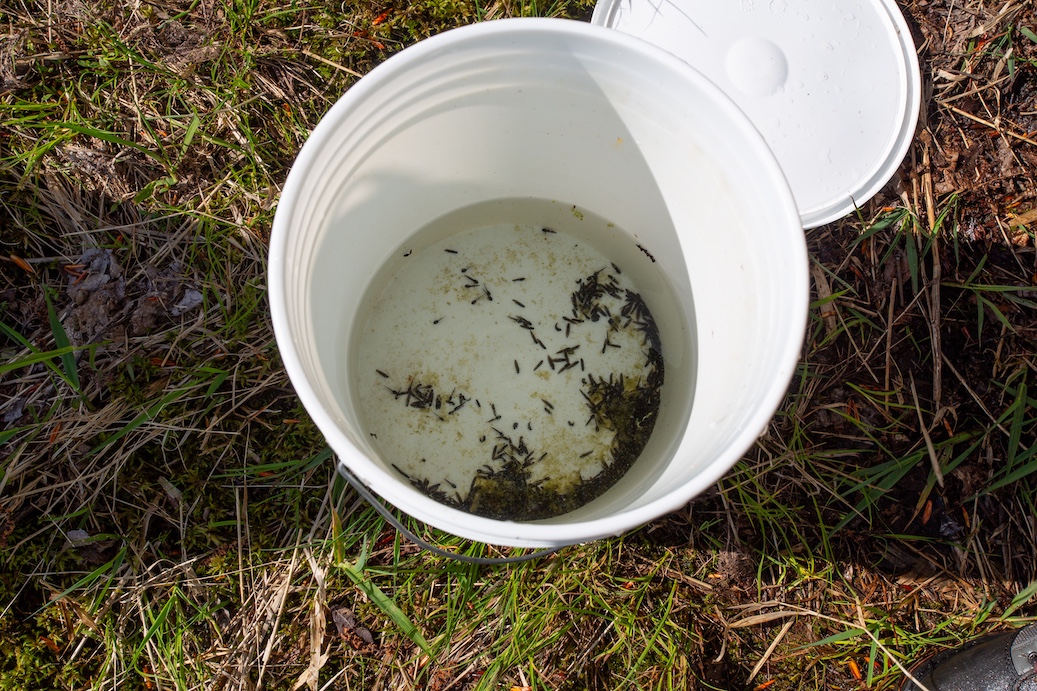
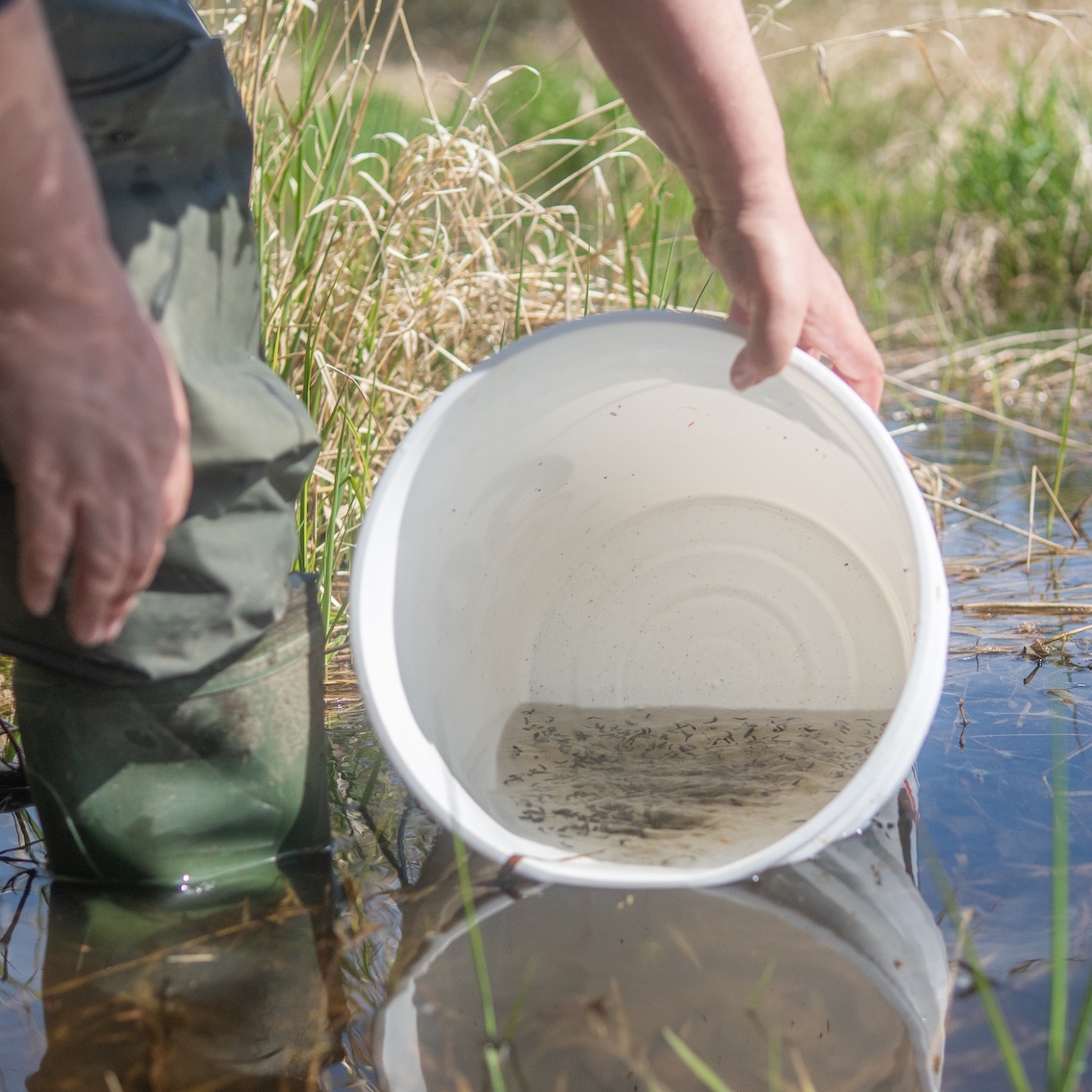
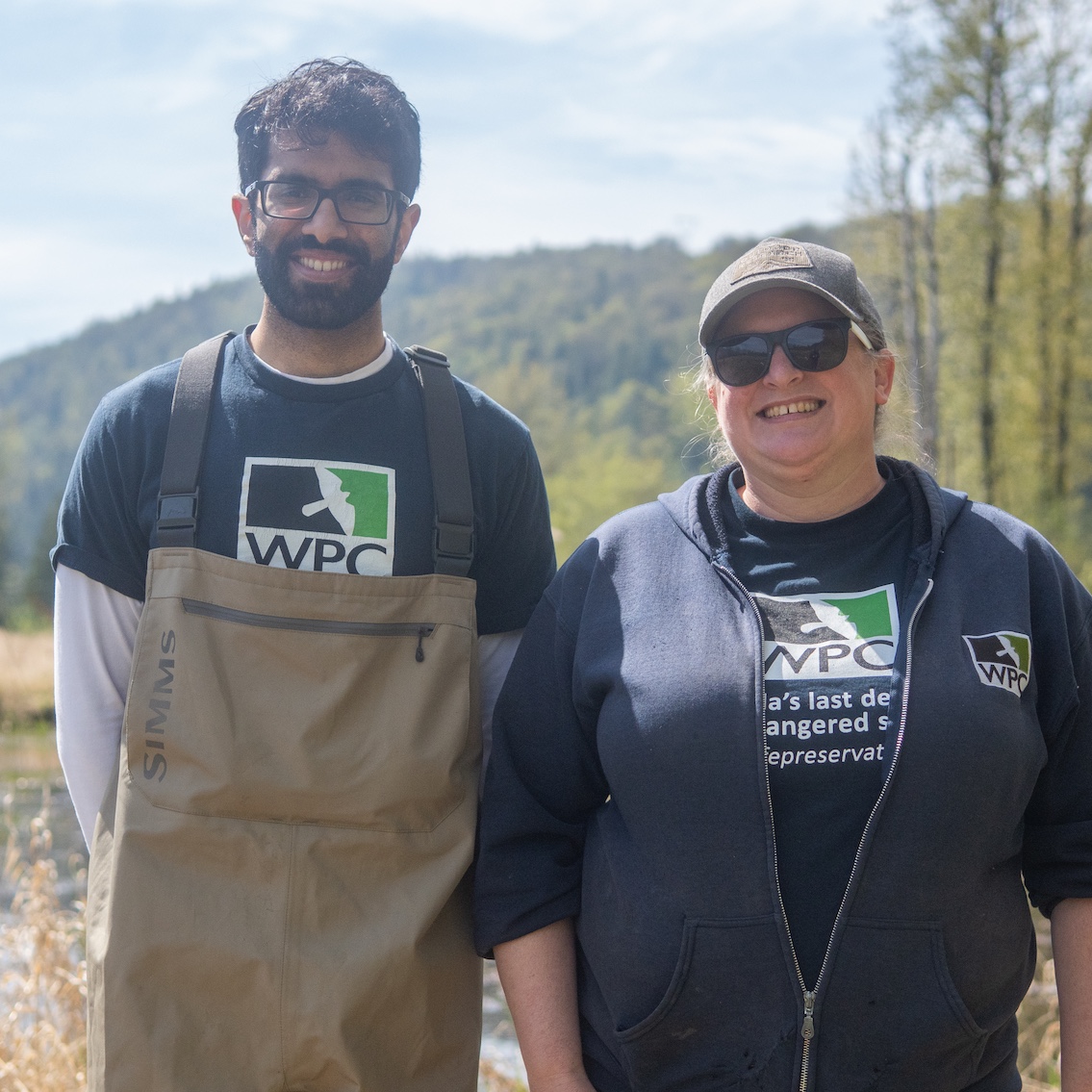
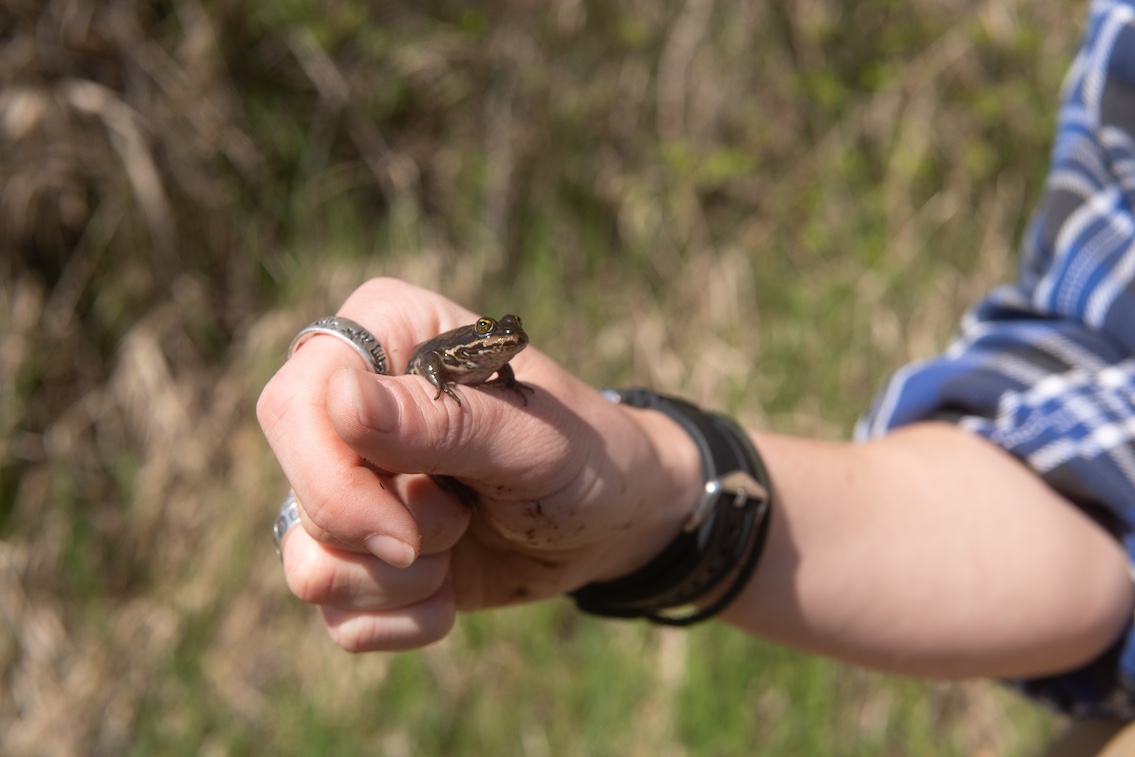
Fortunately, we still had high fertility in the egg masses produced by the older females which produced a total of 4,500 tadpoles. 3,500 of these were released in April during an incomplete release (we are holding onto about 1,000 tadpoles in our facilities for later release) and we also kept an additional 300 for captive rearing and “quality control”.
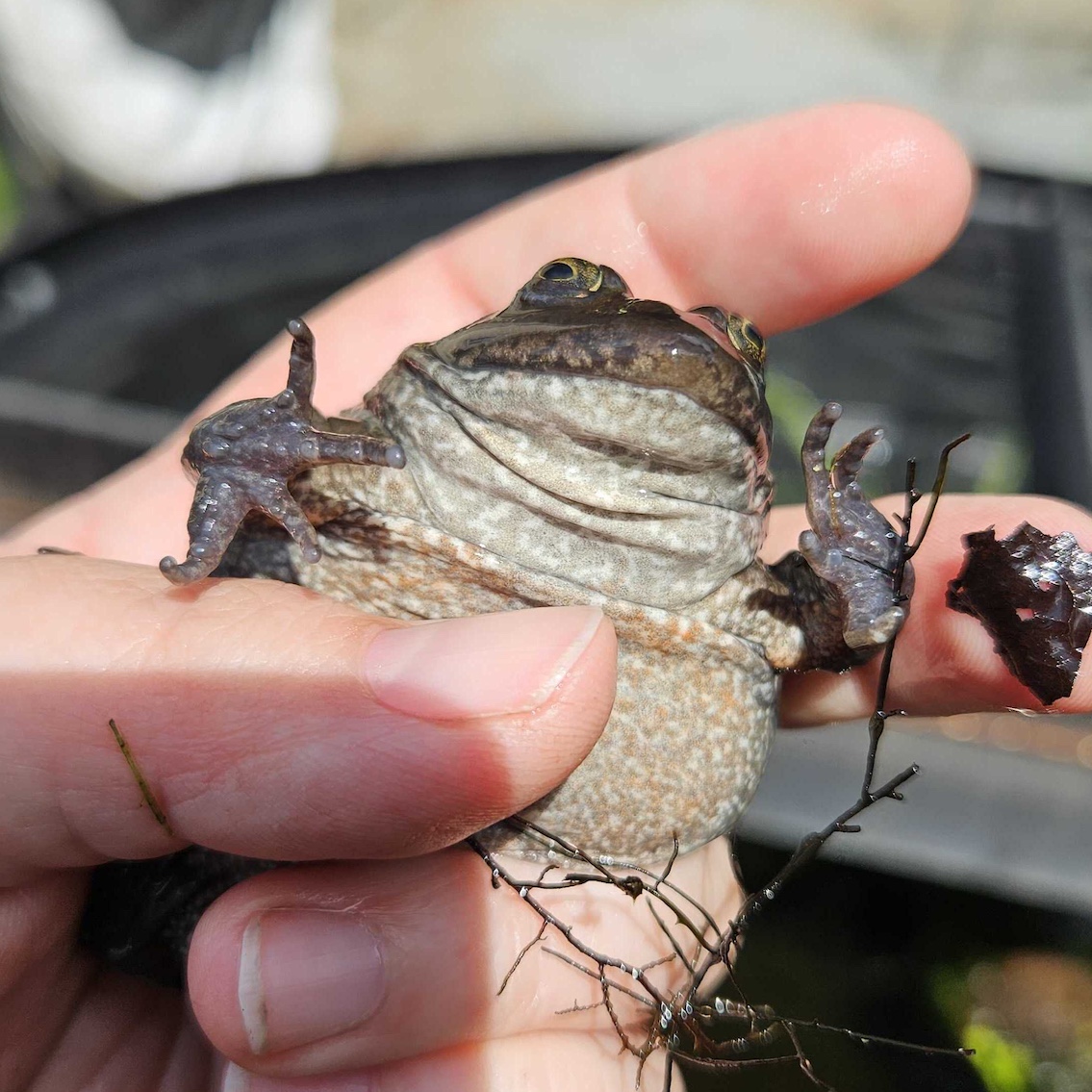
Releasing these tadpoles into a restored habitat that has been our release location for quite a few years now, our spirits were boosted by an amazing observation… the frogs we had released in previous years have been busy creating egg masses. In fact, the number of egg masses had nearly tripled this year and 15 egg masses in total were recorded. This is no doubt a result of the sheer number of tadpoles we have been able to release onsite over the last five years, which has really set this site up for success.
In addition to a lovely day releasing thousands of tadpoles, we’ve also had a few heart-warming moments on site this year already. After trialing egg mass translocations this spring which involved moving egg masses to the release site before they hatch – carefully placing the masses in the traditional laying sites or sites the frogs would likely choose naturally, we noticed something exciting. Only one day after moving the egg masses to the wild, we noticed that some wild female frogs had added their egg masses to the translocated ones… our eggs were accepted as wild ones! Within the week we also saw a wild male calling from a cluster of eggs masses, including some translocated eggs. This means our egg masses and frogs are truly blending in well with their landscape.
By investigating how the next generation of frogs are doing at our release sites (the babies of the frogs we released), we are monitoring the eggs hatching success in the wild compared to the exsitu egg hatching back at our facilities at the Greater Vancouver Zoo. This is the next stage in determining how to best help this species recover.