Les oiseaux des prairies : des icônes d'un paysage menacé
Publié le16 juin 2026parAnnika Wilcox
Qu'est-ce que le Programme de rétablissement de la pie-grièche migratrice de l'Est? Après une chute précipitée de la population sauvage de pie-grièche migratrice de l'Est dans les années 1990, Environnement Canada a invité Conservation de la faune au Canada à se joindre à l'effort de rétablissement multi-partenaires en 2001. Depuis, la taille de la population sauvage a fluctué. Des études ont montré que bien que l'effort de rétablissement ait empêché l'espèce de disparaître du Canada, plus de travail est nécessaire pour identifier et aborder les causes du déclin de l'espèce. CFC travaille pour empêcher la pie-grièche migratrice de l'Est de disparaître en renforçant la population sauvage en Ontario, et en étudiant l'espèce pour en apprendre davantage sur les menaces qu'elle fait face.
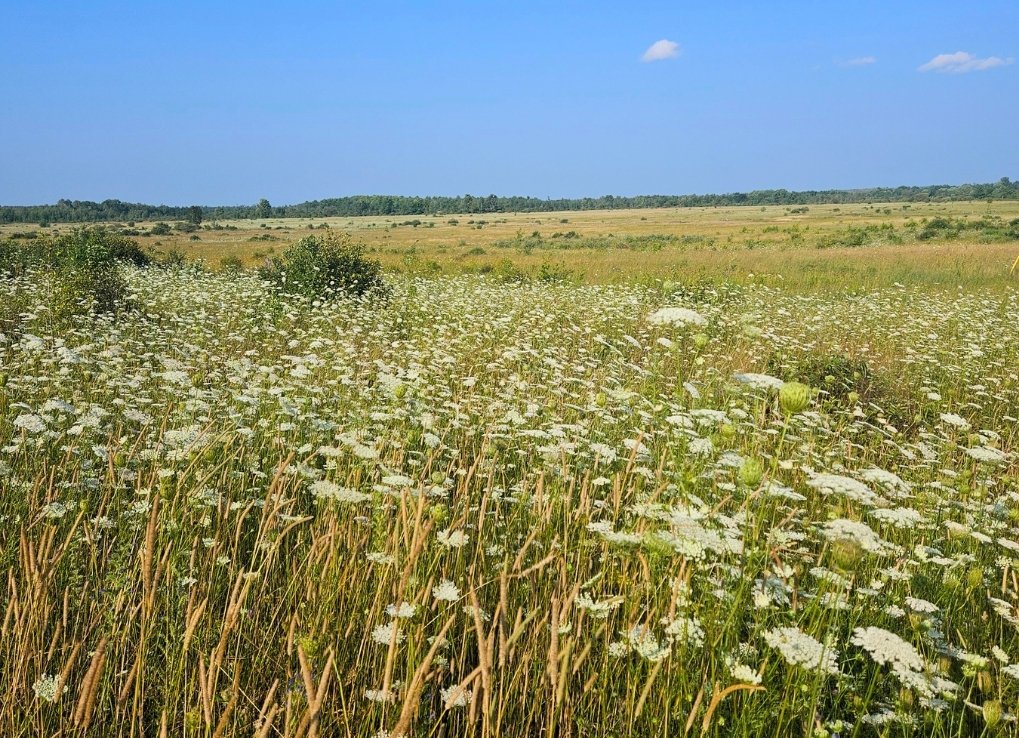
À mon avis, il existe une magie particulière qu'on ne trouve nulle part ailleurs que dans les prairies ouvertes de l'Ontario : le vent qui s'engouffre dans les herbes, les insectes qui bourdonnent tout autour de vous, et un chœur de chants d'oiseaux qui remplit l'air. Mais cette symphonie s'estompe, et les oiseaux qui la composent ont besoin de notre aide. Jetons un coup d'œil à quelques-unes des remarquables espèces d'oiseaux des prairies dont les histoires incarnent la beauté et la fragilité des prairies indigènes de l'Ontario.
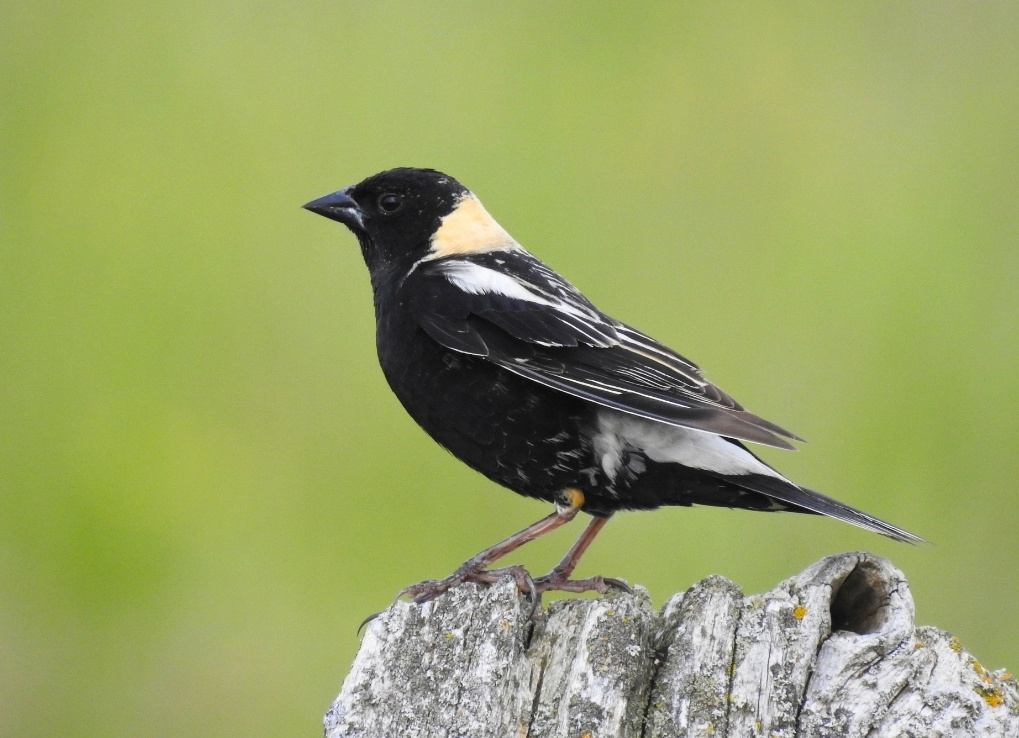
Goglu des prés. Photo : H. Hess.
Peut-être l'un des habitants les plus charismatiques de nos prairies, le bgoglu des prés (Dolichonyx oryzivorusest tout simplement impossible à confondre au printemps. Les mâles en plumage nuptial ont l'air de porter un « smoking inversé », avec leurs parties inférieures noires frappantes et leur nuque d'un jaune crémeux. Si vous me demandez mon avis, cependant, leur trait le plus impressionnant, c'est leur chant. Les goglus annoncent leur territoire en émettant un joyeux fouillis de sons rappelant R2D2, qui résonne à travers les champs de foin et les pâturages. Ce chant de robot farfelu est quelque chose que j'attends avec impatience d'entendre chaque printemps à leur retour en Ontario, et qui m'a fait rire même pendant les longs jours de relevés brûlants.
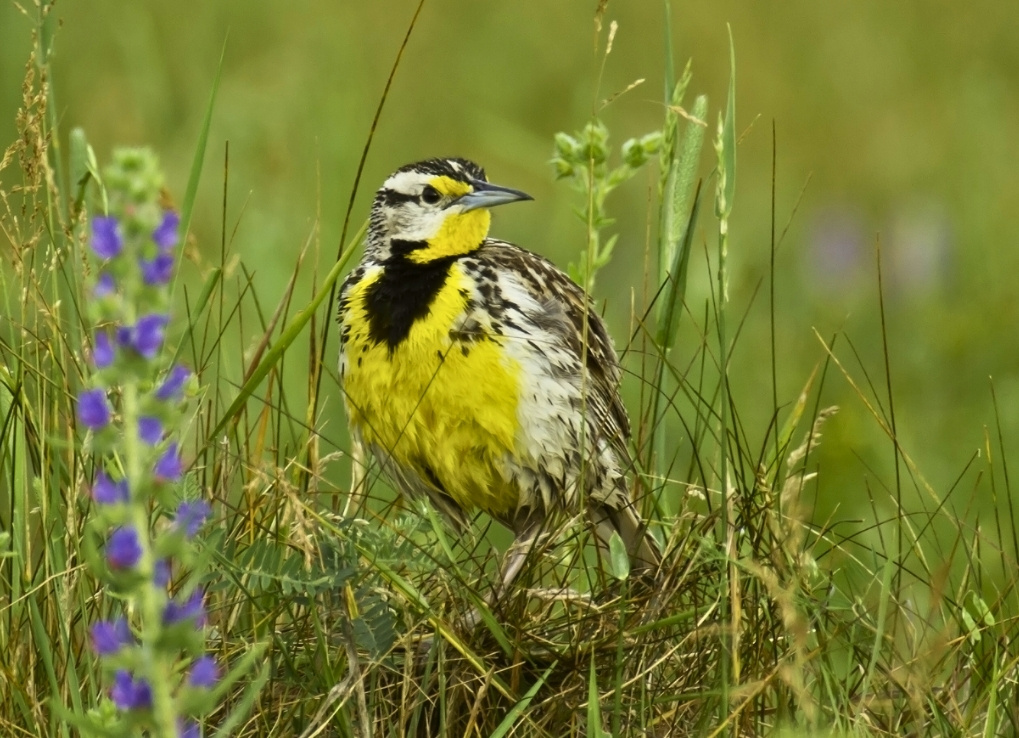
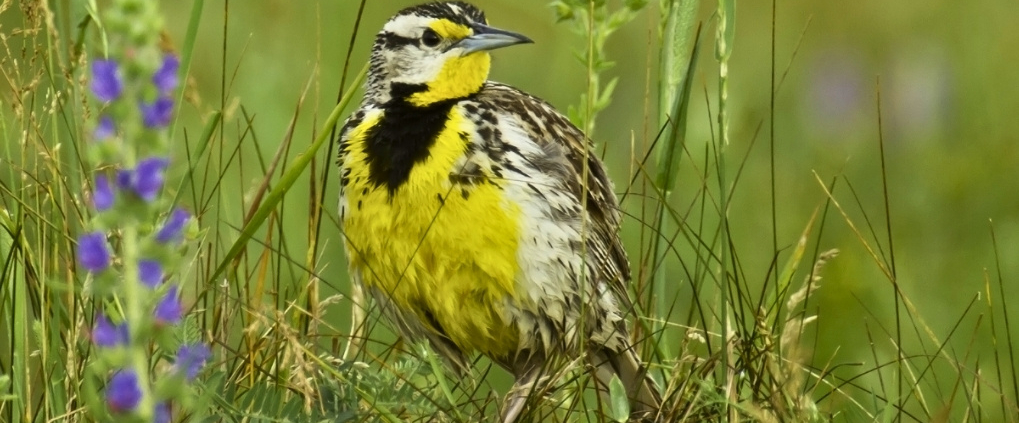
Sturnelle des prés. Photo : Larry Kirtley.
Peu d'oiseaux sont aussi instantanément reconnaissables que la esturnelle des prés (Sturnella magna). Sa poitrine jaune vif, marquée d'un audacieux « V » noir sur la gorge, tranche contre les prairies alors qu'elle chante depuis les poteaux de clôture et les petits arbustes. Le chant de la sturnelle — un sifflement clair et flûté — est l'un des sons qui définissent l'Ontario rural. Les sturnelles passent la majeure partie de leur temps à se promener dans les herbes à la recherche d'insectes et de graines, nichant dans des dômes d'herbe soigneusement dissimulés au sol. Il n'y a rien de tel que de regarder une sturnelle fourrer son bec de façon charmante sous les mottes de bouse pour y trouver un insecte savoureux.
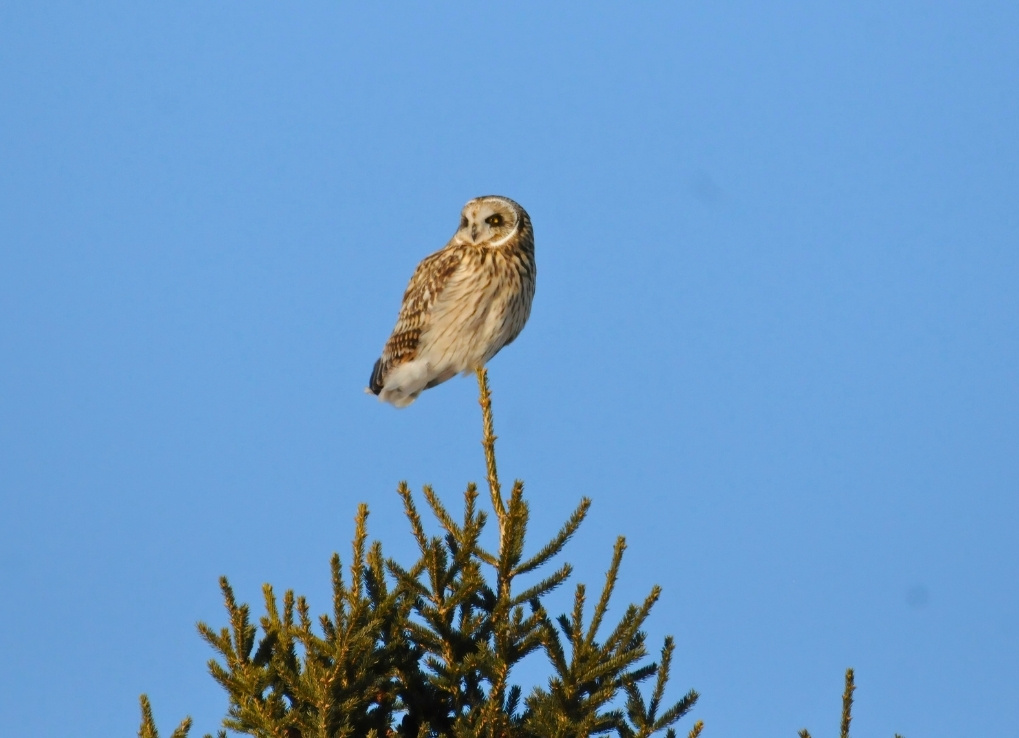
Un hibou des marais perché au sommet d'un conifère. Photo : A. Wilcox.
Quand les goglus des prés et les sturnelles des prés commencent à se terrer dans les herbes pour la nuit, le hibou des marais (Asio flammeus) prend son envol. Contrairement à de nombreuses chouettes qui respectent un horaire strictement nocturne, les hiboux des marais chassent souvent à l'aube et au crépuscule, volant bas au-dessus des champs ouverts d'un vol léger et papillonnant. Ces magnifiques chouettes dépendent des prairies étendues où les petits mammifères comme les campagnols et les souris abondent, et elles sont particulièrement agréables à observer en raison de leur nature nomade — c'est-à-dire qu'en raison de leur dépendance à l'égard de l'abondance de leurs proies, il n'est pas rare de les apercevoir quelque part où on ne les a jamais vues auparavant, et puis plus jamais après. Voir une chouette en train de parcourir un champ au coucher du soleil n'a rien de moins que magique.
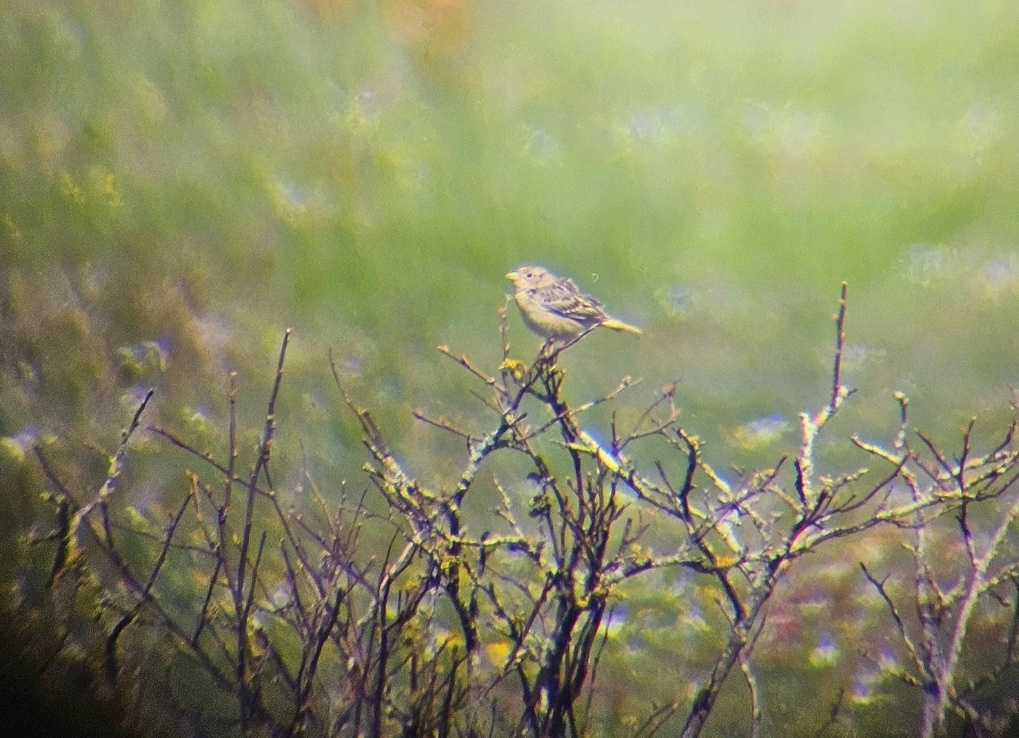
Bruant sauterelle observé à la longue-vue. Photo : A. Wilcox.
Contrairement au hibou des marais, le bruant sauterelle (Ammodramus savannarum) passe souvent inaperçu — et c'est exactement comme ça qu'il survit. De petite taille et dotés d’un plumage aux motifs discrets, ces moineaux se fondent parfaitement dans leur environnement de prairie. Son chant, un trille court et bourdonnant qui rappelle un insecte, est souvent le seul indice de sa présence. Le bruant sauterelle préfère les champs ouverts avec des plaques de sol nu, où il se nourrit d'insectes et de graines. Il passe la majeure partie de son temps à courir bas dans les herbes, émergeant brièvement pour chanter, puis disparaissant à nouveau — ce qui en fait l'oiseau le plus difficile à photographier à la longue-vue!
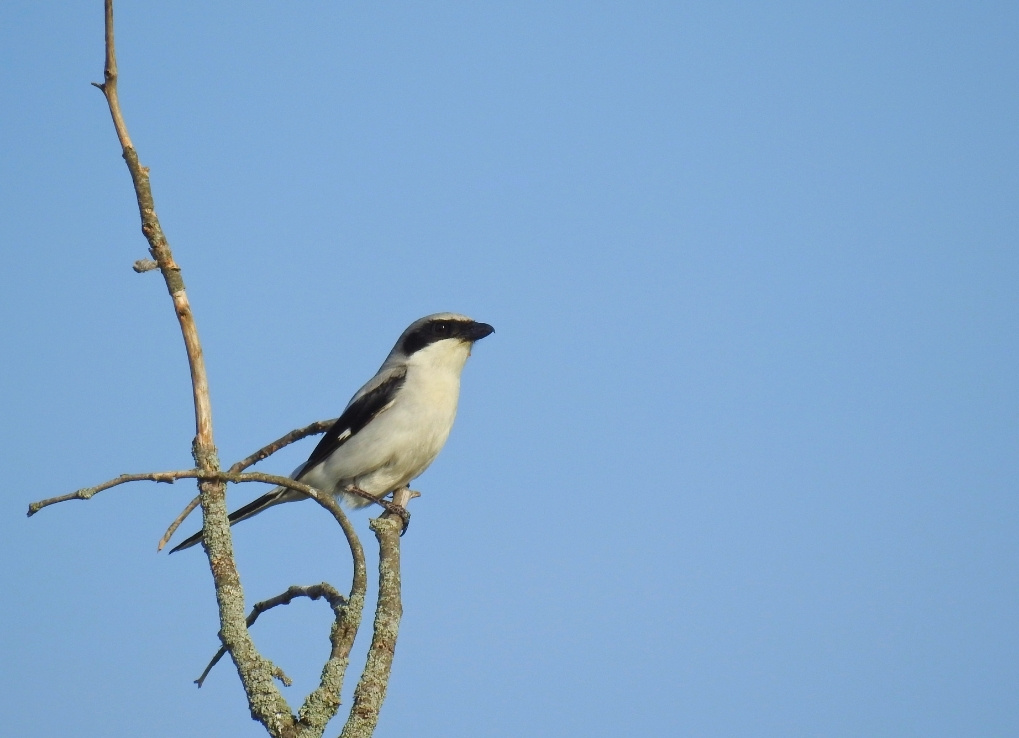
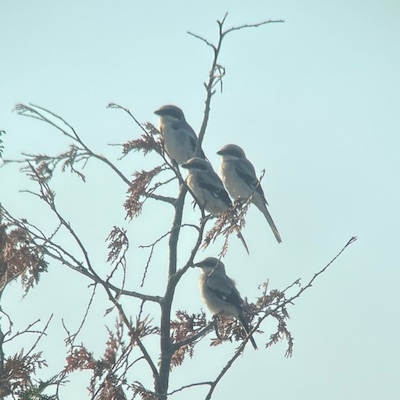
Pie-grièche migratrice de l'Est perchée sur une branche. Photo : H. Hess.
Sans surprise, la pie-grièche migratrice (Lanius ludovicianus migrans) arrive en tête de notre liste. Avec son audacieux masque noir et son puissant bec crochu, elle ressemble plus à un petit rapace qu'à un oiseau chanteur. Les pies-grièches chassent les insectes, les petits mammifères et même d'autres oiseaux, empalant souvent leurs proies sur des épines ou du fil barbelé pour les déchirer et les conserver pour plus tard. Ces redoutables prédateurs favorisent les prairies ouvertes parsemées d'arbustes et de petits arbres qui offrent des perchoirs de chasse convenables. Féroce, intelligente et impossible à confondre, la pie-grièche migratrice est un symbole parfait de la complexité d'un écosystème de prairie.
Outre le fait qu'elles dépendent d'écosystèmes de prairie sains pour prospérer, tous ces oiseaux partagent un trait essentiel : ils disparaissent tous. Les oiseaux des prairies déclinent à un rythme alarmant, et leur avenir est étroitement lié à la façon dont nous comprenons, gérons et protégeons ces paysages et ces populations d'oiseaux au fil du temps.
C'est là qu'intervient le programme Adoptez-un-site de Conservation de la faune Canada . En aidant à rechercher et surveiller les pies-grièches migratrices et autres oiseaux importants des prairies, les bénévoles jouent un rôle crucial dans le suivi des tendances démographiques à long terme et l'orientation des mesures de conservation. Pourquoi ne pas vous impliquer? Écrivez-nous à birds@wildlifepreservation.ca pour être ajouté à notre liste de diffusion et gardez un œil sur nos réseaux sociaux pour un appel à bénévoles au début de 2027. Ensemble, nous pouvons aider à faire en sorte que la magie des prairies de l'Ontario existe pour les générations à venir.
Annika a rejoint l'équipe de CFC de la pie-grièche migratrice en tant que biologiste en recherche en 2025 avant de passer à l'Initiative pour les pollinisateurs indigènes en tant que coordonnatrice des programmes en Ontario. Elle possède une vaste expérience en sensibilisation environnementale, réhabilitation de la faune, et surveillance écologique des oiseaux, des amphibiens, des reptiles et des insectes à risque. Annika est titulaire d'une maîtrise en biologie intégrative de l'Université de Guelph, où elle a mené des recherches sur les facteurs limitants des zones humides agricoles restaurées comme habitat de reproduction pour les oiseaux, en mettant l'accent sur les espèces en péril.