
Une nouvelle sorte d'oiseau des neiges?
Publié le26 mars 2026parHazel Wheeler|La pie-grièche migratrice de l'Est, Rétablissement de la pie-grièche migratrice de l'Est, Actualités et événementsPhoto by Taylor Higgins.
Qu'est-ce que le Programme de rétablissement de la pie-grièche migratrice de l'Est? Après une chute précipitée de la population sauvage de pie-grièche migratrice de l'Est dans les années 1990, Environnement Canada a invité Conservation de la faune au Canada à se joindre à l'effort de rétablissement multi-partenaires en 2001. Depuis, la taille de la population sauvage a fluctué. Des études ont montré que bien que l'effort de rétablissement ait empêché l'espèce de disparaître du Canada, plus de travail est nécessaire pour identifier et aborder les causes du déclin de l'espèce. CFC travaille pour empêcher la pie-grièche migratrice de l'Est de disparaître en renforçant la population sauvage en Ontario, et en étudiant l'espèce pour en apprendre davantage sur les menaces qu'elle fait face.
Il y a beaucoup d'oiseaux dont le plumage blanc les aide à se fondre dans leur environnement enneigé : les harfangs des neiges, les cygnes siffleurs, les bruants des neiges… et les pie-grièches migratrices ?
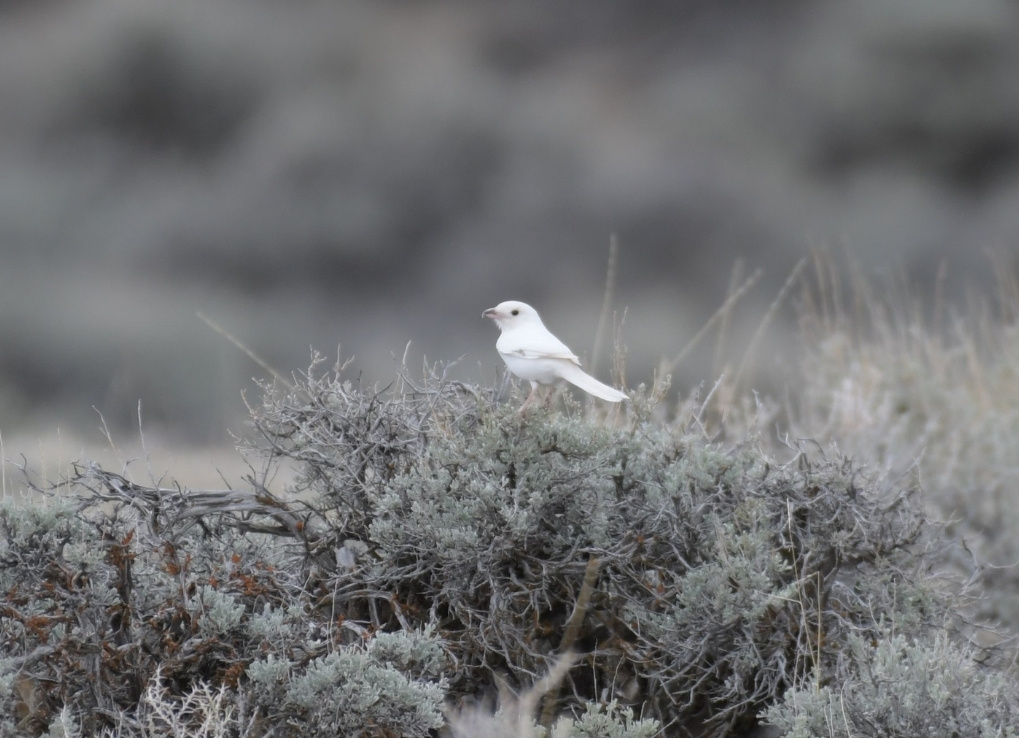
L'année dernière, on nous a envoyé une photo saisissante : une pie-grièche migratrice complètement blanche sur fond d'armoise dans le comté de Sweetwater, au Wyoming (avec l'aimable autorisation de Taylor Higgins). Bien sûr, ce plumage n'aide pas la pie-grièche à se fondre dans le décor — en fait, elle se démarque de façon assez dramatique — mais contrairement aux autres oiseaux qui habitent les paysages enneigés auxquels leur plumage est parfaitement adapté, la coloration de cette pie-grièche vient d'un manque atypique de pigment.
Il y a deux causes possibles à cela : l'albinisme et le leucisme. L'albinisme résulte d'une mutation génétique qui empêche un animal de créer le pigment mélanine. Chez les oiseaux, c'est le pigment qui produit les tons terreux : gris, noirs, bruns et couleurs chamois. Les oiseaux ont d'autres pigments, il est donc possible pour un oiseau albinos d'avoir d'autres couleurs (jaunes, oranges, rouges et certains bleus et verts), bien que les oiseaux albinos soient généralement complètement blancs.
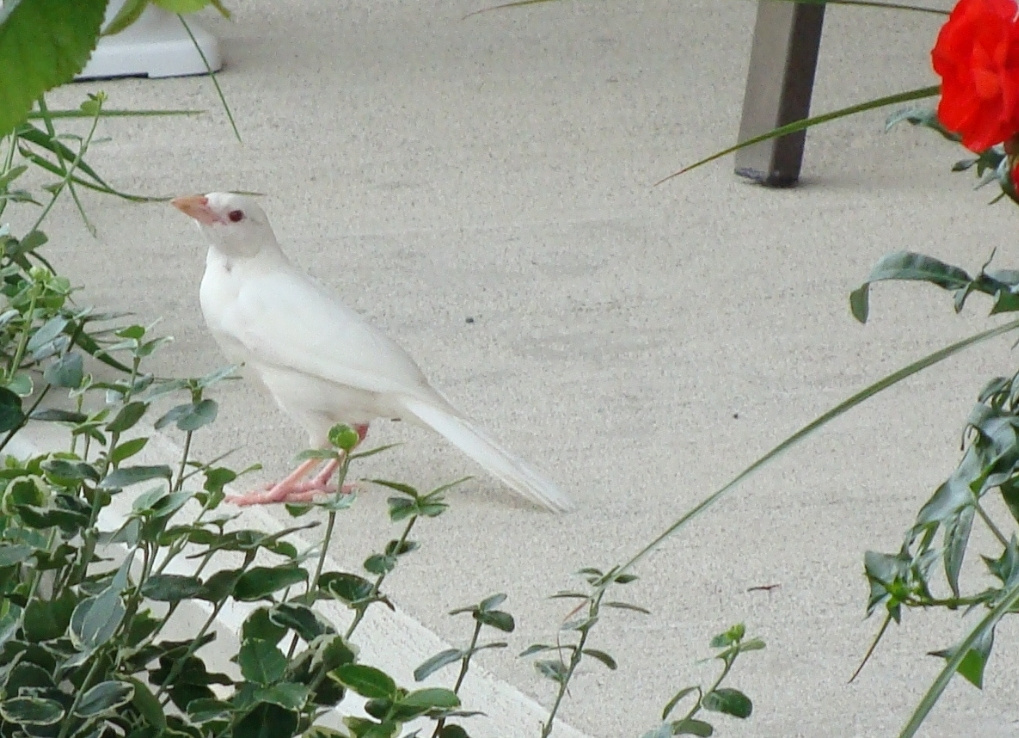
Quiscale albinos à Peterborough, en Ontario. Photo par Slepkov
Un oiseau leucistique, d'un autre côté, peut produire tous les pigments qui conduiraient à la coloration typique, mais il y a une perturbation dans la façon dont les pigments sont déposés. Cela peut conduire à des oiseaux qui pourraient avoir de la couleur, mais qui semblent délavés ou pâlis. Vous pourriez également rencontrer des oiseaux partiellement leucistiques qui ont une coloration normale, mais avec des taches blanches ou délavées dans leur plumage. À l'opposé, il y a aussi des oiseaux et des animaux mélanistiques qui surproduisent de la mélanine, ce qui les amène à avoir une coloration plus foncée. (Fait amusant : saviez-vous que les écureuils noirs ne sont que des écureuils gris de l'Est mélanistiques ? Les écureuils noirs sont peut-être devenus plus courants au Canada parce qu'ils ont une meilleure tolérance au froid que leurs homologues gris !)
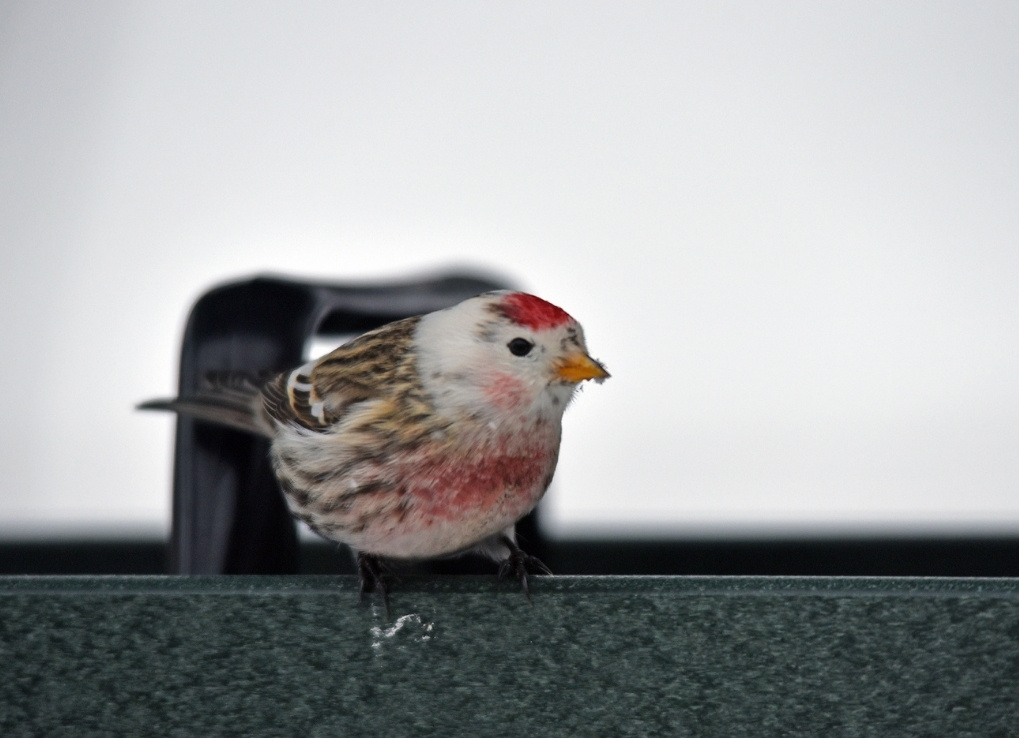
Sizerin flammé partiellement leucistique. Photo de USFWS.
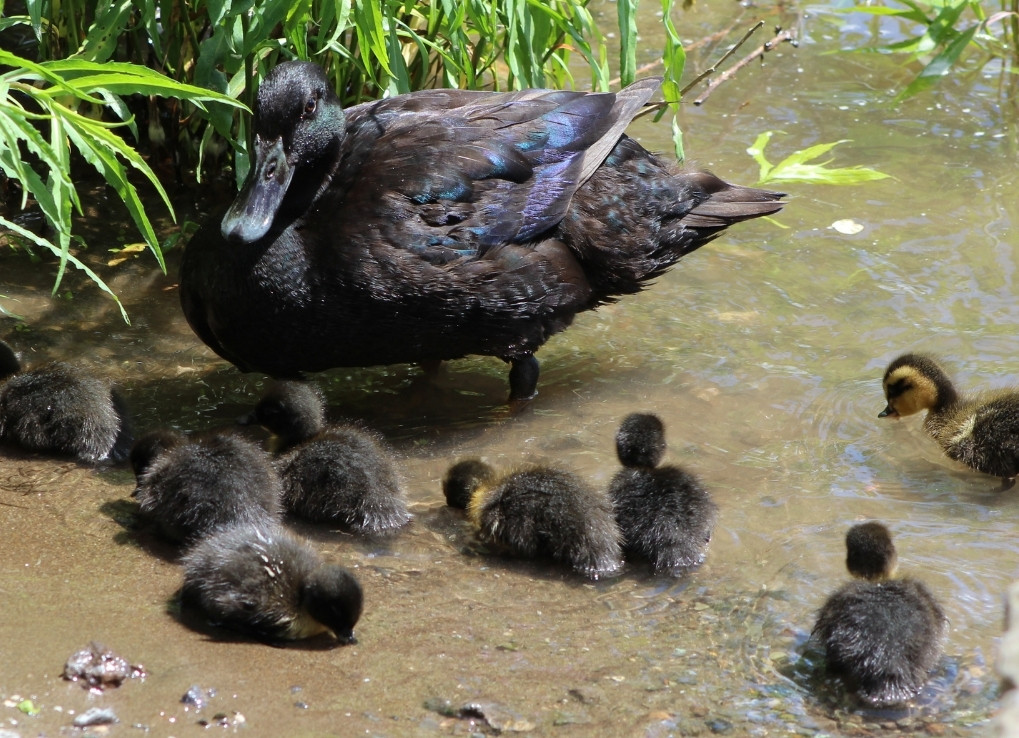
Femelle colvert mélanistique et ses canetons. Photo de LittleLeafSheep.
La clé pour différencier l'albinisme et le leucisme se trouve dans les yeux. Les oiseaux albinos (et autres animaux) auront un œil rouge, la couleur provenant des vaisseaux sanguins à l'intérieur plutôt que de tout pigment, tandis que les oiseaux leucistiques auront une couleur d'œil typique de leur espèce.
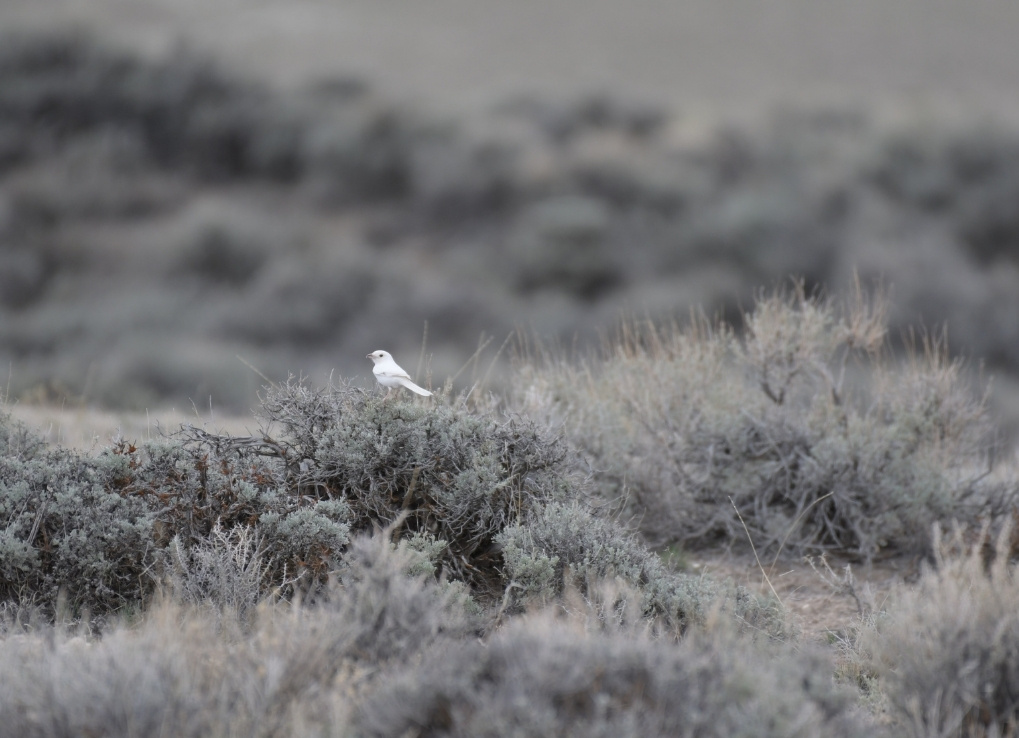
Pie-grièche migratrice. Photo de Taylor Higgins.
S'agit-il alors d'une pie-grièche albinos ou leucistique ? Il est difficile de le dire à partir de cette photo, mais en zoomant, l'œil semble être foncé, ce qui pointe vers le leucisme.
Quelle qu'en soit la cause, c'est sans aucun doute un spectacle spécial à voir ; il y a quelque chose chez ces animaux qui capte l'attention. Toute observation de la faune peut nous connecter à la nature, mais apercevoir quelque chose d'aussi rare met vraiment en lumière la variété et la complexité surprenantes du monde qui nous entoure. C'est une complexité qui vaut la peine d'être protégée.
Hazel travaille avec Conservation de la faune Canada depuis 2013, ayant commencé comme biologiste contractuelle auprès du programme de rétablissement de la pie-grièche migratrice avant d'accéder au rôle de biologiste principale. Après une décennie de travail sur les pies-grièches, Hazel a accédé au rôle de directrice des programmes de conservation, où iel supervise tous nos programmes de rétablissement. Hazel travaille avec les espèces en péril depuis le milieu des années 2000 et détient une maîtrise de l'Université Trent, où iel a étudié les préférences d'habitat des martinets ramoneurs en Ontario.

Nous avons besoin de votre aide