

Avec moins de 1 000 couples estimés dans le pays, la chevêche des terriers est l'un des oiseaux les plus menacés birds in Canada’s prairie grasslands. WPC has participated in burrowing owl recovery programs since 1995, in Saskatchewan, BC and now in Manitoba with the Manitoba Burrowing Owl Recovery Program. The conservation techniques used in the program have been developed over the years, with proven results. The work of the team will help increase the population of this adorable endangered species.
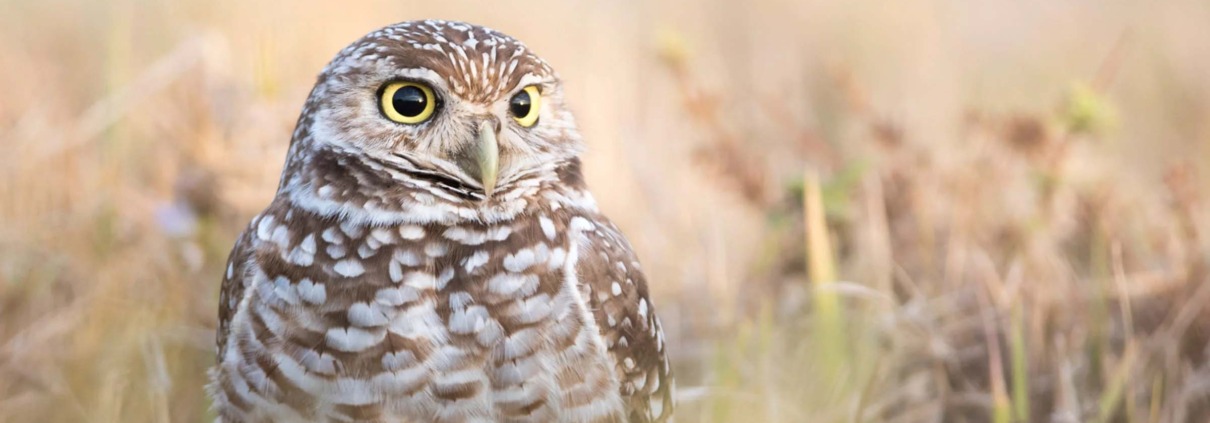
Migratory birds are arriving back to the breeding grounds in Canada and many grassland birds have arrived in southwestern Manitoba’s mixed-grass prairie region. There are several grassland bird specialities in this part of the province. The iconic burrowing owl tops the list for many birders who flock to the southwest corner to get a glimpse of one. Burrowing owls are charismatic little owls weighting only about 150g. Both males and female owls are a similar size and are a speckled brown colour that is perfect for camouflage. They are the only North American species of owl that nests in the ground.

As their name suggests, their unique characteristic is that they nest in burrows in the ground. Contrary to their name, they cannot actually dig their own burrows and rely on burrowing mammals such as ground squirrels, badgers and foxes to dig burrows in grasslands – i.e. pasturelands in souythwestern Manitoba. The Manitoba Burrowing Owl Recovery Program works with landowners to install artificial nest burrows in suitable nesting locations, made of plastic weeping tile and a bucket to protect owl families from digging predators.
These are the types of burrows that we use to reintroduce conservation-bred pairs. These burrows are covered with a large, soft-release enclosure to ensure the owls are protected and are able to get acclimated to the wild environment before release.

A release enclosure on the Manitoba prairie. Photo: Jessica Riach
Once pairs have an established nest, the enclosure is removed and they are able to hunt for food on their own, and avoid predators.
The Manitoba Burrowing Owl Recovery Program has six pairs of conservation-release owls set up in enclosures on private land in southwestern Manitoba. A few have started to nest which is egg-cellent news!
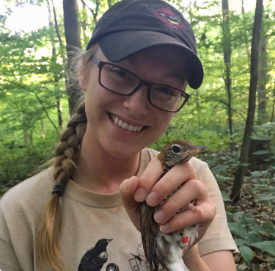
Alexandra Israel
Napanee Biologist – Eastern Loggerhead Shrike Recovery Program
Alex completed her Master’s degree in Biology at York University, where she studied nest concealment in Wood Thrushes and how it might influence nest success in this Species at Risk. Alex also volunteers much of her time at Long Point Bird Observatory, where she assists with their migration monitoring program each year.

About this species
The Burrowing owl (Athene cunicularia)
La chevêche des terriers est l'une des plus petites espèces de chouettes, qui se distingue par ses très longues pattes et sa queue courte. Elle tire son nom de son habitude de nicher dans des terriers creusés par des animaux tels que les écureuils terrestres, les blaireaux et les chiens de prairie. On la surnomme aussi « chouette Howdy » en raison de leur habitude de hocher la tête d'avant en arrière en signe de révérence, un comportement qui leur permet probablement d'évaluer les distances depuis différents points de vue. Les jeunes chouettes dans le nid émettent un son de cliquetis similaire à celui des serpents à sonnettes pour éloigner les prédateurs. La chevêche des terriers est nocturne, bien que, contrairement à d'autres chouettes, elle soit également active dans une certaine mesure pendant la journée. Elle se nourrit de rongeurs, de gros insectes (comme les grillons, les coléoptères et les sauterelles), ainsi que de petits reptiles et amphibiens.
Plus d'articles comme celui-ci

Nous avons besoin de votre aide