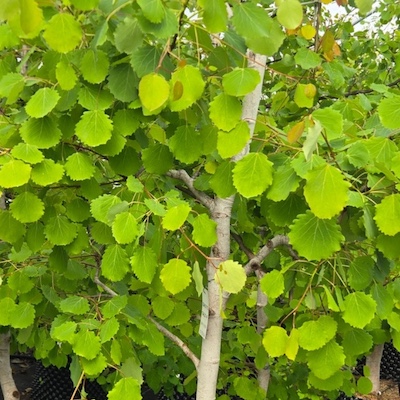
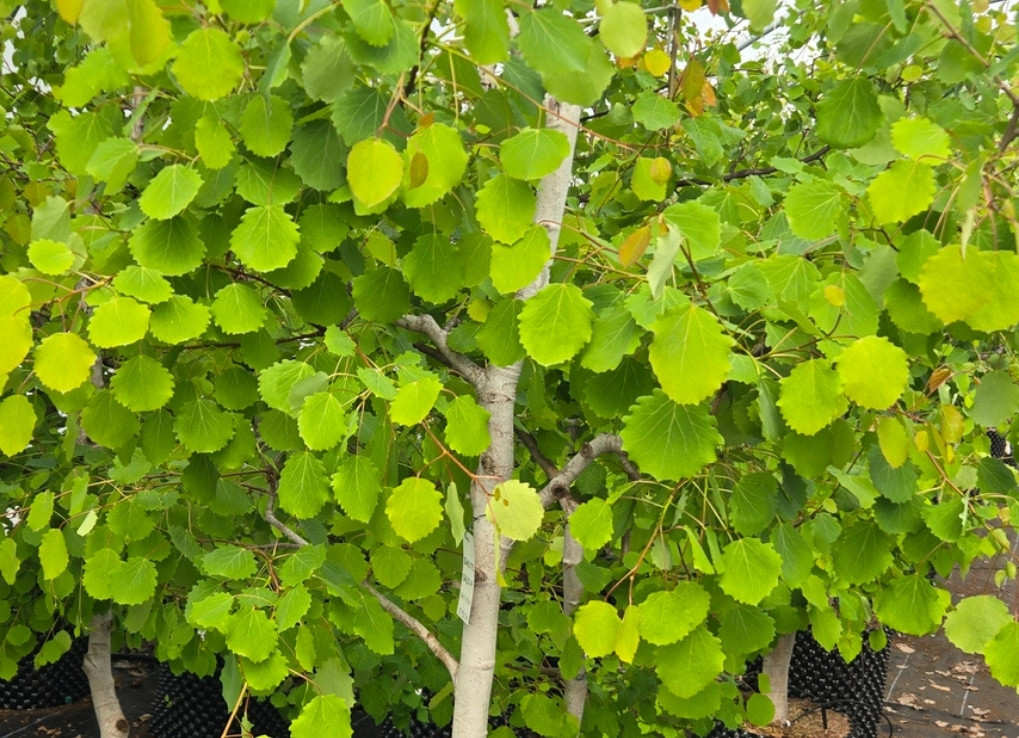
Green aspen leaves on a tree up close.

Qu'est-ce que le programme de Noé du Canada ? Depuis 1988, le programme Noé du Canada offre aux biologistes de la conservation au Canada une opportunité unique. Chaque année, CFC sélectionne un biologiste dévoué parmi des candidats à travers le Canada pour entreprendre un cours de 3 mois à la Durrell Conservation Academy au Royaume-Uni, suivi d'un stage de 6 mois sur l'île Maurice dans l'Océan Indien. C'est une occasion unique pour les jeunes Canadiens d'apprendre directement comment fonctionnent les programmes de rétablissement de la faune les plus réussis au monde, et de ramener ces connaissances et cette expérience pour renforcer la capacité de conservation du Canada.

Pour la toute première fois, CFC propose ce stage à deux biologistes. Nos Noé 2026 sont Jenna Kissel – la 35e Noé du Canada de la CFC, et Daryn Farrant – le 36e Noé du Canada de la CFC. Les deux biologistes partagent leurs expériences et comment ils les appliqueront à leur retour au Canada. Merci à la Fondation Alan & Patricia Koval pour leurs nombreuses années de soutien au programme Noé du Canada et pour avoir donné tant d'efforts pour soutenir deux stages de Noé de la Fondation Koval en 2026.

Due to a delay in approval for my Mauritian work visa, I was able to spend some time exploring other conservation projects on my way to Mauritius. Thank you to Pat and Alan Koval for supporting my journey and helping me see the amazing projects we talked about in the DESMAN course.

Suspicious Activities Reported Inside Dundreggan Greenhouses

Hidden inside the Trees for Life greenhouses at the Dundreggan Rewilding Centre is a rather unusual operation.

Young aspen trees are being deliberately stressed, deprived of water, stripped of bark, and subjected to other treatments designed to encourage them to flower.

That’s right. Conservationists are intentionally making trees uncomfortable.

Welcome to the Aspen Stress Chamber.

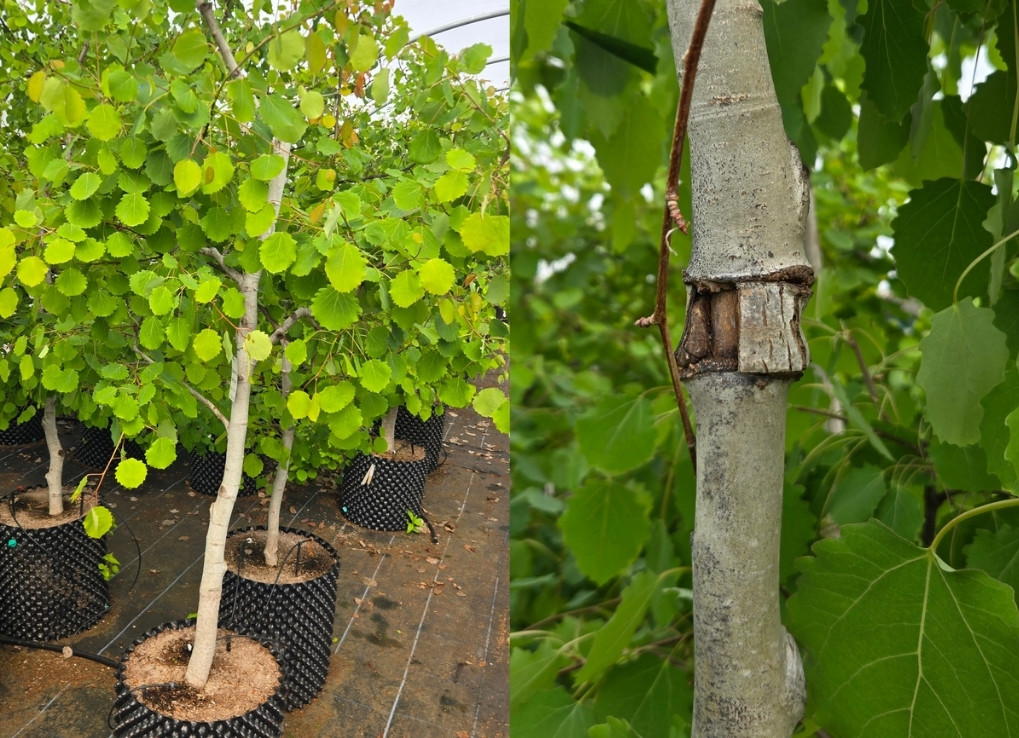
At first glance, it looks less like a tree nursery and more like a botanical experimentation lab. Hydrometers monitor conditions in the soil, while some trees bear visible scars from treatments intended to encourage flowering.

Split image of green aspen trees in a greenhouse on the left, and on the right, a close up image of brown cut tree bark on a tree.

(Left) Exhibit A: Young aspens inside the nursery tent, with soil moisture sensors monitoring conditions. (Right) Exhibit B: An aspen stem that has been girdled as part of an effort to induce flowering. Photos by D. Farrant.

Which raises an obvious question: why are people dedicated to planting and protecting trees deliberately putting them under stress?

Have the tree people finally lost it?

Not quite. To understand what’s happening inside this greenhouse, we need to investigate the unusual reproductive lives of aspens.

ATTACK OF THE CLONES

Back home in Canada, aspens are everywhere. Entire forests can actually consist of clones of the same individual tree, connected underground through shared root systems. Aspens are masters of clonal reproduction: instead of relying on seeds, they can send up genetically identical shoots from their roots.

In other words, one tree can become many trees without ever needing to reproduce sexually.

Efficient? Absolutely. A little suspicious? Only if you’re a journalist looking for a clickbait headline.

But breaking news from Scotland suggests that this strategy has its limitations.

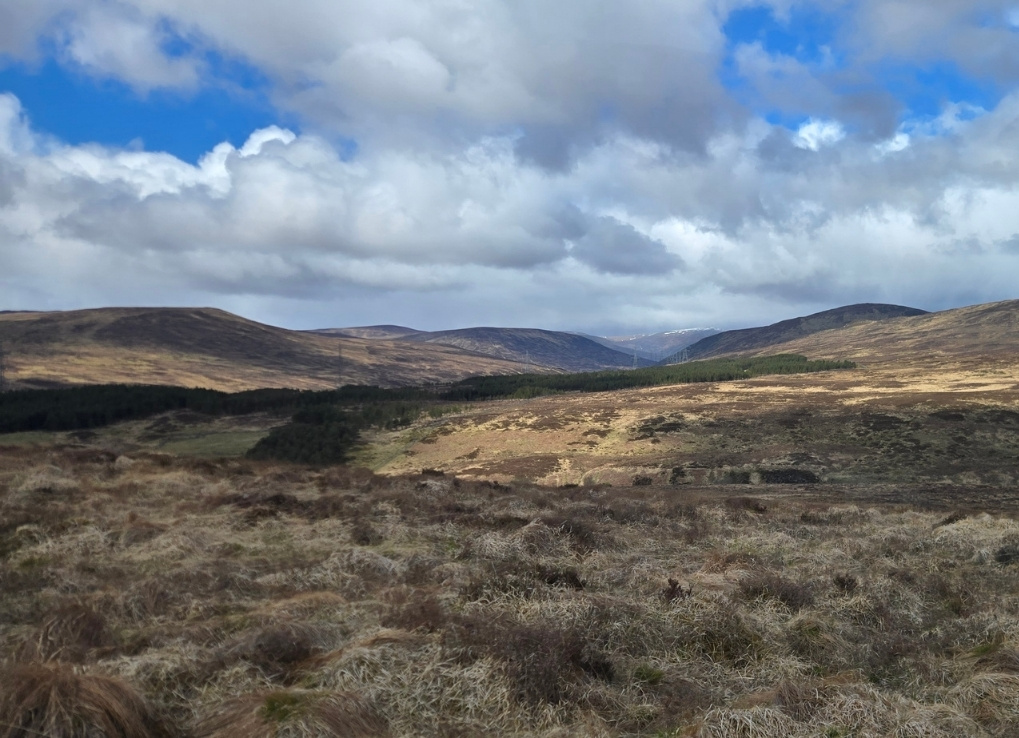
Landscape photo showing brown and yellow hills. The sky is blue and full of white clouds.

Dalnacardoch: a landscape that hints at the challenges facing Scotland’s scattered aspen populations. Photo by D. Farrant.

Centuries of deforestation and land-use change have left only scattered fragments of native woodland across the Scottish Highlands. Aspen populations have become isolated from one another, sometimes separated by considerable distances.

And unlike many trees, aspens are dioecious. This means male and female flowers grow on separate trees. A tree cannot simply reproduce sexually on its own; pollen must travel from a male tree to a female tree for fertilisation to occur.

Which brings us to the next development in this unfolding investigation.

LONELY ASPENS IN YOUR AREA?

Aspens rely on wind to carry their pollen. But when male and female trees are too far apart, the chances of successful pollination can be limited.

Fewer opportunities for pollination mean fewer opportunities for sexual reproduction and the exchange of genes between distinct aspen populations. 

To be clear, cloning isn’t inherently bad. It’s an incredibly successful way for aspens to spread. But when populations are isolated, encouraging sexual reproduction can help maintain genetic diversity and support the resilience of future generations.

And so, the conservation team at Dundreggan has taken matters into its own hands.

THE SUSPECTS HAVE A DEFENCE

The team is deliberately stressing the trees in an effort to encourage flowering.

Why? Because under certain conditions, stressed aspens are more likely to flower. By carefully applying treatments that encourage flowering, the team hopes to increase opportunities for sexual reproduction and, ultimately, the production of genetically diverse offspring.

The Aspen Stress Chamber isn’t an attempt to punish trees for their cloning habits. It’s a conservation intervention designed to give isolated aspen populations a better chance of reproducing sexually.

Every flower matters. Every successful cross-pollination creates an opportunity for new genetic combinations that could help strengthen future populations.

And suddenly, what initially looked like an unnecessarily dramatic way to grow trees starts to make a lot more sense.

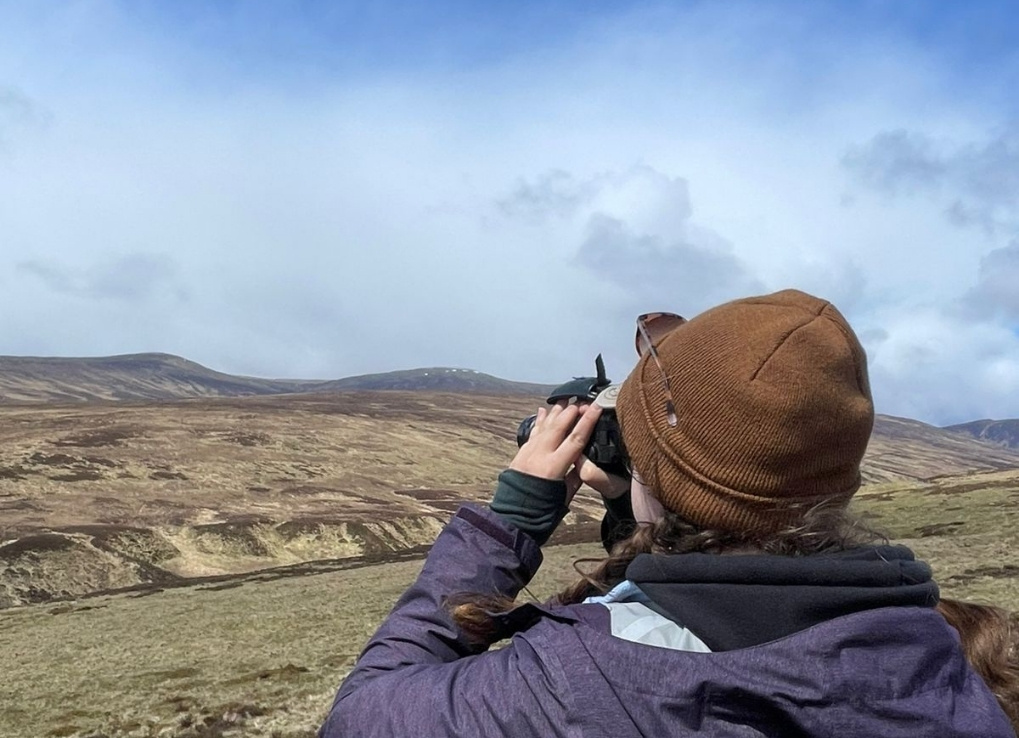
Meanwhile, our correspondent in the field continues to investigate the wider Highland landscape. Photo by D. Farrant.

ELSEWHERE IN THE NURSERY: LIFE AFTER THE STRESS CHAMBER

After visiting the Aspen Stress Chamber, we toured the other greenhouses, where young trees are gradually acclimatised to outdoor conditions.

Each greenhouse had slightly different temperatures and exposure levels, helping prepare the saplings for life outside. It felt almost like watching trees go through survival training before being released back into the Highlands.

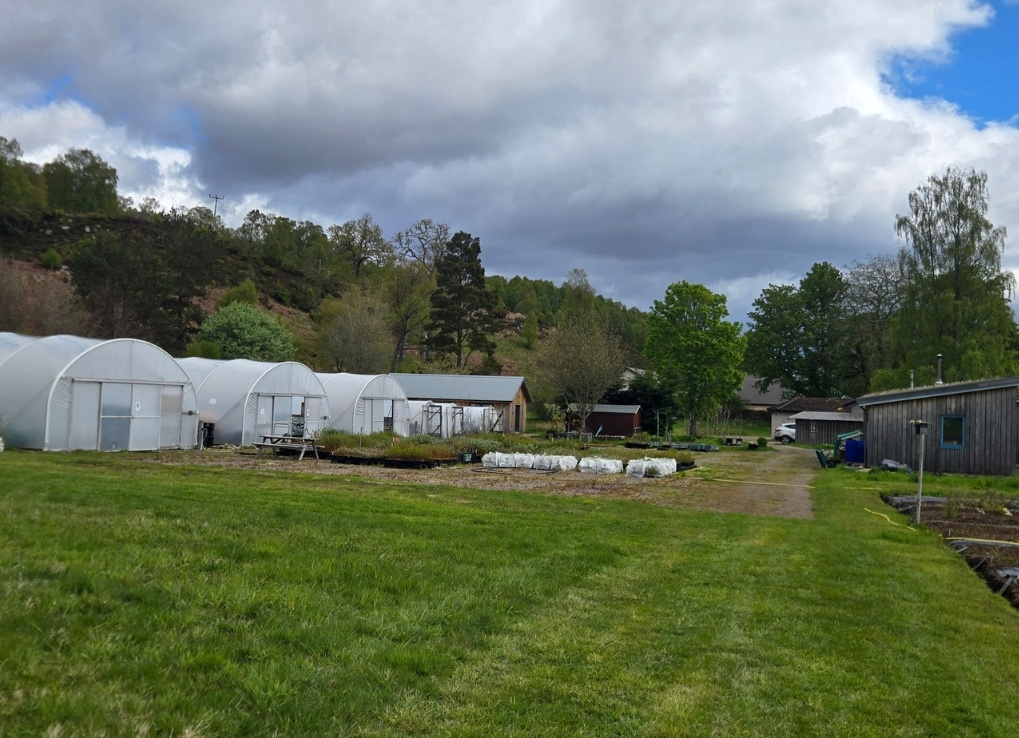
A tree nursery with three white greenhouses. On the right is a brown shed.

The nursery at Dundreggan Rewilding Centre, where young trees are prepared for life beyond the greenhouse. Photo by D. Farrant.

It’s easy to imagine conservation as something straightforward from the outside. Plant trees. Restore forests. Bring nature back.

But walking through Dundreggan offered a glimpse of how much thought, patience, and experimentation can sit behind every stage of that process. Sometimes, helping a forest recover means doing much more than simply planting trees and hoping for the best.

These forests will not return overnight. Some of the trees growing in those greenhouses may outlive everyone who planted them. Others may fail entirely.

But the work continues anyway, one generation of trees at a time.

This has been Daryn from Dodo News Network, reporting live from the Scottish Highlands. Back to you in the studio.

Daryn Farrant

36ème Noé du Canada

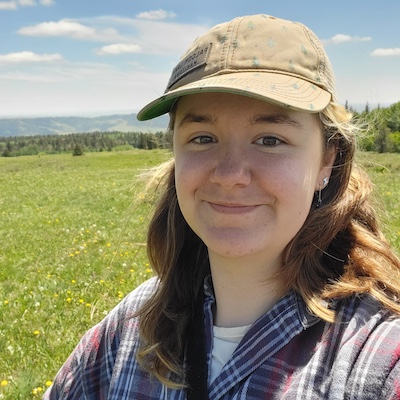
Daryn est biologiste de la conservation et la 36ème Noé du Canada. Elle est titulaire d'un baccalauréat spécialisé en sciences biologiques de l'Université du Manitoba, où elle s'est concentrée sur l'écologie de la restauration et le rétablissement des écosystèmes des prairies. Avant de rejoindre la CFC, Daryn a travaillé avec Parcs Canada au Parc national des Prairies, où elle a dirigé des programmes de surveillance des chevêches des terriers et de la santé riveraine, coordonné le travail sur le terrain, la gestion des données et les relevés sur les espèces en péril. Elle apporte une expérience de terrain variée en gestion des espèces envahissantes et en surveillance écologique, et elle est passionnée par la gestion à long terme et rendre la science accessible à des audiences diverses. Daryn est bilingue en anglais et en français et est enthousiaste à contribuer au rétablissement des espèces menacées au Canada par son travail avec CFC.

Nous avons besoin de votre aide

Faites un don pour sauver les espèces menacées