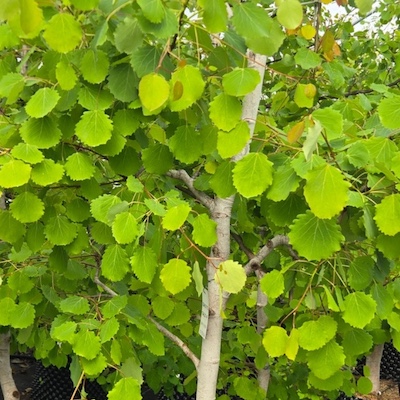
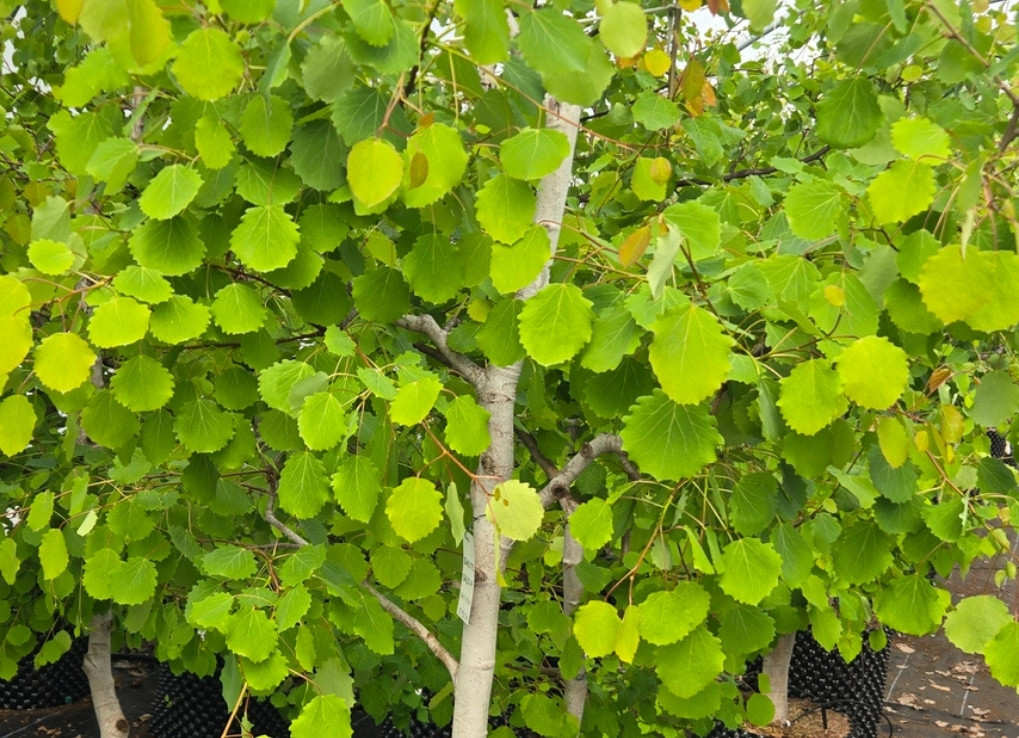
Green aspen leaves on a tree up close.

What is the Canada’s New Noah Program? Since 1988, the Canada’s New Noah program has provided conservation biologists in Canada the opportunity of a lifetime. Each year, WPC selects a dedicated biologist from applicants across Canada to undertake a 3-month course at the Durrell Conservation Academy in the U.K. followed by a 6-month internship on the island of Mauritius in the Indian Ocean. This is an opportunity unlike any other for young Canadians to learn firsthand how the world’s most successful conservation recovery programs are managed and to bring this knowledge and experience back to improve Canada’s conservation capacity.

For the first time ever,  WPC is offering this placement to two biologists. Our 2026 New Noahs are Jenna Kissel – WPC’s 35th Canada’s New Noah, and Daryn Farrant – WPC’s 36th Canada’s New Noah. Both report on their experiences and how they will apply them upon return to Canada. Thank you to the Alan & Patricia Koval Foundation for their many years supporting the Canada’s New Noah Program and for going above and beyond supporting two Koval Foundation New Noah Internships in 2026.

Due to a delay in approval for my Mauritian work visa, I was able to spend some time exploring other conservation projects on my way to Mauritius. Thank you to Pat and Alan Koval for supporting my journey and helping me see the amazing projects we talked about in the DESMAN course.

Suspicious Activities Reported Inside Dundreggan Greenhouses

Hidden inside the Trees for Life greenhouses at the Dundreggan Rewilding Centre is a rather unusual operation.

Young aspen trees are being deliberately stressed, deprived of water, stripped of bark, and subjected to other treatments designed to encourage them to flower.

That’s right. Conservationists are intentionally making trees uncomfortable.

Welcome to the Aspen Stress Chamber.

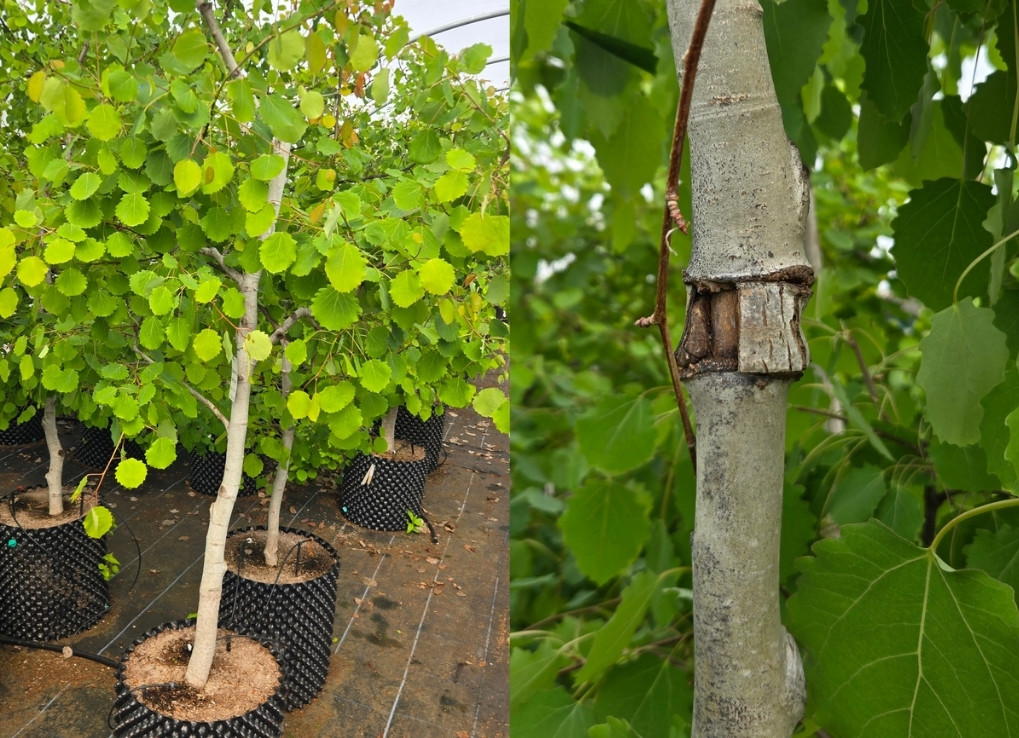
At first glance, it looks less like a tree nursery and more like a botanical experimentation lab. Hydrometers monitor conditions in the soil, while some trees bear visible scars from treatments intended to encourage flowering.

Split image of green aspen trees in a greenhouse on the left, and on the right, a close up image of brown cut tree bark on a tree.

(Left) Exhibit A: Young aspens inside the nursery tent, with soil moisture sensors monitoring conditions. (Right) Exhibit B: An aspen stem that has been girdled as part of an effort to induce flowering. Photos by D. Farrant.

Which raises an obvious question: why are people dedicated to planting and protecting trees deliberately putting them under stress?

Have the tree people finally lost it?

Not quite. To understand what’s happening inside this greenhouse, we need to investigate the unusual reproductive lives of aspens.

ATTACK OF THE CLONES

Back home in Canada, aspens are everywhere. Entire forests can actually consist of clones of the same individual tree, connected underground through shared root systems. Aspens are masters of clonal reproduction: instead of relying on seeds, they can send up genetically identical shoots from their roots.

In other words, one tree can become many trees without ever needing to reproduce sexually.

Efficient? Absolutely. A little suspicious? Only if you’re a journalist looking for a clickbait headline.

But breaking news from Scotland suggests that this strategy has its limitations.

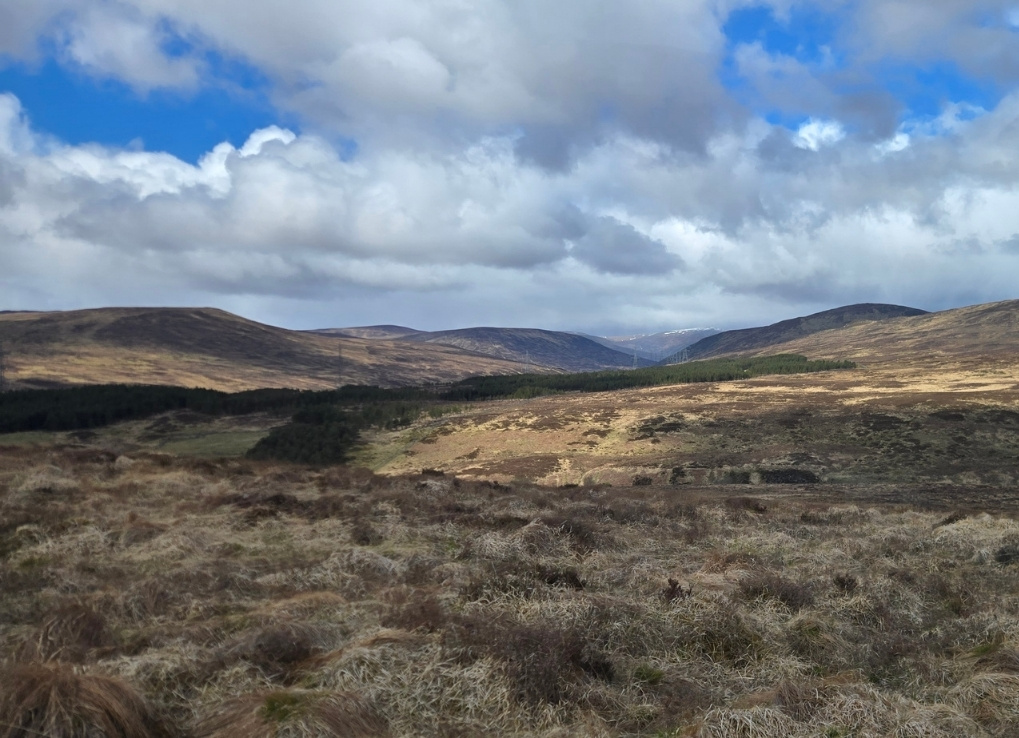
Landscape photo showing brown and yellow hills. The sky is blue and full of white clouds.

Dalnacardoch: a landscape that hints at the challenges facing Scotland’s scattered aspen populations. Photo by D. Farrant.

Centuries of deforestation and land-use change have left only scattered fragments of native woodland across the Scottish Highlands. Aspen populations have become isolated from one another, sometimes separated by considerable distances.

And unlike many trees, aspens are dioecious. This means male and female flowers grow on separate trees. A tree cannot simply reproduce sexually on its own; pollen must travel from a male tree to a female tree for fertilisation to occur.

Which brings us to the next development in this unfolding investigation.

LONELY ASPENS IN YOUR AREA?

Aspens rely on wind to carry their pollen. But when male and female trees are too far apart, the chances of successful pollination can be limited.

Fewer opportunities for pollination mean fewer opportunities for sexual reproduction and the exchange of genes between distinct aspen populations. 

To be clear, cloning isn’t inherently bad. It’s an incredibly successful way for aspens to spread. But when populations are isolated, encouraging sexual reproduction can help maintain genetic diversity and support the resilience of future generations.

And so, the conservation team at Dundreggan has taken matters into its own hands.

THE SUSPECTS HAVE A DEFENCE

The team is deliberately stressing the trees in an effort to encourage flowering.

Why? Because under certain conditions, stressed aspens are more likely to flower. By carefully applying treatments that encourage flowering, the team hopes to increase opportunities for sexual reproduction and, ultimately, the production of genetically diverse offspring.

The Aspen Stress Chamber isn’t an attempt to punish trees for their cloning habits. It’s a conservation intervention designed to give isolated aspen populations a better chance of reproducing sexually.

Every flower matters. Every successful cross-pollination creates an opportunity for new genetic combinations that could help strengthen future populations.

And suddenly, what initially looked like an unnecessarily dramatic way to grow trees starts to make a lot more sense.

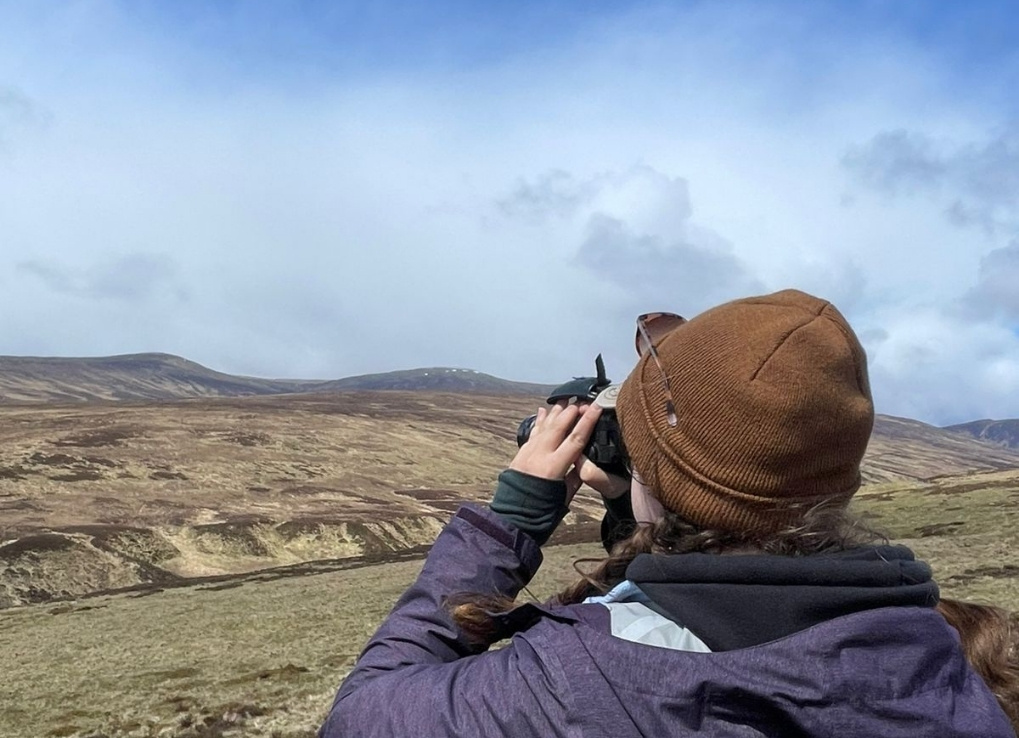
Meanwhile, our correspondent in the field continues to investigate the wider Highland landscape. Photo by D. Farrant.

ELSEWHERE IN THE NURSERY: LIFE AFTER THE STRESS CHAMBER

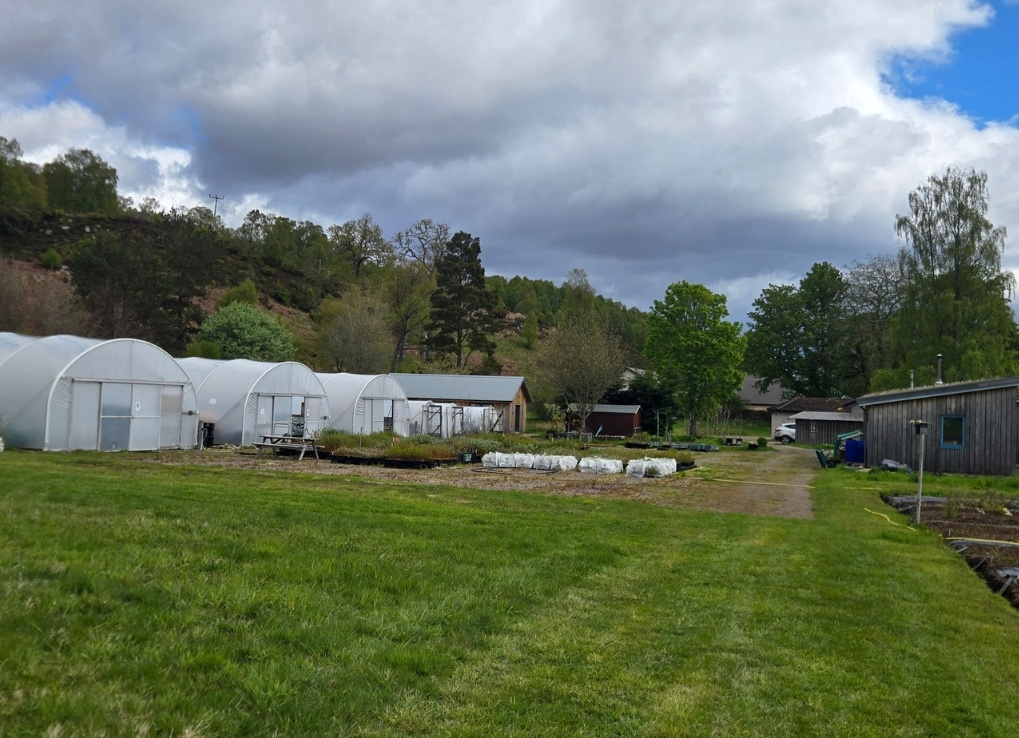
After visiting the Aspen Stress Chamber, we toured the other greenhouses, where young trees are gradually acclimatised to outdoor conditions.

Each greenhouse had slightly different temperatures and exposure levels, helping prepare the saplings for life outside. It felt almost like watching trees go through survival training before being released back into the Highlands.

A tree nursery with three white greenhouses. On the right is a brown shed.

The nursery at Dundreggan Rewilding Centre, where young trees are prepared for life beyond the greenhouse. Photo by D. Farrant.

It’s easy to imagine conservation as something straightforward from the outside. Plant trees. Restore forests. Bring nature back.

But walking through Dundreggan offered a glimpse of how much thought, patience, and experimentation can sit behind every stage of that process. Sometimes, helping a forest recover means doing much more than simply planting trees and hoping for the best.

These forests will not return overnight. Some of the trees growing in those greenhouses may outlive everyone who planted them. Others may fail entirely.

But the work continues anyway, one generation of trees at a time.

This has been Daryn from Dodo News Network, reporting live from the Scottish Highlands. Back to you in the studio.

Daryn Farrant

36th Canada’s New Noah

Daryn is a conservation biologist and the 36th Canada’s New Noah. She holds an Honours Bachelor of Science in Biological Sciences from the University of Manitoba, where she focused on restoration ecology and prairie ecosystem recovery. Prior to joining WPC, Daryn worked with Parks Canada at Grasslands National Park, leading monitoring programs for Burrowing Owls and riparian health, and coordinating fieldwork, data management, and species-at-risk surveys. She brings a range of field experience in invasive species management and ecological monitoring, and is passionate about long-term stewardship and making science accessible to diverse audiences. Daryn is bilingual in English and French and is excited to contribute to endangered species recovery in Canada through her work with WPC.

We need your help

Donate to save endangered species