Ojibway Prairie celebrates new national distinction: key biodiversity area
Publié leavril 22, 2025parJonathan D. Choquette, PhD| Photo: K. Woodhouse
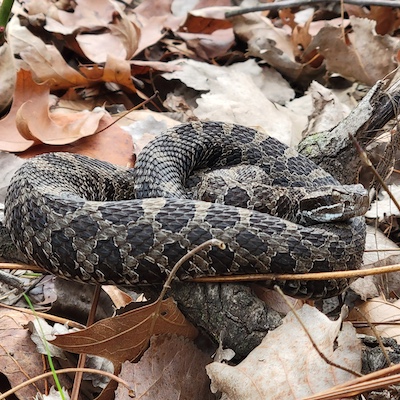
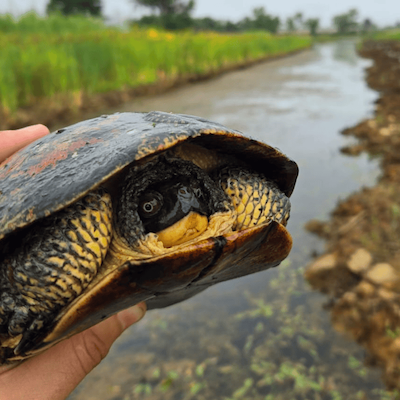
Qu'est-ce que le Programme de rétablissement des reptiles de la prairie Ojibway ? Le complexe de la prairie Ojibway et le grand écosystème du parc (OPCGPE) dans la région de Windsor-LaSalle en Ontario abrite plusieurs espèces de reptiles menacées par le développement urbain, la fragmentation de l'habitat et la mortalité routière, notamment les couleuvres fauves de l'Est, les couleuvres à petite tête, les tortues mouchetées et une population en danger critique de massasaugas. L'équipe de rétablissement des reptiles de la prairie Ojibway (OPRREC) travaille à protéger, rétablir et surveiller ces espèces.
FROM WILDLIFE PRESERVATION CANADA and WILDLIFE CONSERVATION SOCIETY CANADA
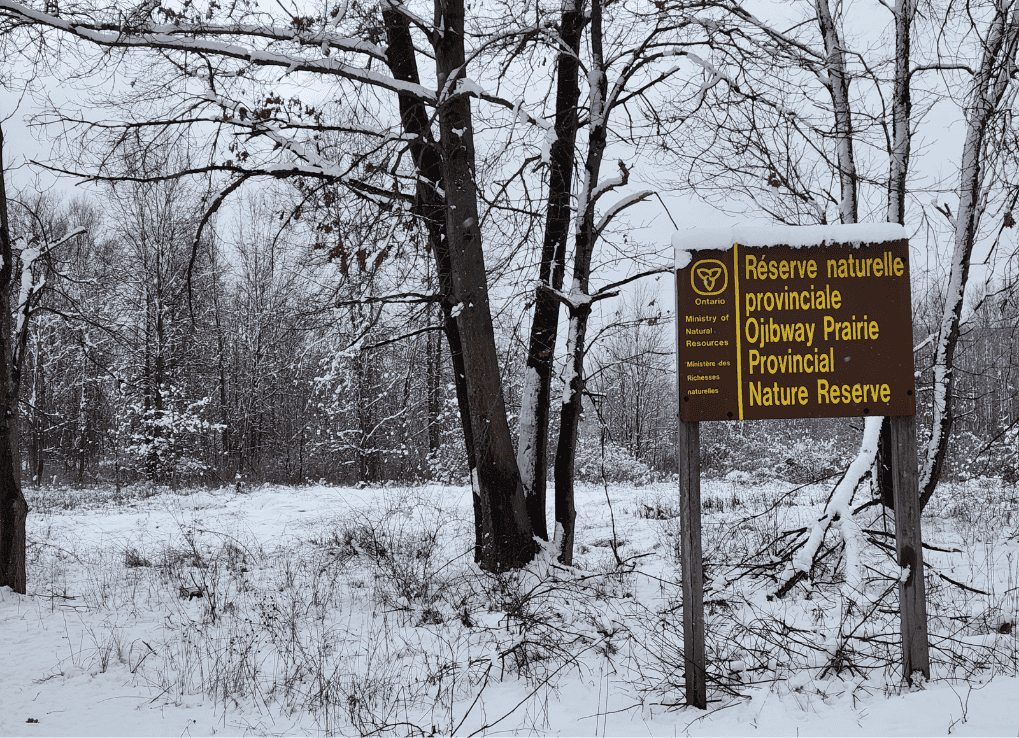
22 April 2025, Windsor ON – It’s official! The Ojibway Prairie celebrates its first Earth Day as one of Canada’s newest Key Biodiversity Areas (KBA). The KBA Canada Secretariat, after a lengthy review and vetting process, confirmed last spring that the Ojibway Prairie Complex and Greater Park Ecosystem in Windsor and LaSalle met all the stringent scientifically-based KBA criteria. This new status reaffirms what most nature enthusiasts in Windsor-Essex already know: that Ojibway Prairie is critical to the conservation of Canadian biodiversity. Recognized mainly for its globally rare tallgrass prairies and oak savannahs, the 26 km2 site also boasts deciduous forests and provincially significant wetlands. Although bisected by urban and industrial land uses, including a busy road network, the Ojibway Prairie KBA is recognized for supporting nationally significant populations of 3 snake species, 3 insect and spider species, and 11 plant species. In fact, 4 of the plant species cannot be found anywhere else in Canada, and 1 insect species cannot be found anywhere else in the world!
KBA designations aren’t easily achieved. The lengthy and gruelling process began back in June 2020 when Jonathan Choquette and his team at Wildlife Preservation Canada (WPC) began investigating the process for making a nomination. “A lot of research went into the pre-submission stage to make sure we had our facts straight, that the species list was accurate, and that the site boundaries were ecologically-based”, says Dr. Choquette, Lead Biologist with WPC. His team assembled and submitted the 20-page nomination package in July 2021. Wildlife Conservation Society Canada worked with WPC onthe nomination, by providing key inputs at various stages during the review process. Input was also incorporated from local First Nations communities, who are recognized as the traditional stewards and caretakers of the Ojibway Prairie area.
Key Biodiversity Area (KBA) and National Urban Park (NUP) designations differ. The KBA designation is entirely ecologically based. It is a process vetted by scientists, naturalists and land managers to identify the most important sites for biodiversity in Canada, based on the presence of concentrations of rare plants and animals within a distinct geographical area. The Ojibway Prairie KBA process has identified the 17 most important plants and animals to target as part of species recovery, habitat restoration, and threat mitigation initiatives in the future National Urban Park. Also, the KBA site boundary will provide ecologically-based guidance when finalizing the National Urban Park boundaries. “There has long been recognition of the importance of the rare and diverse remnant natural areas on Windsor’s west side, but protection and stewardship has at times been disjointed and uncoordinated. KBA recognition will help to focus national and international attention on the importance of the Ojibway Prairie, and will help to support a vision for an expanded, protected and connected Ojibway Prairie National Urban Park, that considers needs of people and the most unique and threatened species within it.”, said Dr. Peter Soroye from Wildlife Conservation Society Canada. Ojibway joins 167 other designated KBAs across the country. Find out more about this special site at KBA Canada’s website.
Ojibway Prairie Complex and Greater Park Ecosystem KBA at-a-glance
About KBA Canada
Les pluviers siffleurs KBA Canada initiative was launched in 2019 to help Canada meet protected area targets and other targets agreed to in the Convention on Biological Diversity. Canada has one of the world’s first comprehensive national programs to identify KBAs and was the first country to adapt the Global KBA Standard to a national context. The KBA Canada initiative is jointly coordinated by Birds Canada, NatureServe Canada, and WCS Canada, and involves and large coalition of non-governmental organizations, governments, Indigenous partners, academic institutions, experts and knowledge-holders that are engaged in the work of identifying, delineating and reviewing KBAs. To date, almost 1,000 sites have been identified as potential KBAs across Canada. Find out more at KBACanada.org.
À propos de Conservation de la faune au Canada
Established in 1985, Wildlife Preservation Canada is a national charity devoted to saving endangered animal species facing imminent extinction in Canada – species whose numbers in the wild are so low that habitat protection alone is not enough. It is currently providing expert hands-on care to reptile, amphibian, bird, and insect species in projects ranging from the St. Lawrence/Great Lakes region to Vancouver Island, making it the only organization in Canada to perform such work in multiple species recovery efforts across the country. For more information: wildlifepreservation.ca; Contact: 519-836-9314, admin@wildlifepreservation.ca
About Wildlife Conservation Society (WCS) Canada
Wildlife Conservation Society (WCS) Canada’s mission is to save wildlife and wild places through science, conservation action, education, and by inspiring people to value nature. WCS Canada plays a unique role in the conservation landscape of Canada, working at the nexus of biodiversity, climate change, and health in priority landscapes where they have had a long-term field presence, and where there is great potential for durable conservation gains. WCS Canada is a member of the global Wildlife Conservation Society (WCS) working across the globe in more than 60 countries to save wildlife and wild places.
Nous avons besoin de votre aide