Parlez-moi des oiseaux
Publié lejuillet 22, 2026parJenna Kissel
Qu'est-ce que le programme de Noé du Canada ? Depuis 1988, le programme Noé du Canada offre aux biologistes de la conservation au Canada une opportunité unique. Chaque année, CFC sélectionne un biologiste dévoué parmi des candidats à travers le Canada pour entreprendre un cours de 3 mois à la Durrell Conservation Academy au Royaume-Uni, suivi d'un stage de 6 mois sur l'île Maurice dans l'Océan Indien. C'est une occasion unique pour les jeunes Canadiens d'apprendre directement comment fonctionnent les programmes de rétablissement de la faune les plus réussis au monde, et de ramener ces connaissances et cette expérience pour renforcer la capacité de conservation du Canada.
Pour la toute première fois, CFC propose ce stage à deux biologistes. Nos Noé 2026 sont Jenna Kissel – la 35e Noé du Canada de la CFC, et Daryn Farrant – le 36e Noé du Canada de la CFC. Les deux biologistes partagent leurs expériences et comment ils les appliqueront à leur retour au Canada. Merci à la Fondation Alan & Patricia Koval pour leurs nombreuses années de soutien au programme Noé du Canada et pour avoir donné tant d'efforts pour soutenir deux stages de Noé de la Fondation Koval en 2026.
En tant que personne toujours avide d'apprendre, j'étais ravie de me retrouver à nouveau dans une salle de classe pour apprendre tout ce que le cours DESMAN avait à offrir. Mais, aussi importante que soit la compréhension de la théorie, elle ne peut vous mener que jusqu'à un certain point. L'application pratique des compétences en conservation, que ce soit l'installation de pièges photographiques ou la rédaction de budgets, donne aux étudiants ce petit quelque chose en plus pour devenir un conservationniste accompli. L'expérience pratique la plus significative, et le point fort de mon séjour à Durrell, a été la tâche de développement des compétences. Sans surprise pour personne, j'ai demandé à effectuer mon développement de compétences auprès du département des oiseaux du zoo de Jersey.
Mon parcours est presque exclusivement en soins et en élevage de rapaces, alors avoir un aperçu de la façon dont d'autres groupes d'oiseaux, comme les canards, les calaos et les oiseaux chanteurs, sont pris en charge en captivité a été une expérience d'apprentissage formidable. Au cours de quelques jours, j'ai passé du temps à suivre les soigneurs d'oiseaux dans leurs routines quotidiennes. J'ai commencé la matinée dans la cuisine de préparation des aliments, aidant à couper des œufs et des fruits. Presque tous les oiseaux du zoo de Jersey sont herbivores, alors c'était beaucoup de fruits, légumes et mélanges de graines — très différent des rongeurs et autres petites proies que j'ai l'habitude de préparer. Une fois la nourriture prête, j'ai suivi l'un des soigneurs de passereaux dans sa routine matinale, s'occupant des volières de calaos ridés, de pies vertes de Java, de pigeons roses, de garrulaxes à couronne bleue, et plus encore.
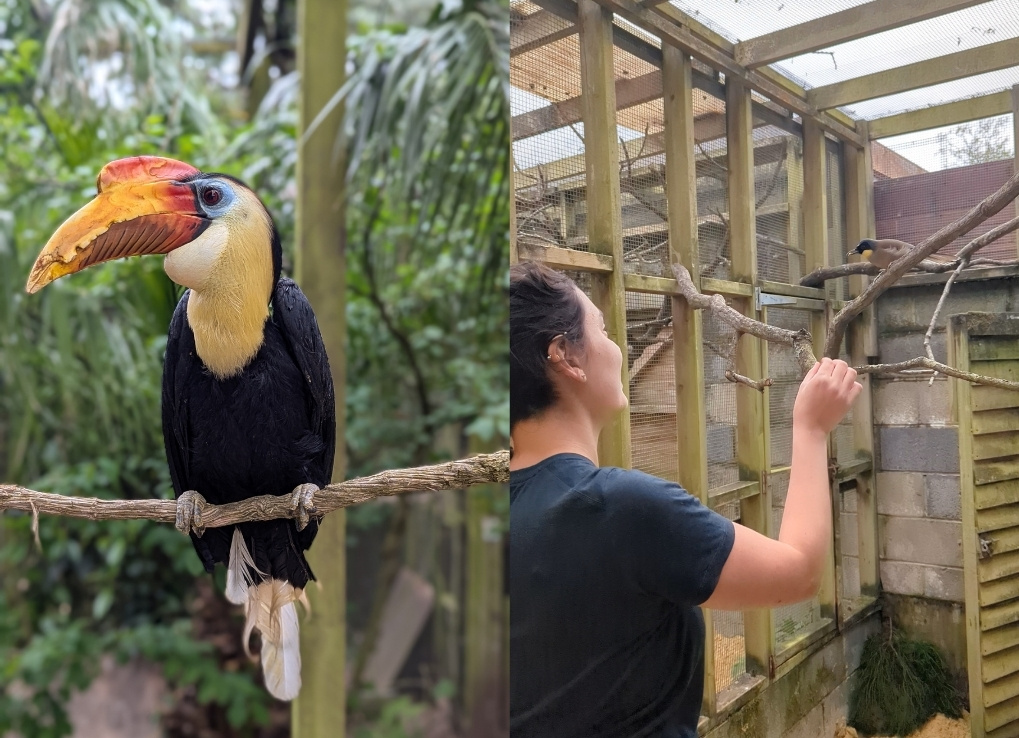
Homer, un calao ridé mâle (à gauche) et Jenna nourrissant Baby Blue, un garrulaxe à couronne bleue, avec des vers de farine (à droite). Baby Blue doit son nom à sa bague bleu bébé. Photos de J. Kissel et S. Atherton.
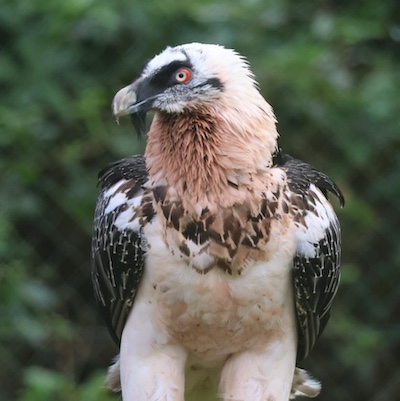
Je suis rapidement tombée sous le charme de plusieurs des oiseaux du zoo, notamment Homer, un calao ridé, et Baby Blue, un garrulaxe à couronne bleue. Quelques-uns de mes moments préférés pendant mon développement de compétences ont été de nourrir Homer avec des raisins et Baby Blue avec des vers de farine. J'ai aussi immédiatement adoré la colonie d'ibis chauves du nord. Ils ont tellement de caractère et sont souvent sous-appréciés simplement parce qu'ils ne sont pas les plus mignons (je ne suis pas d'accord, ils sont adorables !). Je n'ai pas passé beaucoup de temps avec eux, mais j'ai pu leur donner des vers de farine à la fin d'une de mes journées de développement de compétences.
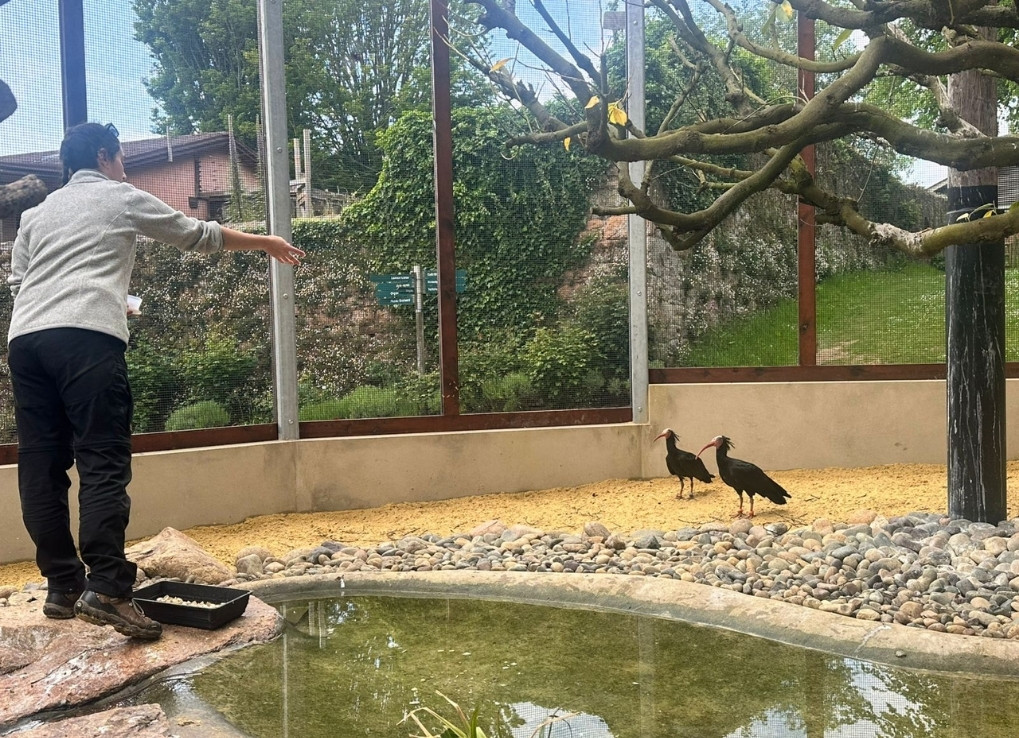
Jenna dispersant des vers de farine pour les ibis chauves du nord. Photo par Abbie.
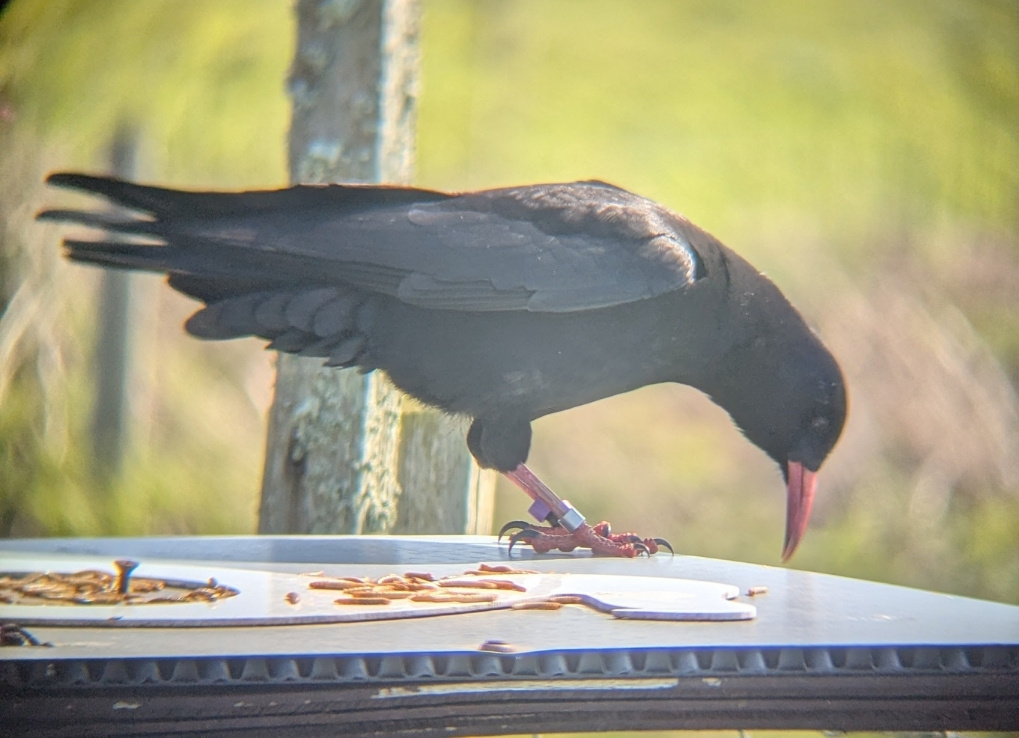
J'ai déjà parlé un peu des chocardes à bec rouge dans un blogue précédent, mais j'ai eu un aperçu de leur volière d'alimentation supplémentaire pendant mon développement de compétences. Les soigneurs se rendent quotidiennement au site de relâchement pour offrir aux chocardes de la nourriture supplémentaire, puis surveillent la volière pour voir qui se présente. Les oiseaux sont identifiés par leurs bagues de couleur sur les pattes, et j'ai acquis une nouvelle appréciation des compétences nécessaires pour suivre et identifier les oiseaux sauvages.
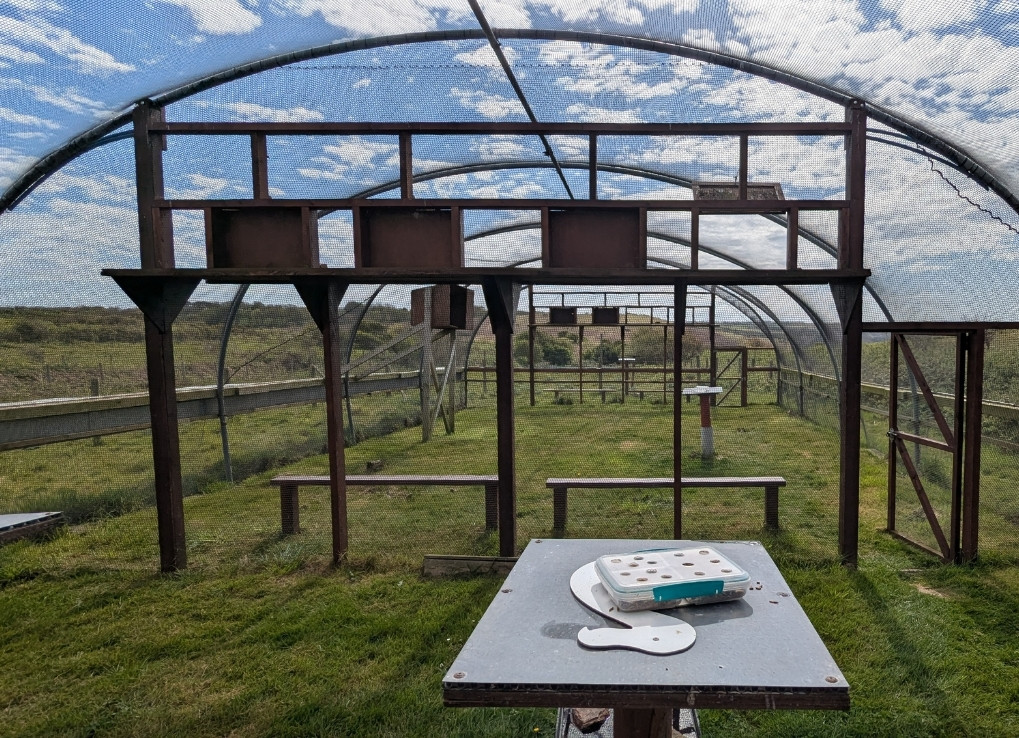
Un aperçu de la volière d'alimentation supplémentaire des chocardes à bec rouge. De la nourriture fraîche est fournie quotidiennement dans un plat pour permettre des comportements de recherche de nourriture naturels. Photo par J. Kissel.
Ce qui est vraiment incroyable avec le zoo de Jersey, c'est leur engagement et leur dévouement envers la conservation des espèces en danger. Même pour quelques jours seulement, j'ai eu la chance de travailler avec certains des oiseaux les plus menacés au monde, des espèces que je n'avais jamais vues ni même entendues mentionner avant d'arriver à Jersey. L'un de mes objectifs personnels de développement professionnel est d'apprendre les protocoles d'élevage et de reproduction dans autant de zoos et de programmes de conservation que possible, pour élargir mes connaissances et appliquer ce que j'ai appris à mes futurs travaux. Je suis reconnaissante pour l'expérience avec le département des oiseaux du zoo de Jersey et les soigneurs qui ont partagé leur temps et leurs connaissances. Si j'ai appris quelque chose, c'est à quel point il y a beaucoup à savoir sur les soins à apporter aux différents groupes d'oiseaux !
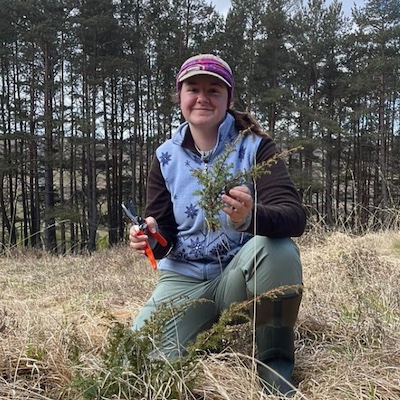
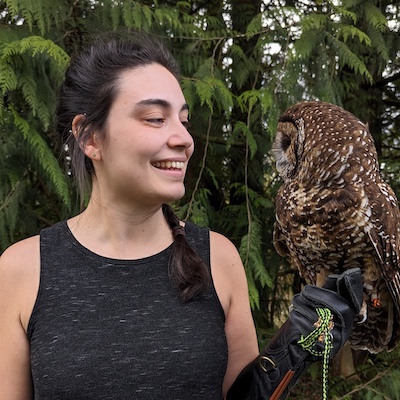
Jenna est gardienne de zoo et conservationniste de la faune passionnée par le rétablissement des espèces menacées. Elle a obtenu un baccalauréat spécialisé en biologie et conservation de la faune de l'Université de Guelph avant de se déplacer en Colombie-Britannique pour travailler avec les chouette tachetée du Nord. Elle a une formation dans le domaine de la conservation des rapaces, avec une spécialisation dans l'élevage et la reproduction en captivité. Elle a eu la chance de travailler avec de nombreuses espèces différentes et programmes de conservation au cours des 8 dernières années et a hâte de continuer ce travail avec les compétences qu'elle gagnera du Programme de Noé.
Nous avons besoin de votre aide