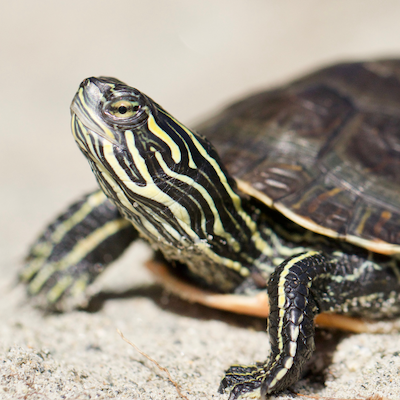
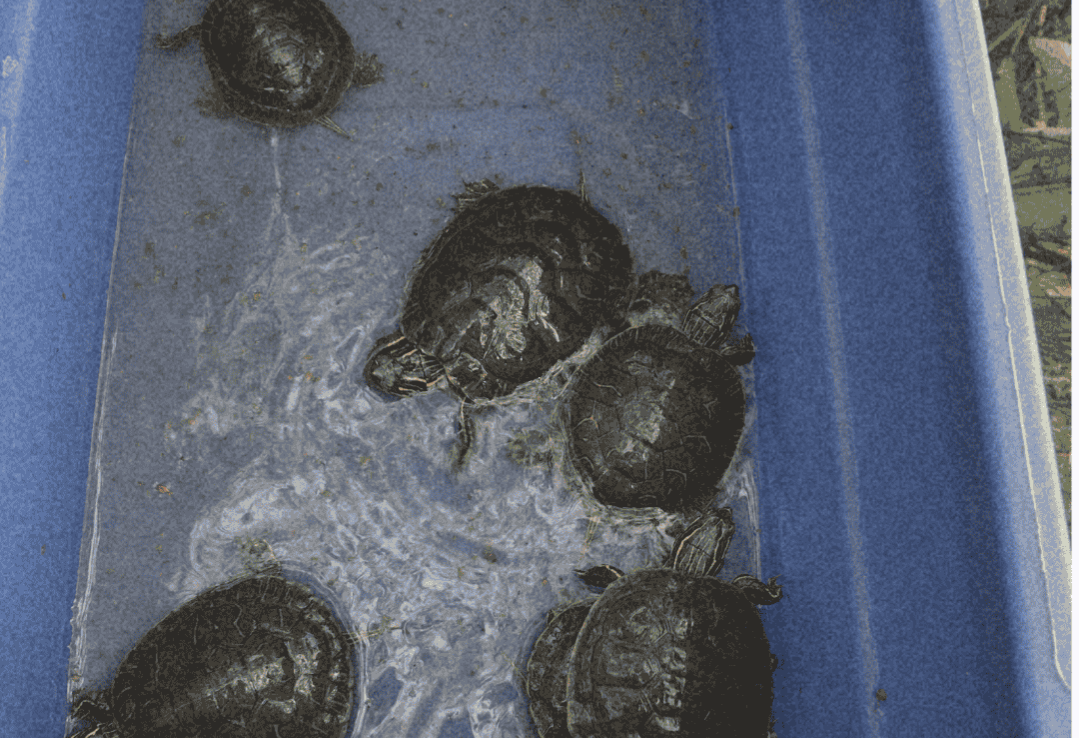
Who is lurking in the turtle tubs?
Publié lefévrier 24, 2021parB.C. Wetlands Species Recovery|Tortues d'eau douce, Actualités et événements, Tortue peinte de l'Ouest
What is the Western Painted Turtle Recovery Program? In the wetlands of B.C.’s Fraser Valley, western painted turtles face many challenges, especially as eggs and tiny hatchlings. With no shortage of hungry predators and no care from their parents once they’ve hatched, only a few young turtles survive to become adults. When you add human activity to the mix, the rate of survival can be so low that a population becomes unsustainable. Since 2012, we’ve been working to improve those odds. In addition to protecting nests, we collect eggs from vulnerable turtle nests, artificially incubate them and head-start new hatchlings before releasing them back into the wild.
The western painted turtle is BC’s only remaining native pond turtle, and the Pacific Coast population is dwindling. WPC’s recovery team, led by Andrea Gielens, protects at-risk nests and collects and incubates eggs to head start hatchlings for release into the wild. Recently, the team was surprised to find something more than just turtles in their specially-designed tanks!
We were quietly going about our daily business, cleaning turtle tanks, when all of a sudden…oh no! What is this?!? Leeches?! Where did they come from?! We have to get rid of them! Check the turtles! Scrub the tank! Get new filters! Clean out the sump pump!
Wait…calm down…look closer…closer still…quick to the microscope!
Turns out our little infiltrators weren’t leeches, ready to suck the blood out of our baby turtles, but lovely little planarians.
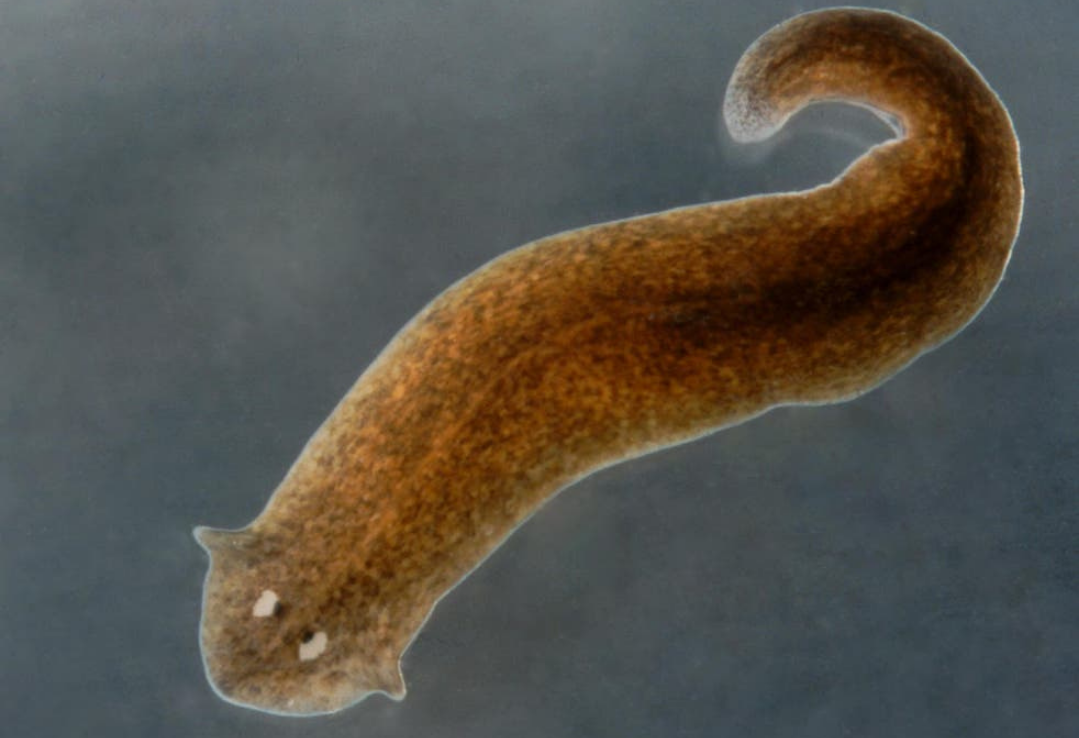
What the heck is a planarian?
You may have been introduced to planarians in a high school science class. Planarians are free living small flat worms with a characteristic arrow shaped head and two adorable “eyes”. These are actually eye-spots, photoreceptors that act like eyes that detect light and direct the animal away form light sources.
Planarians are used in molecular and genetic research, as well as studies of memory formation. They have amazing regenerative properties – if you cut up a planarian (ouch!) any piece can regenerate into a whole animal! They can also repair their own genes making themselves essentially immortal!
Planarians eat dead plant and animal material and as such pose no threat to our turtles. These little creatures just roam around, cleaning up the tank, and might even end up being a tasty turtle snack!
So, welcome tiny amazing guests. We think they are adorable – do you?
Andrea manages WPC’s captive breeding and release programs for the Oregon spotted frog and the coastal western painted turtle. Andrea has studied at-risk reptiles and amphibians in Canada and abroad, including a term at the Durrell Wildlife Conservation Trust in Jersey. Andrea also manages the Taylor’s checkerspot butterfly recovery program on Denman Island in BC.

Nous avons besoin de votre aide