Nothing Found
Sorry, the post you are looking for is not available. Maybe you want to perform a search?

For best search results, mind the following suggestions:

  • Always double check your spelling.
  • Try similar keywords, for example: tablet instead of laptop.
  • Try using more than one keyword.
Projet CFC

Faune des milieux humides de la vallée du Fraser

Statut de l'espèce : En voie de disparition au Canada
Lieu : British Columbia

Espèce

This project focuses on two flagship species for B.C. wetlands. The Grenouille maculée de l'Oregon is Canada’s most menacés frog, with fewer than 300 breeding individuals in the wild. Without intervention, it will almost certainly disappear. Meanwhile, the western painted turtle is B.C.’s only remaining native pond turtle, and the Pacific Coast population is dwindling.

What are the Fraser Valley Wetlands Programs?

Depuis 2010, le CFC élève et réintroduit des milliers de têtards et de jeunes grenouilles de l'espèce Rana pretiosa dans les zones humides de la vallée du Fraser en Colombie-Britannique. Il faut des années d'observation attentive, de collaboration, d'ingéniosité et parfois un peu de chance pour percer le code de reproduction d'espèces spécifiques. Pendant plusieurs années, nos progrès ont été très limités. Mais notre équipe a persévéré. Aujourd'hui, le CFC a mis au point des techniques d'élevage qui sont en train de renverser la tendance pour cette espèce.

Dans les milieux humides de la vallée du Fraser en Colombie-Britannique, les tortues peintes de l'Ouest font face à de nombreux défis, surtout à l'état d'œufs et de tout petits nouveau-nés. Avec une abondance de prédateurs affamés et aucun soin parental une fois éclos, seules quelques jeunes tortues survivent jusqu'à l'âge adulte. Lorsqu'on ajoute l'activité humaine à l'équation, le taux de survie peut être si faible qu'une population devient non viable. Depuis 2012, nous travaillons à améliorer ces chances. En plus de protéger les nids, nous collectons les œufs dans des nids de tortues vulnérables, nous les incubons artificiellement et effectuons le démarrage en tête des nouveau-nés avant de les remettre en liberté dans la nature.

Grenouille maculée de l'Oregon

But

Nous travaillons à prévenir la disparition de la grenouille tachetée de l'Oregon en renforçant les populations sauvages en Colombie-Britannique, et en étudiant l'espèce pour mieux comprendre ce qui affecte ces grenouilles.

OBJECTIFS

Dans 5 à 10 ans, nous prévoyons :

  • Relâcher 10 000 à 20 000 têtards par année au cours des cinq prochaines années
  • Engager davantage les communautés locales dans le programme de conservation et les remises en liberté de têtards

Tortue peinte de l'Ouest

But

Nous travaillons à prévenir la disparition de la tortue peinte de l'Ouest en soutenant et en renforçant les populations sauvages en Colombie-Britannique, et en poursuivant l'étude de l'espèce.

OBJECTIFS

Dans 5 à 10 ans, nous prévoyons :

  • Un suivi intensif des sites de remise en liberté dans la vallée du Fraser pour démontrer le succès du programme de réintroduction
  • L'expansion des activités de démarrage en tête et de remise en liberté de la vallée du Fraser vers la côte du Soleil et l'île Vancouver
  • Les communautés locales davantage engagées dans le programme de conservation et les remises en liberté de tortues

WHAT’S INVOLVED

The freshwater ecosystems of B.C.’s Lower Mainland have been severely impacted by pollution, runoff, climate change, invasive species and large numbers of predators such as raccoons. At least one species native to the area, the northern Pacific pond turtle, has already disappeared from Canada, while others have dropped to such low numbers that their only hope of surviving rests on direct, hands-on conservation.

The recovery plan for Oregon spotted frog calls for l'élevage de conservationd'aide au démarrage and release to re-establish viable populations in at least six sites. Wildlife Preservation Canada began coordinating these efforts in 2010, adding a l'élevage de conservation program to the d'aide au démarrage work taking place at the Greater Vancouver Zoo. This expanded on the breeding efforts underway at the Vancouver Aquarium.

Meanwhile, an ongoing mark-recapture program and extensive egg mass monitoring by our recovery partners is tracking the success of this initiative. Young are being used both to increase the size of existing wild populations and to establish new ones at appropriate sites where the species had been lost.

In 2012, we expanded our work to include the western painted turtle. In order to save this population, experts recommend protecting nests, artificially incubating eggs, headstarting young turtles for release and establishing a conservation breeding program.

Accordingly, we began salvaging western painted turtle eggs from nests at high risk — such as those on gravel boat ramps — and headstarting them. We also began collecting adults found living alone or in such small groups that effective breeding was unlikely. These turtles form the nucleus of a conservation breeding population. We headstart hatchlings for at least a year, until they are too large to be eaten by their major predators: bullfrogs that have been introduced to British Columbia. We also take in sick and injured western painted turtles for rehabilitation and release.

As of fall 2019, we have reared and released over 600 Oregon spotted frogs and 600 western painted turtles. Initial results suggest these individuals are thriving in the wild.

Surveys continually turn up an unexpectedly large number of healthy young turtles that we released the previous years. We plan to expand our reach and rear turtles from populations further north up the Sunshine Coast. We have seen the positive impacts of releasing Oregon spotted frogs to historic populations, with long term data reflecting that our releases have helped stabilize these populations. We continue to work with our partners to research and refine methods for rearing both species to produce the largest number of healthy individuals and make the greatest conservation impact.

In 2019 we were also able to monitor wild populations full time during nesting. This year we observed a record number of nests, 53 in total!

Ramping up our conservation breeding program for each species will allow us to release more frogs and turtles, significantly increasing wild populations and restoring them to historic areas. In the coming years, we also hope to use the techniques from our western painted turtle program to reintroduce the Pacific pond turtle to Canada.

Nous avons besoin de votre aide

Faites un don pour sauver les espèces menacées
like the Fraser Valley Wetlands Wildlife

Personnel du projet

Andrea Gielens

Andrea Gielens

Biologiste principal

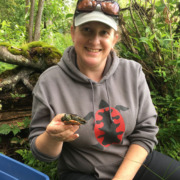
Andrea manages our captive breeding and release programs for the Oregon spotted frog and the coastal western painted turtle. Andrea has studied at-risk reptiles and amphibians in Canada and abroad, including a term at the Durrell Wildlife Conservation Trust in Jersey. Andrea also manages the Taylor’s checkerspot butterfly recovery program in BC.

Merci à ceux qui rendent ce travail possible