Ce qu'il y a à l'intérieur : mesurer la condition corporelle des amphibiens
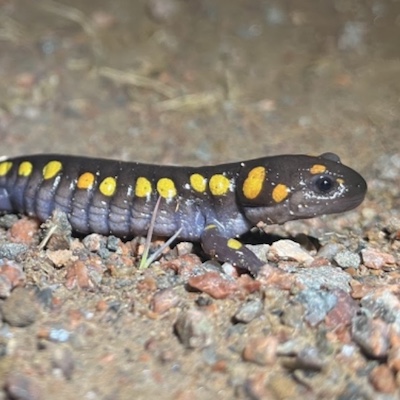
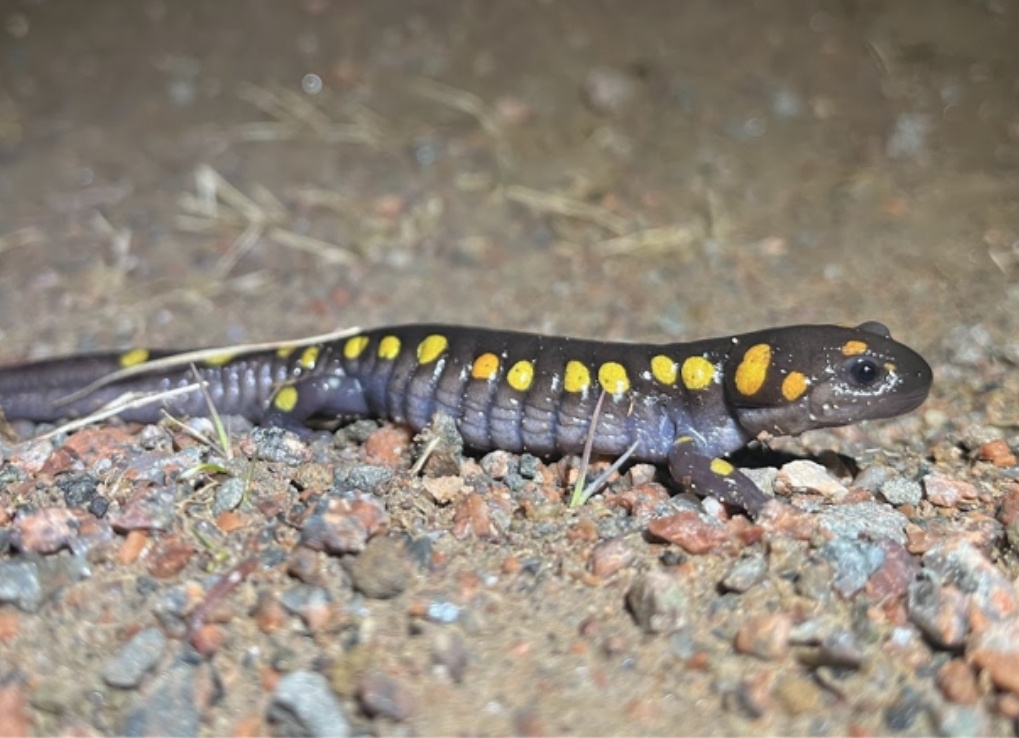
Publié leaoût 25, 2026parTaylor Gilbert| Photo: spotted salamander by J. Riley.
Qu'est-ce que l'Initiative pour les reptiles et les amphibiens? Au Canada, aucun groupe de faune ne court un risque d'extinction plus grave que les reptiles et les amphibiens. Selon le Comité sur la situation des espèces en péril au Canada (COSEPAC), plus de 40 espèces d'amphibiens et de reptiles sont actuellement menacées ou en danger. Plus d'un tiers de ces espèces ont besoin d'une intervention directe pour survivre. Notre programme national des reptiles et des amphibiens développe et promeut les meilleures pratiques pour quatre techniques clés de conservation : la translocation, l'élevage préalable à la libération, l'élevage de conservation et les interventions in situ. Nous amplifions l'impact des groupes de partout sur le continent qui travaillent à la protection de ces espèces très menacées.
La condition corporelle est une mesure que les écologistes et les biologistes de la conservation utilisent souvent pour évaluer la quantité de réserves d'énergie qu'un animal possède. Un individu en bonne condition corporelle est considéré comme ayant plus de réserves d'énergie, comme la graisse, qu'un individu en moins bonne condition corporelle. Cette mesure — la condition corporelle — est précieuse car elle influence directement la survie et le potentiel de reproduction d'un animal. Il a également été établi qu'elle est liée à de nombreux aspects de la biologie et de l'écologie animales, notamment le succès de la recherche de nourriture, les comportements avantageux, une meilleure fonction immunitaire et la capacité à persister dans des environnements physiologiquement difficiles. Ainsi, la connaissance de la condition corporelle et de son impact sur l'aptitude d'une espèce peut aider les efforts de conservation actuels et futurs.
Il existe quelques méthodes courantes pour étudier la condition corporelle, chacune avec ses propres avantages et inconvénients. Parfois, nous utilisons des mesures de la longueur corporelle totale et du poids d'un animal et comparons la relation entre ces mesures à celles d'autres individus de la population pour approximer la quantité de réserves de graisse qu'ils ont (c'est-à-dire les indices de condition corporelle). Pourtant, l'utilisation et la pertinence de cette méthode pour les amphibiens est discutable, car leur poids peut changer considérablement sur de courtes périodes selon leur niveau d'hydratation. Cela signifie que les indices de condition corporelle basés sur le poids d'un amphibien sont souvent une façon inexacte de quantifier les réserves d'énergie. Une alternative est la mesure de la composition corporelle, qui implique de mesurer la quantité de graisse, de tissu musculaire maigre et d'eau qui composent le corps d'un animal. C'est une mesure beaucoup plus directe des réserves de graisse d'un individu. Traditionnellement, cela a nécessité l'euthanasie de l'animal, puis une série de méthodes chimiques sont utilisées pour mesurer les différents tissus ; un processus connu sous le nom d'analyse chimique de carcasse (ACC). Cependant, il existe un nouveau type de technologie non létale utilisée pour quantifier les réserves d'énergie d'un animal sans ces problèmes, appelée Résonance magnétique quantitative (RMQ). La RMQ fonctionne sur le même principe de base qu'une machine IRM, mais au lieu de générer une image — comme ce que vous verriez dans un hôpital — cette machine fournit simplement des lectures sur la quantité de graisse, de masse musculaire maigre et d'eau présentes dans l'individu. Mais une limitation de cette méthode est que les machines RMQ ont été initialement construites pour les mammifères et la recherche médicale.
Pourtant, cette méthode est de plus en plus appliquée en écologie et en conservation de la faune. Dans cette étude, nous testons si l'utilisation d'une machine RMQ, une façon non invasive de mesurer la composition corporelle, est une méthode viable pour les amphibiens. Plus précisément, nous avons étudié les salamandres maculée (Ambystoma maculatum et A. laterale) et les crapauds d'Amérique (Anaxyrus americanus). Avant d'être utilisée pour étudier de nouveaux taxons, la méthode RMQ nécessite une validation et potentiellement un étalonnage par rapport aux mesures traditionnelles de quantification de la composition corporelle, comme l'ACC. Donc, dans cette étude, après avoir scanné chaque spécimen d'amphibien dans la machine RMQ (ces spécimens ont été donnés par d'autres études à travers le Canada pour minimiser notre impact), nous avons également complété l'ACC afin de pouvoir comparer les mesures de masse grasse, maigre et en eau entre les méthodes nouvelle et traditionnelle. À partir de cette comparaison, nous pouvons alors évaluer si cette nouvelle méthode mesure avec précision la composition corporelle des amphibiens.
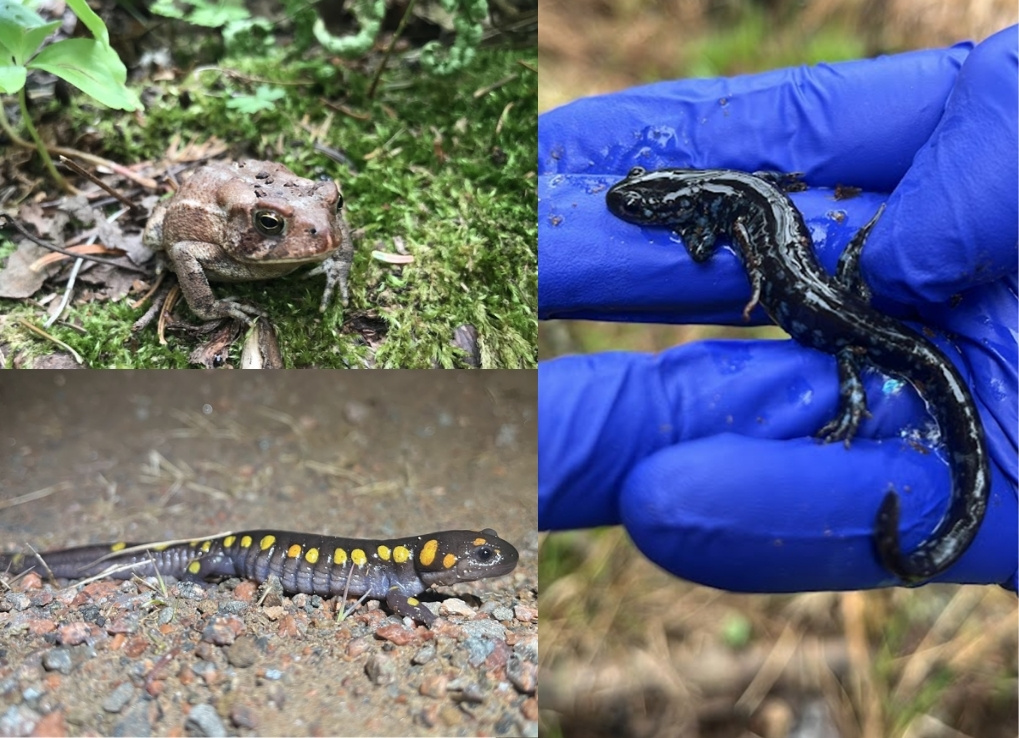
En haut à gauche, un crapaud d'Amérique (Anaxyrus americanus), en bas à gauche, une salamandre maculée (Ambystoma maculatum), et à droite, une salamandre à points bleus (Ambystoma laterale). Photos prises par J. Riley.
L'ACC est considérée comme l'approche standard pour déterminer quantitativement la composition corporelle. Cette méthode implique de dessécher un spécimen décédé dans un four de séchage pour déterminer la masse en eau, puis d'extraire la graisse du spécimen à l'aide d'un appareil Soxhlet et d'éther de pétrole, puis d'incinérer le spécimen, ce qui ne laisse que le contenu minéral. Les poids après chaque étape donnent des mesures de la masse en eau, en graisse et en muscle maigre. Bien que l'ACC ait été utilisée pour étudier la composition corporelle depuis de nombreuses années, elle présente plusieurs inconvénients. L'un des plus importants est qu'elle nécessite l'euthanasie des animaux. Cela limite son application sur le plan éthique et empêche l'étude des animaux en péril. Cela empêche également les chercheurs d'effectuer des études à long terme sur les mêmes individus au fil du temps. Enfin, cette méthode est limitée aux études en laboratoire, prend du temps et présente plus de risques d'erreur humaine pouvant affecter la précision des données.
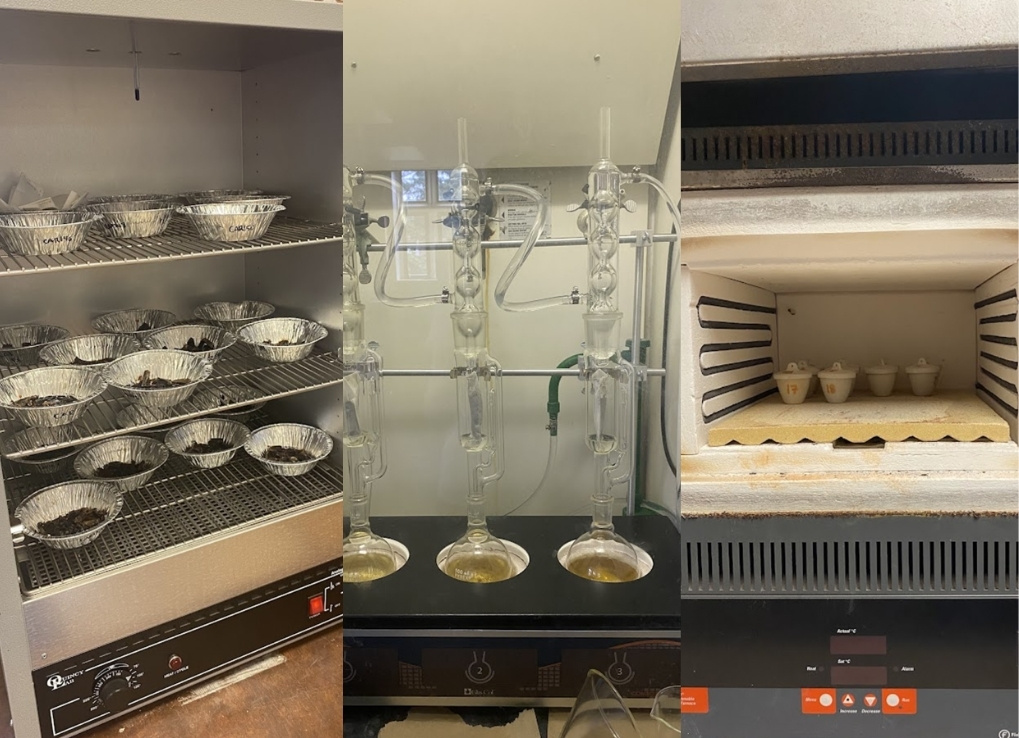
Un four de séchage, un appareil Soxhlet et un four à moufle (de gauche à droite) qui sont toutes des étapes de l'analyse chimique de carcasse (ACC) pour mesurer la composition corporelle des animaux. Photos prises par T. Gilbert.
La méthode RMQ, cependant, n'a pas les mêmes limitations que l'ACC. Cette machine mesure la rotation des protons d'hydrogène, qui diffère entre les tissus corporels. Ce processus est appelé relaxométrie par résonance nucléaire, et en l'utilisant, une machine RMQ peut quantifier la masse grasse, la masse musculaire maigre et la masse en eau des animaux. Cette méthode a été créée pour mesurer la composition corporelle des rats et des souris dans la recherche médicale, mais a été validée pour une utilisation avec la faune, notamment les chauves-souris, les oiseaux, les lézards et les serpents. Une fois qu'une machine RMQ est validée pour un taxon, elle est préférable pour les études futures parce qu'elle est non létale. On place simplement l'animal à l'intérieur de l'un des tubes en plastique transparent de différentes tailles, on place le tube à l'intérieur de la machine RMQ, et on lance le processus de numérisation qui prend environ une minute. De plus, la machine RMQ donne des mesures exactes des types de tissus, est facile à utiliser, nécessite peu de formation, et le processus présente moins de risques d'erreur humaine. La machine RMQ est également portable et peut donc être roulée dans un laboratoire mobile, permettant l'utilisation de cette machine sur le terrain, ce qui minimise le stress des animaux et représente un avantage majeur pour les chercheurs qui travaillent avec des populations sauvages.
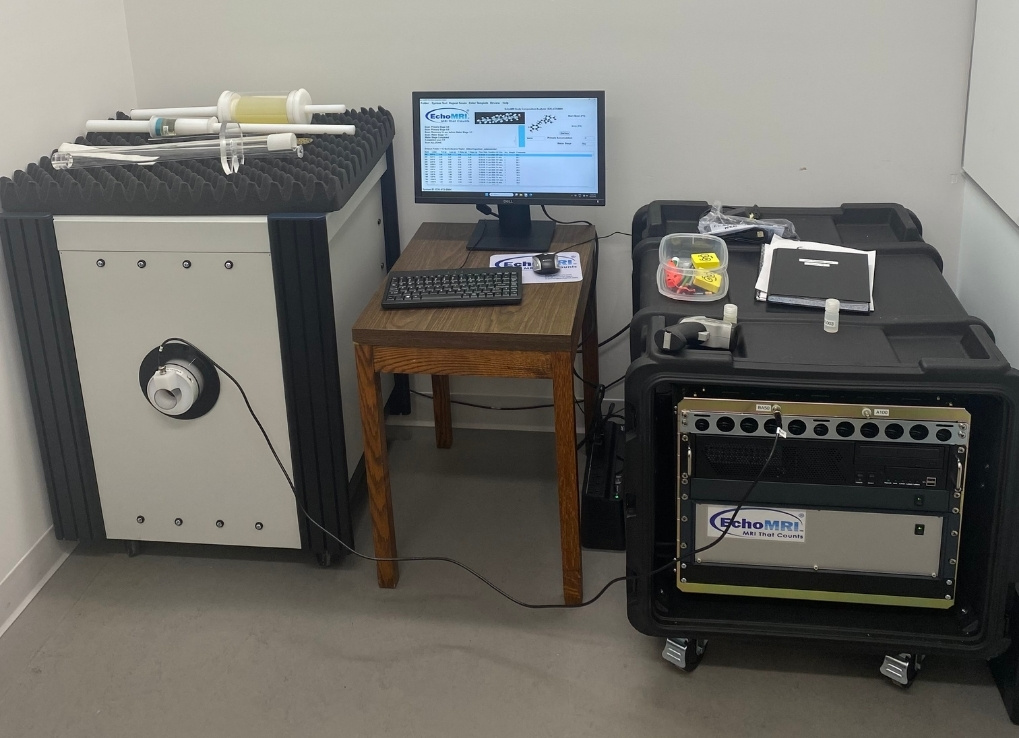
La machine de résonance magnétique quantitative (RMQ) dans les laboratoires RBG. Photo prise par T. Gilbert.
Un facteur supplémentaire à considérer lors de la mesure de la composition corporelle d'un ectotherme (des animaux comme les reptiles et les amphibiens qui dépendent de sources externes de chaleur pour rester au chaud) à l'aide de la RMQ est la température. En effet, la machine RMQ suppose que la température corporelle de l'animal est celle d'un mammifère. Donc, dans cette étude, nous avons également mesuré les amphibiens à quatre températures corporelles (~3, 10, 20 et 30°C). Nous avons pu compléter cela en scellant les spécimens sous vide, en les plaçant sur de la glace, puis en ajustant leur température à l'aide d'un bain d'eau. Ainsi, nous pourrons fournir des meilleures pratiques méthodologiques pour l'utilisation de la RMQ afin de mesurer la composition corporelle des amphibiens en laboratoire et sur le terrain, couvrant une gamme de températures que l'on pourrait attendre des amphibiens sauvages.
Dans l'ensemble, la RMQ est une nouvelle technologie passionnante qui offre aux biologistes de la faune une meilleure façon d'étudier la condition/composition corporelle des animaux de façon plus éthique tant en laboratoire que sur le terrain. Comme la composition corporelle est étroitement liée à l'aptitude des animaux, il est bénéfique pour les chercheurs de disposer d'une technologie simple, portable et non invasive pour étudier l'énergétique animale à l'avenir. Nous espérons que cette étude, ainsi que la machine RMQ bientôt étalonnée, pourra contribuer à faire avancer la recherche et la conservation des amphibiens.
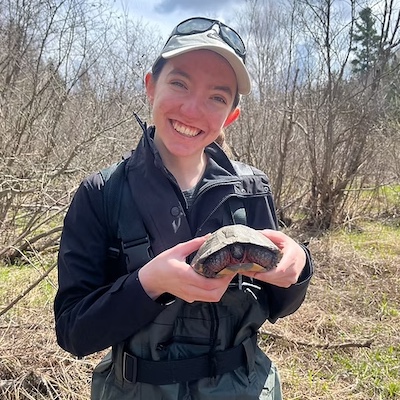
Taylor a toujours eu une passion pour la science. Elle a été fascinée par les expériences et la découverte du fonctionnement des choses depuis son jeune âge. À mesure que ses intérêts se sont développés, elle s'est particulièrement intéressée aux systèmes vivants et à la biologie des animaux. Cet été, Taylor travaille à l'Université Mount Allison sur un projet qui applique une méthode innovante pour mesurer la composition corporelle des animaux à de nouvelles espèces. Plus précisément, elle valide la résonance magnétique quantitative (RMQ) en comparant ses résultats à des méthodes plus traditionnelles pour une variété d'amphibiens et de reptiles canadiens. En dehors du milieu académique et de la recherche, elle aime regarder la Formule 1, lire et jouer au hockey.
Nous avons besoin de votre aide