Devenir biologiste de la conservation
Publié le5 août 2026parGrace Tiessen| Photo : B. Smith (administratrice par intérim des règlements et des communications, Office de protection de la nature de la région de Sault-Sainte-Marie)
Qu'est-ce que le Programme de rétablissement des bourdons? Depuis les années 1990, le nombre de bourdons a chuté de façon spectaculaire, ce qui représente un désastre écologique. Ici, à Conservation de la faune au Canada, nous travaillons à prévenir la disparition des espèces de bourdons en péril en les surveillant à l'état sauvage, en les élevant pour les relâcher dans notre laboratoire de conservation en Ontario, et en étudiant leurs excréments pour y trouver des parasites ! Nous organisons même des événements spéciaux de science citoyenne à travers la province pour suivre la taille des populations, localiser les populations en déclin et offrir des programmes de formation pratiques dans le but d'élargir nos efforts à travers le Canada. Nous sommes la seule organisation au pays à travailler à rétablir les populations de bourdons en péril grâce à l'élevage de conservation.
L'étudiante à la maîtrise en biologie de la faune de l'Université de Guelph, Grace Tiessen, a passé l'été avec l'équipe de rétablissement des bourdons de Conservation de la faune au Canada, dans le cadre de la formation pratique et du développement des compétences du programme. CFC offre aux biologistes canadiens des occasions d'approfondir leur expertise, contribuant ainsi à renforcer la capacité de conservation du pays, et est ravie de fournir un espace pour ces étudiants.
La majeure partie de mon expérience professionnelle en conservation s'est déroulée aux côtés de Conservation de la faune au Canada. J'ai travaillé avec des couleuvrese à petite tête dans le cadre de l'Équipe de rétablissement des reptiles de la prairie Ojibway en 2023, et avec des hespéries tachetées dans le cadre de l'Équipe de rétablissement des papillons en péril de l'Ontario en 2024. Maintenant, je travaille comme technicienne en conservation des bourdons à Sudbury dans le cadre de l'Initiative pour les pollinisateurs indigènes de CFC. Mais cette fois-ci, mon travail contribue également à la complétion de mon programme de maîtrise en biologie de la faune à l'Université de Guelph.
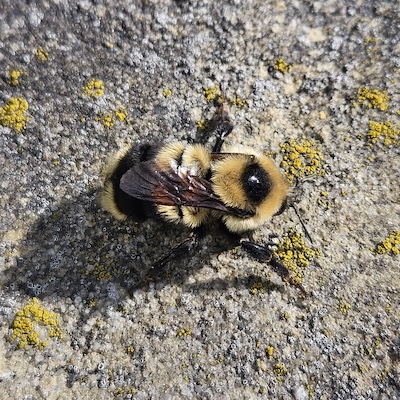
Travailler avec des pollinisateurs, c'est formidable, et passer mon été à l'extérieur à chercher des abeilles dans le cadre de ma maîtrise, c'est plutôt une belle façon de passer l'été ! Une journée typique sur le terrain quand on fait des relevés de bourdons consiste à se promener et à identifier des fleurs, en espérant attraper une abeille sur l'une d'elles. On tourne un peu en rond. Les abeilles que nous espérons attraper à Sudbury sont des reines du bourdon terricolaBourdon terricola). Cette espèce est en fort déclin en Ontario — particulièrement dans le sud — alors quand nous en trouvons, elles sont envoyées à notre laboratoire pour des études en captivité et pour la reproduction, afin d'aider à restaurer leurs populations sauvages. Toutes les autres espèces de bourdons que nous attrapons sont relâchées une fois nos relevés terminés. Parfois, elles aiment traîner un peu avec nous avant de s'envoler, mais nous essayons toujours de nous assurer qu'elles rentrent saines et sauves.
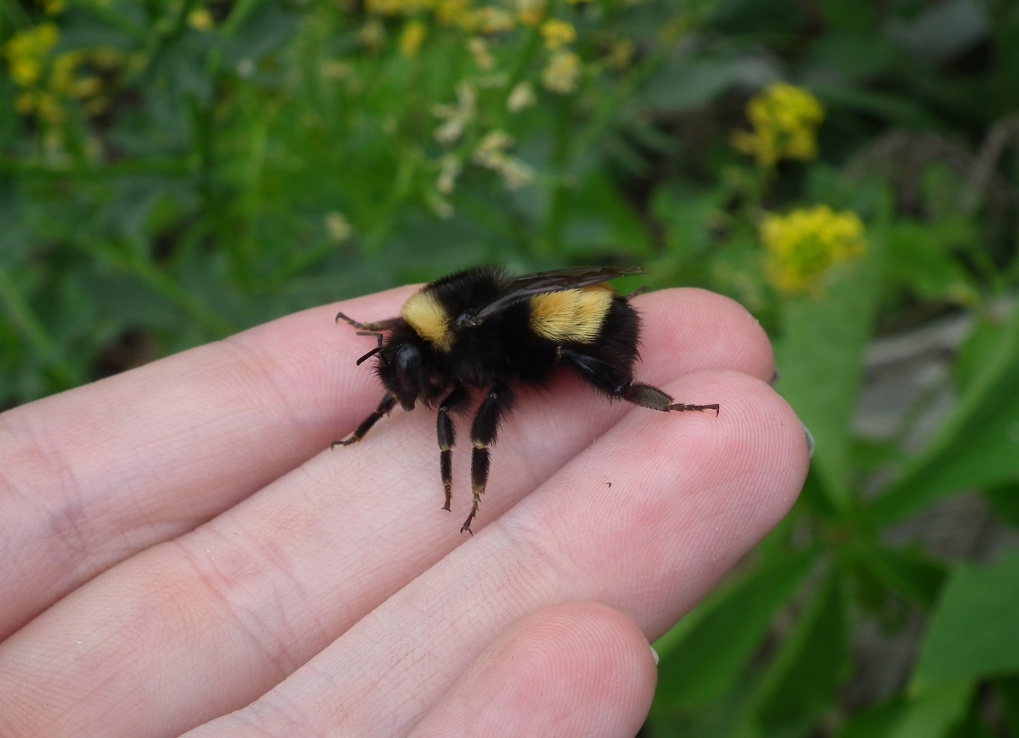
Un bourdon terricola se reposant sur la main de Grace. Photo : G. Tiessen.
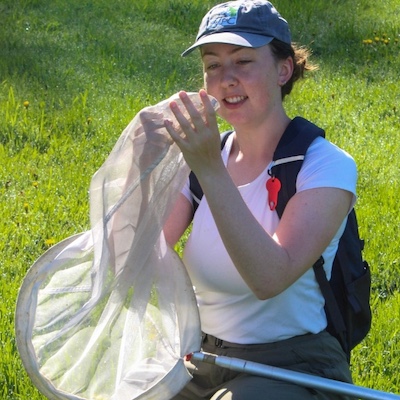
En tant que chasseuse de papillons expérimentée, je pensais que j'allais automatiquement être une pro pour attraper des bourdons dans mon filet, mais ce n'était pas aussi facile que je le pensais. Malgré leur apparence mignonne et maladroite, les bourdons sont rapides, agiles, et ils semblent toujours savoir ce que vous pensez. C'est du moins ce que ma coéquipière Mariel, la biologiste régionale de terrain pour l'équipe de Sudbury, et moi avons vécu. J'ai perdu le compte du nombre de fois où Mariel et moi nous sommes envoyé des messages pour dire qu'il n'y avait pas d'abeilles sur un site, et moins de dix secondes après avoir appuyé sur envoyer, un bourdon apparaissait juste devant notre visage. Ces doux géants peuvent aussi facilement échapper à la portée de nos filets télescopiques, butinant sur la fleur la plus haute d'un pommier ou volant en cercles serrés autour de nos têtes, comme s'ils nous narguaient.
Aussi amusantes que soient ces expériences, elles mettent aussi en lumière l'un des plus grands défis de la conservation : trouver des espèces rares..
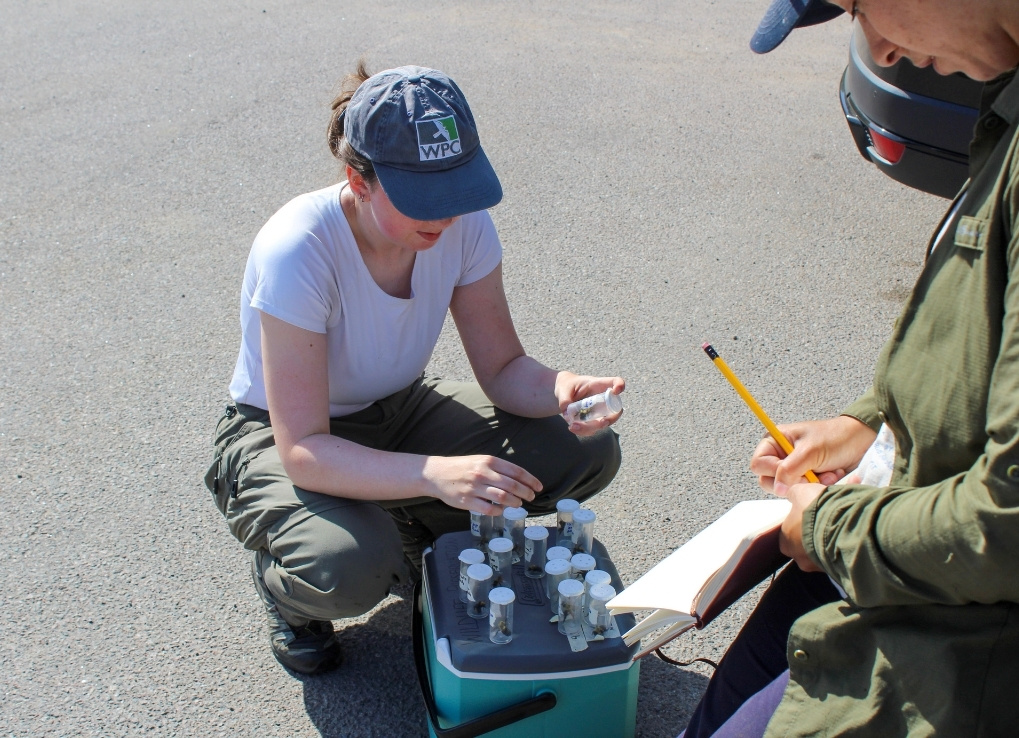
La surveillance des populations de bourdons, c'est bien plus qu'attraper des abeilles. En tant que surveilleurs, nous devons suivre des protocoles standardisés pour nous assurer que les données que nous recueillons sur différents sites et au fil des années peuvent être comparées avec précision. Les conditions météorologiques, l'heure de la journée, l'abondance des ressources florales et même la vitesse du vent peuvent tous influencer l'activité des abeilles, ce qui signifie qu'une espèce peut être présente sur un site mais passer complètement inaperçue lors d'un relevé. L'apprentissage de ces protocoles m'a montré à quel point la cohérence et l'attention aux détails sont importantes en biologie de la faune. Chaque abeille que nous identifions, chaque relevé que nous complétons et chaque point de données que nous enregistrons contribuent à un effort plus large pour comprendre les tendances des populations et orienter les actions de conservation pour les espèces en péril comme le bourdon terricola. Bien que passer la journée à chercher des pollinisateurs puisse sembler simple, une surveillance efficace exige une observation minutieuse, une identification précise des espèces et des méthodes rigoureuses de collecte de données.
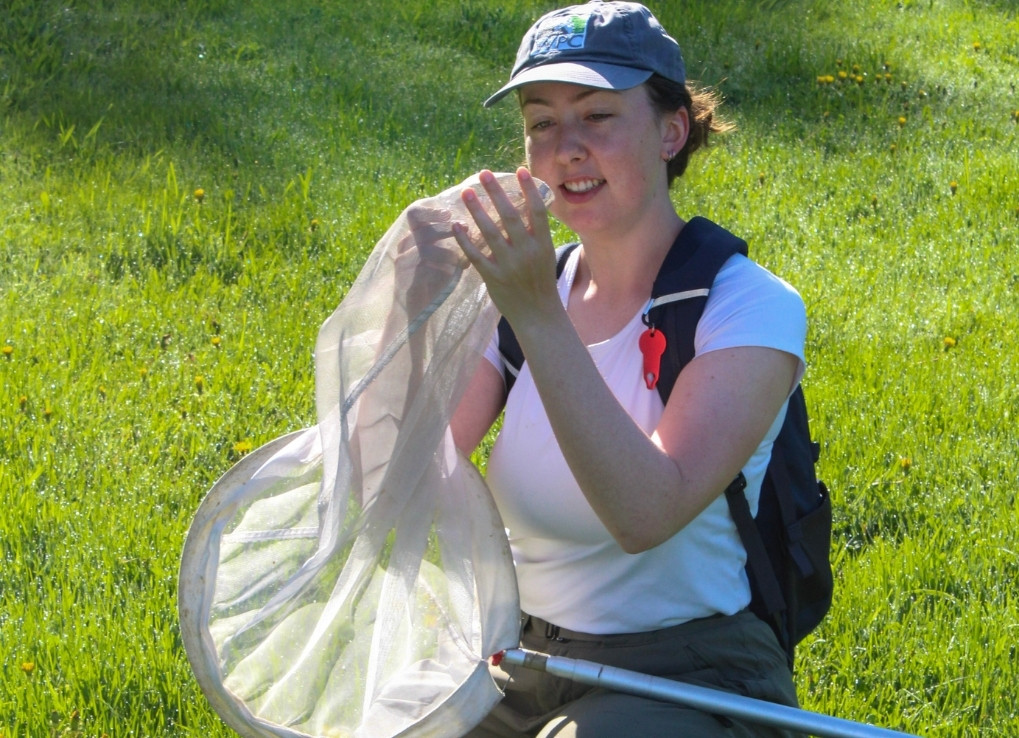
Transfert d'un bourdon du filet de Grace dans un flacon sur le terrain. Photo : B. Smith (administratrice par intérim des règlements et des communications, Office de protection de la nature de la région de Sault-Sainte-Marie).
L'une des compétences les plus gratifiantes que j'ai développées dans ce travail a été d'apprendre à identifier les espèces de bourdons sur le terrain. Beaucoup de gens pensent que tous les bourdons se ressemblent, mais le sud et le centre de l'Ontario abritent 16 espèces différentes, toutes avec de subtiles différences dans les motifs de couleur et la morphologie. Distinguer ces espèces nécessite souvent une attention particulière aux détails, et le développement de ces compétences a amélioré ma confiance en tant que biologiste de terrain, même si je me trompe encore parfois. C'est aussi très gratifiant de pouvoir regarder un animal que je n'aurais pas reconnu il y a deux mois et de connaître son nom.
Ce travail a été une formidable conclusion à mon programme de maîtrise, et m'a rappelé pourquoi j'ai choisi une carrière en conservation de la faune. Même si les journées peuvent être longues et chaudes, et que trouver une espèce cible peut parfois ressembler à chercher une aiguille dans une botte de foin, chaque relevé contribue à des informations précieuses qui aident à orienter les décisions de conservation. Grâce à cette expérience, j'ai pu mettre en pratique ce que j'ai appris pendant ma maîtrise et devenir une meilleure biologiste de la conservation grâce aux compétences acquises avec CFC. J'ai renforcé mes compétences en relevés de terrain, en identification des espèces et en collecte de données, tout en acquérant une appréciation bien plus profonde des défis liés à la protection des espèces en péril. Plus important encore, j'ai appris que la conservation réussie repose sur la patience, la persévérance et la volonté de continuer à chercher, même quand les abeilles semblent déterminées à rester hors de portée de votre filet.
Grace a rejoint CFC pour la première fois en 2023 en tant que stagiaire technicienne de terrain en rétablissement des reptiles au sein de l'équipe OPPREC. En 2024, elle a travaillé comme membre d'équipe pour le Programme de réintroduction de l'hespérie tachetée à Pinery, et est ravie de revenir cette année en tant que technicienne en conservation des bourdons dans le cadre de l'Initiative pour les pollinisateurs indigènes. Grace a étudié les sciences biologiques à l'Université de Windsor et complète actuellement sa maîtrise en biologie de la faune à l'Université de Guelph. Elle est impatiente de continuer à en apprendre davantage sur le monde naturel et de contribuer à des travaux de conservation concrets.
Nous avons besoin de votre aide