Cours accéléré : la surveillance des pie-grièches
Publié le6 août 2026parChristopher BarkwellPhoto: C. Barkwell
Qu'est-ce que le Programme de rétablissement de la pie-grièche migratrice de l'Est? Après une chute précipitée de la population sauvage de pie-grièche migratrice de l'Est dans les années 1990, Environnement Canada a invité Conservation de la faune au Canada à se joindre à l'effort de rétablissement multi-partenaires en 2001. Depuis, la taille de la population sauvage a fluctué. Des études ont montré que bien que l'effort de rétablissement ait empêché l'espèce de disparaître du Canada, plus de travail est nécessaire pour identifier et aborder les causes du déclin de l'espèce. CFC travaille pour empêcher la pie-grièche migratrice de l'Est de disparaître en renforçant la population sauvage en Ontario, et en étudiant l'espèce pour en apprendre davantage sur les menaces qu'elle fait face.
L'étudiant à la maîtrise en biologie de la faune de l'Université de Guelph, Chris Barkwell, a passé l'été avec l'équipe de rétablissement de la pie-grièche migratrice de l'Est de Conservation de la faune au Canada, dans le cadre de la formation pratique et du développement des compétences du programme. CFC offre aux biologistes canadiens des occasions d'approfondir leur expertise, contribuant ainsi à renforcer la capacité de conservation du pays, et est ravie de fournir un espace pour ces étudiants.
Une partie du Programme de rétablissement de la pie-grièche migratrice de l'Est consiste à effectuer des relevés et à surveiller les pie-grièches sauvages tout au long de la saison de reproduction. Voici à quoi ressemble une journée typique et pourquoi c'est important !
Conseils de sécurité sur le terrain
Avant de commencer tout relevé de pie-grièches, rester en sécurité sur le terrain est primordial. Une journée de relevé typique est longue et se passe à l'extérieur, alors venez bien préparé :
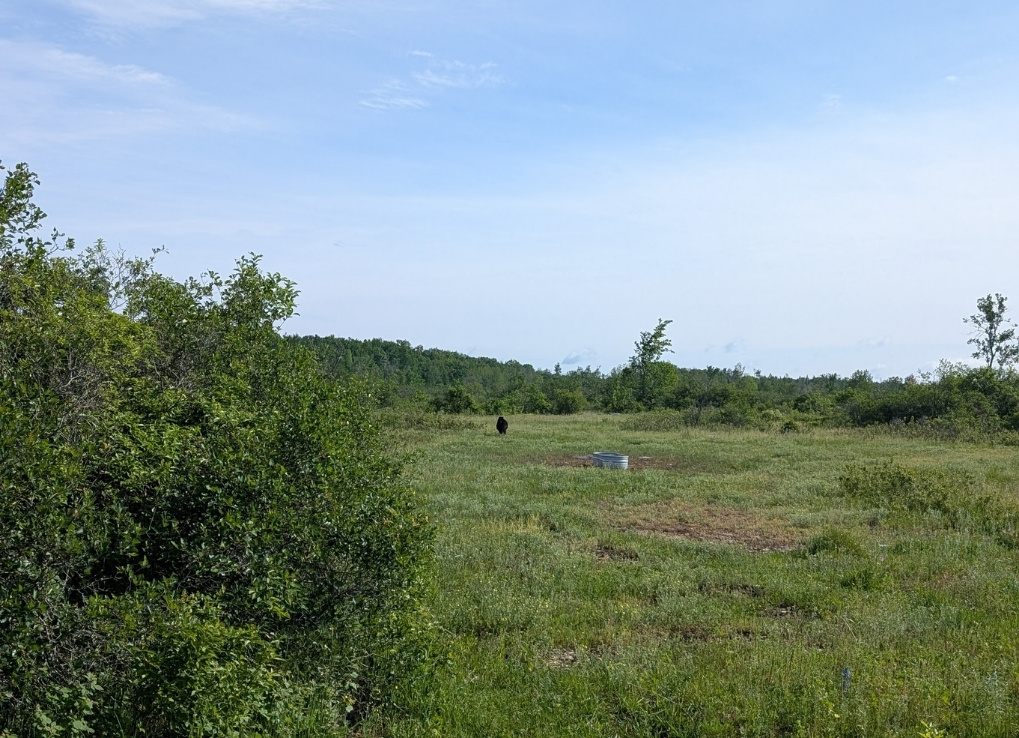
Un ours qui s'enfuit après m'avoir aperçu sur le terrain. Apprenez comment agir intelligemment en présence d'ours avant de vous aventurer sur le terrain. Photo par C. Barkwell.
Qu'est-ce que le relevé ?
Les relevés commencent début mai, lorsque les pie-grièches reviennent au Canada pour l'été. Faire un « relevé », c'est essentiellement se rendre dans l'habitat des pie-grièches et chercher ces oiseaux. CFC effectue des relevés dans deux zones principales : Carden Alvar et Napanee, les deux derniers endroits au Canada où les pie-grièches migratrices de l'Est reviennent régulièrement pour se reproduire. CFC a cartographié des parcelles d'habitat approprié dans les deux régions, principalement des terres de conservation et des pâturages à bétail.
Les pie-grièches sont difficiles quant à l'endroit où elles vivent. Elles ont besoin de :
D'autres caractéristiques utiles incluent une herbe courte (pour que les proies ne puissent pas se cacher facilement) et l'éloignement des perturbations humaines comme les routes passantes, car les pie-grièches peuvent être craintives face à la présence humaine.
De plus, lors des relevés, l'habitat est évalué pour déterminer s'il est toujours approprié, car l'habitat change avec le temps. Par exemple, si des arbustes commencent à envahir un champ ouvert, les pie-grièches pourraient ne plus l'utiliser.
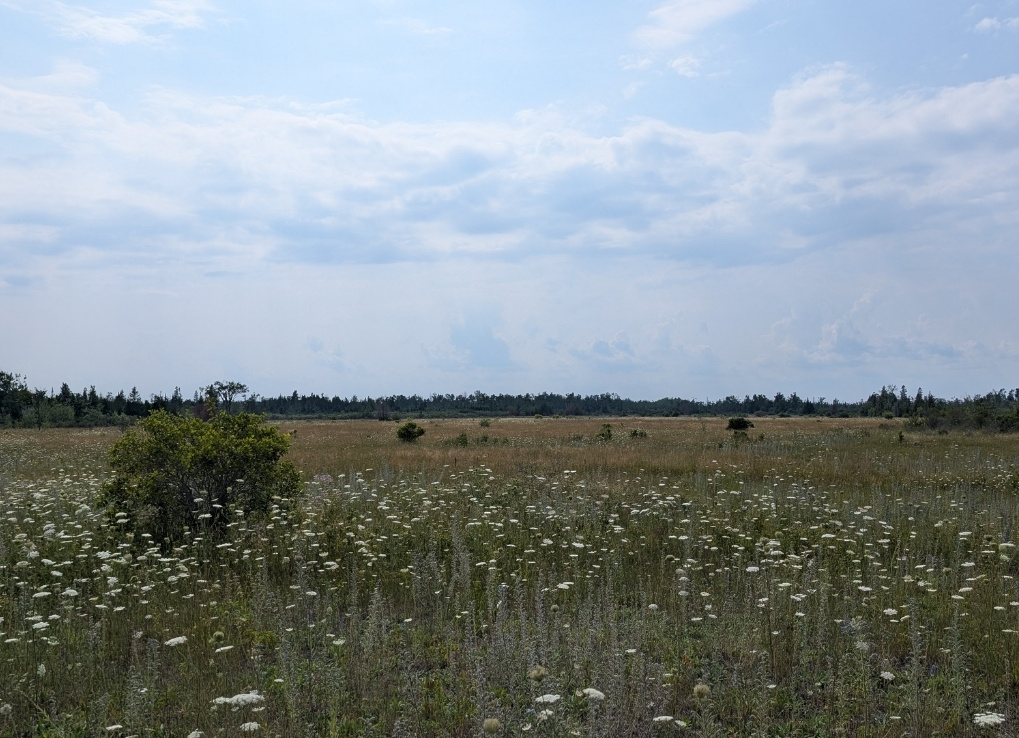
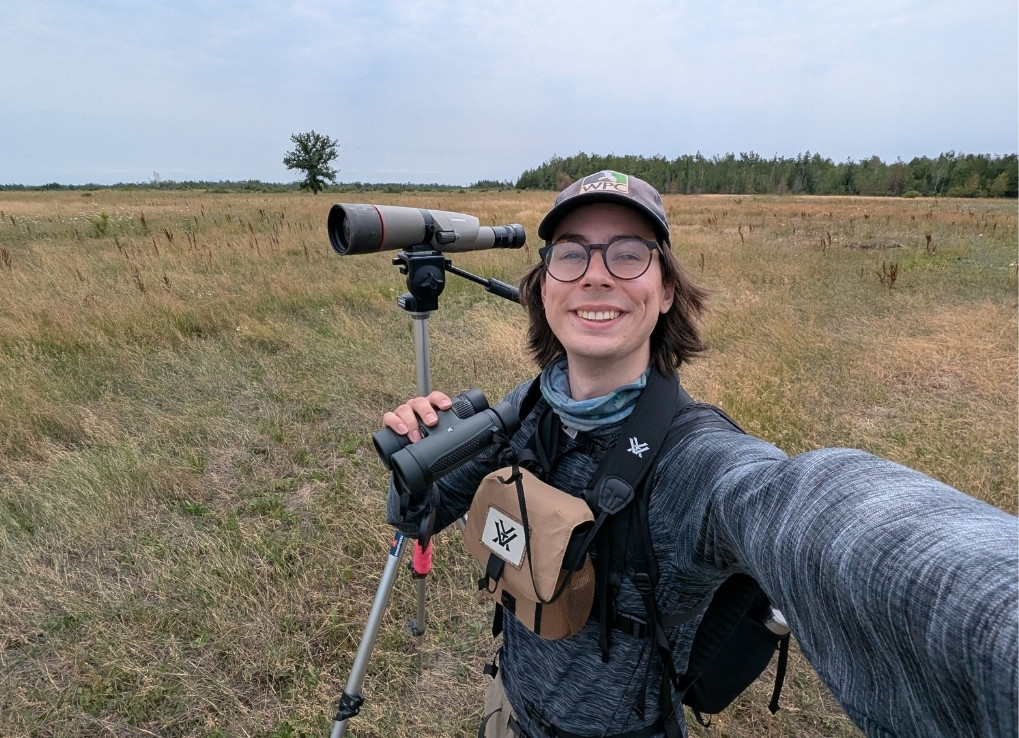
Des terres de conservation dans la région de Carden Alvar. C'est un excellent exemple d'habitat que les pie-grièches apprécieraient. Photo de C. Barkwell.
Comment trouve-t-on une pie-grièche ?
Trouver une pie-grièche, c'est une question de compétence, de patience et d'un peu de chance.
Confirmer qu'on a trouvé une pie-grièche !
Une fois qu'on aperçoit un oiseau qui pourrait être une pie-grièche, sortez vos jumelles ou votre lunette, les pie-grièches ne nous laissent généralement pas nous approcher. Rappellez-vous qu'elles n'aiment pas la présence humaine !
Cherchez :
Pour en savoir plus, consultez le blogue de CFC sur Comment identifier une pie-grièche migratrice. Et si vous trouvez une pie-grièche, gardez vos distances, restez hors de vue (derrière un buisson) et restez silencieux. Les pie-grièches sont sensibles et nous voulons qu'elles se sentent en sécurité !
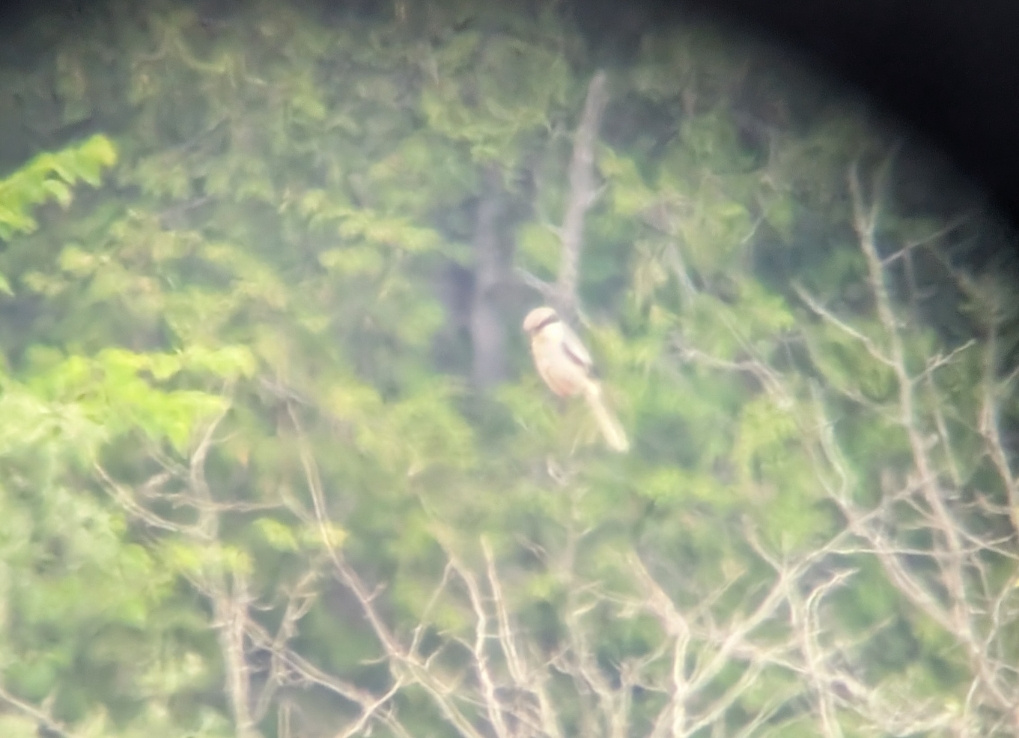
Une pie-grièche migratrice perchée au loin. Vous n'aurez pas toujours une bonne vue de la pie-grièche, il est donc important de connaître ses caractéristiques distinctives. Photo de C. Barkwell.
Qu'est-ce que la surveillance ?
Une fois qu'une paire ou un individu de pie-grièche est trouvé, la surveillance commence. La surveillance consiste à vérifier régulièrement les emplacements connus des pie-grièches et à enregistrer ce que font les oiseaux. C'est très important pour les couples reproducteurs, car leur comportement nous indique comment leur nidification progresse.
Lors de la surveillance, le personnel observe des choses comme :
Ces indices aident à déterminer si un couple est en train d'établir un territoire, de construire un nid, de couver des œufs, de nourrir des oisillons ou de prendre soin de jeunes à l'envol.
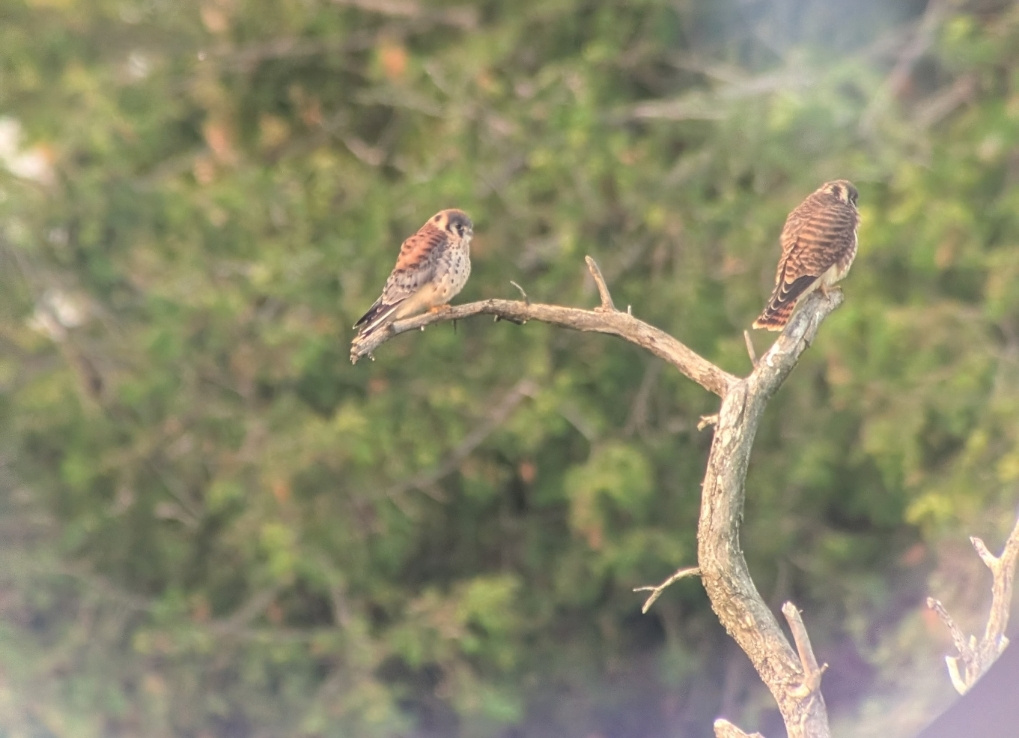
Deux crécerelles d'Amérique perchées. Les crécerelles s'attaquent aux nids de pie-grièches et peuvent manger leurs œufs, leurs oisillons ou leurs jeunes à l'envol. Photo de C. Barkwell.
Le baguage des pie-grièches
Parfois, les pie-grièches sont baguées pendant la surveillance. Une bague d'oiseau est un petit anneau placé sur la patte d'un oiseau. Les bagues des pie-grièches comprennent :
Si une pie-grièche baguée est revue, cela peut nous indiquer où elle a migré pour l'hiver et si elle est revenue dans la même zone de reproduction l'année suivante. Pendant le processus de baguage, nous prélevons également un échantillon de sang et de plumes. Ces échantillons nous donnent un aperçu de la génétique d'un oiseau et peuvent même nous dire où les oiseaux migrent ! Le baguage est effectué par des professionnels formés pour réduire le stress sur les oiseaux et prévenir les blessures.
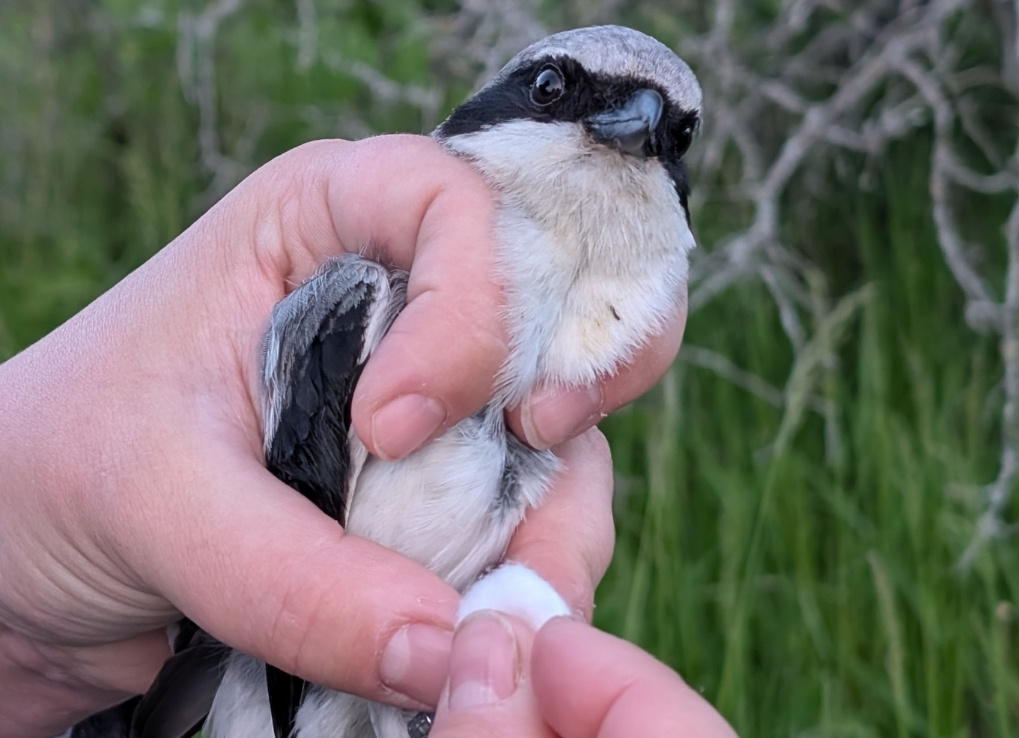
Baguage d'une pie-grièche migratrice sauvage — une compresse de gaze est appliquée après une légère piqûre non invasive à la patte de la pie-grièche pour prélever du sang. Après quelques instants avec une légère pression de la gaze, le saignement s'arrête et elle est prête à être relâchée. Photo Par C. Barkwell.
Les vérifications des nids
Les vérifications des nids consistent à utiliser une petite caméra sur une perche pour prendre une photo du nid. Cela permet de déterminer combien d'oisillons il y a et quel pourrait être leur âge. Les vérifications des nids ne doivent être effectuées que par des professionnels formés, les faire incorrectement peut amener les parents à abandonner le nid.
Pourquoi faisons-nous tout cela ?
La surveillance de la faune nous aide à comprendre la santé des populations: combien d'individus il y a, si la population augmente ou diminue, et quelles menaces ils affrontent (comme la perte d'habitat ou de nouvelles maladies). Cela nous aide également à comprendre le comportement normal d'une espèce.
Pour le Programme de rétablissement de la pie-grièche migratrice de l'Est, la surveillance guide d'autres parties du projet, notamment le relâchement des pie-grièches élevées en captivité et les efforts de gérance des terres. En bref, la surveillance nous dit ce dont les pie-grièches ont besoin et comment nous pouvons mieux les soutenir !
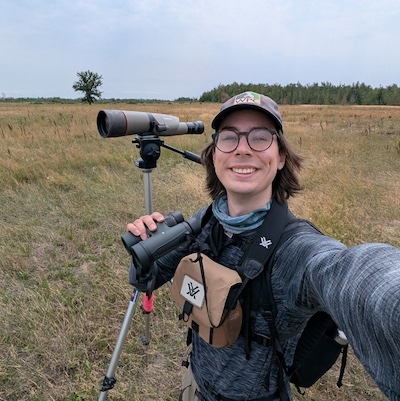
Christopher est ravi de se joindre à CFC en tant que stagiaire de terrain en rétablissement de la pie-grièche dans le cadre de son stage pratique pour sa maîtrise en biologie de la faune à l'Université de Guelph. Passionné par la conservation et la faune, il a acquis de l'expérience avec les invertébrés aquatiques, les oiseaux chanteurs en péril et les petits mammifères. Originaire du Manitoba, Chris est impatient d'explorer le paysage naturel de l'Ontario, d'en apprendre davantage sur les espèces qui s'y trouvent et d'acquérir de l'expérience dans le rétablissement de la pie-grièche migratrice.

Nous avons besoin de votre aide