Vu à travers la lunette
Publié lejuillet 21, 2026parJane Wood
Qu'est-ce que le Programme de rétablissement de la pie-grièche migratrice de l'Est? Après une chute précipitée de la population sauvage de pie-grièche migratrice de l'Est dans les années 1990, Environnement Canada a invité Conservation de la faune au Canada à se joindre à l'effort de rétablissement multi-partenaires en 2001. Depuis, la taille de la population sauvage a fluctué. Des études ont montré que bien que l'effort de rétablissement ait empêché l'espèce de disparaître du Canada, plus de travail est nécessaire pour identifier et aborder les causes du déclin de l'espèce. CFC travaille pour empêcher la pie-grièche migratrice de l'Est de disparaître en renforçant la population sauvage en Ontario, et en étudiant l'espèce pour en apprendre davantage sur les menaces qu'elle fait face.
Bonjour à tous ! Je m'appelle Jane, je suis la stagiaire de terrain pour la pie-grièche à Napanee. Je suis sur le terrain depuis un peu plus d'un mois maintenant, et j'ai vu beaucoup de belles choses pendant mon temps dehors. La plupart des espèces que j'ai observées sont des oiseaux (sans grande surprise !), mais j'ai aussi vu un coyote et eu quelques rencontres avec des cerfs. Ayant grandi dans une maison avec une mère photographe et un père ornithologiste, j'étais très intéressée à essayer de capturer des photos de la faune que je voyais. Je n'ai pas l'un de ces super téléobjectifs que tous les meilleurs ornithologues ont, alors j'ai décidé d'utiliser les outils à ma disposition : mon iPhone 13 et la lunette fournie par CFC pour les relevés et la surveillance sur le terrain. À travers la lunette, j'ai observé des comportements fascinants, un plumage coloré et de nouvelles espèces vues pour la première fois. Quelques-unes de mes préférées sont présentées ci-dessous — j'espère que vous apprécierez ce petit aperçu des espèces d'oiseaux de prairie communes (et moins communes !) observées sur le terrain.
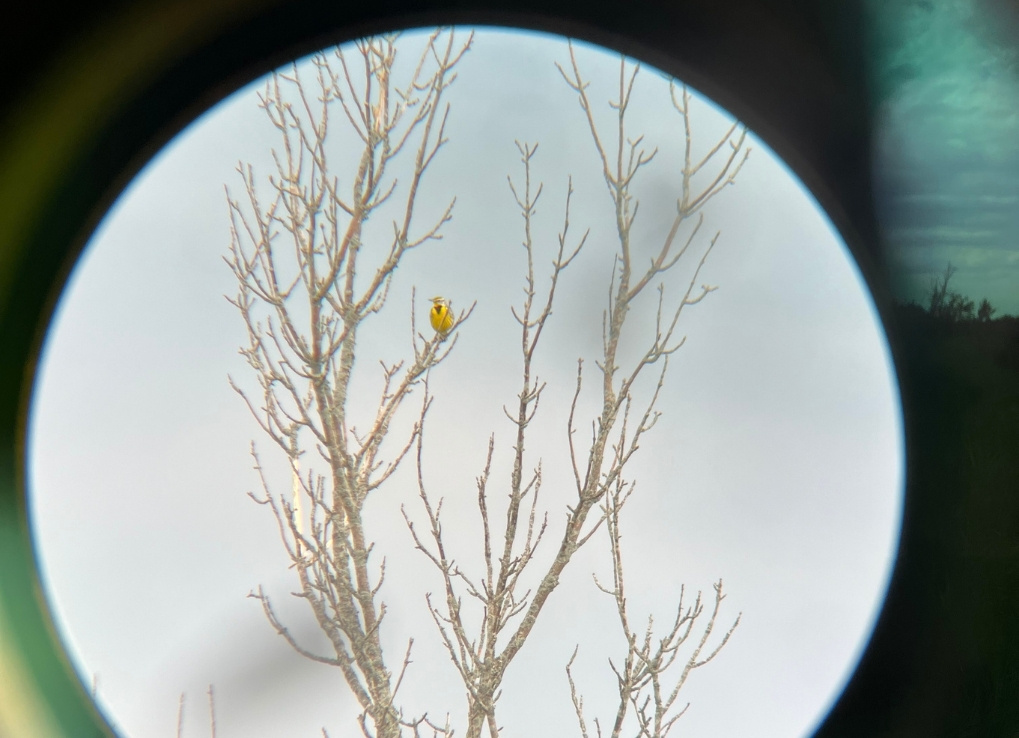
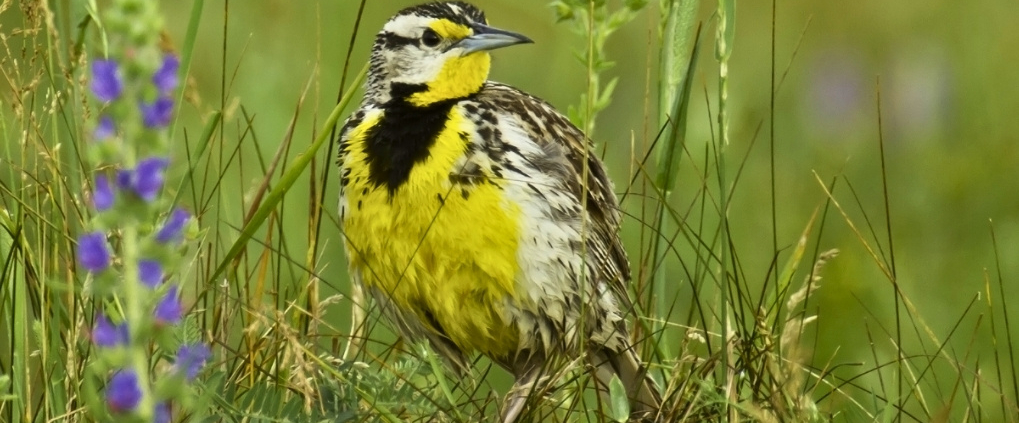
Sturnelle des prés: Cet oiseau m'a tellement enthousiasmée car c'était une première pour moi ! Maintenant que j'ai passé un mois sur le terrain, ils sont à peu près aussi courants que les merles, mais c'est toujours un plaisir d'apercevoir leur poitrine jaune vif et d'entendre leur cri ressemblant à celui de la pie-grièche (une grande source de confusion en début de saison !).
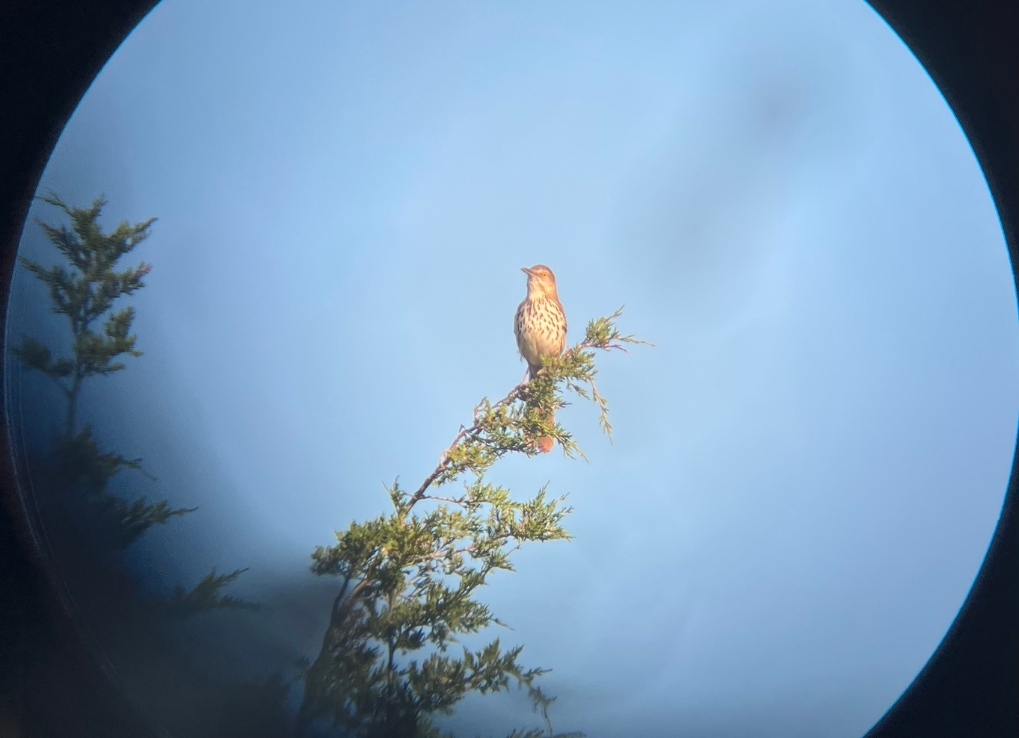
Moqueur roux: Encore une première ! J'adore les entendre sur le terrain, avec leurs appels répétitifs en doubles notes. Pendant une surveillance, nous avons accidentellement fait s'envoler une femelle moqueur roux, ce qui nous a donné l'occasion de voir l'un de ses nids, bien caché dans les buissons au sol, avec trois petits œufs !
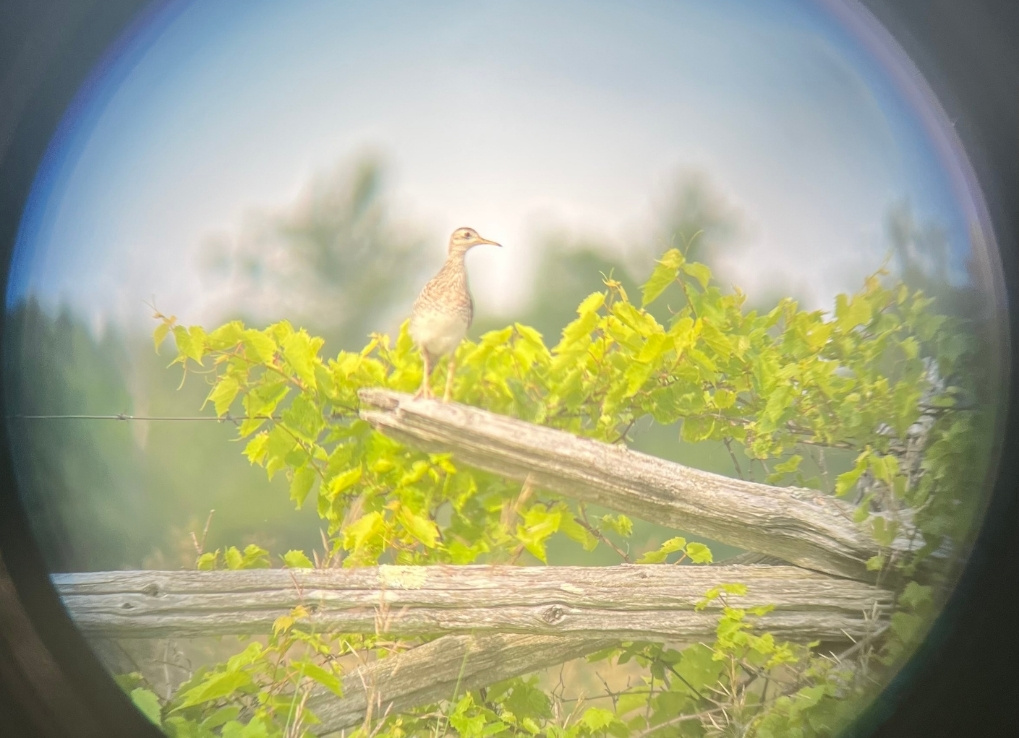
Maubèche des champs: Mes préférées à voir sur le terrain ! Ce sont des oiseaux très amusants et qui semblent un peu déplacés dans les habitats de prairie. Estimez-vous chanceux si vous en voyez une perchée sur un fil ou un poteau de clôture, ou si vous entendez leur appel ressemblant à un sifflement !

Grue du Canada: Vous pouvez voir à quel point j'étais excitée de voir cet oiseau d'après le flou de la photo. Je les ai accidentellement effrayées pendant une session de surveillance des pie-grièches. Il y avait toute une petite famille, deux adultes avec leur poussin. J'espère les revoir pour obtenir une photo plus nette !

Urubu à tête rouge: Ma photo préférée jusqu'à présent (avec un sujet très photogénique !). Les urubus à tête rouge sont une présence très familière sur le terrain, bien qu'il soit plutôt rare de les voir perchés — ils planent généralement haut au-dessus de nous. Cet individu était perché aux côtés d'un autre urubu, peut-être pour se reposer ou pour garder un nid hors de vue.
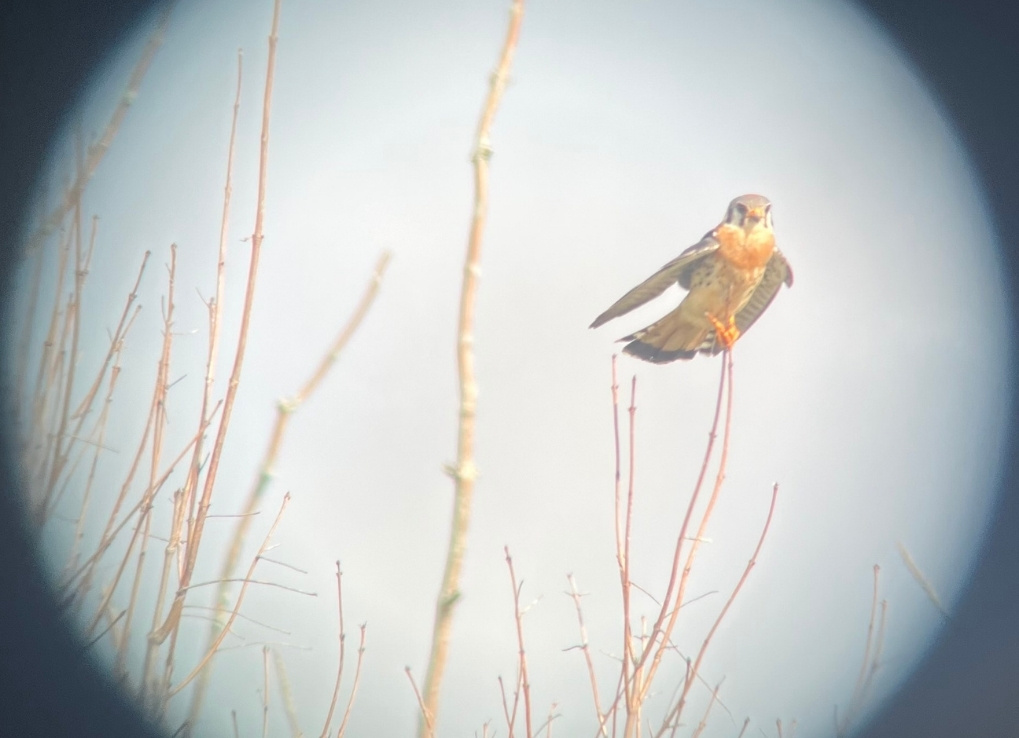
Crécerelle d'Amérique: Aussi connue sous le nom de faucon émerillon, j'adore secrètement voir ces oiseaux sur le terrain, même s'ils sont des prédateurs de nos pie-grièches migratrices. Je pense toujours regarder une tourterelle triste avant d'utiliser les jumelles ou la lunette, et je suis agréablement surprise quand c'est une crécerelle. N'en ayant vu qu'une seule fois auparavant, elles sont maintenant une présence quotidienne.
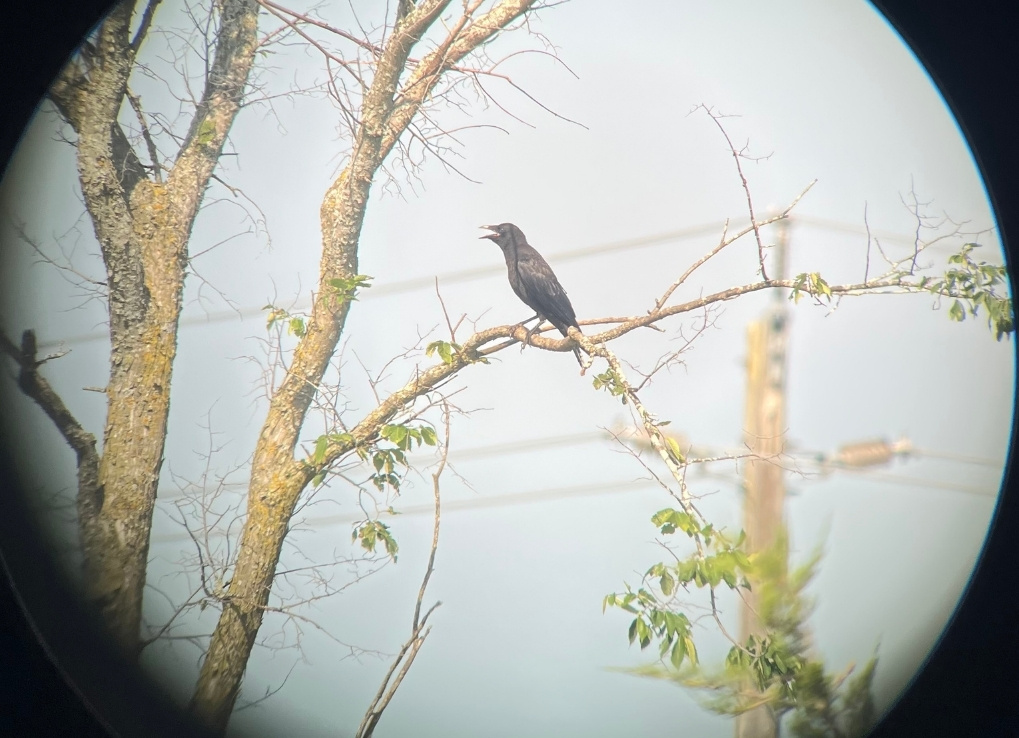
Corneille d'Amérique: On adore les détester. Les corneilles sont également des prédateurs des pie-grièches, en particulier des œufs et des oisillons. Elles sont très communes et peuvent souvent limiter les activités qu'on peut faire, car on ne veut pas les attirer vers les pie-grièches à proximité. Malgré cela, elles m'amusent beaucoup avec leurs personnalités bruyantes, toujours en train de crier et de se battre entre elles.
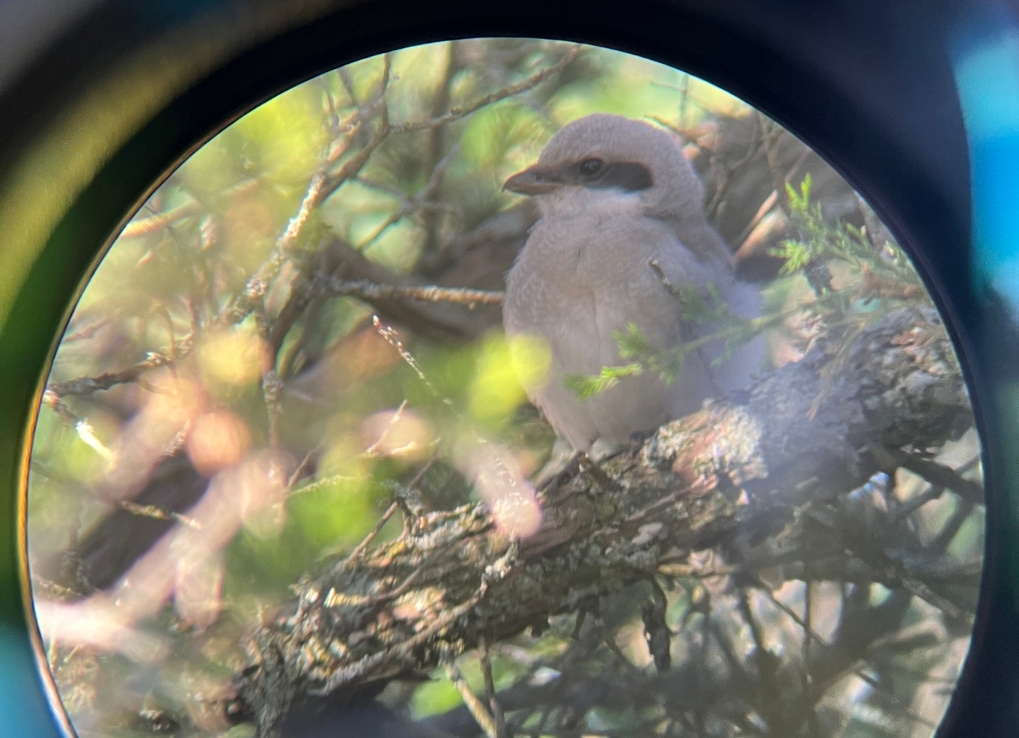
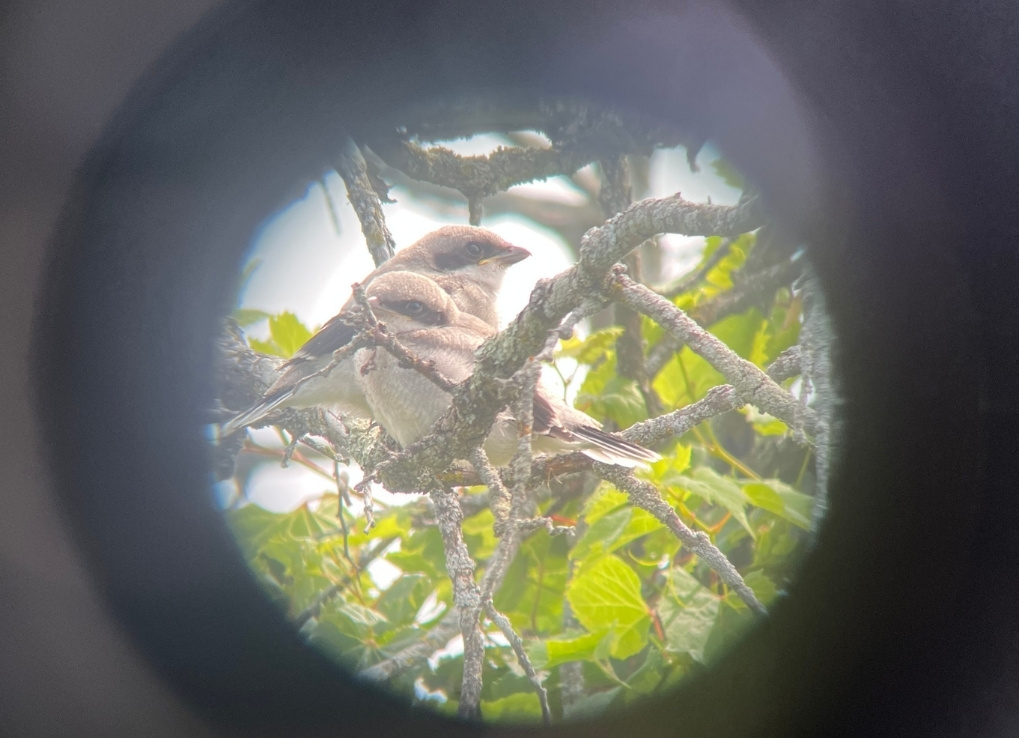
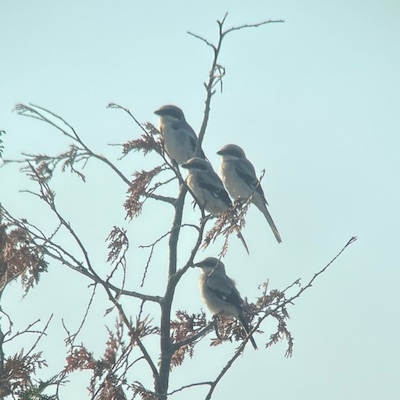
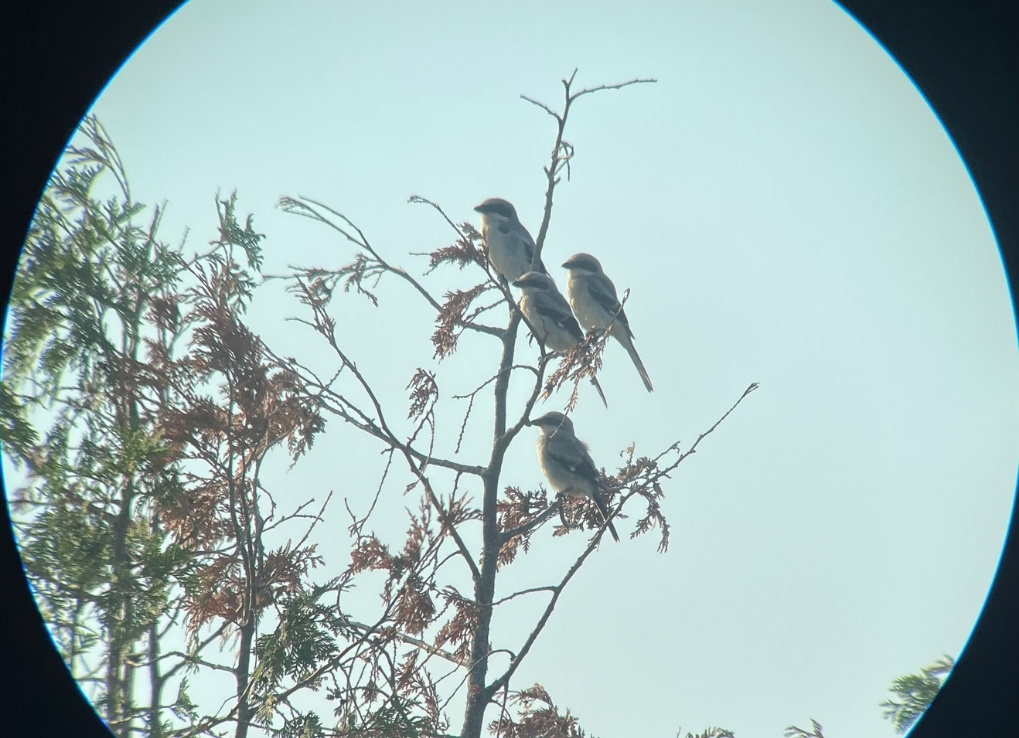
Pie-grièches migratrices: Notre oiseau préféré ! Observer leur comportement a été ma partie préférée de ce travail. La première photo montre le premier oisillon que j'ai jamais vu, depuis longtemps parti de son site de nidification. La deuxième montre une paire d'oisillons encore nourris par leur mère. Ils sont très exigeants, mendiant et criant constamment pour que leur maman les nourrisse davantage. La dernière photo est le plus grand nombre de pie-grièches que j'ai jamais capturé en une seule photo. On y voit un père pie-grièche et trois de ses oisillons. Il continue à les nourrir malgré leur grande taille. Dans quelques jours, ils devraient chasser et se nourrir eux-mêmes.
J'espère encore capturer quelques autres espèces communes mais passionnantes comme le Busard Saint-Martin, le Pluvier kildir et la Bécassine de Wilson. Restez à l'affût !
Jane est ravie de travailler avec CFC cet été dans le cadre de son stage de maîtrise en biologie faunique à l'Université de Guelph. Elle a de l'expérience en conservation des reptiles et des poissons et est enthousiaste de se lancer dans les oiseaux! Entre le baccalauréat et la maîtrise, elle a travaillé dans des cliniques vétérinaires pour animaux exotiques et de compagnie, ce qui a approfondi son intérêt pour la santé et le bien-être des animaux. Elle a hâte de passer l'été dehors, à en apprendre davantage sur les oiseaux des prairies et leur conservation.

Nous avons besoin de votre aide