
FREED: empowering BIPOC students for a future in ecology
Publié lefévrier 7, 2025parHazel Wheeler and Cole Blair| All photos courtesy of Michael Alexander
Qu'est-ce que le Programme de rétablissement des bourdons? Depuis les années 1990, les populations de bourdons sont en chute libre, ce qui représente une véritable catastrophe écologique. Quatre-vingt-dix pour cent de toutes les plantes à fleurs — y compris la plupart des fruits et légumes dans votre réfrigérateur — ont besoin de ces pollinisateurs pour se reproduire.
Jusqu'à ce que les causes de ces déclins puissent être inversées, l'élevage de conservation et la réintroduction sont la seule façon de protéger les bourdons en péril. Aujourd'hui, CFC est la seule organisation au Canada à reconstruire les populations d'abeilles sauvages grâce à l'élevage de conservation. Grâce à des percées récentes, nous avons trouvé comment augmenter considérablement le nombre de reines que nous produisons. Une fois relâchées dans la nature, elles peuvent établir leurs propres colonies, produisant des centaines de pollinisateurs pour soutenir les écosystèmes qui les entourent.
Many of us who are lucky enough to have achieved their career aspirations can think back to a period in their life when they realized “this is what I want to do.” No matter the career, these crystalizing moments are almost always born from personally connecting with their topic or field of interest. These deep feelings of connection are often what inspire people to act to improve our environments and societies.
However, there are often barriers that can prevent equal access to these self-realizing and connecting experiences. For example, in the world of ecology these experiences often come in the form of field courses that can cost thousands of dollars, which can put them out of reach for many. Beyond the financial, though, there are also long-standing systemic barriers that can put these experiences even farther out of reach for equity-deserving groups, such as Indigenous, Black, and/or Racialized (BIPOC) students. The exclusion of BIPOC voices from conservation and ecology means that this important work is largely being done with a very limited viewpoint: that of the white settler operating within Western scientific frameworks. This can create blind spots that could be avoided through the inclusion of more diverse perspectives. Also concerning is the reality that BIPOC students may have difficulties in actualizing their ambitions because of these inequalities. Luckily, there are incredibly hard-working groups that dedicate themselves to creating such opportunities, one of which we had the wonderful fortune of collaborating with last summer: FREED.
Field Research in Ecology and Evolution Diversified (FREED) is a grassroots organization founded and organized by current and former students in Southern Ontario universities with the goal of improving the accessibility of field research experiences for BIPOC undergraduates. Focusing on the fields of evolution, ecology, and conservation biology, FREED offers financially accessible, multi-day field courses that provide foundational field experiences to BIPOC students to help them stand out in increasingly competitive job markets.
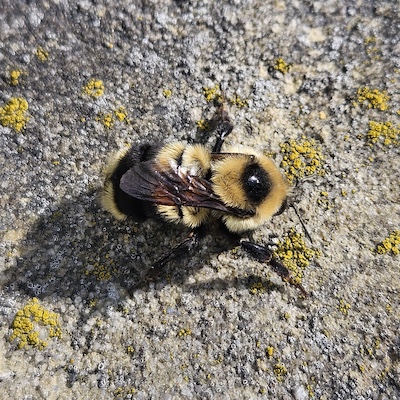
Last August, WPC staff participated in one of two weeklong field courses hosted by FREED in iconic Algonquin Provincial Park, Ontario. Attended by 15 students from Guelph and McMaster Universities, the week consisted of daily workshop events in which students practiced field research techniques relevant to a variety of wildlife groups, such as birds, mammals, plants, and a personal favourite of ours: bumble bees! Taylor Kerekes and Cole Blair of our Native Pollinator Initiative, joined by WPC’s Conservation Programs Director Hazel Wheeler, ventured into the Algonquin wilderness to deliver a workshop to FREED students on bumble bee ecology and survey methods, allowing participants to get an up-close experience with these critical pollinators.

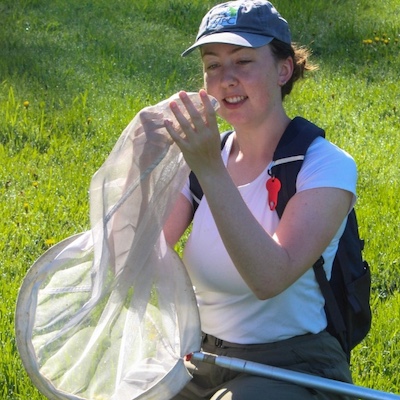
Taylor Kerekes, biologiste principal de l'Initiative pour les pollinisateurs indigènes de CFC, donne une conférence aux étudiants de FREED sur l'écologie des bourdons avant de partir pour un relevé simulé (photo de Michael Alexander).
All of us from WPC had a great time with our brief involvement with FREED’s field course, but how did the students feel? We talked to two FREED participants, Prakrithi and Camilo, who have eagerly shared their unique perspectives on their experiences.
Stay tuned for part two of this blog, where Camilo and Prakrithi delve into their time at FREED! (Spoiler alert: they loved it).
Cole’s time with WPC began as a graduate student at the University of Toronto, where he researched harmful parasites in bumble bees (he looked at a LOT of bee poop). He has since played a supporting role as a technician in both the field and in our bumble bee Conservation Breeding Lab. As the Ontario Program Coordinator, Cole hopes to demonstrate to others that any conservation engagement – no matter how big or small – can go a long way.

Hazel travaille avec Conservation de la faune Canada depuis 2013, ayant commencé comme biologiste contractuelle auprès du programme de rétablissement de la pie-grièche migratrice avant d'accéder au rôle de biologiste principale. Après une décennie de travail sur les pies-grièches, Hazel a accédé au rôle de directrice des programmes de conservation, où iel supervise tous nos programmes de rétablissement. Hazel travaille avec les espèces en péril depuis le milieu des années 2000 et détient une maîtrise de l'Université Trent, où iel a étudié les préférences d'habitat des martinets ramoneurs en Ontario.

Nous avons besoin de votre aide