How Bumble Bee Watch supports conservation
Publié leaoût 12, 2021parPollinator Team|Blogs, Les bourdons
Qu'est-ce que le Programme de rétablissement des bourdons? Depuis les années 1990, les populations de bourdons sont en chute libre, ce qui représente une véritable catastrophe écologique. Quatre-vingt-dix pour cent de toutes les plantes à fleurs — y compris la plupart des fruits et légumes dans votre réfrigérateur — ont besoin de ces pollinisateurs pour se reproduire.
Jusqu'à ce que les causes de ces déclins puissent être inversées, l'élevage de conservation et la réintroduction sont la seule façon de protéger les bourdons en péril. Aujourd'hui, CFC est la seule organisation au Canada à reconstruire les populations d'abeilles sauvages grâce à l'élevage de conservation. Grâce à des percées récentes, nous avons trouvé comment augmenter considérablement le nombre de reines que nous produisons. Une fois relâchées dans la nature, elles peuvent établir leurs propres colonies, produisant des centaines de pollinisateurs pour soutenir les écosystèmes qui les entourent.
Community science is a great tool to collect data for conservation programs and engage the community in their local environments. As many conservation programs are limited by many elements (time, funding, and personnel), community science programs are invaluable. Launched in 2014, Bumble Bee Watch (BBW) is a North American community science initiative that is a collaborative project between many partners. The platform allows users to submit photos of bumble bees (via browser or an app), guides them through an identification tool to help them identify the species of the individual, and then users’ submissions are verified by experts. Not only is the initiative a great way to get participants in nature interacting with the big fuzzy pollinators, but it also provides critical monitoring data of bumble bees across North America.
How does the data collected by Bumble Bee Watch help conservation?
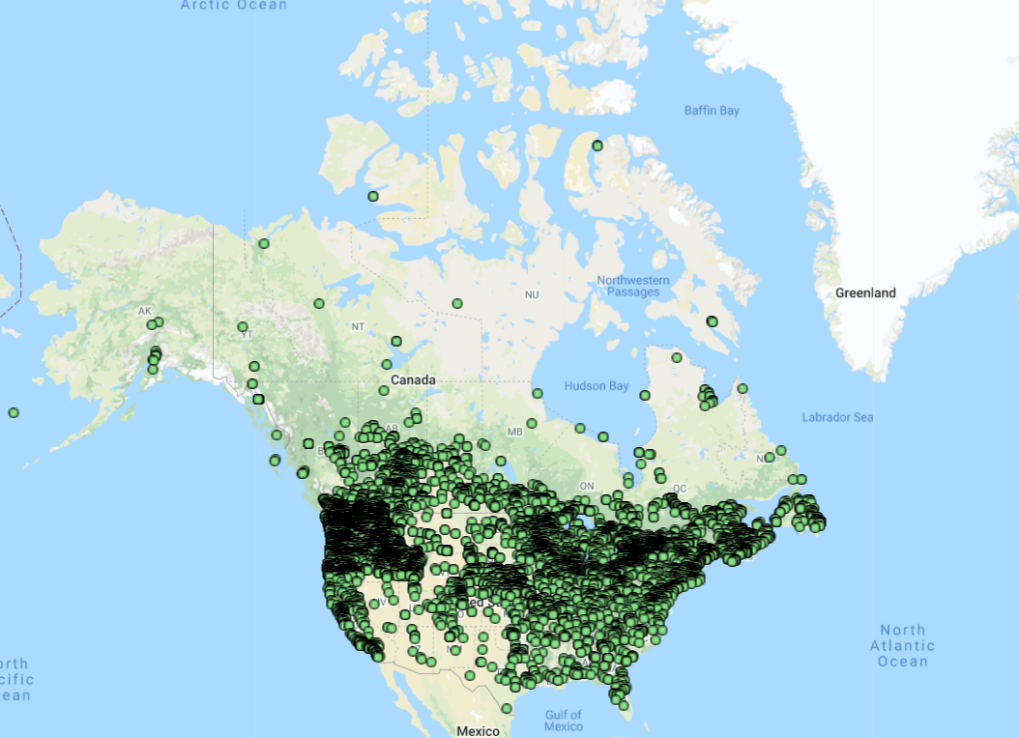
Map of Bumble Bee Watch submissions (April, 2021)
Increases survey coverage
Year to year, WPC’s Bumble Bee Recovery Program ranges from groups of one to three small field crews that conduct our annual spring queen bumble bee surveys across Ontario. Between WPC’s program, and other expert-collected observations, experts can only travel so far and survey so many areas. BBW helps fill in the gaps through the participation of volunteers. Currently, we have submissions from every state, province, and territory.
Helps build a long-term dataset
Since launching in 2014, there have been nearly 78,000 submissions to the platform. Over time, this data allows us to see changes, such as when and where species are present. Every time someone observes a species and submits it to BBW, that verified data point contributes to a long-term dataset.
Locates rare and at-risk species
Currently, there are over 5,000 records of 11 of the 13 declining North American species. This data is crucial for monitoring purposes. For example, each spring WPC’s team surveys for the special concern yellow-banded bumble bee and verified observations from BBW provide insight for new survey sites.
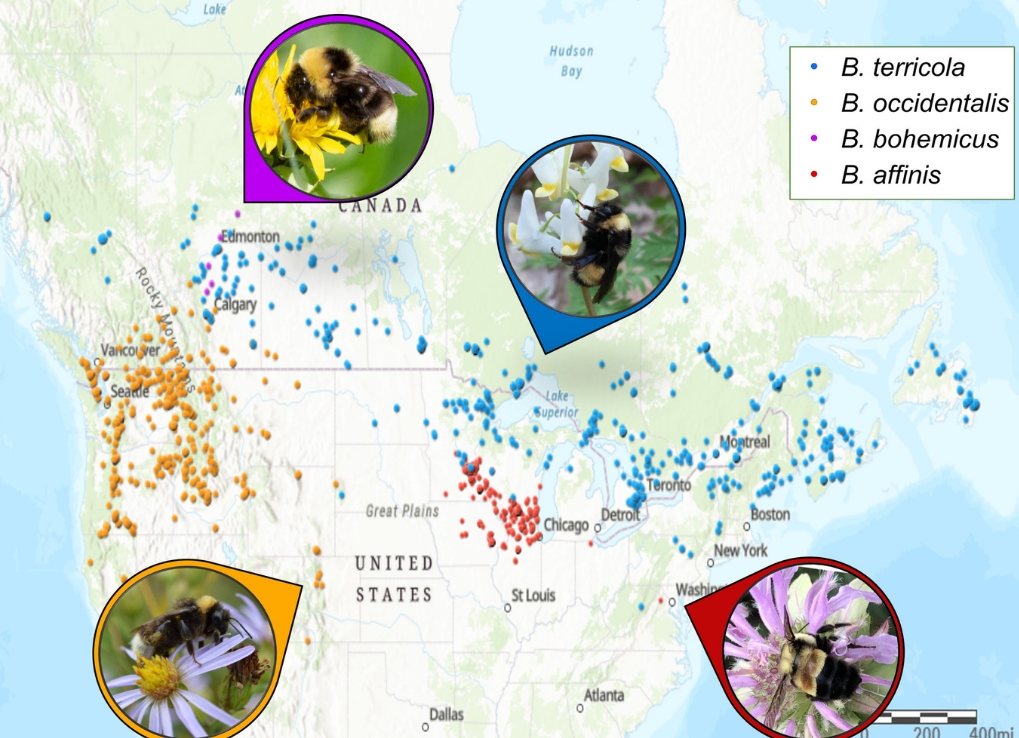
Map using BBW verified data of four declining north American species; western bumble bee (Bombus occidentalis) in orange, gypsy cuckoo bumble bee (Bombus bohemicus) in purple, yellow banded bumble bee (Bombus terricola) in blue, rusty-patched bumble bee (Bombus affinis) in red. Map made by T.Harrison, March 2021. ©B. affinis: ©Linnea Wier / B. bohemicus: ©Dave Prescott
Contributes to species’ status assessments
BBW helps us monitor at-risk species that may be difficult to find otherwise. These verified data points stand as vital records and can be used for assessing species by various governmental bodies like the Committee on the Status of Endangered Wildlife in Canada (COSEWIC). For example, in 2018, data from BBW was used by COSEWIC to help assess the American bumble bee (Bombus pensylvanicus) as a species of special concern.
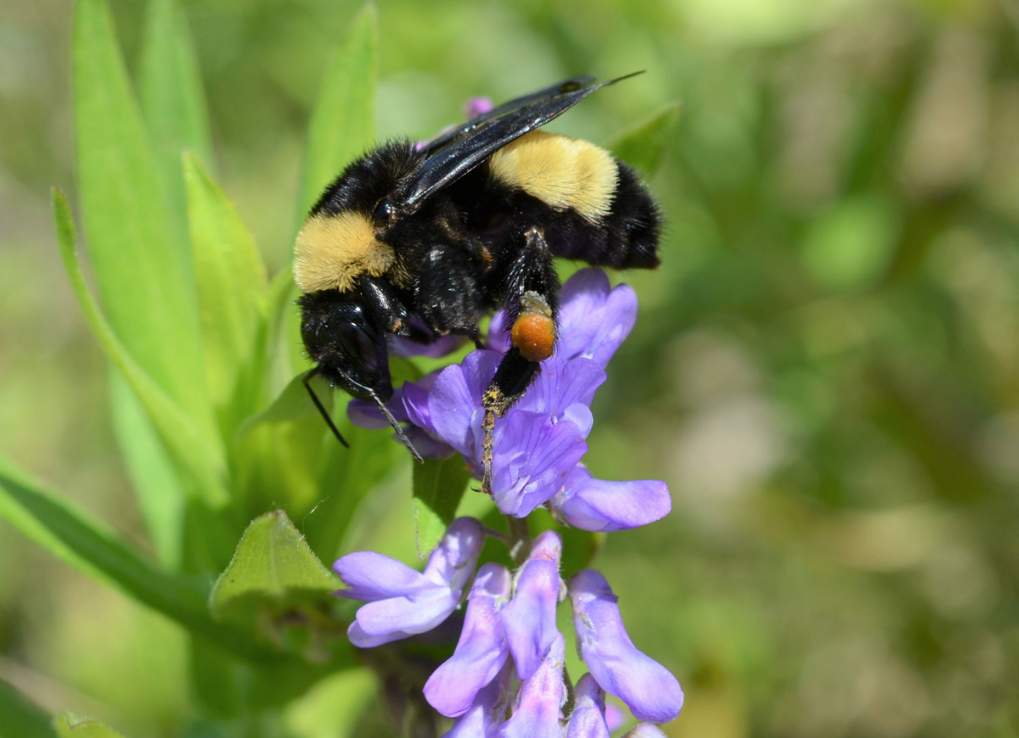
American bumble bee (Bombus pensylvanicus) queen on cow vetch. Photo: T. Harrison
Guides conservation action
BBW data can help identify sites for habitat projects (e.g. planting, restoration). It also can help guide species-specific and region-specific research and conservation programs based on present data (remember how we use the data to plan survey sites in new areas!).
Monitors species’ ranges
Using data points on BBW, species’ ranges can be estimated and monitored for changes. Using this data, we can see if species’ ranges are changing over time and how (e.g. the direction the species is expanding.)
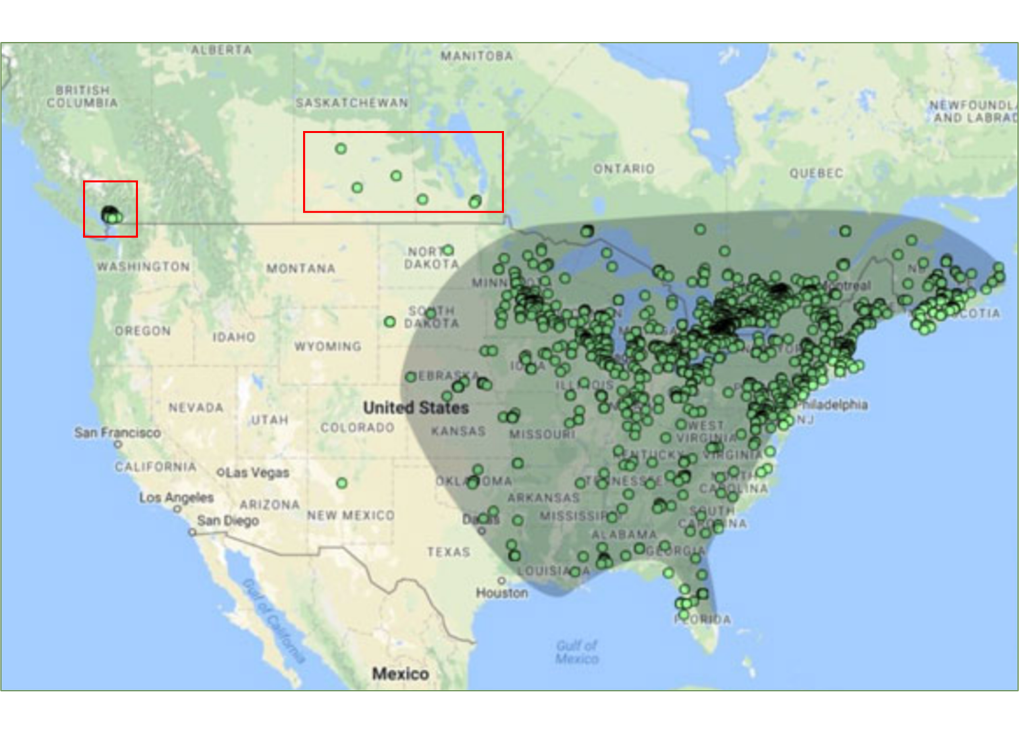
Range map of the common eastern bumble bee (B. impatiens) using Bumble Bee Watch data. Outliers outlined in red show spread from managed colonies.
Contributes policy support and discussion
BBW data can be used for policy support and discussion in a variety of ways. An example of this is that through BBW there have been verified observations of species outside their historical range (e.g. the common eastern bumble bee, Bombus impatiens). The latter could mean that exported and managed common eastern bumble bee colonies require more monitoring measures to avoid spread.
When you participate in Bumble Bee Watch, you can be assured that your submissions contribute to something meaningful. We are grateful for your participation in this conservation action – it is participants like you that help make this all possible!
Tiffani joined WPC as a bumble bee conservation field technician in 2017 and fell in love with the work. Since then, she has worked a variety of roles leading monitoring surveys, research projects, and community outreach both in Ontario and Alberta. She is currently finishing her Master’s in Conservation and Biodiversity at the University of Toronto, focusing her studies on pollinators.

Nous avons besoin de votre aide