
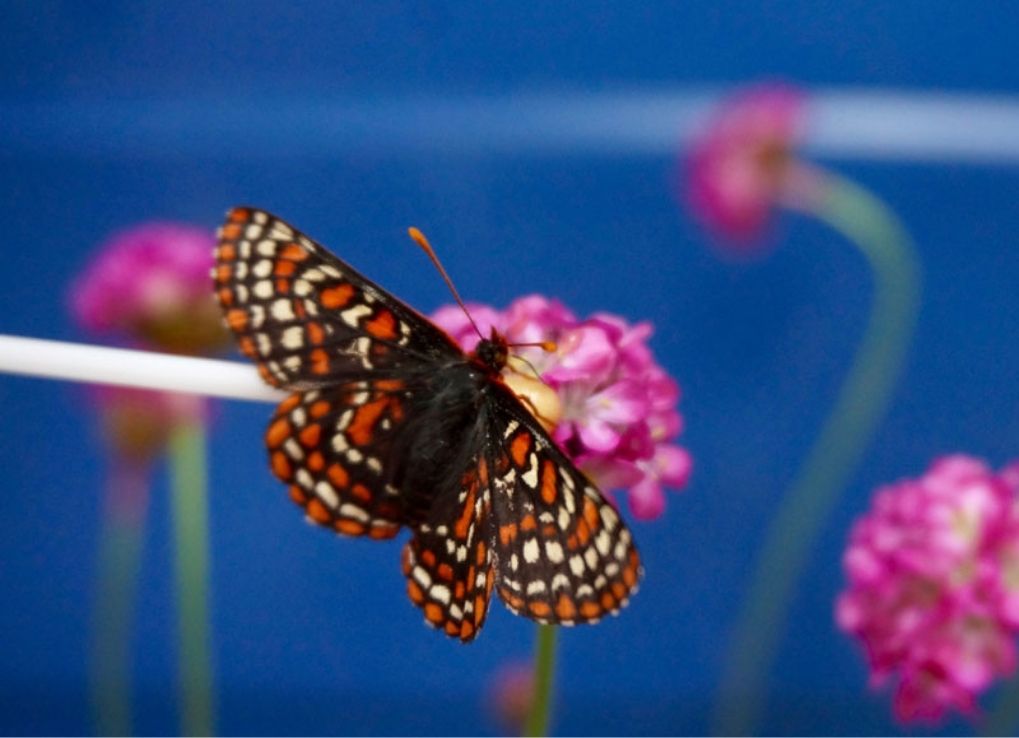
I love Taylor’s checkerspot!
Publié leaoût 18, 2020parDamier de Taylor|Actualités et événements, Pollinisateurs, Damier de Taylor
Qu'est-ce que le programme de rétablissement du papillon damier de Taylor ? Indicateur environnemental de la santé de l'écosystème entier, ce papillon spécial était autrefois très répandu dans les îles San Juan, le sud de l'Île de Vancouver et les îles environnantes de la Colombie-Britannique. On croyait qu'il avait disparu du Canada jusqu'en 2005, quand 15 damier ont été observés sur l'île Denman dans les îles du golfe de la Colombie-Britannique. Depuis, CFC travaille à soutenir le papillon en renforçant la population sauvage en Colombie-Britannique par la reproduction en conservation dans notre programme situé au zoo du Grand Vancouver, et en aidant les efforts des partenaires qui restaurent et maintiennent l'habitat de l'espèce.
Taylors checkerspot butterflies fluttered around Denman Island, in BC’s Juan De Fuca Strait for at least 16 years, using parks, right of ways and private properties that contained the specific mix of wetted habitat, nectaring plants and food plants for species requirements. As the numbers of checkerspots began to decrease residents were left wondering, where have all the butterflies gone?
Through extensive work over the years, surveying, monitoring, captive breeding and releasing butterflies on Denman, it’s become clear the important role that private lands play in sustaining habitat for these creatures on island. As we move forward after an incredible year releasing the first cohort of larva onto restored historical habitat on neighbouring Hornby Island, we grappled with the need to sustain butterfly populations on Denman, and how that might look within the human community landscape.
From this planning and discussion came an idea for a new partnership. In Spring 2020, WPC was proud to partner with Denman Conservancy Association (DCA) to work on some targeted community outreach. By combining the local knowledge, species expertise and community connection of DICA, with the experience in outreach, engagement and implementation of WPC, a bridge was able to be built between the science of species conservation and the embedded on-the-ground knowledge and access granted by landowners across the island.
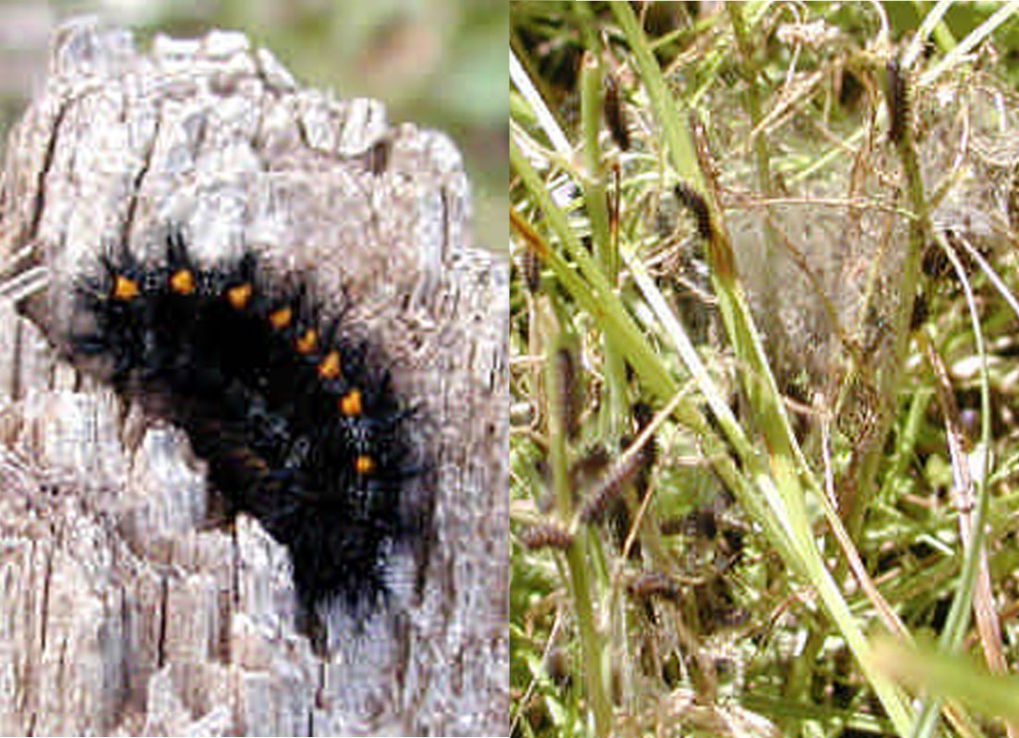
Taylor’s checkerspot caterpillar and caterpillars in their web on native speedwell plant. PHOTO: Jenny Balke
During flying season in 2020, 18 private landowners participated in surveys of their properties. Butterflies tend to use open habitats, which are created on the settled parts of properties, making landowner observations very feasible. As a result the long term participation of landowner stewards can contribute in a significant way to our knowledge of species distribution and numbers and thus the conservation of the species. By reinvigorating the community of Denman Island to the plight of the butterfly, we can tap into this potential and engage landowners not only for monitoring but also to protect butterfly features on their lands and keep checkerspot butterfly needs at the top of their minds.
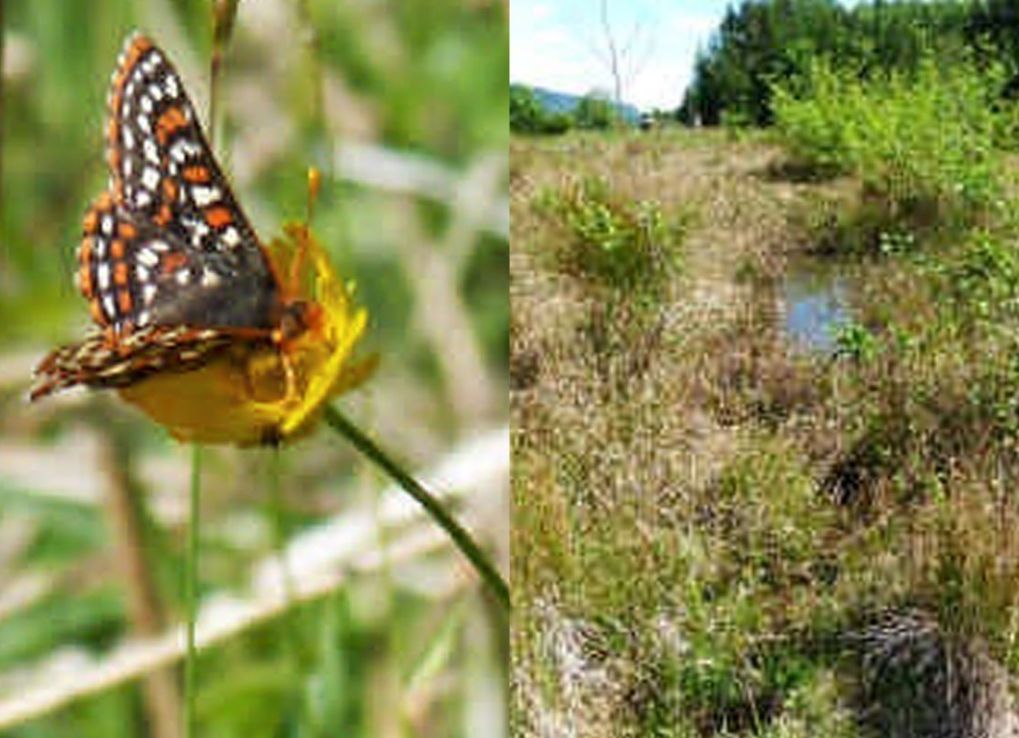
Taylor’s checkerspot butterfly nectaring on a buttercup and an example of characteristic checkerspot habitat. PHOTO: Jenny Balke
During flying season local biologist Jenny Balke was hired to work on the surveys and with the community on collecting observations and characterizing habitat. The prime warm dry weather during flight season in combination with sustaining rain periods could result in a bumper crop of checkerspot butterflies in 2021. Now we just wait and see.
At the end of butterfly flying season landowners were left with stewardship recommendations, additional info and items to help them remember the importance of the butterfly and the value of their participation in its recovery.
Sorry, no posts matched your criteria
Nous avons besoin de votre aide