Seen through the scope
Posted onJuly 21, 2026byJane Wood
What is the Eastern Loggerhead Shrike Recovery Program? After a precipitous drop in the wild eastern loggerhead shrike population in the 1990s, Environment Canada invited Wildlife Preservation Canada to join the multi-partner recovery effort in 2001. Since then, the wild population size has fluctuated. Studies have shown that although the recovery effort has prevented the species from disappearing from Canada, more work is required to identify and address the causes of the species’ decline. WPC works to prevent the endangered eastern loggerhead shrike from disappearing by building the wild population in Ontario, and studying the species to learn more about the threats they face.
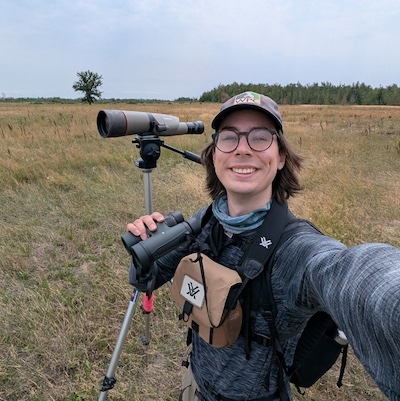
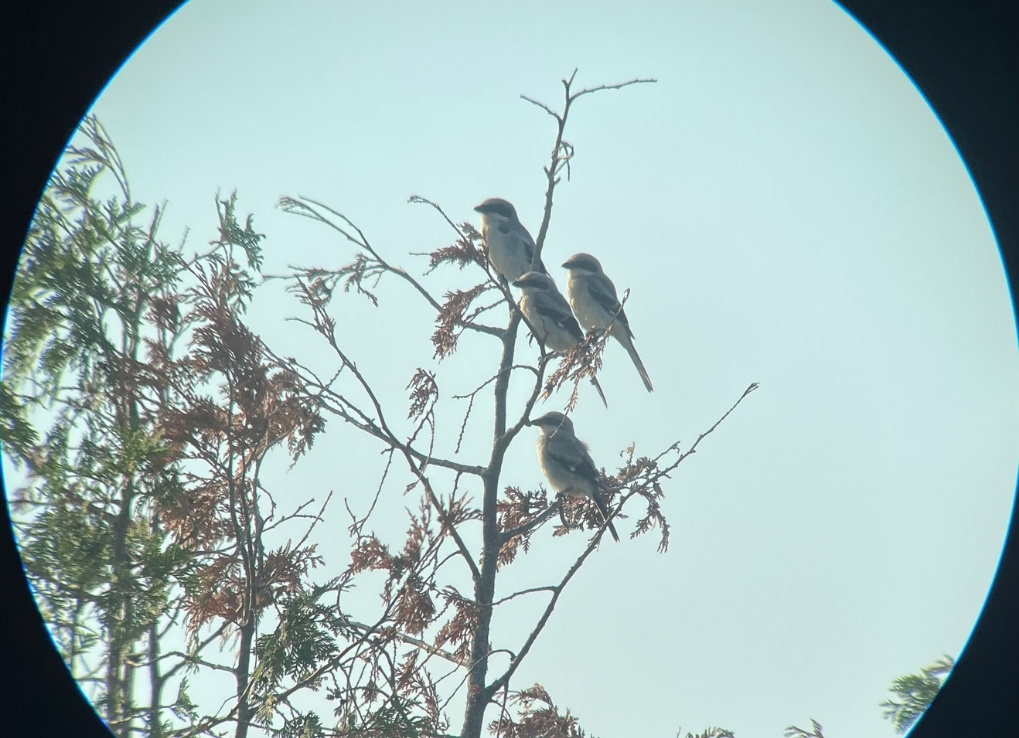
Hi everyone! My name is Jane, I am the Napanee Shrike Field Intern. I have been out in the field for a little over a month now, and have seen a lot of cool things in my time outside. Most of the species I have observed have been birds (no surprise there) but I have also seen a coyote and had a couple of deer encounters. Having grown up in a home with a photographer mother and birder father, I was very interested in attempting to capture photos of the wildlife I was seeing. I don’t have one of those super long lenses that all of the top birders have, so I decided to use what tools I had available: my iPhone 13, and the scope provided to me by WPC for field surveys and monitoring. Through the scope, I have seen exciting behaviours, colorful plumage, and new lifers. Some of my favourites are attached below, I hope you enjoy the little glimpse into common (and uncommon!) grassland bird species seen while out in the field.
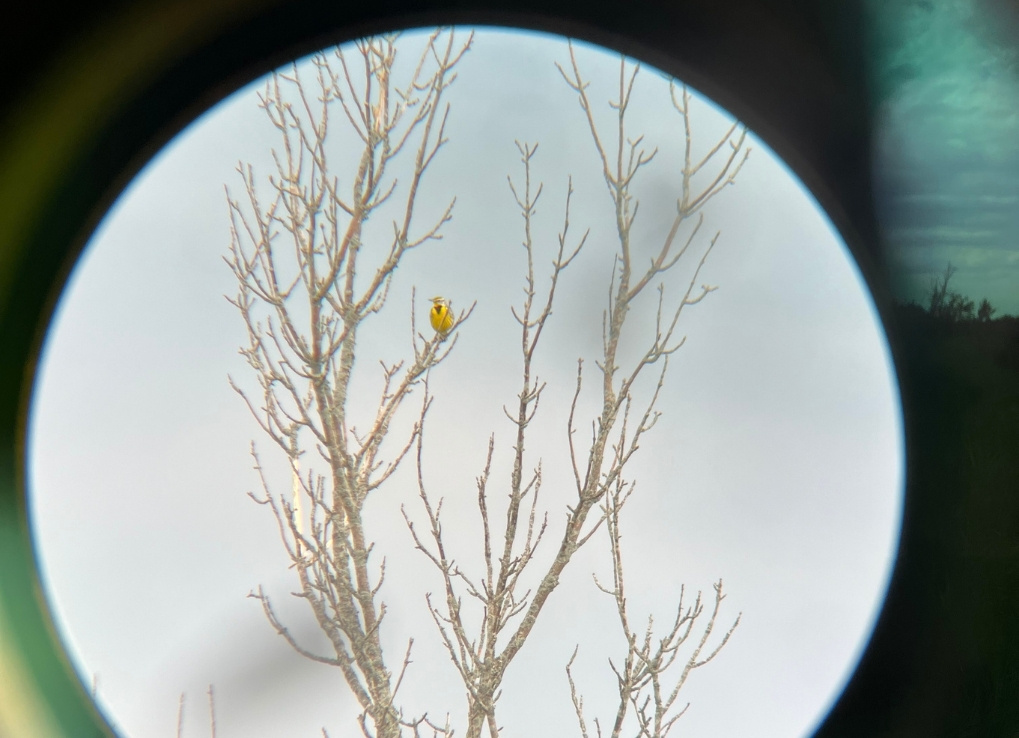
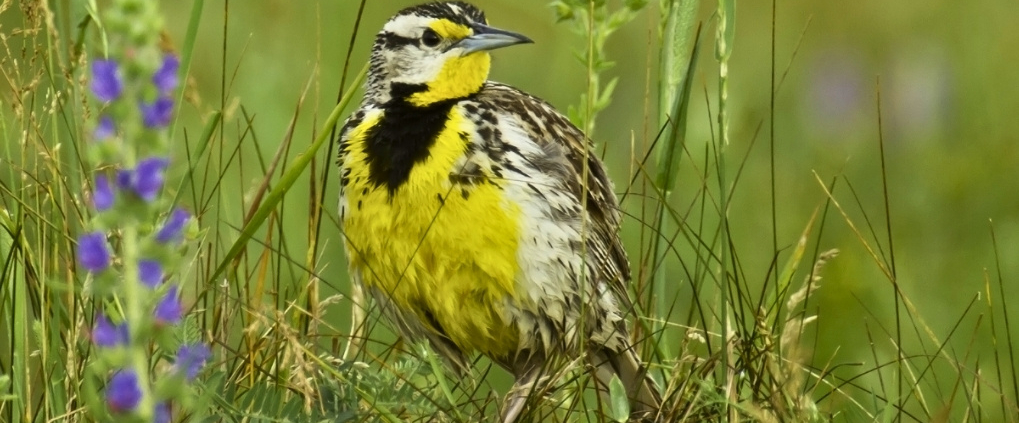
Eastern meadowlark: This bird was so exciting to me as a new lifer! Now that I have spent a month in the field, they are about as common to see as robins, but still always special to catch a glimpse of their bright yellow breast, and hear their shrike-like call (a great source of confusion early in the season!).
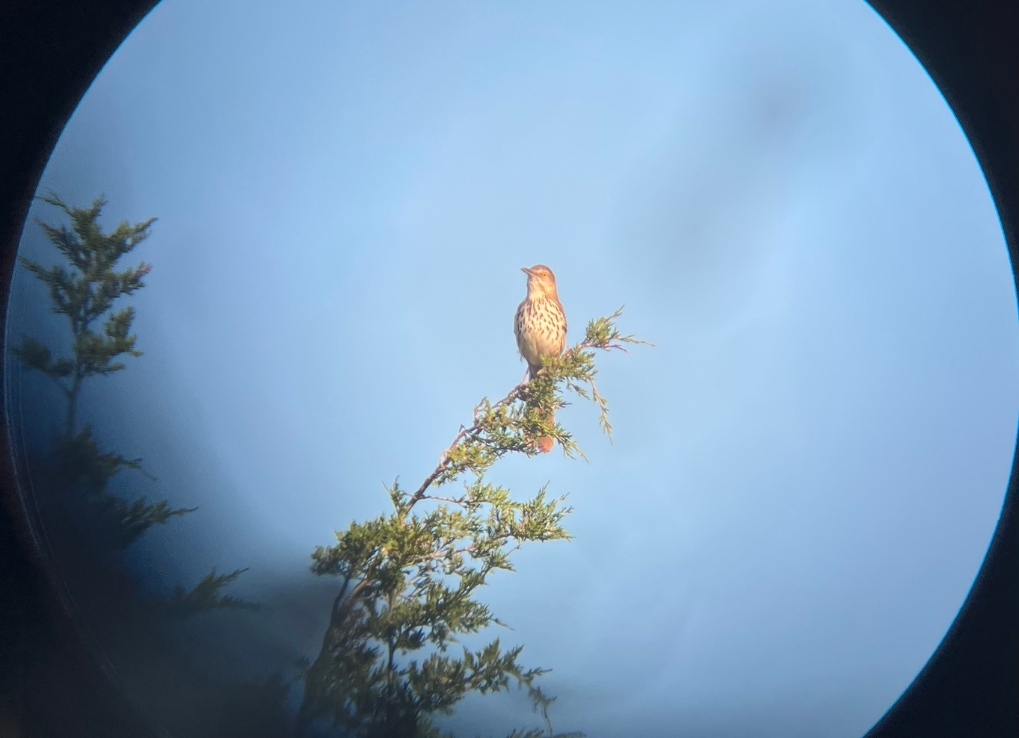
Brown thrasher: Another new lifer! I love hearing them out in the field, with their double repetitive calls. While out monitoring, we accidentally flushed a female thrasher, which gave us the chance to see one of their nests, all tucked in the bushes on the ground, with three little eggs!
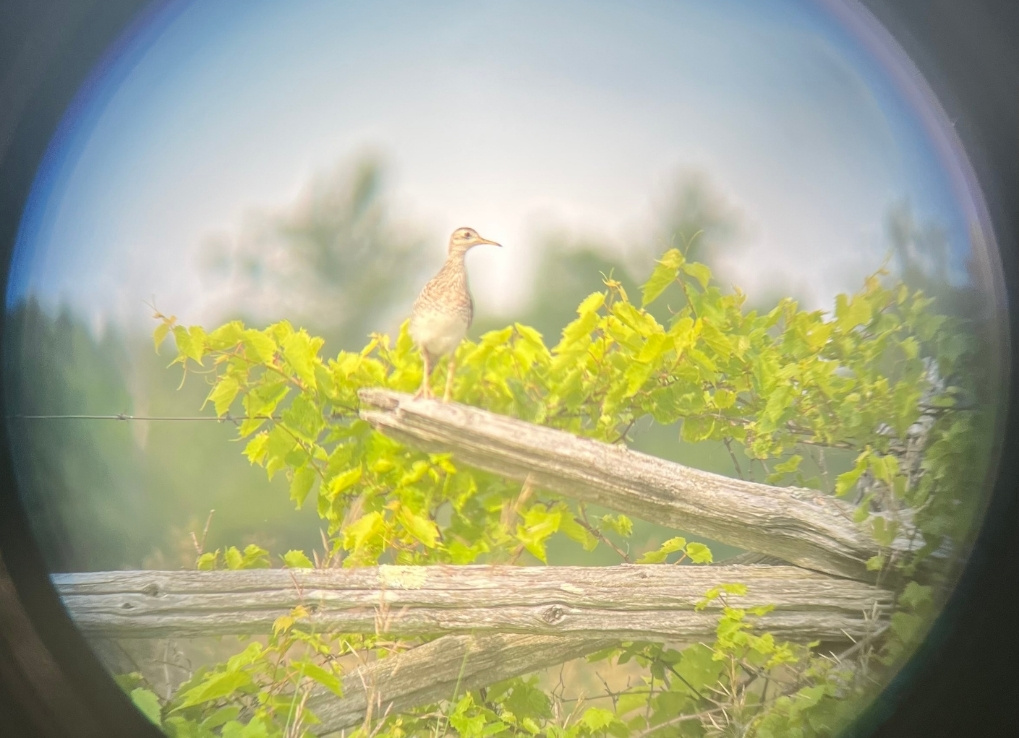
Upland sandpiper: My favourites to see in the field! They are a very funny and out of place looking bird in grassland habitats. Count yourself very lucky if you get to see one perched on a wire or fence post, or if you get to hear their wolf-whistle-like call.

Sandhill crane: You can tell how excited I was to see this bird by how blurry the photo is. I accidentally scared them while out on a shrike monitoring session. There was a whole little family, two adults with their chick. I hope to see them again to get a clearer photo!

Turkey vulture: My favourite photo that I have taken so far (with a very photogenic subject!). Turkey vultures are a very familiar presence out in the field, although it is pretty uncommon for us to see them perched, they are typically soaring high above us. This individual was perched alongside another vulture, perhaps taking a rest, or guarding an out of sight nest.
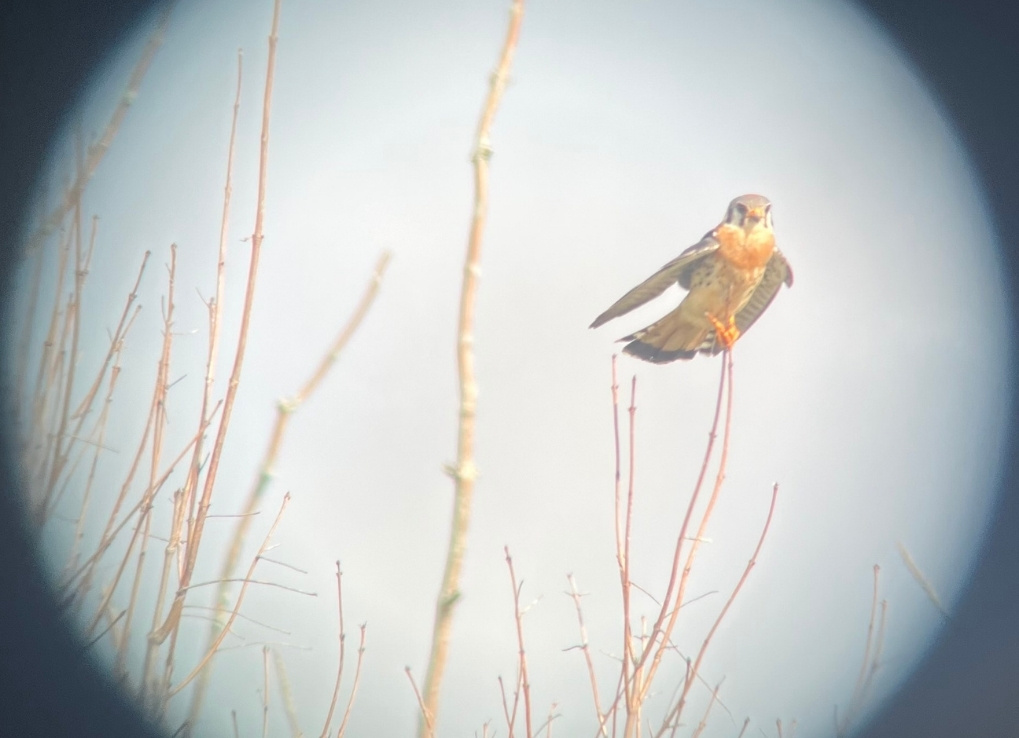
American kestrel: Also known as the sparrowhawk, I secretly love seeing these guys out in the field, even though they are a predator to our loggerhead shrikes. I always think I am looking at a mourning dove before using the binoculars or scope, but am pleasantly surprised when it’s a kestrel. Having seen one only once before, they are now a daily occurrence.
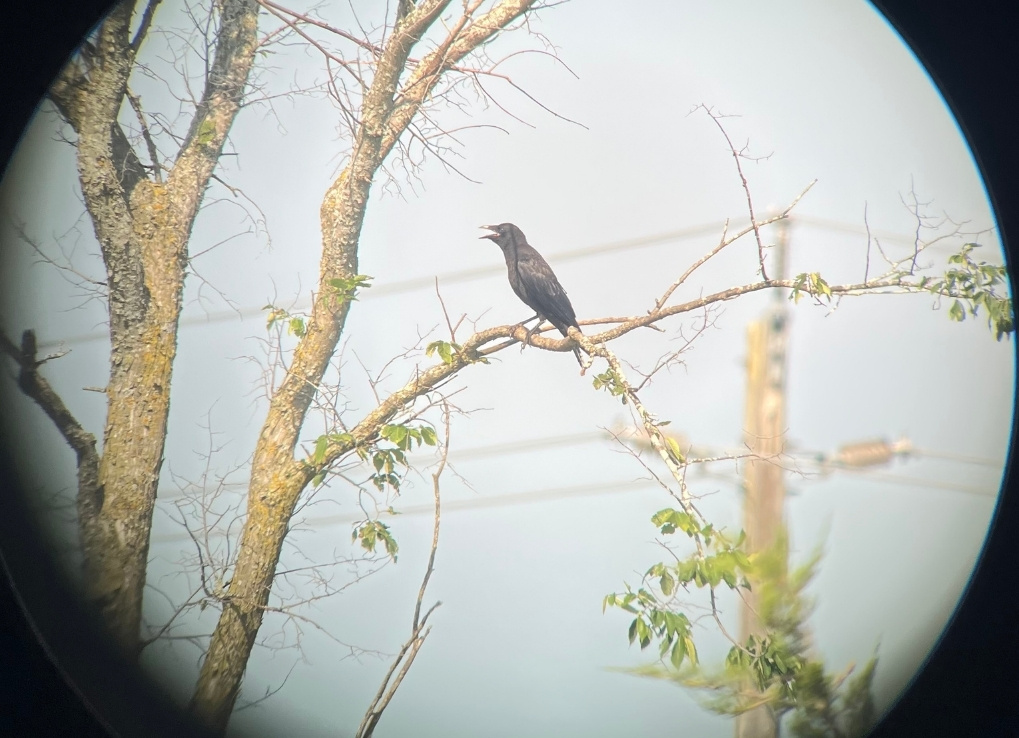
American crow: We love to hate them. Crows are also predators to shrikes, particularly eggs and nestlings. They are so common, and can often limit the activities that we can do, not wanting to draw them to the shrikes nearby. Despite this, I get a kick out of them and their loud personalities, always yelling and fighting amongst each other.
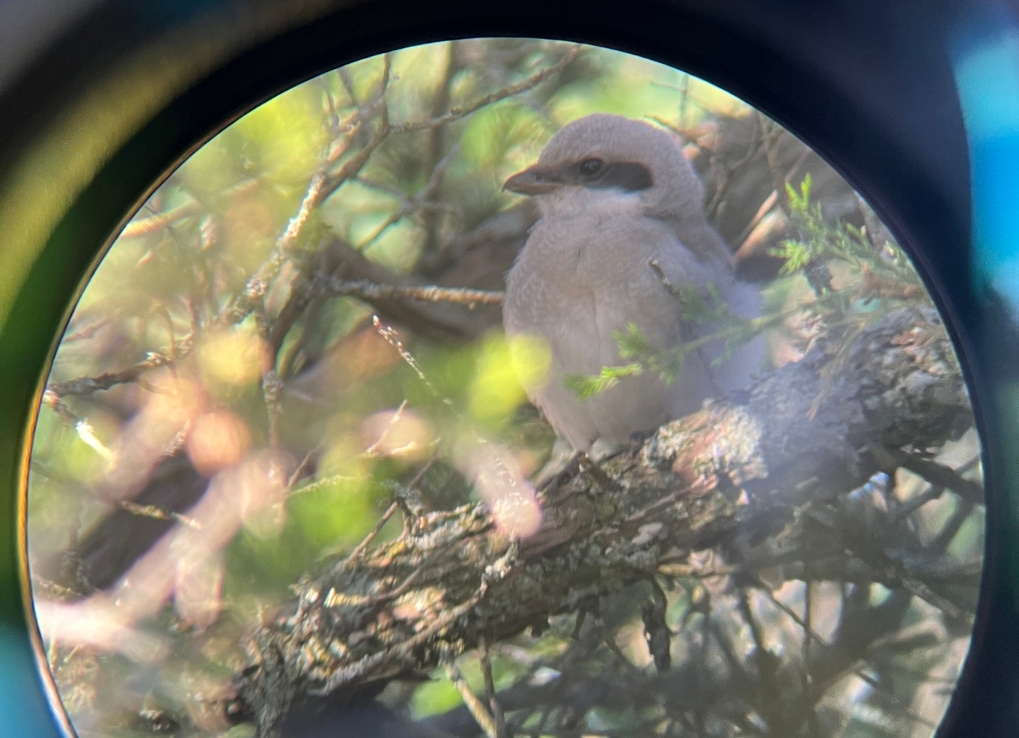
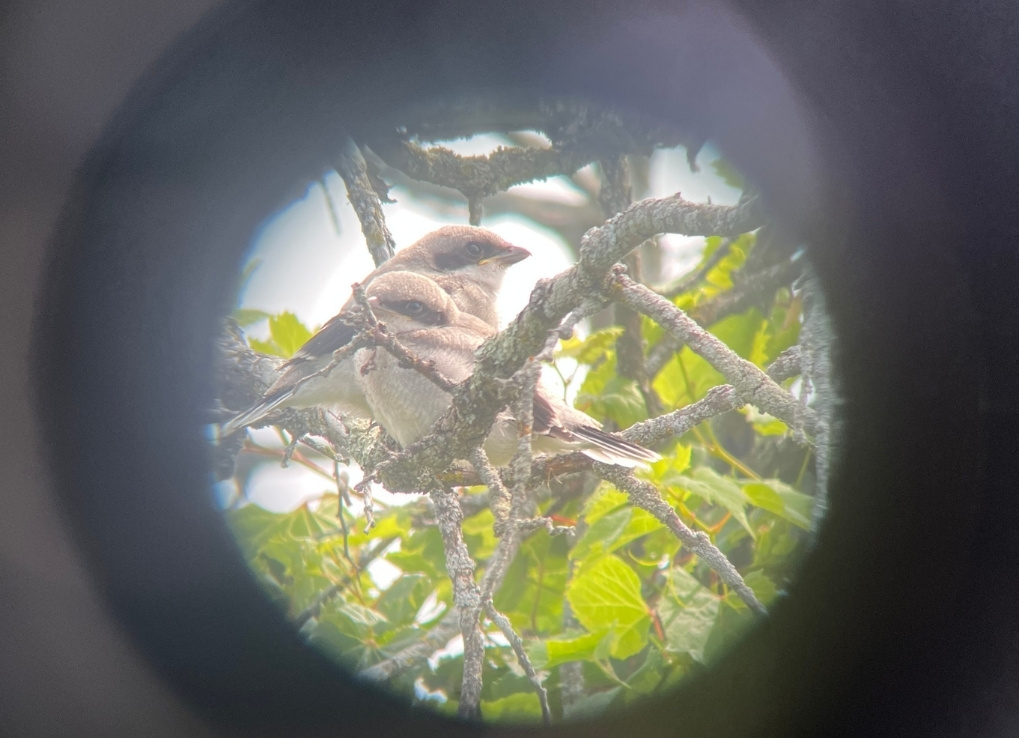
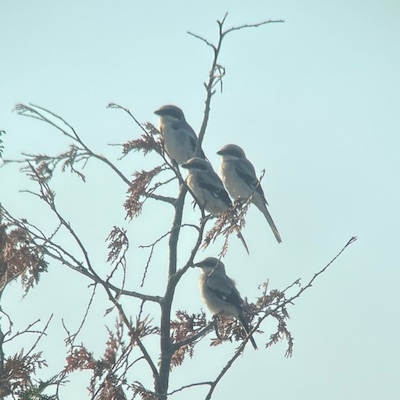
Loggerhead shrikes: Our favourite bird! Getting to watch them and their behaviour has been my favourite part of this job. The first photo was the first fledgling I ever saw, now long gone from its nest site. The second is a pair of fledglings still being fed by their mother. They are very needy, constantly begging and yelling at their mom to feed them more. The last photo is the most shrikes I have ever caught in one picture. It shows a father shrike and three of his fledglings. He is still feeding them despite how large they are. Within a couple of days, they should be hunting and feeding themselves.
I am still hoping to capture a couple other common but exciting species such as a Northern Harrier, Killdeer, and Wilson’s Snipe. Stay tuned!
Jane is thrilled to be working with WPC this summer as part of her practicum placement for her Master’s in Wildlife Biology at the University of Guelph. She has experience in reptile and fish conservation, and excited to branch out into birds! Between undergraduate and graduate school, she worked at exotic and companion animal veterinary clinics, something that furthered her interest in animal health and welfare. She is excited for a summer outside, learning about grassland birds and their conservation.

We need your help