
Wanted, alive and well: shrikes!
Publié leseptembre 7, 2021parKatelyn West
Qu'est-ce que le Programme de rétablissement de la pie-grièche migratrice de l'Est? Après une chute précipitée de la population sauvage de pie-grièche migratrice de l'Est dans les années 1990, Environnement Canada a invité Conservation de la faune au Canada à se joindre à l'effort de rétablissement multi-partenaires en 2001. Depuis, la taille de la population sauvage a fluctué. Des études ont montré que bien que l'effort de rétablissement ait empêché l'espèce de disparaître du Canada, plus de travail est nécessaire pour identifier et aborder les causes du déclin de l'espèce. CFC travaille pour empêcher la pie-grièche migratrice de l'Est de disparaître en renforçant la population sauvage en Ontario, et en étudiant l'espèce pour en apprendre davantage sur les menaces qu'elle fait face.
Howdy, shrikes!
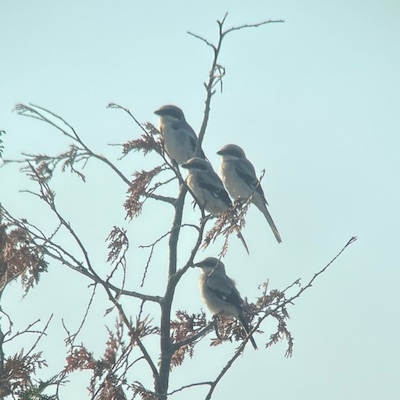
Over six weeks from July through August, the WPC team welcomed 23 conservation-born eastern loggerhead shrikes, an endangered songbird, to their natural grassland habitat in Carden, ON. These shrikes were hatched out and raised by their parents at WPC partner conservation breeding facilities in Ontario and in the United States, until they became independent fledglings. At that stage, the juvenile shrikes were expertly transported to Carden, where they were cared for in the field enclosures that we spruced up for them. Following a strategic process known as hacking, these shrikes were exposed to natural elements to allow them to acclimate to their wild surroundings in the safety of the pre-release enclosures where the juvenile shrikes were able to finesse their shrike skills. After about a week’s time, when each shrike demonstrated their ability to fly, hunt live invertebrate and vertebrate prey, and survive the elements of the alvar – they were ready to be released into it!
Saddle up.
Before the juvenile shrikes are released, we apply a unique combination of bands to their legs.

Shrikes receive their unique metal federal band and colour bands. Left: a 2021 conservation-bred juvenile. Right: a 2021 wild-trapped female. These birds were handled by trained biologists with permits and were released unharmed. Photos: Katelyn West and Hazel Wheeler
Seven juvenile shrikes released from Carden also received a radio tag harness. This lightweight device aids in the research of shrike movement, since little is known about their migratory and overwintering behavior. The radio devices are tracked through the Motus Wildlife Tracking System and will record a shrike’s location if the bird passes within range of a Motus tower.

A radio tag harness being attached to a juvenile shrike. Photos: Katelyn West and Jane Spero
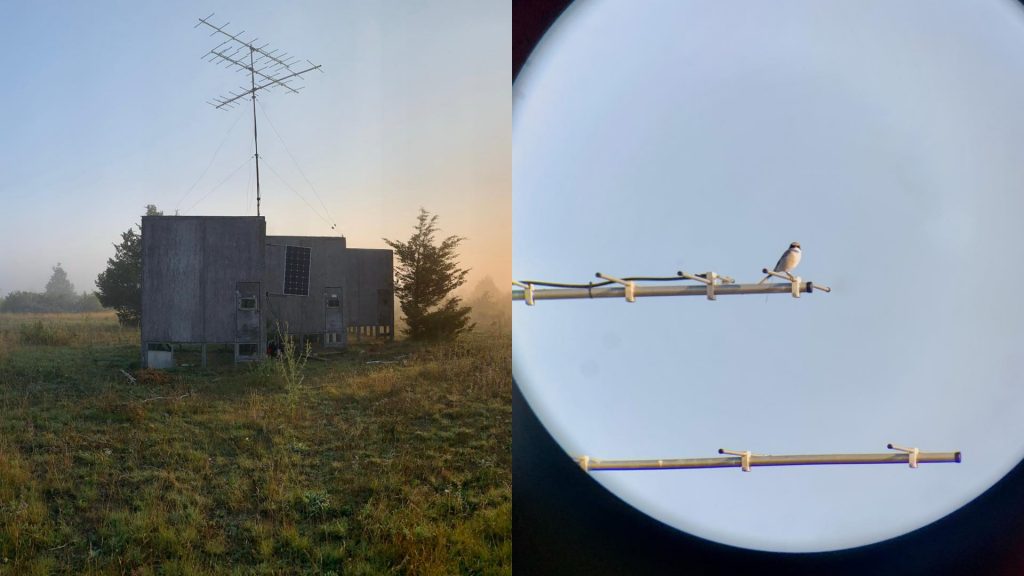
A Motus tower alongside a pre-release enclosure in Napanee and a shrike perched on the antennae. Photos: Paula Gomez Villalba
Ya’ll come back now, ya hear!
The combination of banding and radio tagging shrikes improves their detection rates in the wild and can provide amazing insight into their lives. For example: this season in Carden we detected a female shrike with a four-band combination. The bands indicated that she was a conservation-bred shrike hatched through the recovery program and released in Carden in 2019. The bands tell us that she is two years old and completed at least one full migration to and from Carden. During the 2021 season, she nested with a wild male and successfully fledged four young. This reaffirms our knowledge that shrikes bred and released through the program survive and thrive! They are very successful post-release and will return to help recruit new shrikes to the dwindling wild population.
New detections from Motus towers of radio tag harnesses occur annually, and will help us piece together the answer to where shrikes overwinter, aiding in shrike conservation.
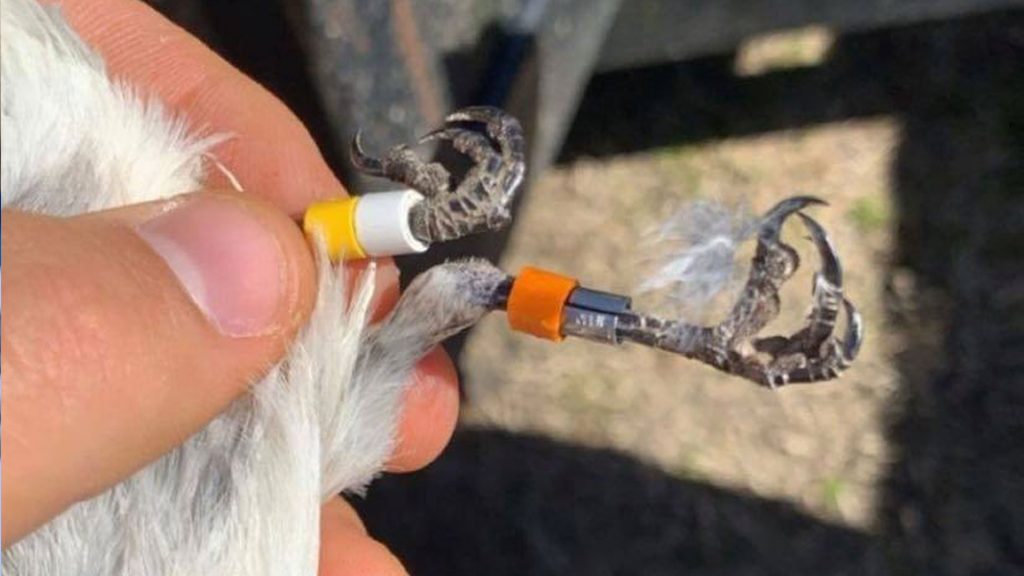
The bands of an eastern loggerhead shrike detected in North Carolina this winter when it managed to become trapped in the finder’s farmhouse attic. The bands indicate it was banded in Napanee in June 2020. Photo: C. Fonvielle
Wanted, alive and well: shrikes!
You don’t need to be an experienced bird bander or shrike biologist to help with shrike research.
Citizen scientists frequently spot shrikes and report their sightings to WPC -bonus points if band combinations are sighted! In fact, shrike reporters help WPC field teams each and every field season. During breeding season in the Carden and Napanee regions, keep your eyes on the treetops and power lines for these masked birds. And during migration, if you reside or recreate in southern Ontario or if if you are as far south as North Carolina, keep your eyes to the skies and your backyards! Eastern loggerhead shrikes head south starting in September and can move from the Carden region to areas within Pennsylvania in under a month’s time.
To report a shrike sighting or band combination: call us at 1-800-956-6608 or email birds@wildlifepreservation.ca
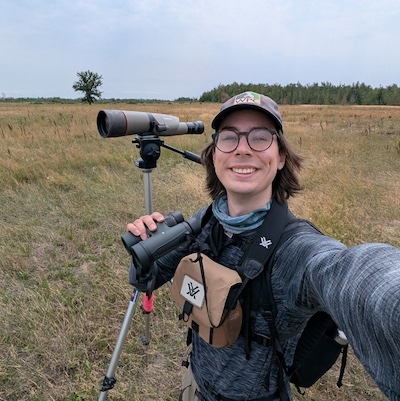
Katelyn is a Fish and Wildlife Technician who has been working and volunteering in the field of avian conservation for the past six years. Majority of her career has been spent working with raptors. She has contributed to efforts being made to restore the endangered population of northern spotted owls in British Columbia through captive breeding, as well as having assisted with monitoring programs for Cooper’s hawks, flammulated owls, great gray owls, bald eagles and northern saw-whet owls.

Nous avons besoin de votre aide