What’s the buzz at WPC’s Bumble Bee Conservation Lab?
Publié leaoût 11, 2021parSarah MacKell|Blogs, Les bourdons, Pollinisateurs
Qu'est-ce que le Programme de rétablissement des bourdons? Depuis les années 1990, les populations de bourdons sont en chute libre, ce qui représente une véritable catastrophe écologique. Quatre-vingt-dix pour cent de toutes les plantes à fleurs — y compris la plupart des fruits et légumes dans votre réfrigérateur — ont besoin de ces pollinisateurs pour se reproduire.
Jusqu'à ce que les causes de ces déclins puissent être inversées, l'élevage de conservation et la réintroduction sont la seule façon de protéger les bourdons en péril. Aujourd'hui, CFC est la seule organisation au Canada à reconstruire les populations d'abeilles sauvages grâce à l'élevage de conservation. Grâce à des percées récentes, nous avons trouvé comment augmenter considérablement le nombre de reines que nous produisons. Une fois relâchées dans la nature, elles peuvent établir leurs propres colonies, produisant des centaines de pollinisateurs pour soutenir les écosystèmes qui les entourent.
Welcome to WPC’s Bumble Bee Conservation Lab at African Lion Safari just outside of Hamilton, ON. We are very excited to update you on our new lab space that’s actually in a trailer. Spoiler alert – many bees can fit in a small space!
Sarah MacKell is the Lead Biologist for WPC’s Native Pollinator Initiative.
This year the program has focused on breeding three common species: common eastern, brown-belted and tri-coloured bumble bees. We’ve focused on common species this year to get a better understanding of the new lab space and to test out new pollen diets on reproduction and health. The information we collect this year with these common species will be extremely valuable for future years work with at-risk bumble bees.
We collected 45 queens and installed them into our Bumble Bee Conservation Lab in April and early June.
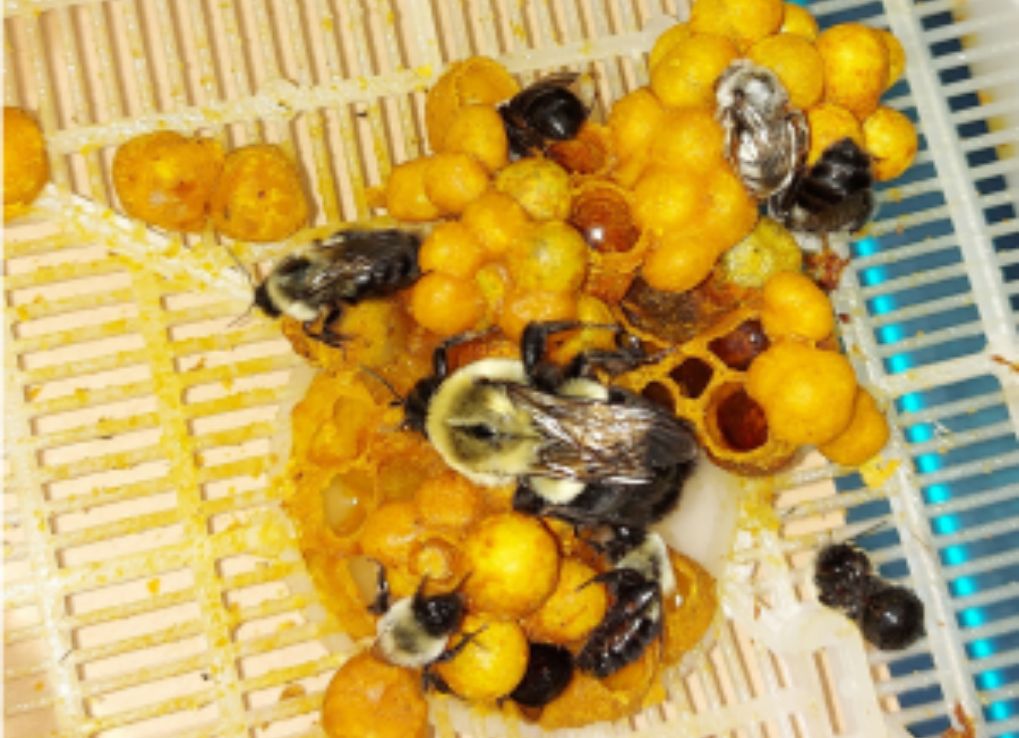
Common eastern bumble bee colony with 8 workers. The very blonde worker in the top right corner is a newly emerged worker – bees start off very blonde and become black and yellow like the other workers shown here over the first few days after emergence.
We installed 20 common eastern (Bombus impatiens) bumble bee queens and we’ve had great success with reproduction so far. 50% of queens have had workers emerge, which is much more than we estimated before the field season.
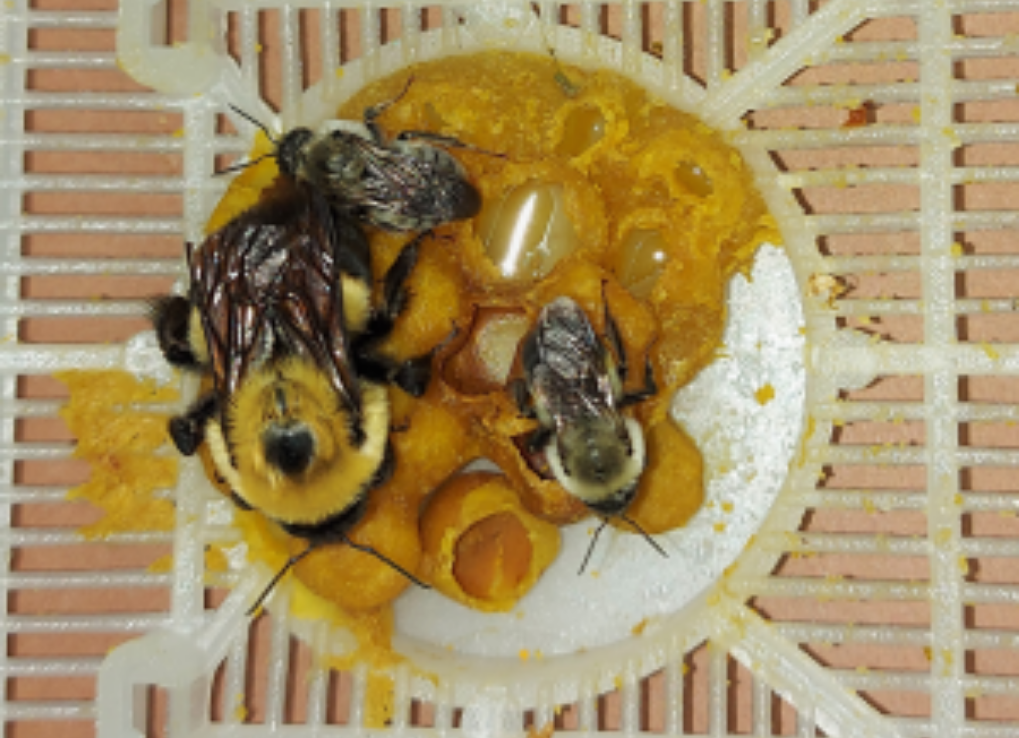
Brown-belted bumble bee colony with 2 workers.
We also installed 20 brown-belted (Bombus griseocollis) bumble bee queens and we’ve had very similar reproductive success as the common eastern bumble bee queens, with 45% of queens having workers emerge so far. This is a huge success since we have attempted to breed brown-belted bumble bees in the past and have never had workers emerge before, so the lab set up and our new techniques this year seem to be working well!
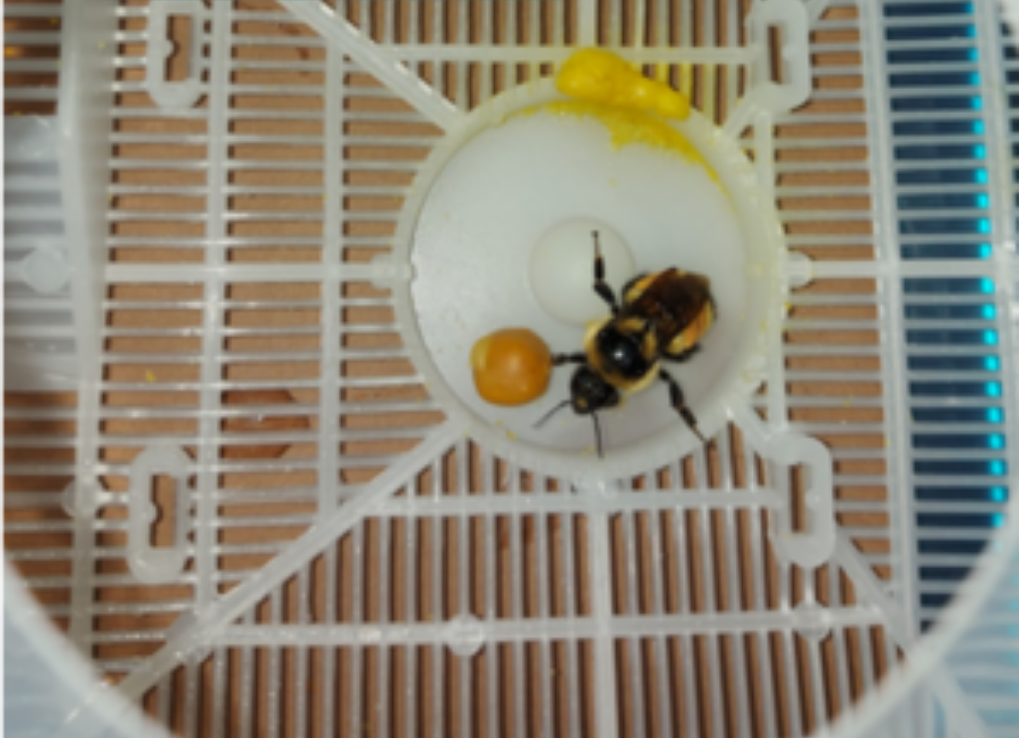
Tri-coloured bumble bee queen with three brood cells. Brood cells are the little yellow clumps right above the queen.
We only installed 5 tri-coloured (Bombus ternarius) bumble bee queens due to finding less of this species within our field surveys than expected. Even with the relatively few queens of this species it has been interesting to get to know their behaviours and how they differ from the other common species we collected. However, we haven’t had workers produced from these tri-colored queens, but many of these queens have been showing signs of reproduction, for example brood cells like in the picture above.
Overall, there has been great success this year with about 42% of queens producing workers. There is much more information and experiments to share from the Bumble Bee Conservation Lab.
Stay tuned for more updates on our exciting season!
Sarah is a native bee specialist, with an educational background in ecology and environmental science. Sarah is completing her MSc at York University, where she focused on native bee conservation in southern Ontario.
Nous avons besoin de votre aide