Au-delà du microscope : suivre nos échantillons jusqu'au laboratoire
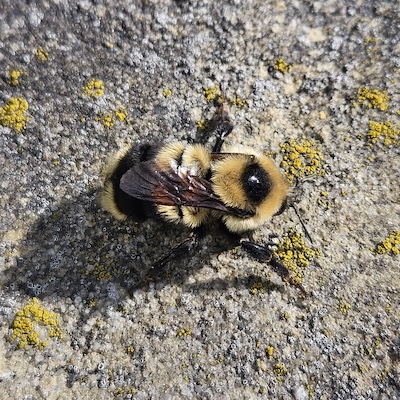
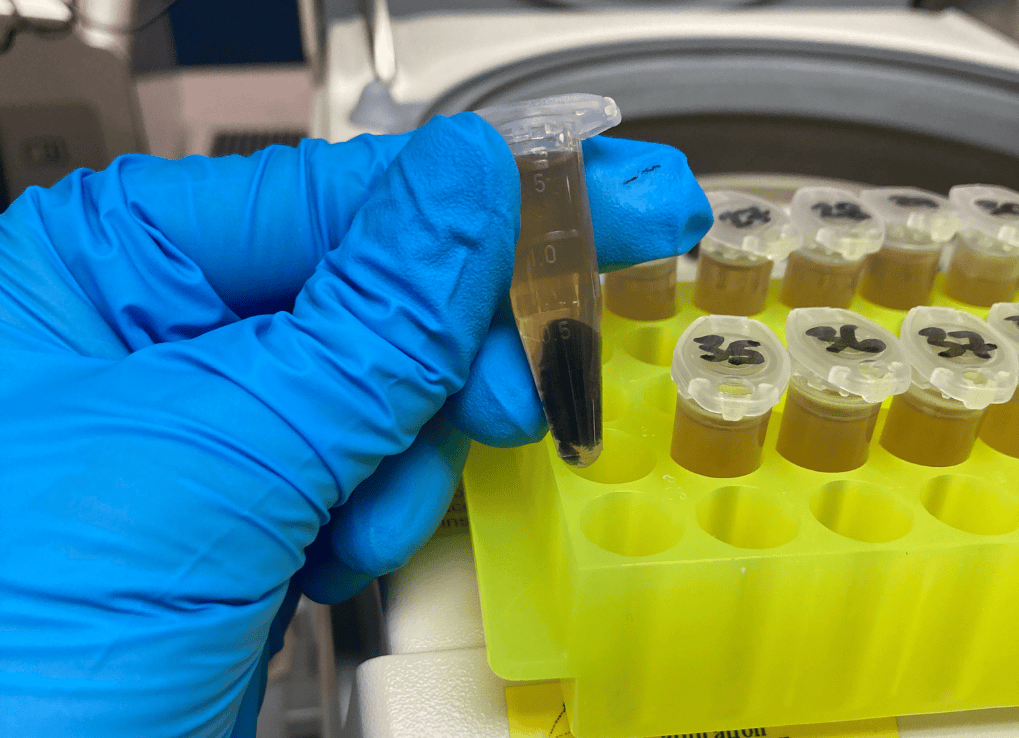
Publié le15 juillet 2025parParker Smale| Échantillons d'abeilles (Photo: P. Smale)
Qu'est-ce que le Programme de rétablissement des bourdons? Depuis les années 1990, les populations de bourdons sont en chute libre, ce qui représente une véritable catastrophe écologique. Quatre-vingt-dix pour cent de toutes les plantes à fleurs — y compris la plupart des fruits et légumes dans votre réfrigérateur — ont besoin de ces pollinisateurs pour se reproduire.
Jusqu'à ce que les causes de ces déclins puissent être inversées, l'élevage de conservation et la réintroduction sont la seule façon de protéger les bourdons en péril. Aujourd'hui, CFC est la seule organisation au Canada à reconstruire les populations d'abeilles sauvages grâce à l'élevage de conservation. Grâce à des percées récentes, nous avons trouvé comment augmenter considérablement le nombre de reines que nous produisons. Une fois relâchées dans la nature, elles peuvent établir leurs propres colonies, produisant des centaines de pollinisateurs pour soutenir les écosystèmes qui les entourent.
Mon travail, tel que je le décris à mes amis et membres de ma famille curieux, consiste à prendre un petit nombre de bourdons en péril et à les transformer en un grand nombre de bourdons. Puisque l'objectif du Programme de rétablissement des bourdons est d'augmenter la taille des populations sauvages de bourdons par des relâchements — cela nécessite très rarement un microscope ou des pipettes, sauf pour certains de nos efforts d'échantillonnage fécal.
Habituellement, nous laissons le laboratoire Schroeder de l'Université du Minnesota s'occuper du travail « minutieux » — chaque année, nous prenons quelques-unes des abeilles mortes tout au long de la saison et les envoyons au laboratoire du Dr Schroeder, où lui et son équipe effectuent du séquençage d'ARN sur elles, nous fournissant des informations importantes sur la santé des abeilles et les pathogènes et parasites possibles dans nos abeilles. Cette année, nous avons fait quelque chose de différent : en mars, j'ai pris l'avion jusqu'aux Twin Cities moi-même pour en apprendre davantage sur la façon dont on passe de l'abeille à la feuille de calcul.
Bien que je sois biologiste, le laboratoire dans lequel je travaille n'est pas ce que les gens imaginent habituellement quand ils pensent à un laboratoire scientifique. Il n'y a pas de flacons de produits chimiques, pas de lunettes de sécurité, pas de blouses de laboratoire. Il y a un microscope et quelques pipettes, mais nous ne les avons obtenus que l'année dernière, et ils sont gardés dans un autre bâtiment. Ce que nous avons à la place, c'est un climat chaud et humide, un doux bourdonnement en arrière-plan, et un éclairage d'ambiance : puisque les insectes ne peuvent pas voir la lumière rouge, le laboratoire est éclairé par des ampoules rouges et des lampes frontales qui donnent à l'espace un vibe « Dr. Frankenstein » bien défini. À mon grand désespoir, on m'a dit que ma demande d'un levier que je pourrais actionner pendant les orages pour ranimer les cadavres (d'abeilles) est « hors budget » et « contraire à l'éthique. »
Le laboratoire du Dr Declan Schroeder, situé dans le labyrinthe du Veterinary Diagnostic Laboratory sur le campus St. Paul de l'Université du Minnesota, correspond mieux au stéréotype d'un laboratoire scientifique moderne. La première chose que nous faisons en entrant dans le laboratoire blanc et chromé et bien éclairé est de trouver des blouses de laboratoire de rechange — quelque chose que je n'ai pas porté depuis les cours de chimie de première année à l'université. L'environnement ultra-stérile a du sens, car le laboratoire se spécialise en virologie, se concentrant le plus récemment sur les virus dans le secteur agricole : les abeilles mellifères et les porcs. Une molécule en aérosol indésirable pourrait fermer un rucher (probablement). Pour éviter de tels désastres, presque tout notre travail se déroule à l'intérieur de deux cabines de sécurité biologique de six pieds de long. Avec des vitres coulissantes et une sorte de technologie sous vide, elles utilisent un flux d'air constant et une filtration pour empêcher toute particule en suspension dans l'air de contaminer l'équipement ou les liquides avec lesquels nous travaillons. La première étape de ce travail ? Faire de la « soupe d'abeilles. »
Recette de la « soupe d'abeilles »
Ingrédients :
1 reine bourdon (B. terricola ou B. ternarius)
3 à 6 ml de réactif, pour faciliter le mouvement des solides
Instructions :
Comme mentionné précédemment, dans le laboratoire de conservation des bourdons, notre travail est de garder les abeilles en vie, mais une partie du cycle de vie de la colonie de bourdons comprend une mort naturelle. Les reines bourdons ne vivent qu'environ un an, et après leur mort, la seule façon d'en extraire ce précieux ARN est de les décomposer. Après une décomposition physique (et chimique !), le reste du processus consiste à ajouter et retirer divers réactifs chimiques afin d'isoler cet ARN du reste des éléments flottant dans la soupe.
C'est incroyable à quel point les deux côtés de notre travail sont différents. Quand je vais au laboratoire et regarde une étagère de colonies d'abeilles, je peux sentir comment chaque colonie ou reine se porte sans même les retirer de l'étagère :les colonies saines sont chaudes, bourdonnant d'ouvrières. Même avant que les ouvrières n'émergent, et que chaque colonie n'est qu'une seule reine, je peux glaner des informations à partir de son niveau d'activité, de combien elle a mangé, et de son comportement. En regardant la plaque que nous avons préparée, il n'y a pratiquement aucune différence entre les 96 puits : chacun semble contenir une goutte d'eau, mais contient en réalité les informations génétiques d'une seule abeille ou d'un échantillon fécal. Ce n'est qu'à la fin du processus, quand Clarissa a généré des graphiques et des graphiques dans le logiciel de séquençage, que je me souviens pourquoi nous faisions tout ça : les abeilles !
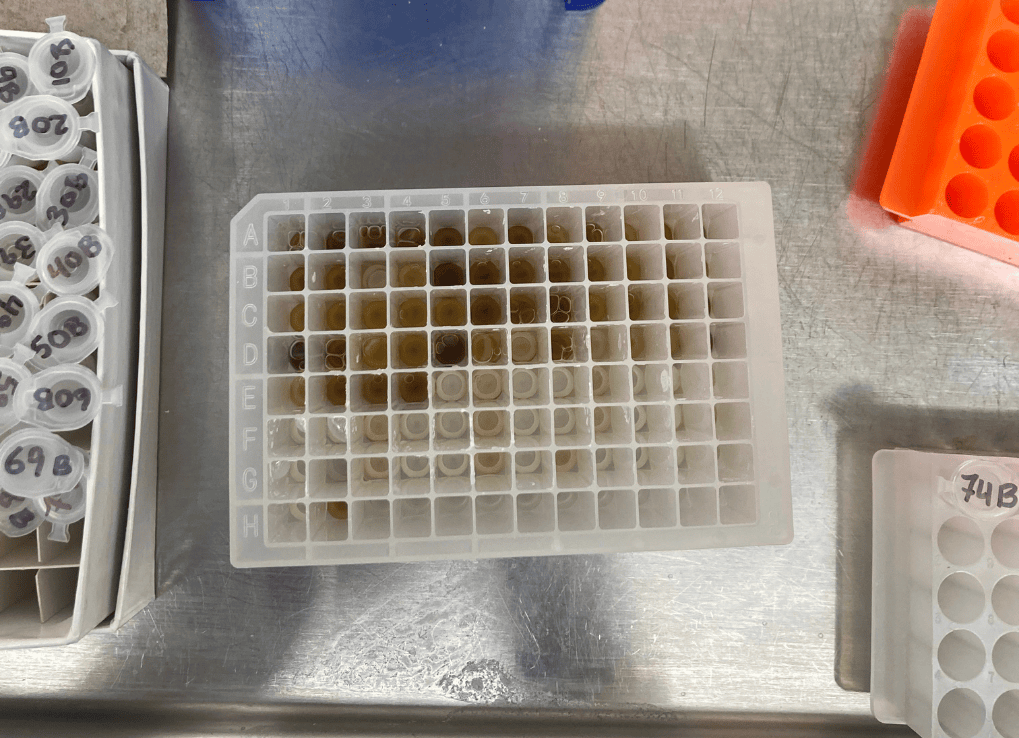
Plus tôt dans le processus, on pouvait au moins dire que certains échantillons provenaient de corps d'abeilles (plus foncés) et certains d'échantillons fécaux (plus clairs/transparents). Mais à la fin, chaque puits n'était que du liquide transparent. Photo de Parker Smale.
Sur cette note, pouvoir voir comment fonctionne toute cette recherche en biologie moléculaire m'aide à mieux comprendre comment choisir les échantillons à conserver et à envoyer, ainsi que les meilleures pratiques pour le stockage et la préparation des échantillons d'une manière qui facilitera le travail de l'équipe de laboratoire qui les traitera.
De même, de l'autre côté des choses, il a été utile de passer du temps avec l'équipe Schroeder pour expliquer davantage notre laboratoire et ce que nous recherchons dans nos échantillons, ce qui les aide à mieux comprendre comment interpréter des résultats ambigus ainsi que quel type de rapport est le mieux pour notre équipe à la réception.
L'utilisation de la biologie moléculaire en conservation est plus importante que jamais. Pour nous, cela signifie envoyer des abeilles mortes pour voir si elles ont des maladies. Pour d'autres, cela pourrait ressembler à l'utilisation d'échantillons de sang pour estimer la diversité génétique d'une population, l'utilisation de l'ADN environnemental pour recueillir des informations sur l'abondance des espèces et la biodiversité sur un site, ou même l'identification de la source d'animaux et de produits animaux commercialisés illégalement. Tout ça est important ! La technologie continue d'avancer, et nous devrions l'utiliser autant pour le bien que pour le mal !
Parker est arrivé à CFC avec une passion innée pour l'élevage de conservation après avoir acquis de l'expérience dans l'élevage de nombreux types d'insectes. En tant que technicien principal du programme d'élevage des bourdons de CFC, il s'est spécialisé dans la gestion des données, la préparation du pollen et le matchmaking entomologique. Maintenant, en tant que biologiste du laboratoire du programme, son travail est axé sur l'affinement des méthodes d'élevage pour améliorer les résultats de l'élevage de conservation : plus récemment, son travail a contribué au premier accouplement réussi du bourdon terricole au laboratoire!

Nous avons besoin de votre aide