
Bumble bee field work: when a generalist meets a specialist
Publié leoctobre 25, 2021parEllen Richard
Qu'est-ce que le Programme de rétablissement des bourdons? Depuis les années 1990, les populations de bourdons sont en chute libre, ce qui représente une véritable catastrophe écologique. Quatre-vingt-dix pour cent de toutes les plantes à fleurs — y compris la plupart des fruits et légumes dans votre réfrigérateur — ont besoin de ces pollinisateurs pour se reproduire.
Jusqu'à ce que les causes de ces déclins puissent être inversées, l'élevage de conservation et la réintroduction sont la seule façon de protéger les bourdons en péril. Aujourd'hui, CFC est la seule organisation au Canada à reconstruire les populations d'abeilles sauvages grâce à l'élevage de conservation. Grâce à des percées récentes, nous avons trouvé comment augmenter considérablement le nombre de reines que nous produisons. Une fois relâchées dans la nature, elles peuvent établir leurs propres colonies, produisant des centaines de pollinisateurs pour soutenir les écosystèmes qui les entourent.
This year I am fortunate enough to be a part of Wildlife Preservation Canada’s (WPC) Native Pollinator Initiative (NPI). I come from a background heavy in entomology, which is the study of insects. I began my university education in a zoology program at the University of Guelph, which shockingly did not have insect diversity as a mandatory course for the degree. I say shocking, because approximately half of the world’s animal diversity is insects! Insects are found in just about every habitat, and differ greatly in their appearance, behaviour and overall ecology.
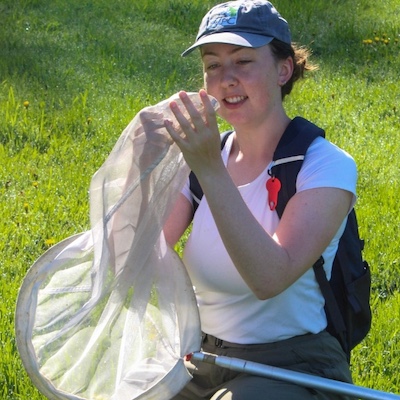
My appreciation of insects began by volunteering in a lab sorting through insect samples that came from Costa Rica. I marveled at the shapes and sizes of the specimens I was looking at, and I have worked closely with insects ever since. I continued my studies in entomology in the form of a master’s degree looking at insect pollination. I analyzed the diversity of non-bee flower visitors to agricultural crops, the amount of pollen they carried, and the composition of the pollen carried by each insect. Prior to and during my master’s research I worked on a long-term Ontario bee diversity survey program, where I helped collect, identify, database and analyze 20,000 bee specimens.

Ellen very happy with a two spotted bumble bee male on her cheek.
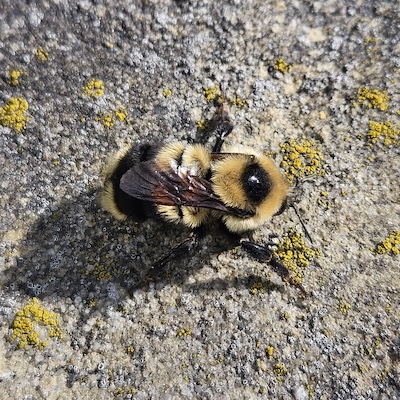
I have worked with many groups of insects, but this summer I got to hone in on one group in particular: bumble bees (genus, Bombus). I have been working closely with Tiffani Harrison, the WPC’s Conservation Outreach & Field Biologist with the NPI team, for the past few months –spending a significant portion of our time in the field catching and monitoring bumble bees.
Tiffani has been working with WPC on the NPI project for several years now and has an expert eye for bumble bees. I am flabbergasted when she spots one in a tree 10 meters away and makes a species identification before actually catching it and examining it up close. Similarly, she is amazed when I can name various insects she points out in the field with ease, or narrow down most other bees we see down to species or at least genus in a few seconds.
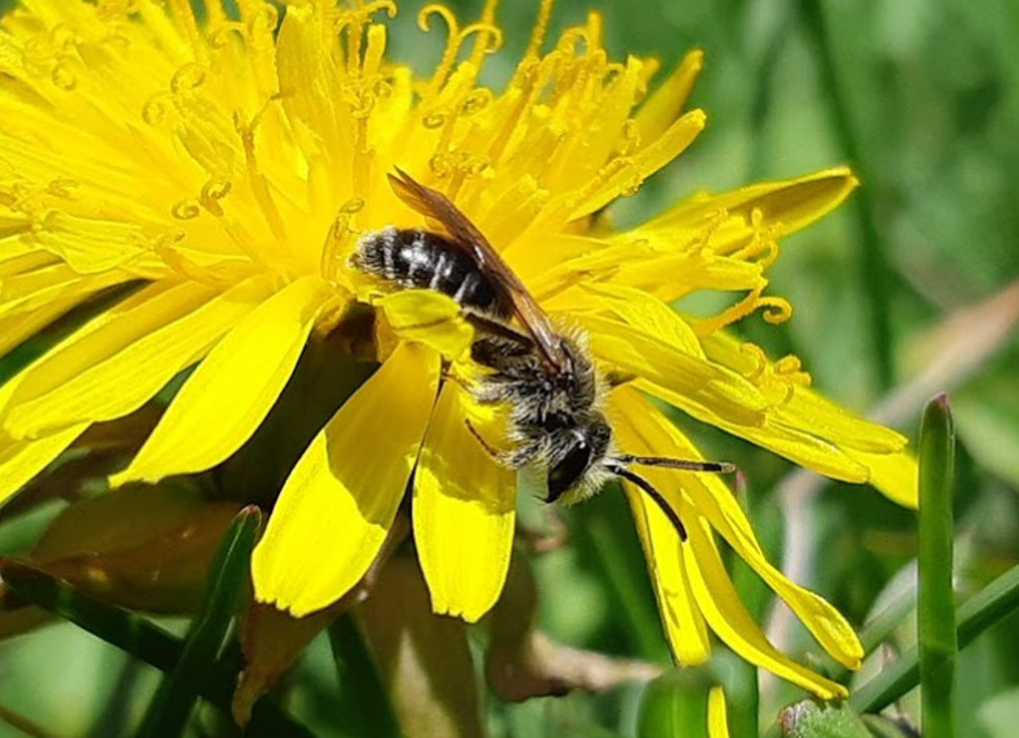
Above, an andrena species male – a bee that I identified for Tiffani and below, Fernald’s cuckoo – a bumble bee I struggled to identify that Tiffani knew at a glance. Photos: E. Richard
Tiffani has taught me so much about bumble bee ecology and identification in the field, including tips on how to identify the 14 different bumble bee species we caught during our surveys this year. This free flow of knowledge between us has really made this experience even more enjoyable. Unlike myself, Tiffani did not come from an entomology background, but is now very specialized on bumble bees. So, when we are out in the field together, she teaches me about bumble bees, and I share my knowledge of the other insects, allowing us to continuously learn from one another.
Just as having high bee diversity is important, having a diversity of skills in your field work team is crucial and fun!
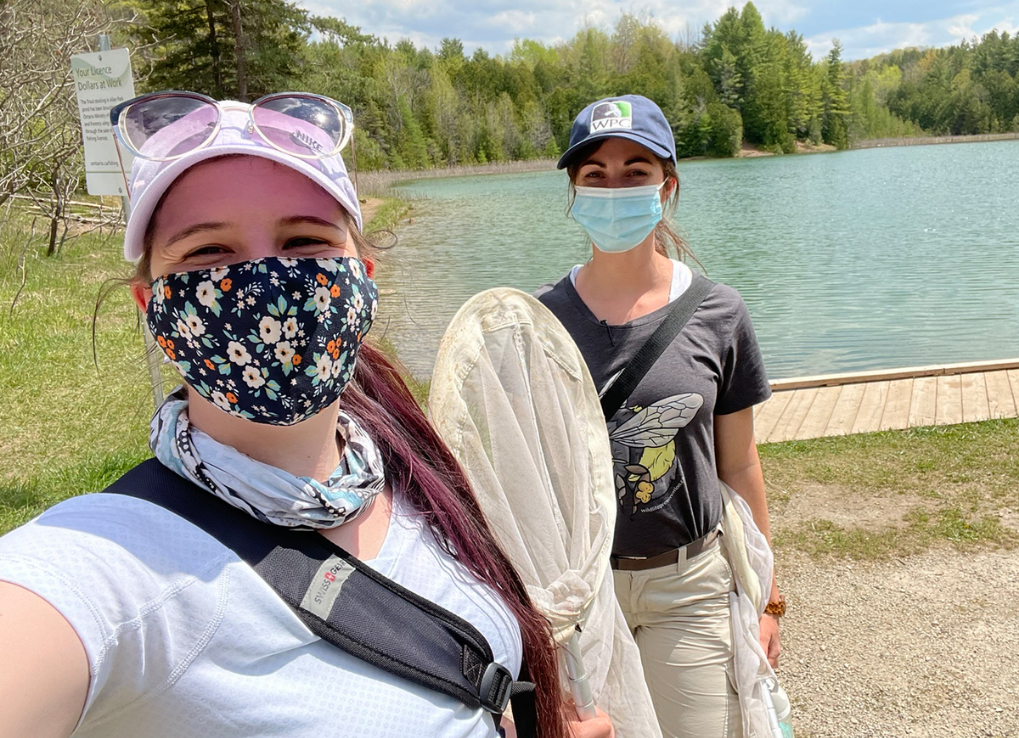
Ellen has completed a Master’s degree in environmental sciences at the University of Guelph. Her research focused on assessing non-bee pollinators forage patterns in an agricultural environment. She has a huge passion for the diversity of form and function in the insect world.
Ellen loves sharing this smaller, often overlooked world with others and spreading the excitement.

Nous avons besoin de votre aide