
Émerger dans une nouvelle opportunité
Publié lemars 2, 2026parAlyssa de Wit
Qu'est-ce que les programmes de rétablissement de la Colombie Britannique ? Dans les zones humides de la vallée du Fraser en Colombie Britannique, les tortues peintes de l'Ouest font face à de nombreux défis en tant qu'œufs et nouveau-nés, avec des taux de prédation élevés, la perte et la fragmentation de l'habitat, et aucun soin parental une fois éclos, ce qui mène à des populations non viables. Depuis 2012, nous améliorons leurs chances de survie en protégeant les nids, en récoltant les œufs vulnérables, en les incubant artificiellement et en donnant une longueur d'avance aux nouveau-nés avant leur relâchement dans la nature. De même, le damier de Taylor, une espèce en danger clé de voûte et indicateur environnemental, était autrefois considéré comme disparu du Canada jusqu'à sa redécouverte en 2005 sur l'île Denman. Depuis, CFC s'est concentré sur le renforcement de sa population sauvage en Colombie Britannique grâce à des efforts d'élevage de conservation et de restauration de l'habitat.
Ensemble, ces initiatives visent à améliorer la survie des deux espèces dans leurs écosystèmes. Le zoo du Grand Vancouver soutient ces deux programmes par ses installations et son expertise collaborative.
En entrant dans le laboratoire des tortues, une chose m'a submergée : le brouillard ! Seulement parce que c'était une matinée fraîche et que je porte des lunettes, et si vous savez quelque chose sur l'hébergement des tortues, vous saurez qu'elles sont gardées dans un environnement chaud et humide. Une fois que ma vision a commencé à s'éclaircir, le travail a commencé.
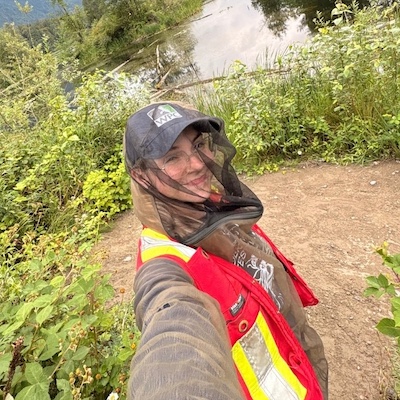
Je m'appelle Alyssa de Wit, et je suis la nouvelle assistante à la conservation des projets de C.-B. soutenant la conservation de la grenouille maculée de l'Oregon, du damier de Taylor et de la tortue peinte de l'Ouest. J'ai précédemment travaillé avec CFC à l'été 2025 comme monitrice de nids de tortues à Chilliwack. Je suis enthousiaste à l'idée d'élargir mon expérience pratique avec ces espèces en danger, en aidant à l'élevage, à l'incubation, au relâchement et plus encore !
Commencer un nouvel emploi en début d'année peut être agréable; nouveau travail, nouvelles expériences, nouveau départ ! Cependant, selon l'espèce, commencer en février signifie que beaucoup d'individus dorment. La douzaine de tortues adultes, dont Tutu, et les grenouilles maculées de l'Oregon brument (une forme d'hibernation chez les animaux à sang froid) d'environ octobre à mars dans le réfrigérateur et dans des bacs extérieurs, respectivement ; lisez le blogue « La destination hivernale la plus fraîche » pour plus d'informations. Les damiers de Taylor subissent la diapause (phase dormante) en tant que larves de septembre à février. Cependant, même si beaucoup dorment, ça ne veut pas dire que nous, on dort !
L'année dernière, 250 tortues peintes de l'Ouest écloses ont été gardées pour une longueur d'avance, pendant laquelle elles mangent et grandissent en hiver pour mieux se protéger des prédateurs une fois relâchées. L'une des premières tâches qu'on m'a enseignées était de nourrir et de nettoyer les tortues. Une variété d'aliments, notamment des vers de sang, des grillons, du krill, des crevettes et des filets de sole, sont donnés chaque matin. Une fois les tortues rassasiées, le nettoyage commence !
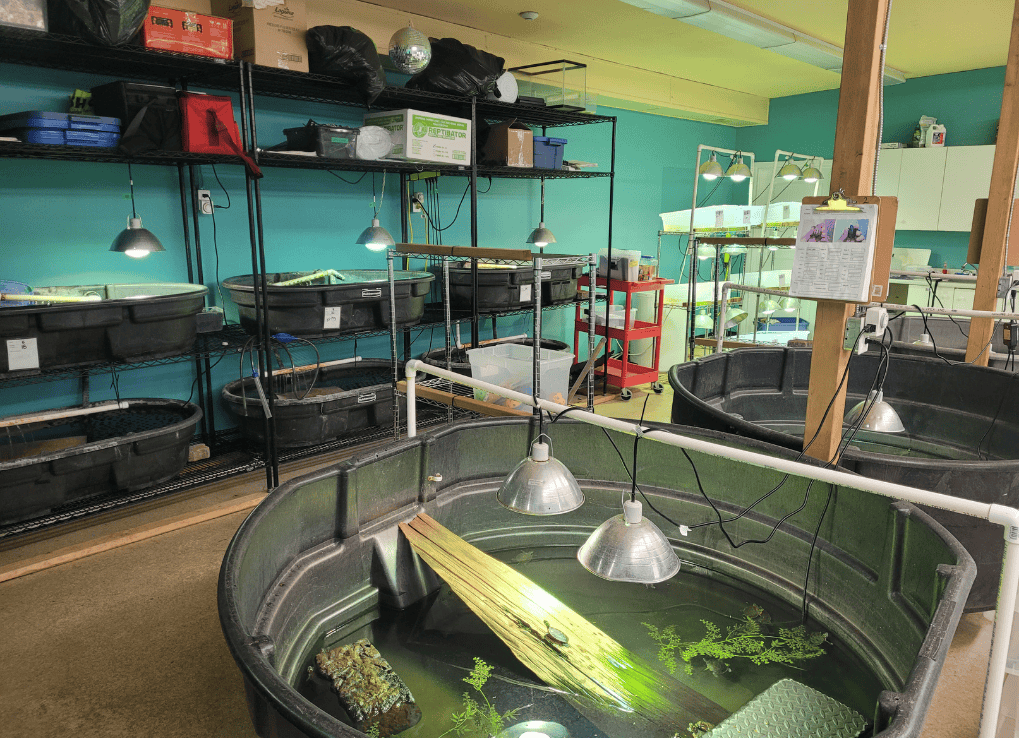
La taille détermine le logement approprié pour les tortues. Des bacs rectangulaires transparents empilés sur des étagères sont utilisés pour les plus petites tortues ; des biofiltres longeant le bord de la pièce, composés de deux bacs : l'un avec des tortues et l'autre pour faire circuler et chauffer l'eau ; et de grands bacs ronds pour les tortues de plus de 30 grammes en attente d'être relâchées. Chaque jour, chaque bac est soit siphonné soit nettoyé au filet pour enlever les excréments et toute nourriture restante. Tous les bacs sont également nettoyés en profondeur périodiquement, avec toute l'eau enlevée et frottée.
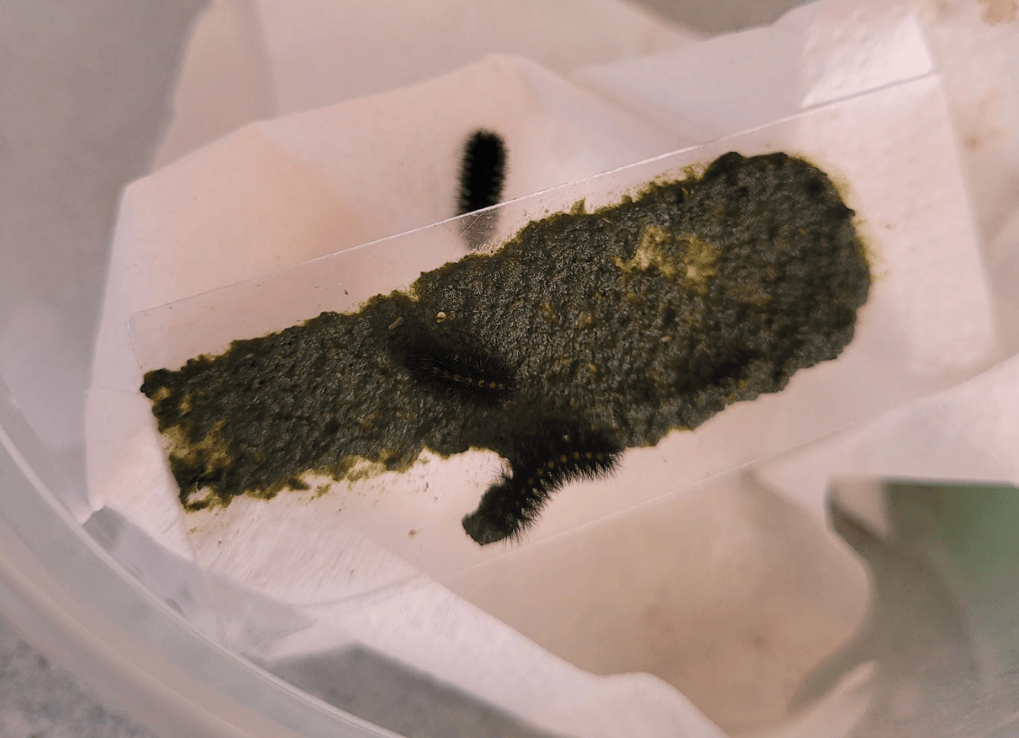
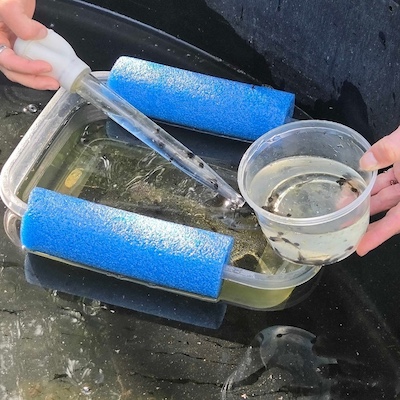
Les damiers de Taylor hivernent en tant que larves ; ils commencent à se réveiller à la mi-février à mesure que les températures augmentent. En hiver, en raison de l'offre limitée de plantain frais, un aliment important donné aux chenilles, nous utilisons du plantain lyophilisé, qui est mélangé avec de l'eau pour créer une pâte, puis étalé sur une lame de microscope (illustré ci-dessus). C'est exactement ce que la chenille avait commandé !
Conservation de la faune au Canada travaille depuis plus de 40 ans à sauver les animaux en péril au Canada. CFC utilise des techniques scientifiques telles que l'élevage de conservation et le relâchement, la réintroduction et la translocation pour les reptiles, les amphibiens, les oiseaux, les insectes et les mammifères. En 2025, grâce aux efforts de CFC, 8 852 animaux ont été élevés dans des installations de conservation, et 4 661 individus ont été relâchés dans la nature. Cette année, je suis enthousiaste à l'idée des efforts de conservation qui se profilent et des jalons qui peuvent être atteints !
Alyssa était surveillante de nids de tortues peintes de l'Ouest en 2025 et est heureuse d'élargir ses connaissances et son expérience avec la grenouille maculée de l'Oregon et le papillon damier de Taylor en tant qu'assistante aux programmes de conservation. Alyssa est titulaire d'un baccalauréat de l'UFV et a travaillé principalement dans l'élevage, le suivi et l'éducation des espèces en voie de disparition. Elle a travaillé pendant plus de 5 ans dans le rétablissement des chouettes tachetées et, en 2024, dans la conservation des oiseaux des prairies en Ontario. En 2023, Alyssa a fait un voyage en voiture à travers la Nouvelle-Zélande et a été bénévole dans un centre de réhabilitation en Australie pour les kangourous, les wallabies, les wombats et et bien d'autres.

Nous avons besoin de votre aide