Keep calm and carrion
Posted onAugust 27, 2026byJenna KisselPhoto: H. Cale.
What is the Canada’s New Noah Program? Since 1988, the Canada’s New Noah program has provided conservation biologists in Canada the opportunity of a lifetime. Each year, WPC selects a dedicated biologist from applicants across Canada to undertake a 3-month course at the Durrell Conservation Academy in the U.K. followed by a 6-month internship on the island of Mauritius in the Indian Ocean. This is an opportunity unlike any other for young Canadians to learn firsthand how the world’s most successful conservation recovery programs are managed and to bring this knowledge and experience back to improve Canada’s conservation capacity.
For the first time ever, WPC is offering this placement to two biologists. Our 2026 New Noahs are Jenna Kissel – WPC’s 35th Canada’s New Noah, and Daryn Farrant – WPC’s 36th Canada’s New Noah. Both report on their experiences and how they will apply them upon return to Canada. Thank you to the Alan & Patricia Koval Foundation for their many years supporting the Canada’s New Noah Program and for going above and beyond supporting two Koval Foundation New Noah Internships in 2026.
When people think of vultures, their immediate reaction is often “what?” or “gross”. Commonly portrayed as villains in popular culture and slang (“vulture” is often used as a derogatory term), they are not given the appreciation they deserve. These unloved birds provide an incredibly valuable ecosystem service, cleaning up carcasses and preventing the spread of disease. However, they are one of the fastest declining groups of birds in the world. Of the 23 species of vultures worldwide, ~70% are threatened with extinction. Despite their unflattering, and unfair, reputation, they are my favourite birds (but don’t ask me to choose which species is my favourite, I love them all)!
Due to some delays with my Mauritian visa, I had some time to travel around the U.K. after leaving Jersey. Thanks to WPC and the Patricia and Alan Koval Foundation who paid for my extended travel costs, I went to Wales after visiting London to volunteer with the Horstmann Trust.
The Horstmann Trust is a charity in the U.K. dedicated to vulture conservation, working to prevent the loss of these imperilled species through captive breeding and release, with a focus on Egyptian, bearded, and hooded vultures. I could not pass up the opportunity to work with vultures in a conservation breeding program, so I spent a little over two weeks at the Trust, which turned out to be the best two weeks of my life.
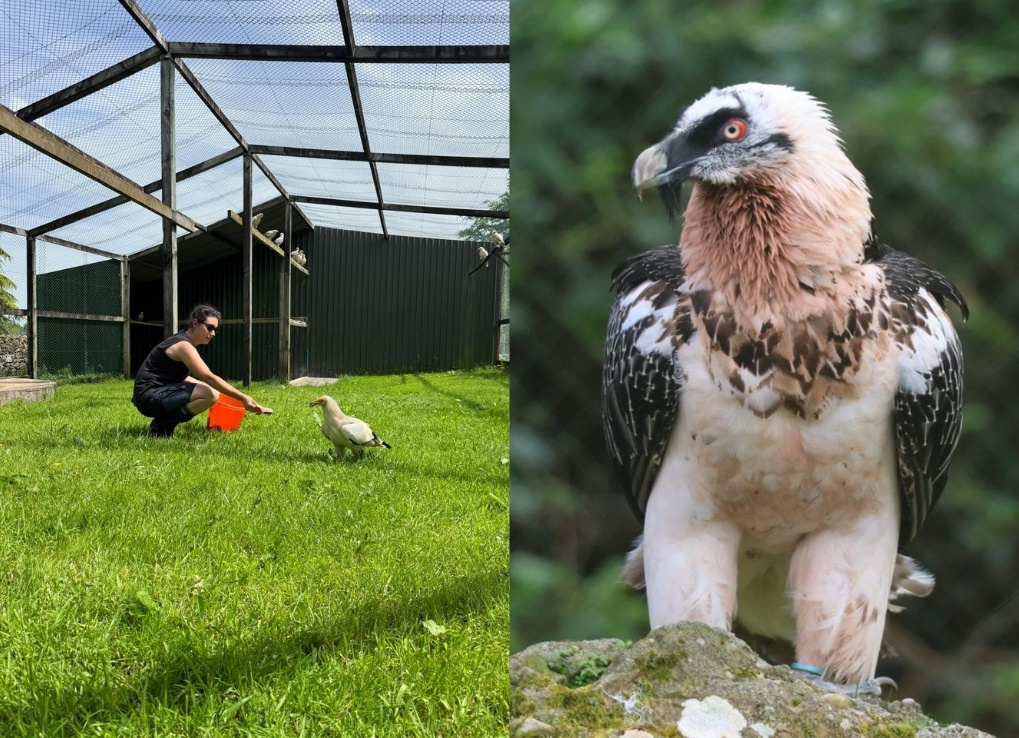
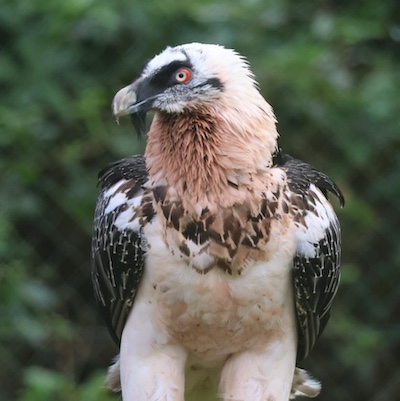
(Left) Jenna offering food to an Egyptian vulture, and (right) a bearded vulture. Photos: H. Cale.
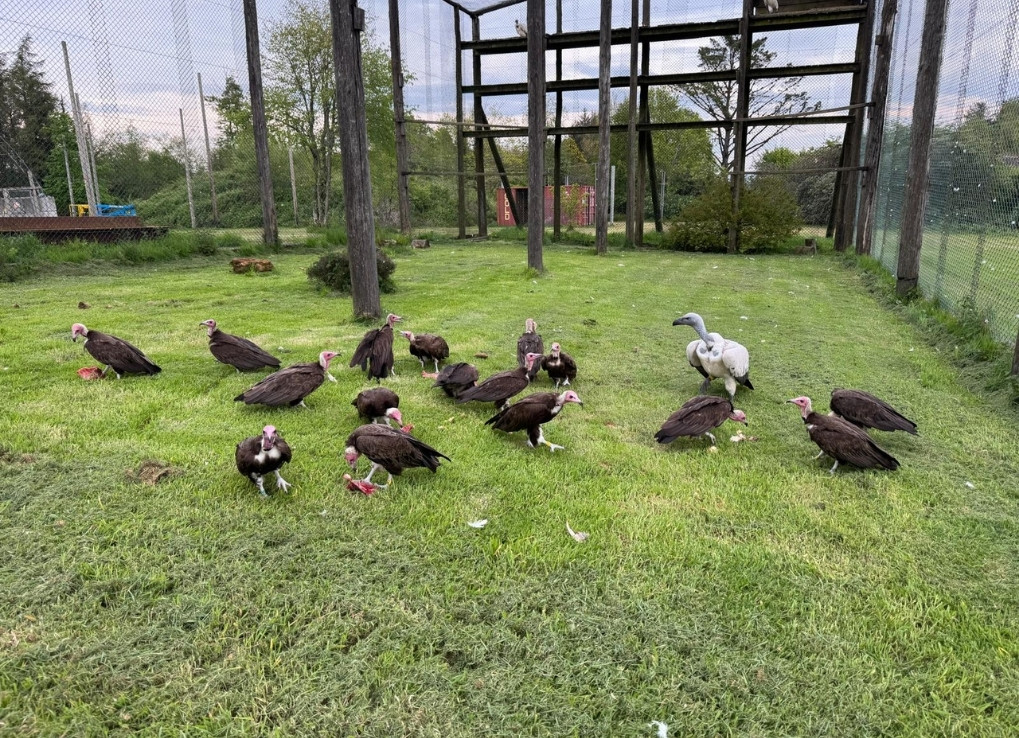
I was lucky enough to volunteer with the Trust during the breeding season, so I got to experience egg incubation and chick hand-rearing, as well as daily vulture husbandry. Mornings were spent preparing food and feeding the collection of vultures, which also includes cinereous vultures, cape vultures, palm nut vultures, and Andean condors. Afternoons always had a different task, from data entry to cleaning baths to mowing aviaries.
Mixed in throughout the day were caring for the eggs and chicks. Eggs were weighed and candled daily, while baby vultures were fed 3 times a day. A baby bearded vulture and three hooded vultures had hatched by the time I arrived, with more hooded vulture and Egyptian vulture eggs in incubators (though sadly I had to leave before any Egyptian vultures hatched). A major component of the Horstmann Trust is the reintroduction of captive bred birds to the wild, in partnership with local conservation organizations. In June of this year, two Egyptian vultures bred at the Trust were released in Bulgaria as part of the EU LIFE’s Egyptian vulture recovery project.
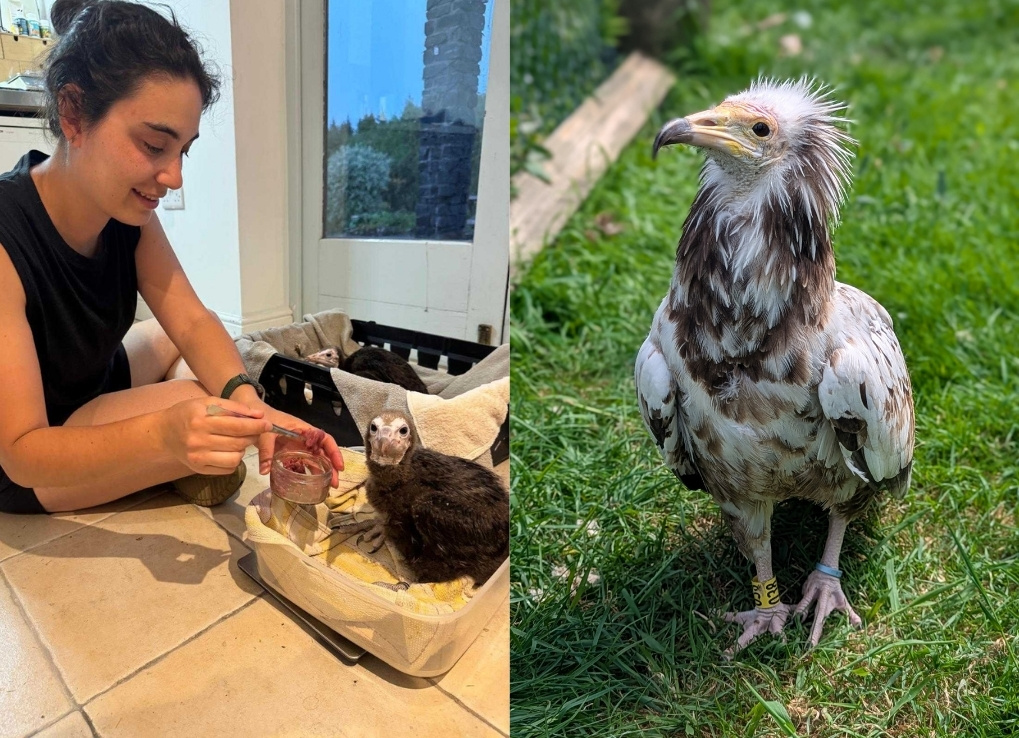
(Left) Jenna feeding two of the hooded vulture chicks and (right) a subadult Egyptian vulture that hatched at the Horstmann Trust in 2023. Photos: H. Cale and J. Kissel.
Avian conservation breeding is truly my passion, and getting to work with vulture conservation specifically was a dream come true. Volunteering with the Horstmann Trust was a bit of a side quest from the New Noah Program’s path, and I am eternally grateful to WPC and the Patricia and Alan Koval Foundation for supporting my journey, and to the Horstmann Trust team for accommodating me.
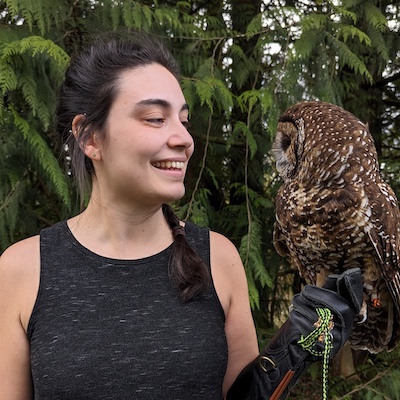
Jenna is a zookeeper and wildlife conservationist who is passionate about endangered species recovery. She graduated with a BSc in Wildlife Biology & Conservation from the University of Guelph before moving to British Columbia to work with northern spotted owls. Her background is in raptor conservation, specializing in husbandry and conservation breeding. She has been fortunate to work with many different species and conservation programs over the last 8+ years and can’t wait to continue this work with the skills she’ll gain from the New Noah Program.
We need your help