
Nothing Found
Sorry, no posts matched your criteria
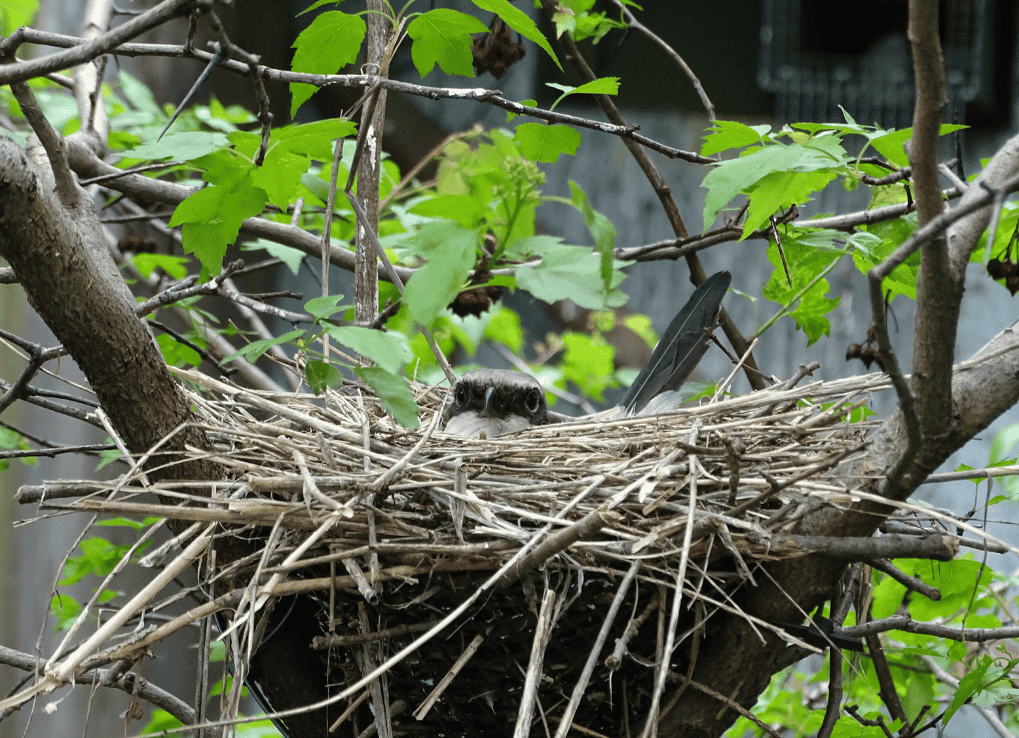
What is the Eastern Loggerhead Shrike Recovery Program? After a precipitous drop in the wild eastern loggerhead shrike population in the 1990s, Environment Canada invited Wildlife Preservation Canada to join the multi-partner recovery effort in 2001. Since then, the wild population size has fluctuated. Studies have shown that although the recovery effort has prevented the species from disappearing from Canada, more work is required to identify and address the causes of the species’ decline. WPC works to prevent the endangered eastern loggerhead shrike from disappearing by building the wild population in Ontario, and studying the species to learn more about the threats they face.
Spring: a time for renewal, regrowth, and lots of baby birds! Loggerhead shrikes are among the first migratory songbirds to return to Ontario in the springtime; pairs usually begin breeding and laying their first clutches of eggs in April.
Altricial birds like loggerhead shrikes go through perhaps one of the most dramatic “glow-ups” in the entire animal kingdom: what starts out as a bald, shriveled, bug-eyed lump in a nest turns into an adorable, fluffy, clumsy fledgling! Altricial animals are hatched or born helpless and have to be fed and cared for by parents before becoming independent.
Staff at facilities in our Conservation Breeding & Release Program as well as researchers in the field will occasionally perform nest checks to track hatch-dates and brood sizes of the shrikes they are monitoring. Based on unique growth stage characteristics, staff and researchers are able to determine the approximate age of a brood. It takes about 18 days from hatching for young loggerhead shrikes to leave the nest.
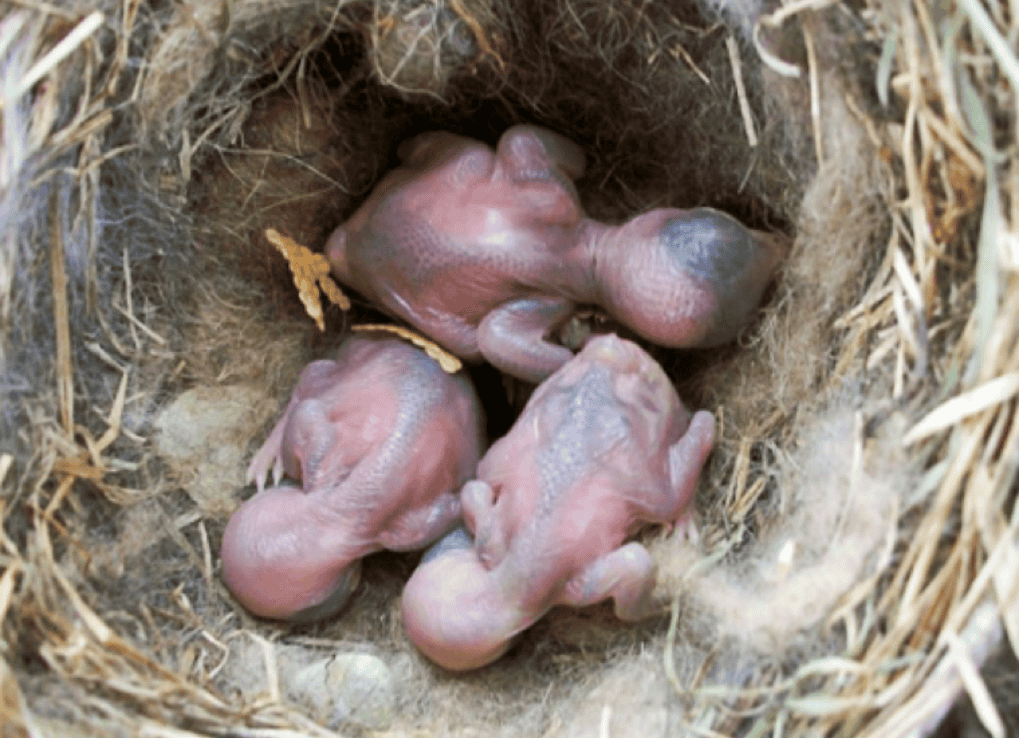
Nest checks are only performed by trained personnel, and only if they can be done quickly and safely, without causing undue stress or disturbance to the birds. Do not try them at home!
Day 2 after hatching: Tiny; about the size of an egg and generally still curled into the shape of an egg. Skin is pinkish-orange in colour. The eyes are closed.
Day 5: Sheathed feather tips erupt from the skin on the tail, and the top and back of the head. Feathers begin to unfurl on the back and shoulders and may appear as small white dots or brushes.
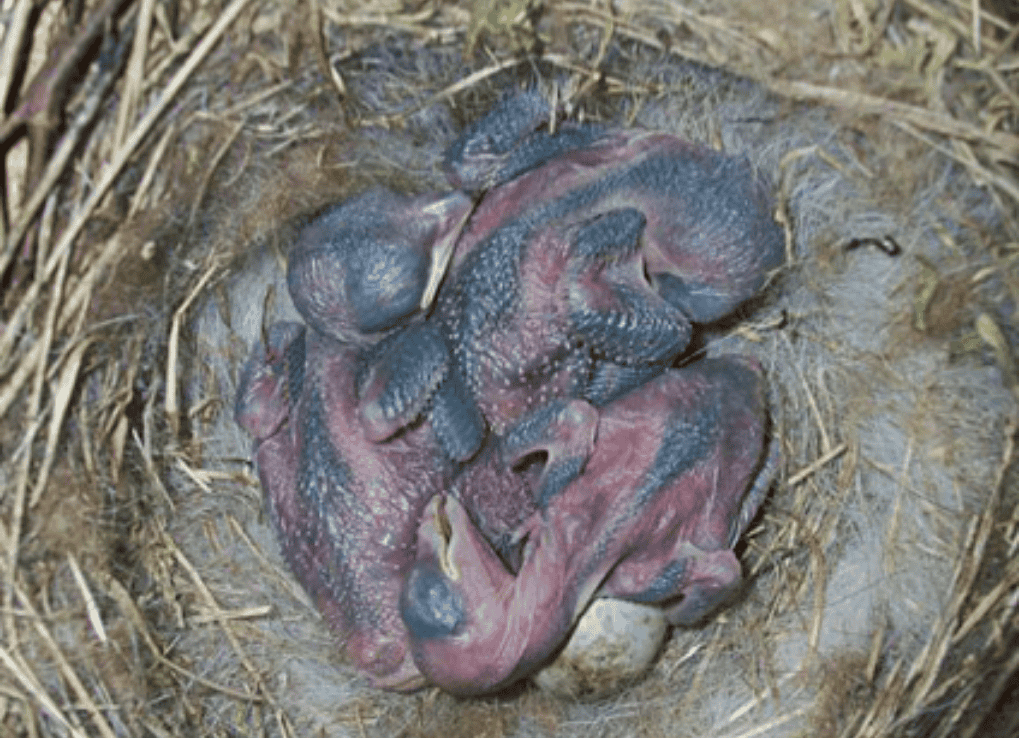
Photo by A. Capelle and C. Villeneuve.
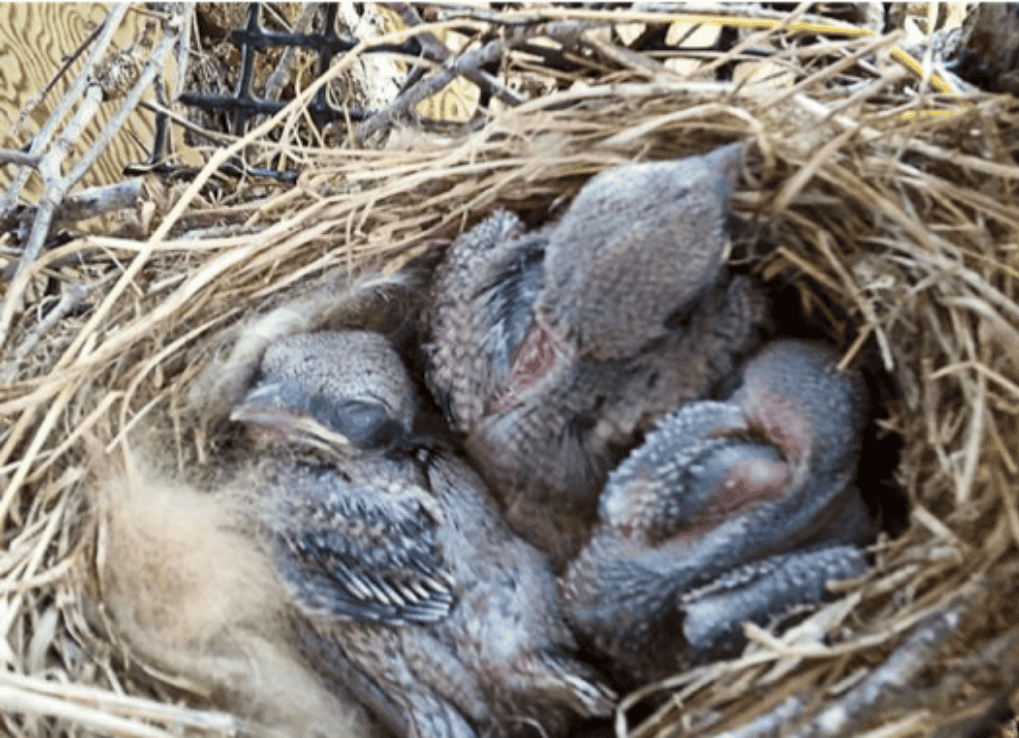
Photo by A. Capelle and C. Villeneuve.
Day 10: The head is covered with unfurled feathers about one-half grown and the black ear patch begins to show. The body is becoming completely covered with feathers and down. The feathers of the shoulder and spinal tract are one-third grown, having unfurled sufficiently to completely cover the back of the nestling as it crouches in the nest. Nestlings are able to extend their neck and beg but are not yet able to stand.
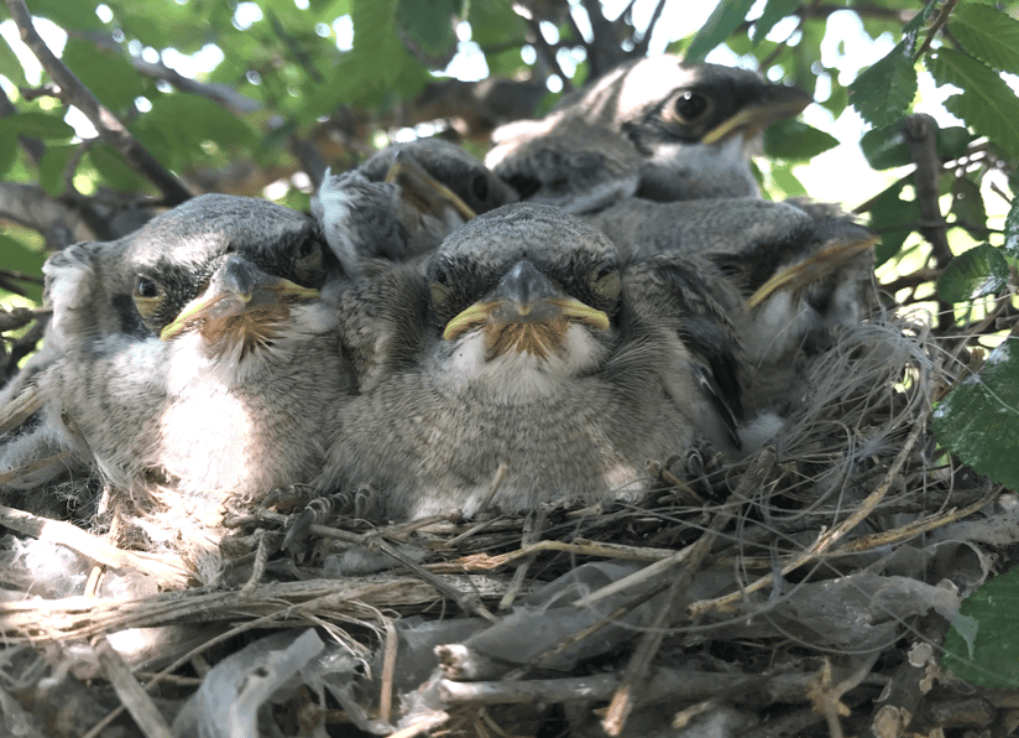
Photo by J. Giacomo.
Day 15: The legs and bill are dark grey. Nestlings are moving around in the nest well; young are able to stand and may move onto the edge of the nest from Day 15 until branching.
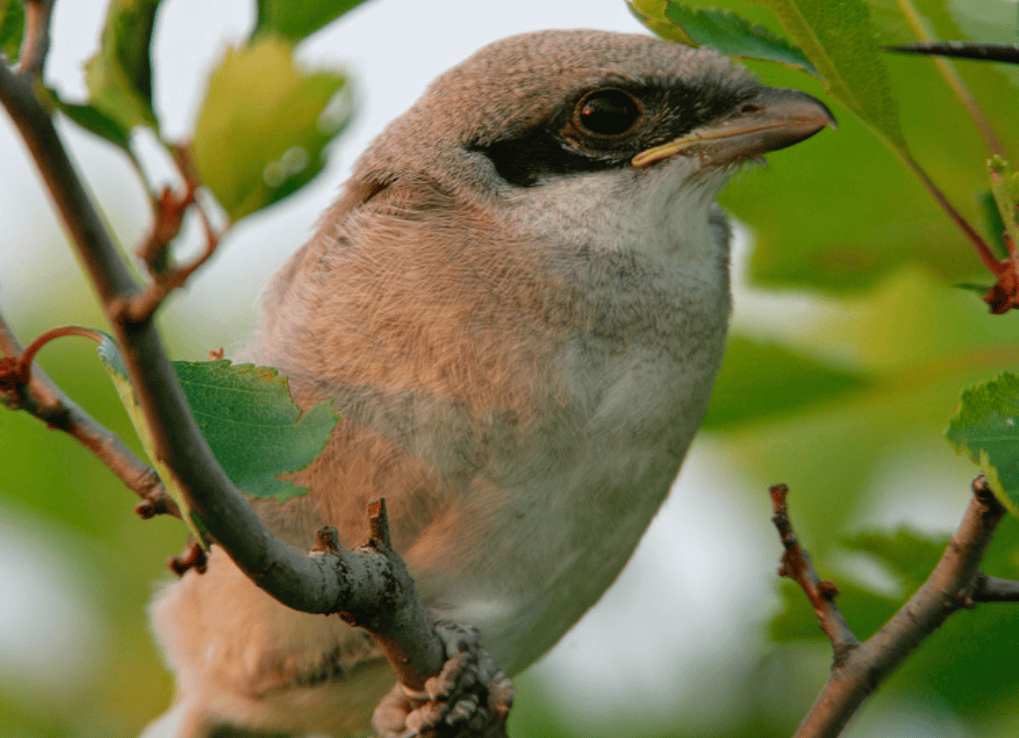
Day 18+ : Young are “branching”, which generally means that they have successfully fledged the nest. The young will spend the next little while strengthening their flight muscles while learning to fly. Parents are still feeding them as they continue to become independant.
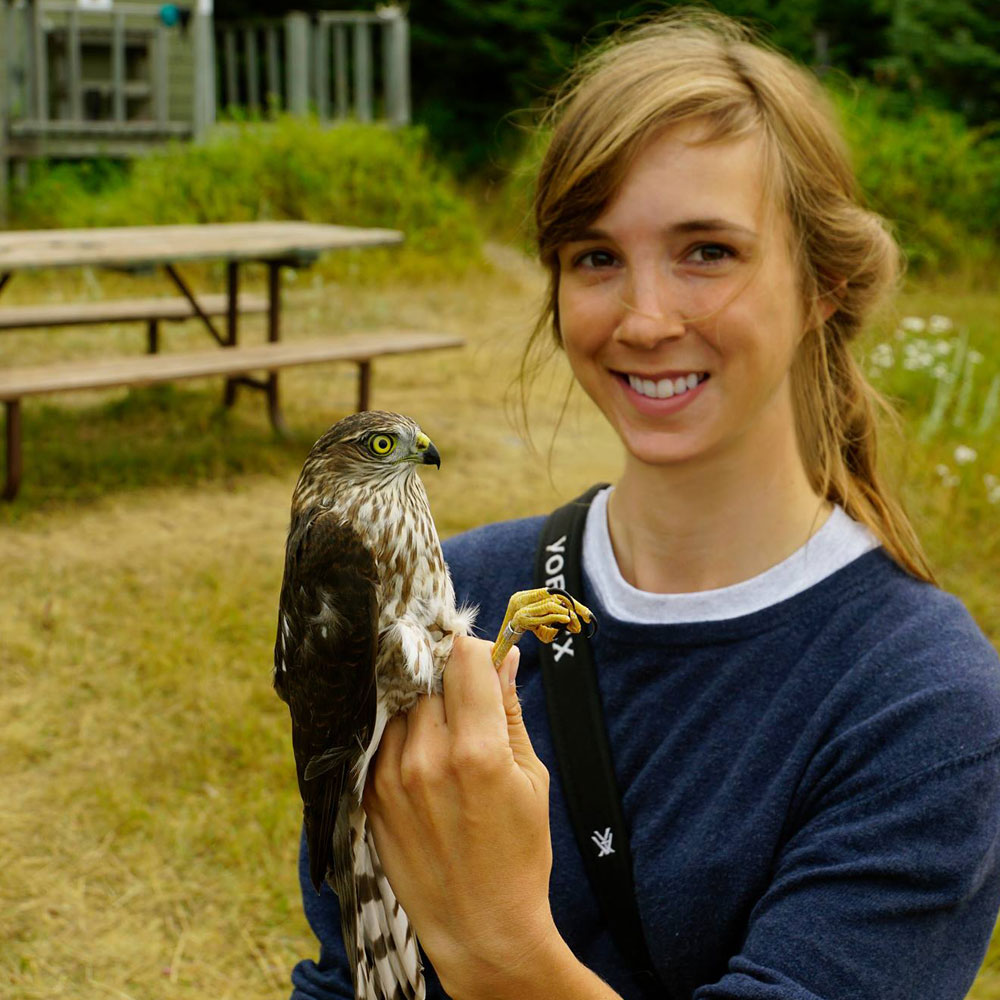
Jane holds a Master’s degree in Animal Biosciences from the University of Guelph, where she studied building collision injuries in migratory songbird species. Jane worked as a rehabilitation supervisor, where she was responsible for the care, treatment, and reintroduction of injured and orphaned wildlife, including many species at risk.
Sorry, no posts matched your criteria
We need your help