Release sites receive passing grade from “inspector” snakes!
Posted onJune 16, 2020byOjibway Massasauga|Massasauga Rattlesnake, News and Events, Ojibway Prairie Reptile Recovery

The Ojibway Prairie Complex and Greater Park Ecosystem is one of the most biodiverse locations in Ontario, with several species of flora and fauna not present elsewhere in Canada. Despite this, the majority of land that was once diverse tallgrass prairie has since been converted into housing or agriculture. Although this has led to the overall decline of myriad animal and plant species historically found in the area, one of the hardest hit groups has been reptiles, with several species now considered locally extinct. Enter the Ojibway Prairie Reptile Recovery program, established with the primary goal of recovering the Ojibway population of eastern massasauga rattlesnakes (Sistrurus catenatus) – a population with only a handful of individuals remaining.
In order to conserve any endangered population, not only must the factors leading to that population’s decline – like habitat loss, road mortality, and intentional killing – be reduced, but also recruitment into that population must be increased. Unfortunately, this is much easier said than done. New snakes cannot simply be added to the area and expected to survive and breed, although this would make our work much easier! Instead, translocations need to be carefully planned out and studied beforehand to improve the chances of success.
Through previous massasauga translocation studies, we found the biggest challenge to be high overwinter mortality. In order to survive the winter, snakes need to seek shelter underground in areas below the frost line. The massasaugas at Ojibway Prairie do this by hibernating in crayfish burrows, which provide the perfect conditions as the burrows are deep enough and possess adequate humidity. High concentrations of suitable burrows are relatively rare on the landscape, and so it is common for snakes to use the same overwintering spots year after year.
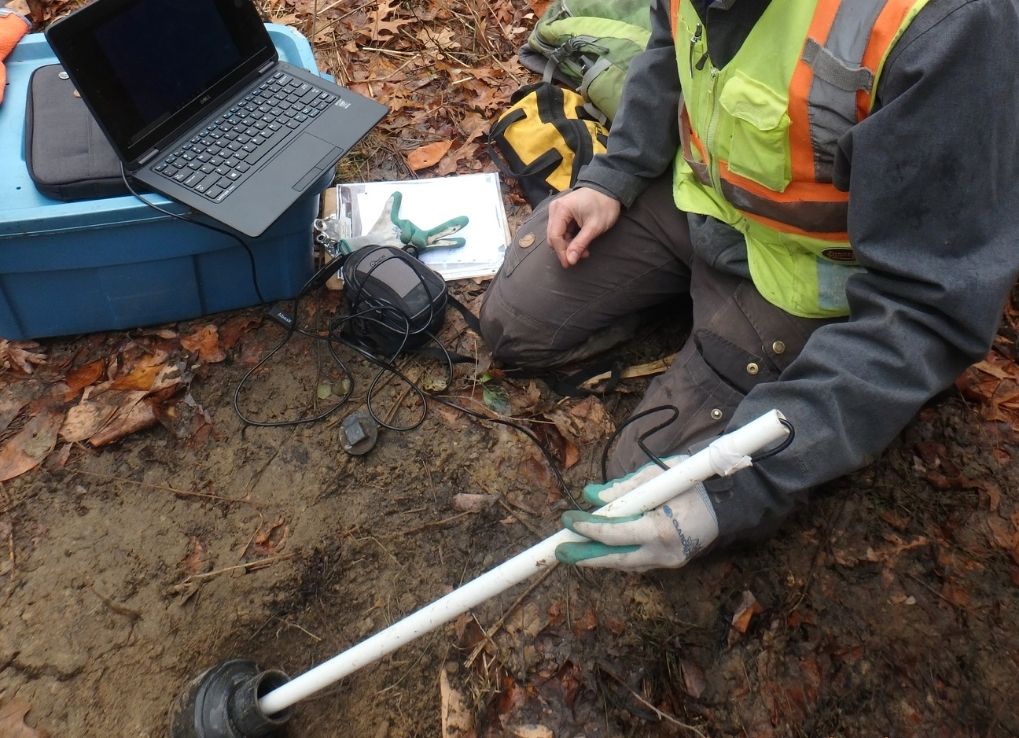
Lead Biologist Jonathan Choquette using a borescope camera and laptop to monitor gartersnakes hibernating in an artificial hibernaculum.
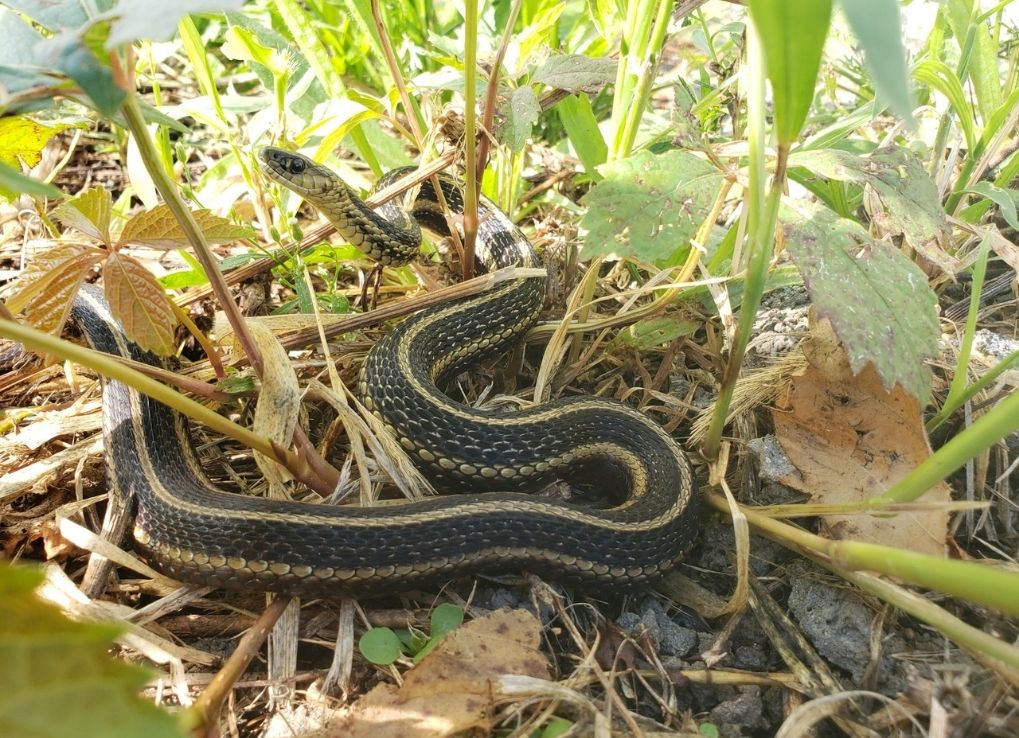
To increase the likelihood of success of future massasauga translocations, our team has been conducting a hibernation habitat study for the past five years. Confident in the results we have been seeing so far, last year we installed several artificial hibernacula similar in structure to a crayfish burrow, and placed 21 eastern gartersnakes (Thamnophis sirtalis sirtalis) inside for the winter. Gartersnakes were chosen as a surrogate species in lieu of massasaugas because they hibernate in the same spots and are not a species at risk. These “inspector” snakes were tasked with confirming our data – which strongly suggested we had found suitable overwintering locations.
We are proud to announce that not a quarter, nor half, but ALL of the 21 gartersnakes survived the winter in their artificial burrows! This is not only exciting because no snakes were harmed, but also because this shows a lot of promise for successfully translocating massasaugas into the area and helping restore the population. Even with our 100% success rate, we are planning to test another batch of gartersnakes this upcoming winter. If we are once again successful, the next step is to conduct a trial with massasaugas. Until then however, we are grateful to the gartersnakes of winter ’19 for their contribution to massasauga recovery!
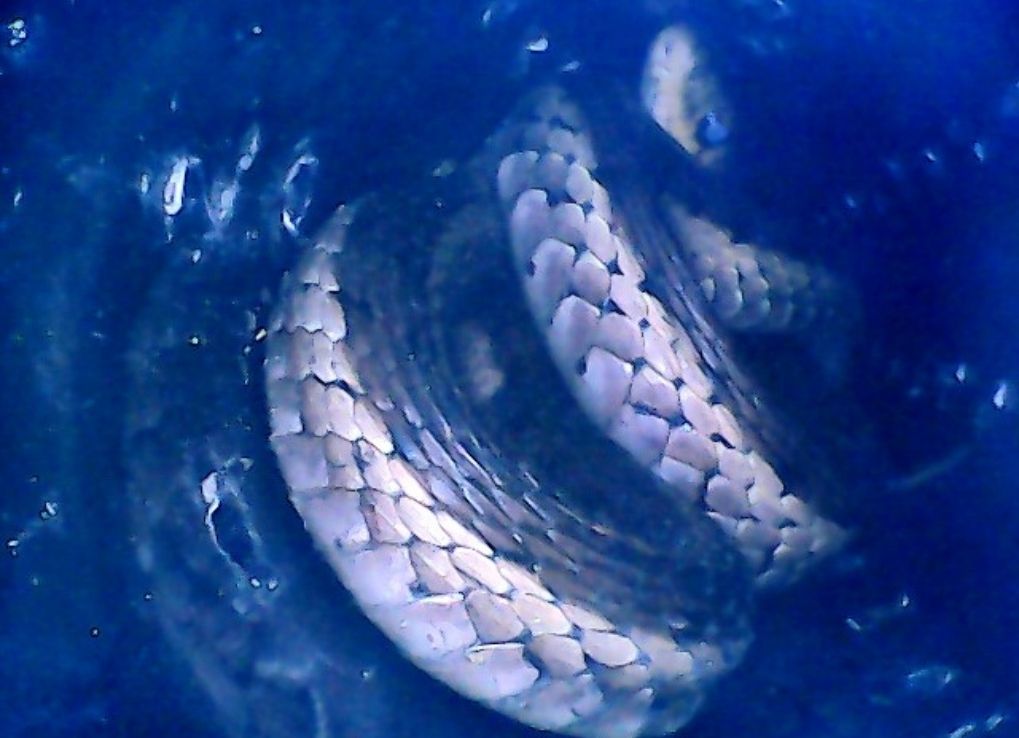
An eastern gartersnake (Thamnophis sirtalis sirtalis) spending the winter in an artificial hibernaculum at the Ojibway Prairie. This photograph was taken with a flexible borescope camera.
Jonathan manages the recovery program for the Ojibway population of the Massasauga rattlesnake in Southern Ontario. Jonathan is a habitat expert, studying both biology and landscape architecture at the University of Guelph. As an academic for many years, Jonathan has published numerous articles about the importance of habitat for reptiles and amphibians.

Matt is currently finishing up his Master’s degree in Biology at Queen’s University where he has been working on developing and improving conservation strategies for gray ratsnakes. Over the years he has worked on several different conservation projects primarily focusing on reptile, bird, and insect species-at-risk both in Canada and abroad.

We need your help


