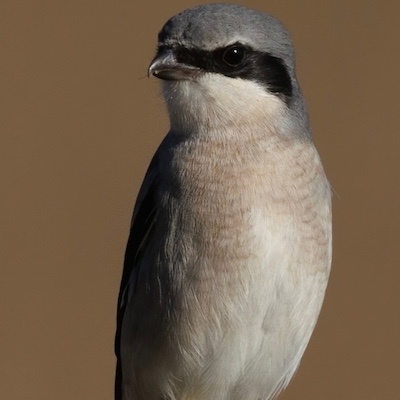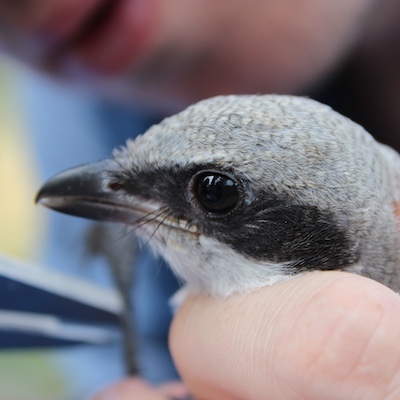
There is no pause for eastern loggerhead shrike!
Posted onJune 23, 2020byEastern Loggerhead Shrike Recovery|Eastern Loggerhead Shrike, Loggerhead Shrike, News and Events

What is the Eastern Loggerhead Shrike Recovery Program? After a precipitous drop in the wild eastern loggerhead shrike population in the 1990s, Environment Canada invited Wildlife Preservation Canada to join the multi-partner recovery effort in 2001. Since then, the wild population size has fluctuated. Studies have shown that although the recovery effort has prevented the species from disappearing from Canada, more work is required to identify and address the causes of the species’ decline. WPC works to prevent the endangered eastern loggerhead shrike from disappearing by building the wild population in Ontario, and studying the species to learn more about the threats they face.
~ Eliza-Jane Morin joined WPC’s Eastern Loggerhead Shrike Recovery Program as the Napanee summer field biologist. She reports on her first few weeks.~
Despite the world’s pause, wildlife has carried on as usual. The eastern loggerhead shrike is no exception.
Although field activities for the Eastern Loggerhead Shrike Recovery Team had a late start, the shrike in Napanee, ON are on time as ever. As summer field biologist for the program, I hit the ground running on June 5th and have not stopped since!
First fledglings observed
The breeding season for this endangered songbird was in full swing with three nests discovered in the first week of site surveys. Within three days of the second nest being discovered, it had successfully fledged becoming the first official Eastern Loggerhead Shrike Recovery fledglings of 2020! Shortly thereafter, two more nests followed. Due to the status of this At Risk Species, it is important to record as much data as possible on their overall reproductive success, including fledgling success. Fledgling success is the number of young a pair of loggerhead shrike successfully rear to “young adulthood”. This information helps WPC monitor and assess eastern loggerhead shrike population recovery.
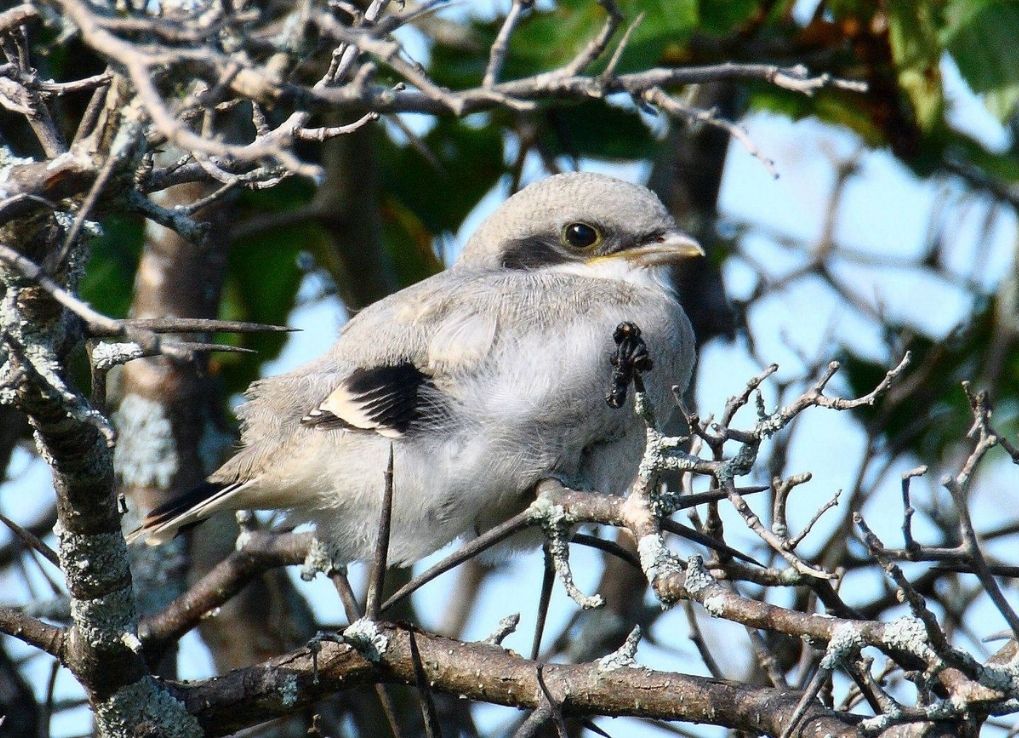
We didn’t want to get too close, but the chicks would look very similar to this three week old bird in WPC’s conservatin breeding program.
Loggerhead shrike are a predatory songbird making them early breeders compared to other songbird species. This means nests can fledge as early as late May to beginning of June. Usually, the Eastern Loggerhead Shrike Recovery team begins its field activities in May at the onset of the breeding season. The late start to the field season meant that some nests might have already fledged before our staff members were able to survey the sites. Luckily, I was able to spot at least three of those nests in Napanee before the young shrikes were ready to fledge (with three days to spare, yikes!).
Tracking who is who
In addition to discovering nests, we have also seen eleven individual adult loggerhead shrike across our field sites, of which seven were banded. Every year, the Eastern Loggerhead Shrike Recovery team bands loggerhead shrike in the wild and from our captive breeding program with a unique four-band combination. This helps us keep track of who is who and what they are up to year after year. By verifying our banding records, we were able to confirm that most of the birds had been banded in 2018 and 2019 both from captive and wild origins.
Additionally, thanks to Amy Chabot, the first adult eastern loggerhead shrike of 2020 was captured and banded this week in the field.
Getting back to work
As you can see, the loggerhead shrike in Napanee are keeping me quite busy. I am delighted to be part of the team this season and will be updating you on all the happenings in the field.
However, for now, I must get back to work. There are still plenty of sites to survey, nests to find and shrikes to spot. With my feet halfway out the door and a scope on my back, I am heading out to the field to continue surveying for this elusive songbird.
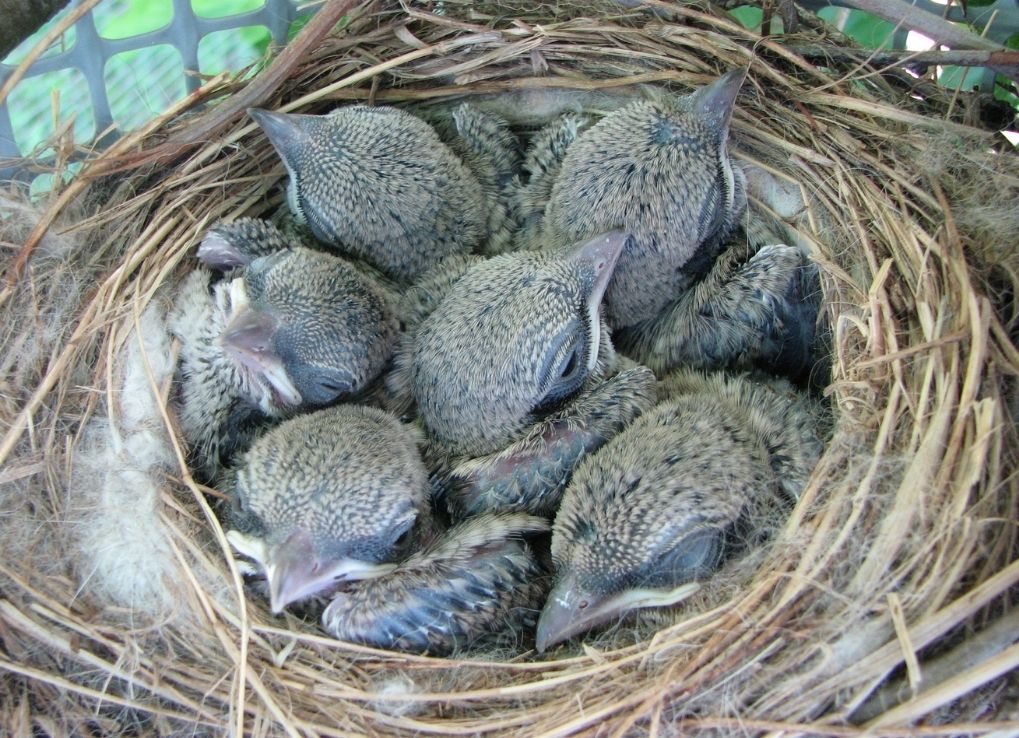
10 day old shrike nestlings
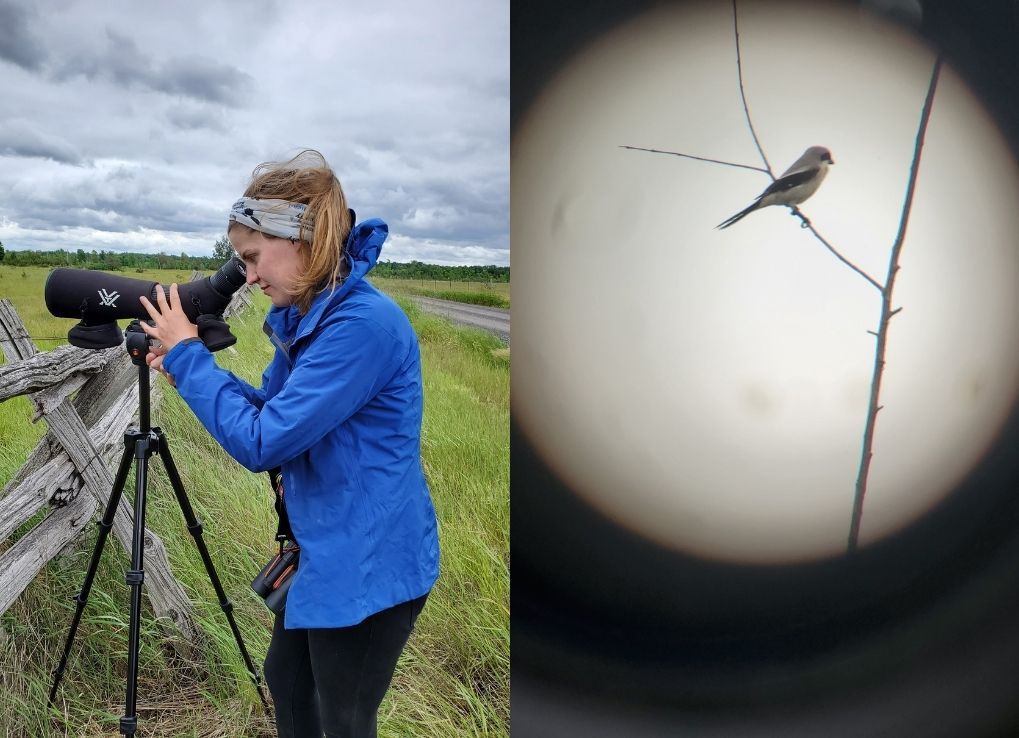
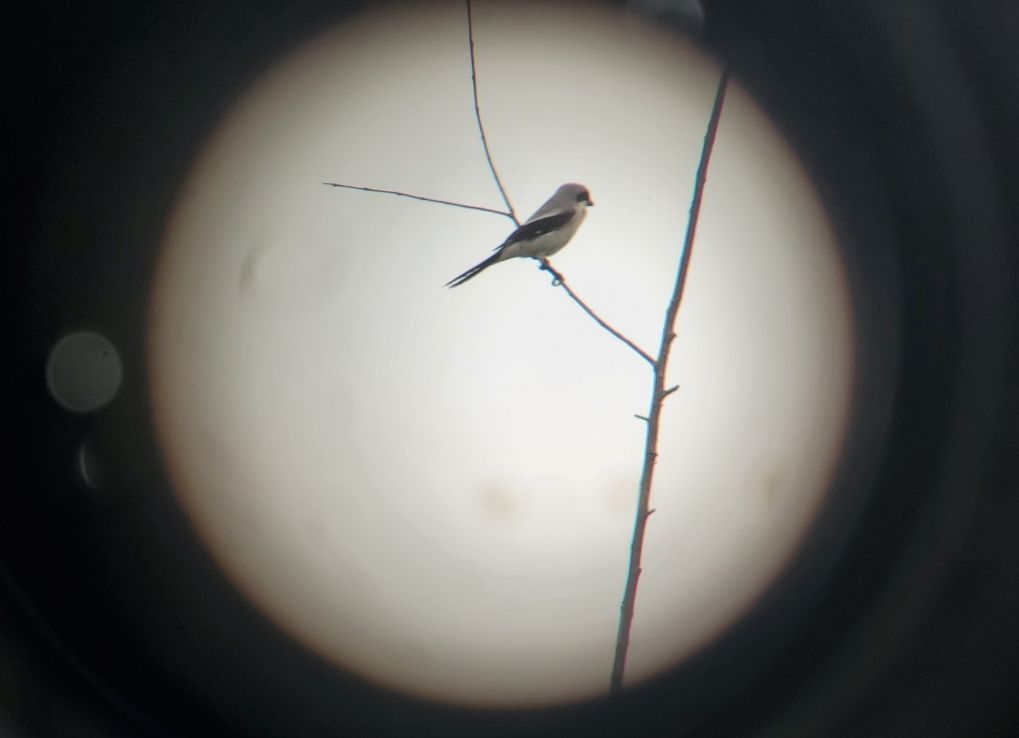
(Right) Napanee field biologist, Eliza-Jane Morin, scouting for shrike. (Left) A shrike as seen through a spotting scope.
Eliza has been working in the field of avian conservation for over 5 years. Her work experiences have brought her from the Peruvian Amazon to the prairies of Southern Alberta. Most recently, she completed a master’s degree in Coastal and Marine Resource Management in Iceland.

We need your help