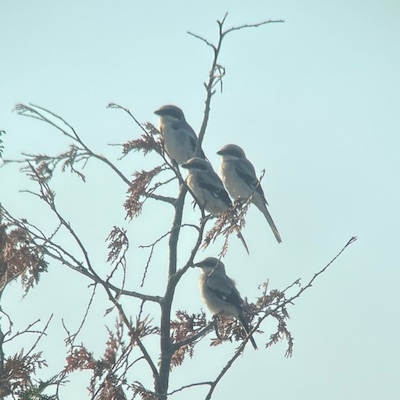
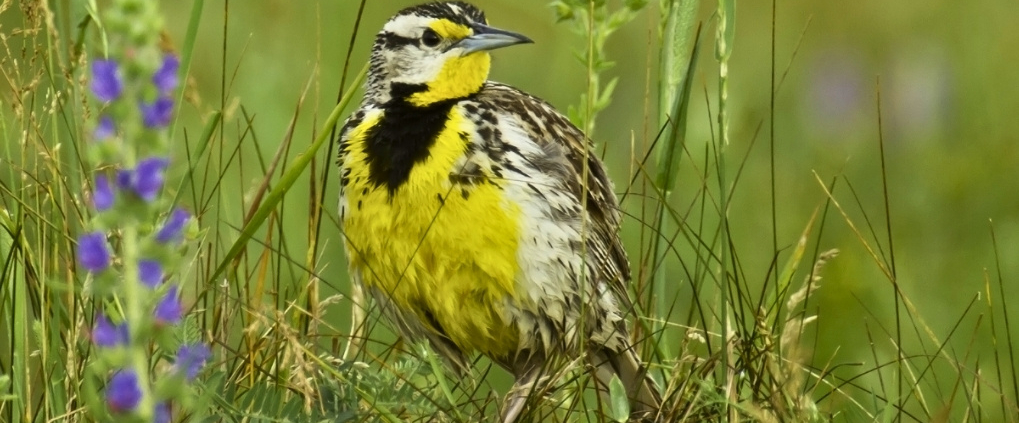
Same, same but different! How the loggerhead shrike is an honorary raptor
Posted onJune 9, 2021byKatelyn West|Blogs, Eastern Loggerhead Shrike, Eastern Loggerhead Shrike Recovery
With a cold and soggy start to the field season during the first week of May, there wasn’t too much to report about our efforts here in Carden. Carden is one of the few core areas in Ontario where part of WPC’s Eastern Loggerhead Shrike Recovery Team is stationed once again to help monitor and save this endangered songbird.
Now that we’re a whole month into the field season, I have some news to share. May was filled with the majority of the season’s surveying efforts. Eastern loggerhead shrikes are one of the first migrants to return to the area, and detecting them early is best for data collection, since they don’t seem to waste any time switching gears into breeding mode. This was evident when my field partner Meaghan Tearle and I found a pair of shrikes already nesting on our first day out in the field.
So far our surveys have detected 6 nesting pairs and 2 single shrikes that will be keeping us busy with monitoring sessions for the remainder of their time in their breeding territories. Last year, surveying efforts were delayed and limited due to regulations in place and we’re excited to have a greater opportunity this season to head safely out into the field following current protocols. We would like to surpass the number of shrikes detected last year. So far so good!
After spending a month monitoring and surveying for shrikes, I can certainly say that I’ve learned a thing or two about them, which is great because although this isn’t my first time working with an endangered species, this is my first time truly working with a species of songbird. Until this field season I’ve spent most of my career working with raptors, so while I’m out monitoring shrike, I tend to frequently compare the two types of birds. Shrikes hold the nickname “Butcherbird” which certainly brings comparisions to mind!
Even though shrikes lack talons and rely on spiny branches and barbed wire to impale their prey, here are a few reasons why I frequently compare this songbird to a raptor nonetheless.
Raptors and shrike both hunt and consume vertebrate species – not an easy feat! Though due to size, a shrike’s diet would be limited to smaller rodents and birds with the addition of invertebrates, while raptors can handle much larger quarry.

A loggerhead shrike regurgitating a pellet. Photo: P. Rathner

Left – The contents of a shrike pellet containing remains of insect shells/exoskeletons and small mammal teeth. Right – The contents of an owl pellet containing whole skulls of larger rodents. Photo: E. Donahue and K. West
Certain raptors utilize a sit and wait approach to hunting. They often resort to perching in one place, watching the world go by, and waiting for dinner to come to them. Not because they’re lazy, but because this conserves energy. Shrikes utilize this method as well and require tall perches within their grassland habitats (such as tall trees, shrubs and fence posts) to hunt from a high vantage point. When shrikes are not perched to hunt, they can also be seen hovering just above the ground as they track and attack their prey – a behaviour raptors like the American kestrel and rough-legged hawk do while hunting open land.
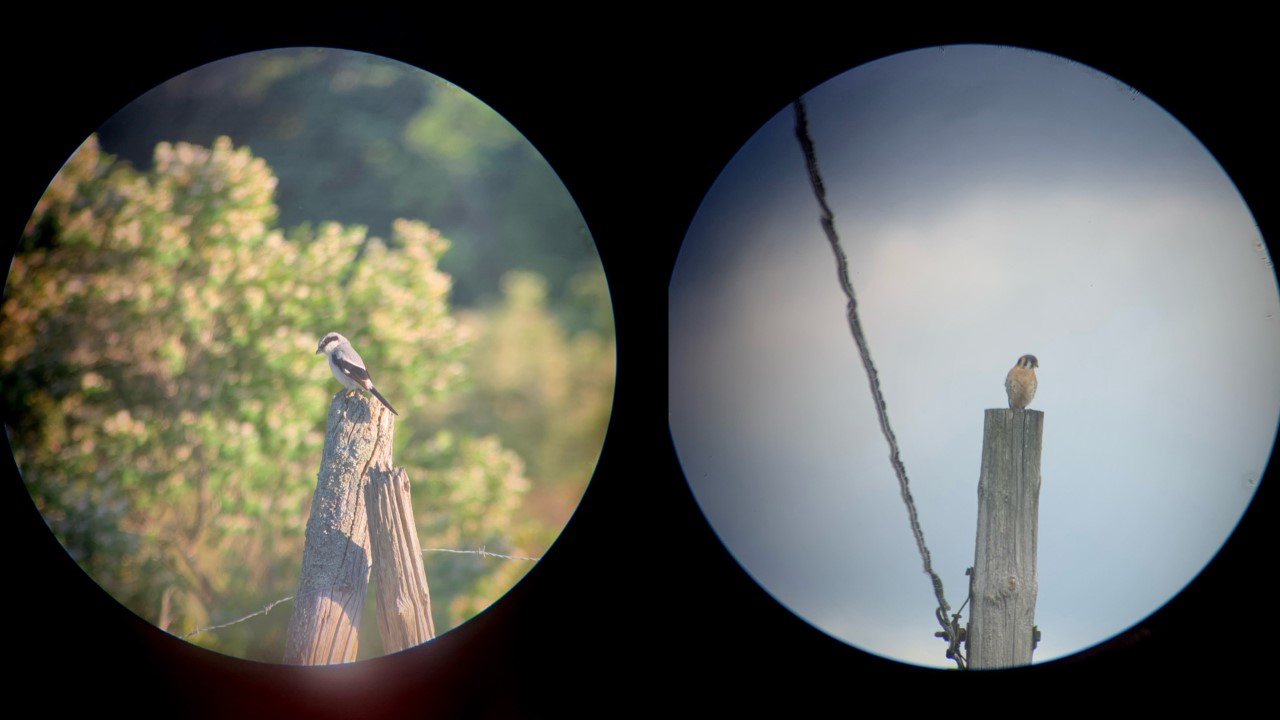
Photo: An eastern loggerhead shrike and an American kestrel hunting from tall man made structures in Carden, Ontario. Photo: K. West
Many North American raptors squeeze in a few migrations within their lifetime. The eastern loggerhead shrike also migrates south for the winter and returns north to breed.

Photo: Loggerhead shrike and northern harrier range maps (Orange=breeding, Blue=nonbreeding, Purple=year-round) Credit: All About Birds – The Cornell Lab
If you look closely at the beak of a falcon and the beak of a shrike, you’ll notice a small pointy notch on the upper mandible called a tomial tooth. Both birds have this unique beak shape to help them kill and consume their prey.
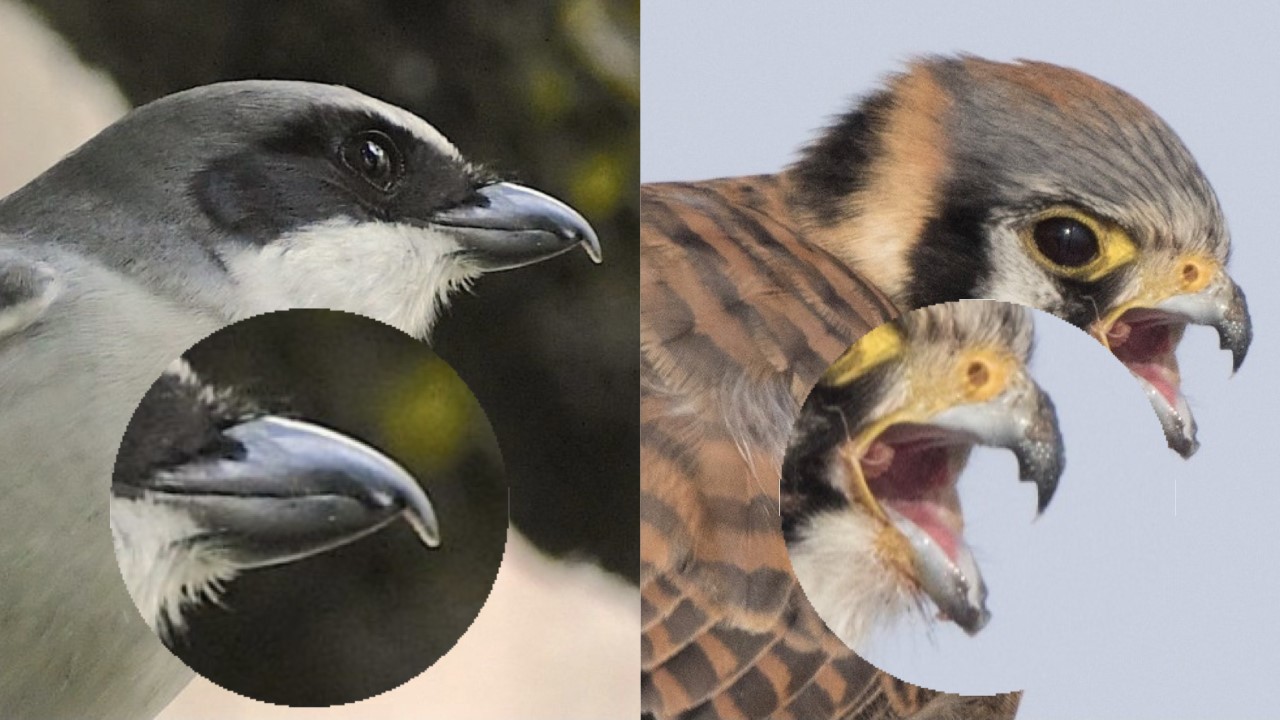
Photo: A loggerhead shrike tomial tooth and an American kestrel tomial tooth. Credit: A. Samuelson and R. Dudley
Although it might be confusing that raptors and shrike are completely different types of birds, yet have so much in common, one thing is certain: they don’t make good friends. Shrikes are at risk of predation from various species of raptors that also call the Carden plains home. They’re both important predators to their ecosystems, but this time around I’m rooting for team shrike!
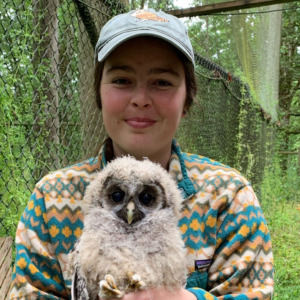
Katelyn is a Fish and Wildlife Technician who has been working and volunteering in the field of avian conservation for the past six years. Majority of her career has been spent working with raptors. She has contributed to efforts being made to restore the endangered population of northern spotted owls in British Columbia through captive breeding, as well as having assisted with monitoring programs for Cooper’s hawks, flammulated owls, great gray owls, bald eagles and northern saw-whet owls.
We need your help