First Stop
Canada

Saving species requires perseverance
Froggy resilience: a comeback against all odds
Learning from the best in conservation
Breaking new ground in plant conservation
Bumble breeding breakthroughs
Why conserve butterflies?
Letter from Lance
Like anything worth doing, saving endangered species is not easy. The odds are stacked against you; complex and intertwined biological, ecological, social, and economic pressures all present unexpected challenges. Conservation science is considered an interdisciplinary and inexact science because to be successful your team needs to have experts in each of these disciplines. Which is why one of the three P’s of successful conservation programs, Perseverance, is so important.
Conservation biologists are open and collaborative, but we are also as dogged, tenacious, and resolute a group of people that you will ever meet. In general, we care a bit too much about what we do which creates emotional highs and lows, but also sees us through the tougher times together.
Successful recovery programs take years. Think of some of the most successful programs around the world like the California condor and Arabian oryx, and here in Canada; swift fox, whooping crane, Vancouver Island marmot. One thing they all have in common is that they took decades and a lot of adaptive learning and management to be successful.
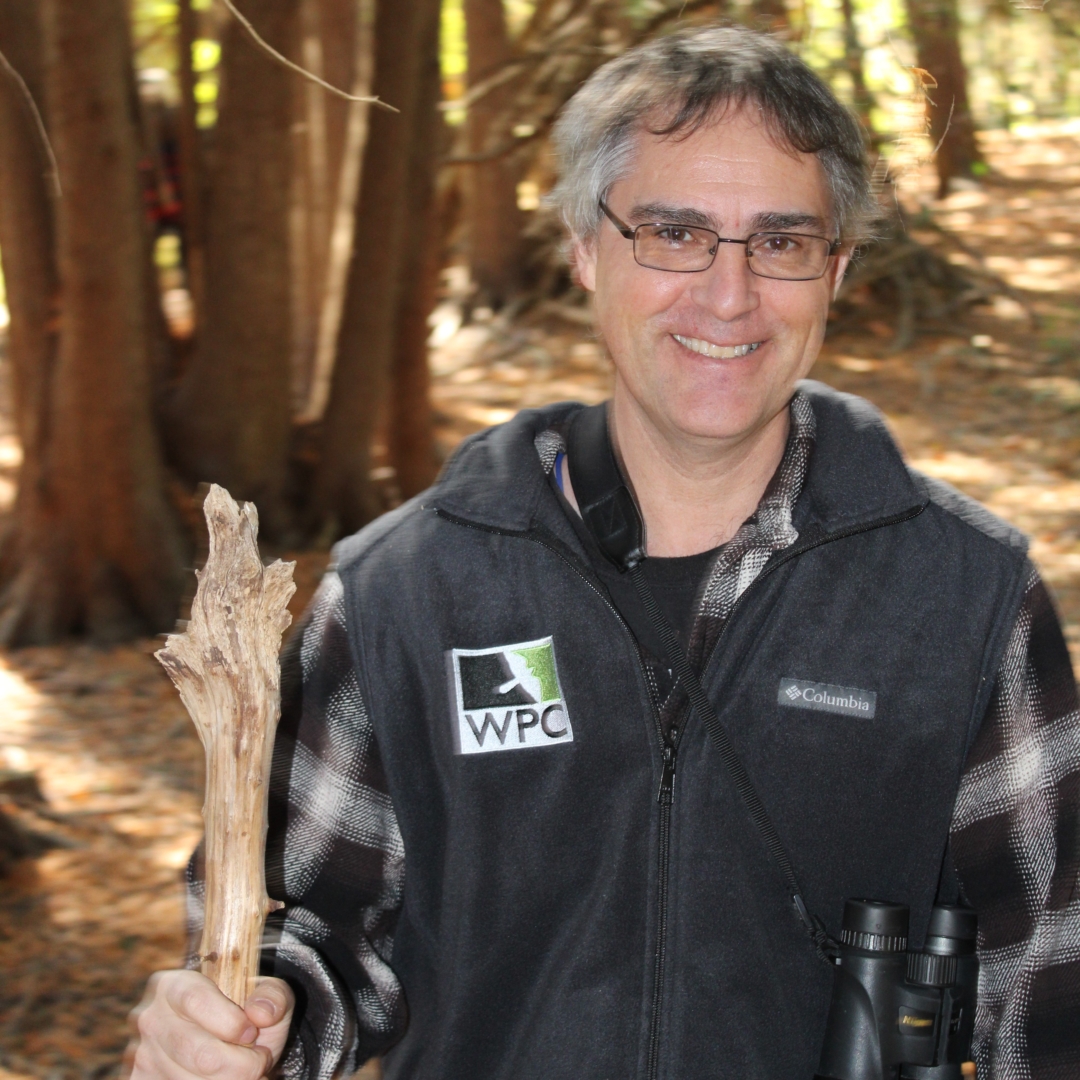
Lance Woolaver, Executive Director
A perfect example of where perseverance is required is WPC’s very own Oregon spotted frog program. The global fungus chytrid threw our team for a loop this winter, on the heels of two record breaking field seasons and after many years of developing ground-breaking best practice methods for breeding an endangered frog in captivity.
I personally know how the BC frog team felt. I’ve experienced similar moments at one time or another as a field biologist on every program I’ve worked on over the last 25 or so years. These moments have happened to every program including those that are considered the standard bearers for success. It is like someone has punched you in the gut and it takes your breath away. The important thing is what happens next. You go into action, the team comes together, you get as much information as possible, and if you are fortunate, like we were, you have the expertise within your team to act quickly.
The BC recovery team turned the situation into a learning opportunity, figuring out how to successfully treat frogs for this devastating disease during the winter. No one has ever done this before. That is my definition of perseverance and if a team doesn’t have it then you probably won’t be successful.
Two other programs in this newsletter require this same level of determination. WPC are at the forefront of developing conservation breeding and reintroduction methods for bumble bees and butterflies. When we began, we were told by some that it couldn’t be done but we are doing it. Each year we’ve learned new critical tricks and techniques. We know it isn’t going to be easy, but we also are not going to give up.
One thing I tell myself and the teams I’ve worked with is that if this work were easy everyone would be doing it. It isn’t easy and that is why we are doing it. Wildlife Preservation Canada will continue to do whatever it takes to protect Canada’s biodiversity.
Thank you to all of you, partners and supporters, for joining us in this mission to save Canada’s endangered species from extinction.

Lance Woolaver,
Executive Director

Oregon spotted frog
(Rana pretiosa)
Status: Endangered in Canada
Conservation breeding, headstarting, and release are core activities used by WPC to restore Oregon spotted frogs to historic sites throughout the Fraser River valley. Techniques we are using to save this species will be used to save other frog species here in Canada in the future.
Fraser Valley Recovery
The Oregon spotted frog recovery program continued its record streak last year with an astounding 23,527 tadpoles produced from 39 egg masses. Most were released in spring to continue their development in the wild, but ~1000 were retained in our breeding facility for release later in the summer. This allows us to monitor the condition of the tadpoles held back, to ensure that our lab conditions mirror what is occurring in their natural habitat and we are producing healthy frogs.
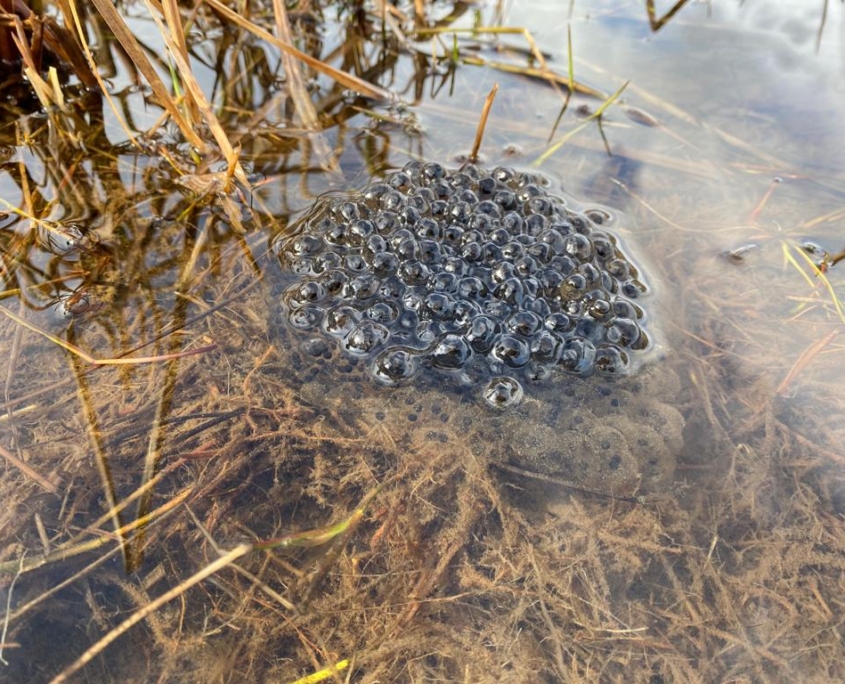
After a winter of unknown outcomes, Oregon spotted frog egg masses are a welcome sign this spring.
Egg laying season in the wild begins in early spring so while our frogs were getting busy in the lab, our teams went out to visit a restored natural site to see how the wild animals were faring.
We were thrilled to see wild egg masses for the third year in a row! This confirms that released frogs from our conservation program are breeding and thriving. This specific site that we have been monitoring produced two egg masses, and though that is down from five masses the previous year, field crews noted that numbers of egg masses were down at all sites and this is likely the result of natural yearly fluctuations.
Due to our incredible breeding success last year, our research this year will shift to exploring the role of exogenous hormones, which are hormones that are in the environment from other frogs, and how they can play a role in triggering breeding. Moving into fall, frogs went into hibernation, their tanks wrapped in heaters and insulation to keep them cold but prevent them from freezing solid during the winter.
About halfway through December, disaster struck. Staff checked on the frogs in the morning and found many of them in one tank were visible on top of the detritus layer. Given the time of year, frogs are almost never visible having buried themselves for the winter months. Further investigation revealed the animals had in fact died, rather quickly overnight. We gathered our thoughts about how to handle the situation. This type of mortality is not common in conservation breeding programs and we needed to determine the cause.
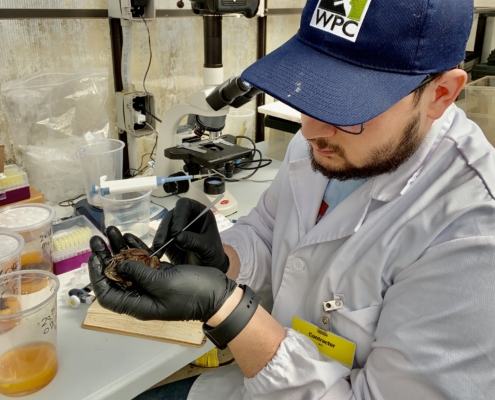
The frogs in our conservation breeding program are good sports when it comes to being swabbed for pathology tests.
The investigation process was intensive and involved tearing apart beautifully constructed naturalized enclosures but resulted in the recovery of live animals that had not succumbed to whatever had affected their tank mates. We decided to place them in artificial hibernation in fridges, both for easy access and care as well as control over their environment.
We took swabs and samples from both deceased and live animals and sent them to the provincial pathology lab which soon sent back the second least desired result, after unknown – it was chytrid. Chytrid is a fungus found in wild frog populations, including many in BC, that prevents frogs from being able to breathe through their skin, an incredible process and critical especially during hibernation. This fungus affects amphibian populations worldwide and is considered a significant culprit in mass extinction events, specifically in tropical areas.
We had to decide if we should wake the frogs, treat them, and potentially lose breeding for the following year. Or, if we should treat them in hibernation, hoping they didn’t lose too much weight and could rally for breeding season. We chose the latter option, though this was uncharted territory. Only a handful of conservation organizations in the world have done this type of treatment for chytrid.
We consulted members of the recovery team, gathered medication, supplies and sterilization equipment and began the treatment process, involving daily baths in antifungal solution. We treated 55 frogs, one by one, knowing that their fate was in our hands. After treatment, each frog has its skin surface swabbed and screened for DNA markers of the fungus. This screening needs to be done twice, one week and two weeks post treatment and both screens need to come back negative.
After the first round, we still had positive results for the presence of chytrid. Since the frogs were doing well we decided to increase the concentration and length of the baths and begin the whole process again. Another 55 baths. After the second round of treatment, they received negative test results for chytrid and the breeding season was upon us.
We quickly moved on to our usual preparation for the breeding season, hoping the frogs would continue their natural process. After the winter chaos, we were all relieved when the remaining seventeen females produced twelve egg masses. The egg masses are developing well and we should still have a significant number of tadpoles to release, though perhaps not a record-breaking year. But certainly a year to remember.
Onward to rebuilding, learning, and species recovery!
Canada’s New Noah

This diversity of greetings captures the wonderful diversity of my fellow “DESMAN” (Durrell Endangered Species Management) classmates. Our cohort is composed of 13 students, representing a whopping 11 different countries! We have gathered from the far reaches of the world on Jersey Island to participate in this three-month intensive course.It seems appropriate then, given our range in backgrounds that our host, Jersey, is a bit of an amalgamation of countries itself. Located only 14 miles from the North Coast of France, this Brit-“ish” island has a mixture of both French and English species, people, and languages.
Since we participants have a variety of education and experience, our courses for DESMAN began with a general introduction to biodiversity and some basic principles of conservation like disease management, invasive species, and climate change to get on the same page. But we are quickly pushed outside of our comfort zones with a challenging (but rewarding!) few weeks in facilitation and practicing the Conservation Standards methods. I can’t wait to have the opportunity to apply these techniques when I’m back in Canada!
With my background in conservation breeding and reintroductions, I was particularly excited to visit the chough (pronounced “chuff”) reintroduction program, run in partnership with States of Jersey, Durrell Wildlife Conservation Trust, and Jersey National Trust. The chough is a
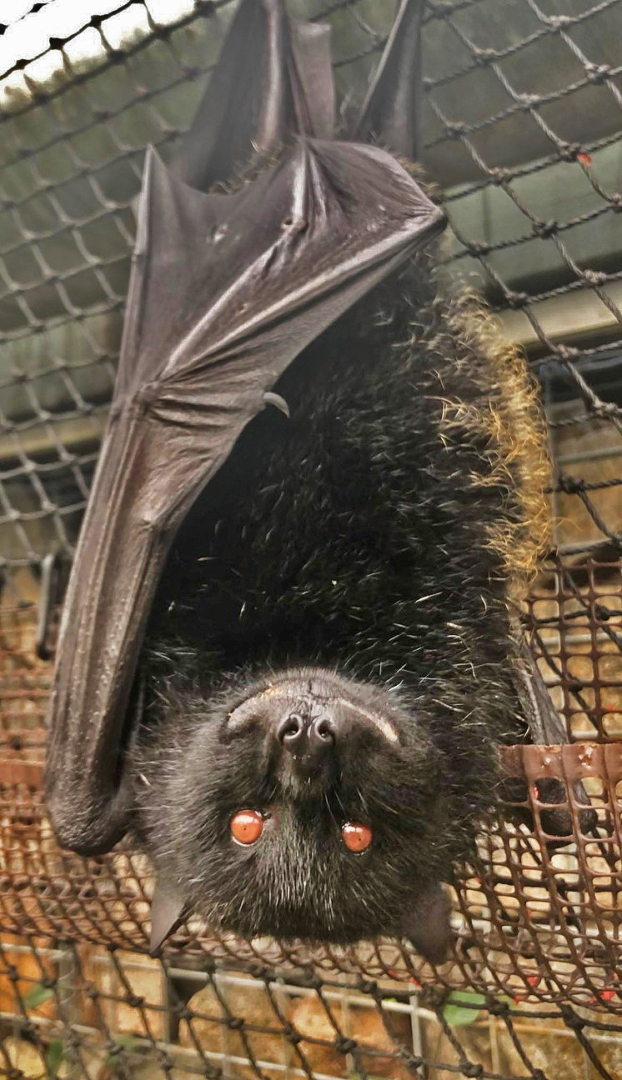
“Hanging” out with the Livingstone’s fruit bat at the Jersey Zoo conservation aviary.
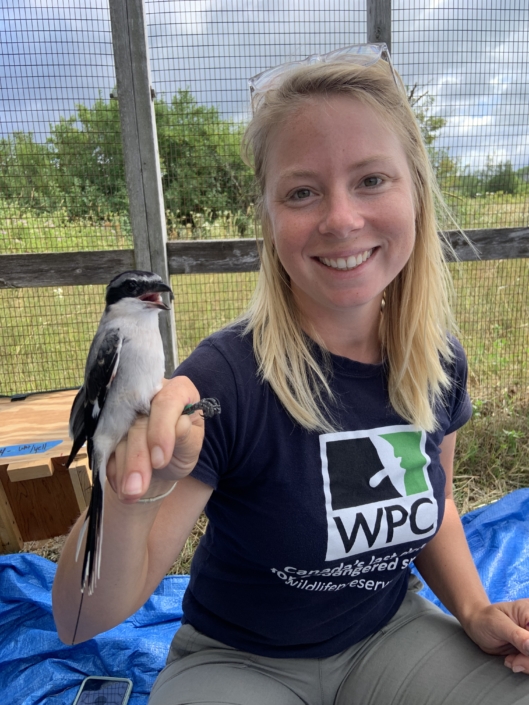
type of corvid, similar to a raven or crow, but with a bright red beak and feet! The species had been extinct on Jersey for about 100 years, but a dedicated reintroduction program brought them back. As a marker of success, populations are starting to establish as far away as France! Similar to WPC’s Loggerhead Shrike program, the chough program is a great example of how zoos can help combat species extinctions.
During my time working alongside the Jersey Zoo staff, I have had the pleasure of learning more about their husbandry practices and conservation programs. From preparing diets for lemurs to learning more about breeding threatened skinks, it’s been incredible to experience all the great conservation work the institution is doing!
I was especially inspired by their impressive bat aviary. Home to a colony of Livingstone’s and Rodrigues fruit bats, the 800m2 custom designed aviary allows the bats to have a continuous 100m flight path! The Livingstone’s fruit bats are a threatened species and are only found in three zoos in the world, and the Jersey Zoo has 90% of the total captive population. This dedication to the welfare of an endangered species bodes well for its future survival in the wild.
The time on Jersey has flown by and I cannot believe how much I have learned about wildlife conservation in just a few months. There is nothing that compares to this type of immersive learning experience. As I leave Jersey and move on to the next part of my journey in Mauritius, I am grateful for the opportunity to travel abroad to witness examples of first-class conservation practices that can be brought back to help save Canadian species.

The DESMAN program is globally unique and attracts participants from all backgrounds. WPC is fortunate to be granted an annual position in the program.
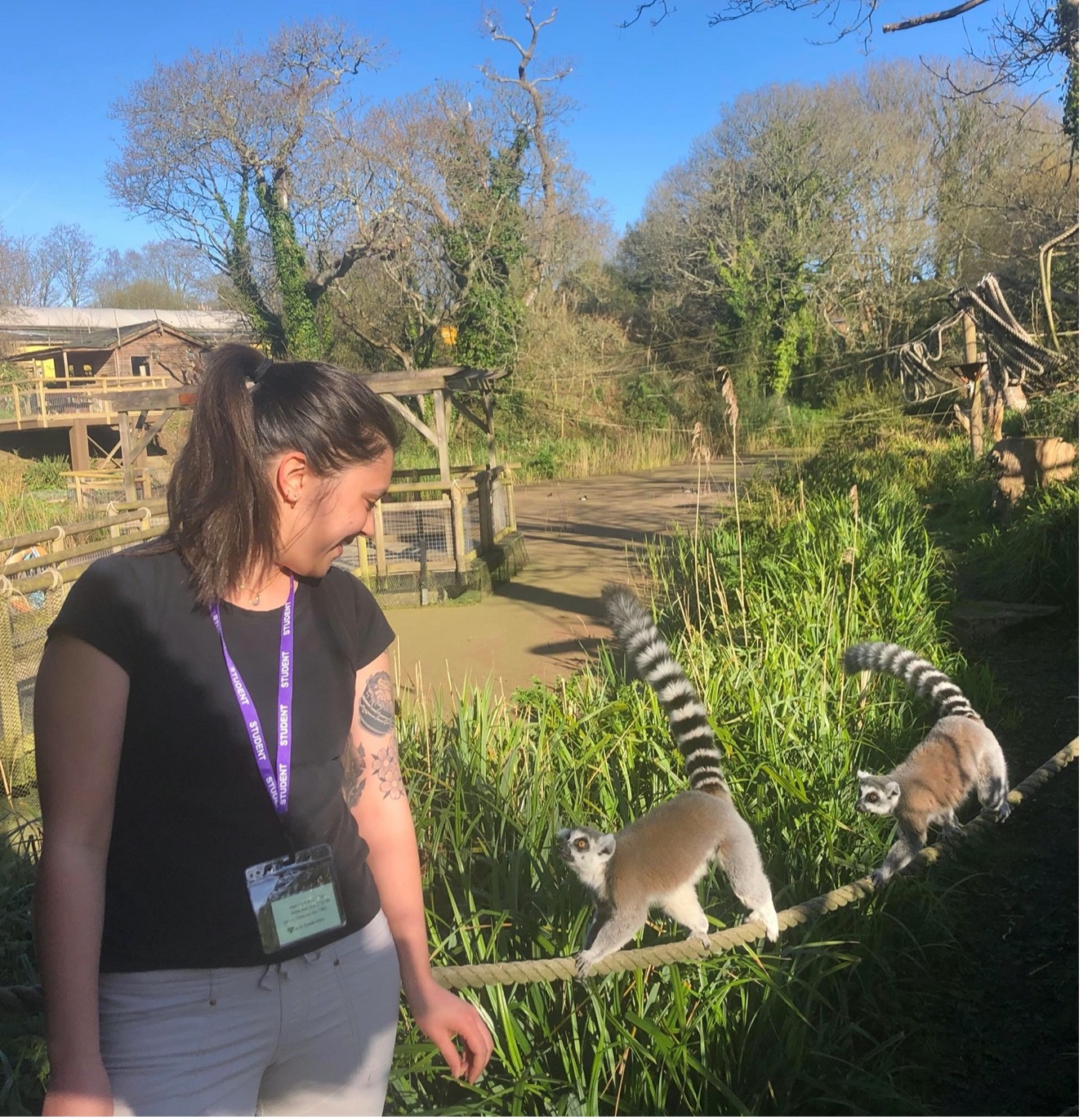
As a kid who grew up watching Zobooomafoo, I was thrilled to get up close and personal with some ring-tailed lemurs!

Canadian Species Initiative

As the first buds appear on trees and new shoots emerge from the ground heralding the arrival of spring, it is important to reflect on the essential role of plants and the need for their conservation. Despite being often overlooked, plants provide food, medicine, and oxygen, and are vital for healthy ecosystems. However, many plant species in Canada are at risk of extinction due to habitat loss, climate change, and human activities.
According to the Committee on the Status of Endangered Wildlife in Canada (COSEWIC), over 200 plant species are at risk of extinction across the country, including iconic species such as the eastern prairie fringed orchid found in the tallgrass prairie ecosystems of Ontario, and the golden paintbrush, an endangered Garry Oak ecosystem plant found in BC. Many of the animal species that WPC works to save rely on these ecosystems. The loss of these plant species would not only be a tragedy for Canada’s biodiversity but would also have significant ecological impacts.
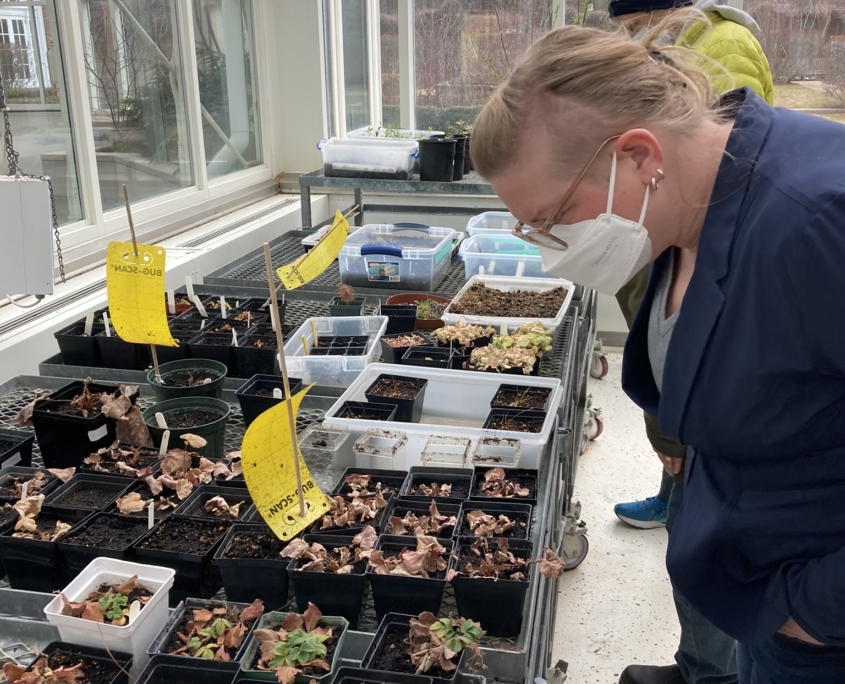
Checking out the ex situ population of Eastern Mountain Avens at the Acadia University botanical garden.
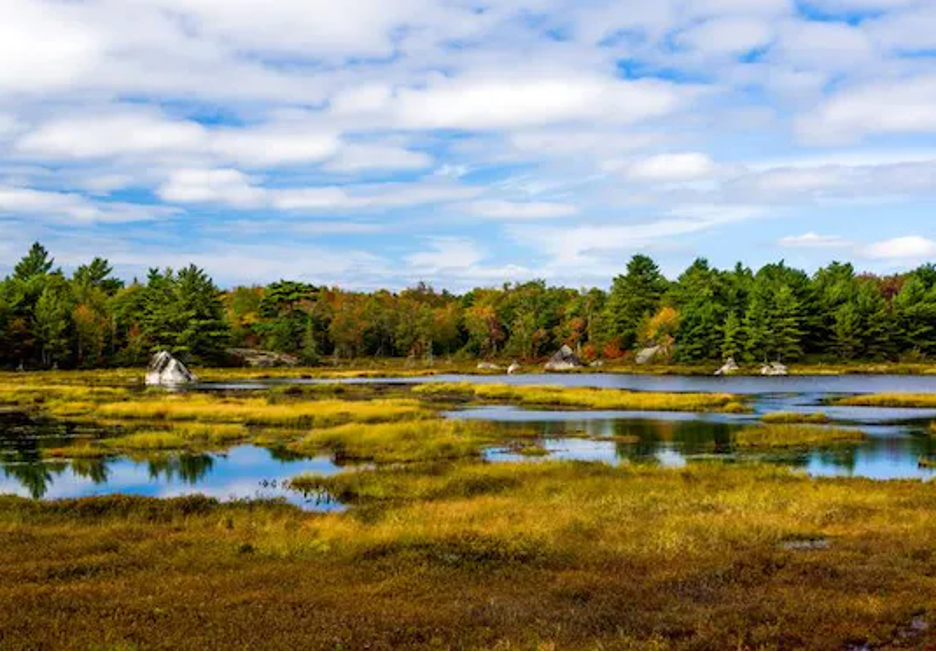
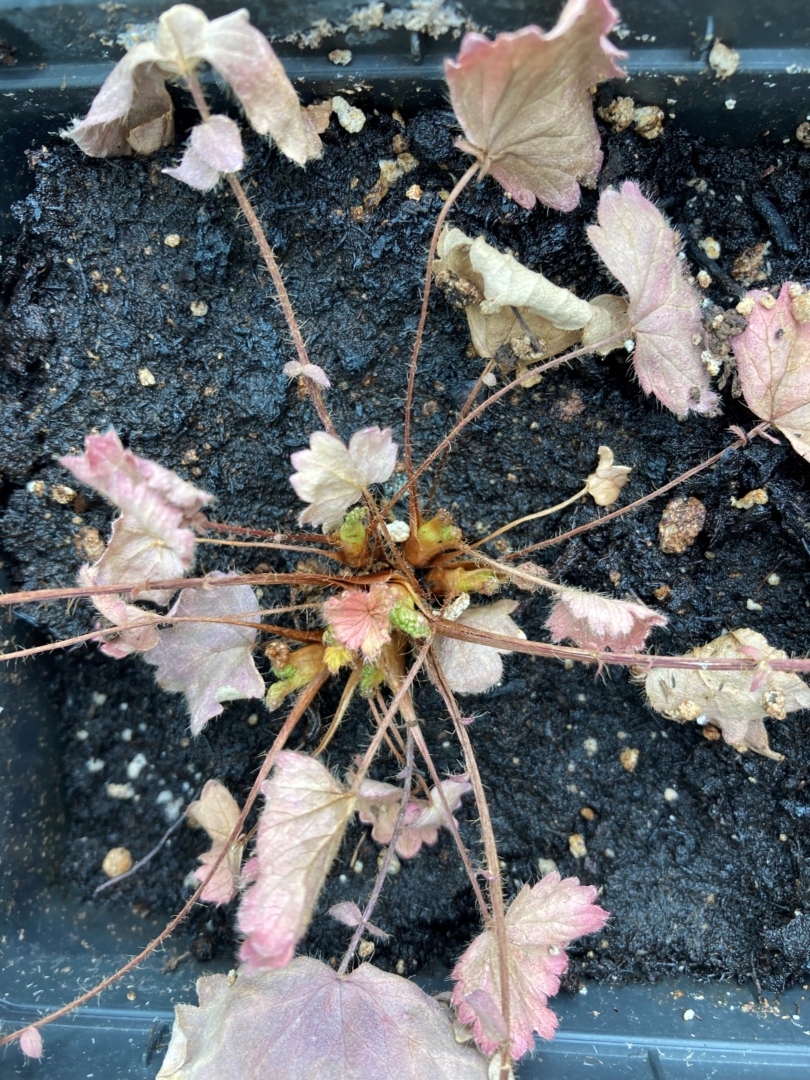
This year marks a significant milestone in WPC’s history as we are now supporting endangered plant conservation. The Canadian Species Initiative, a partnership between WPC and African Lion Safari, has been engaged by federal and provincial governments to facilitate conservation planning for one of the most endangered plants in Canada, eastern mountain avens (Geum peckii). This rare plant is only found in peatland habitats in Digby County, Nova Scotia, and high elevation rocky slopes of the White Mountains in New Hampshire.
Wetland habitats, such as the unique community of bog vegetation where eastern mountain avens grows in Canada, are rich in biodiversity and provide important ecosystem services. Sadly, the eastern mountain avens is threatened by climate change, shrub encroachment, expanding gull colonies, and water management, causing declines in many of the small, scattered populations in Nova Scotia.
Addressing the threats to eastern mountain avens is challenging, but fortunately, we have a few conservation tricks up our sleeves!
Ex situ conservation measures are one approach that can help support conservation and prevent extinction of endangered plant species. Ex situ conservation refers to the practice of managing species outside their natural habitat, in a stable environment where they can be protected from the threats they face in the wild. This can include the cultivation of plants in botanical gardens or storage of plant material in seed or tissue banks, or both, as is the case of eastern mountain avens.
Ex situ conservation programs, along with conservation efforts in the wild, can help directly address threats to endangered species or offset the effects of those threats, protect against species extinction in cases of ongoing threats, or even restore wild populations.
To determine how the eastern mountain avens ex situ population can best compliment wild conservation efforts like habitat restoration, population monitoring, and ecological research, the Canadian Species Initiative hosted the first-ever detailed assessment of ex situ conservation strategies for a plant species. Following a roadmap developed by the IUCN Conservation Planning Specialist Group, this assessment brought together a diverse group of species experts, including recovery team members and other interested parties, who reviewed current research and threats to eastern mountain avens, and evaluated ex situ conservation strategies to determine what is feasible and would have most significant impact.
The recommendations from the workshop will provide guidance to governments on the best strategies for eastern mountain avens recovery.
In the fight against biodiversity loss and climate change, plant conservation is a crucial issue in Canada requiring the collective efforts of governments, organizations, communities, and individuals. By working together and using proven conservation planning processes and tools, we can ensure that future generations can continue to benefit from Canada’s rich plant heritage.

Yellow-banded bumble bee
(Bombus terricola)
Status: Special Concern
WPC’s Native Pollinator Initiative identifies factors causing bumble bee population declines, and develops techniques for recovery focused on research, monitoring, outreach, citizen science, and breeding. It is a multi-species effort to save Canada’s native pollinators from extinction.
Photo by M. Arseneault
Native Pollinator Initiative

Conservation breeding and release programs are an established way to restore populations of at-risk species, but such programs for invertebrates are very rare compared to those for vertebrates. One common challenge for conservation programs for insects is the development of reliable breeding and rearing techniques. Since WPC’s Native Pollinator Initiative’s inception, we have developed and tested different husbandry techniques for increasing the success of bumble bee conservation breeding colonies, focusing on the Special Concern yellow-banded bumble bee, Bombus terricola. The ultimate goal of the Bumble Bee Recovery Program is to establish a self-sustaining pool of captive colonies to supplement wild populations of this species.
Although the yellow-banded bumble bee has been our main focus in the breeding program, we had a two-year break from breeding in 2020 and 2021, in part because of the pandemic, but also so we could set up a new lab space at African Lion Safari, in Southern Ontario. After this hiatus, we were very excited to resume breeding this species last year.
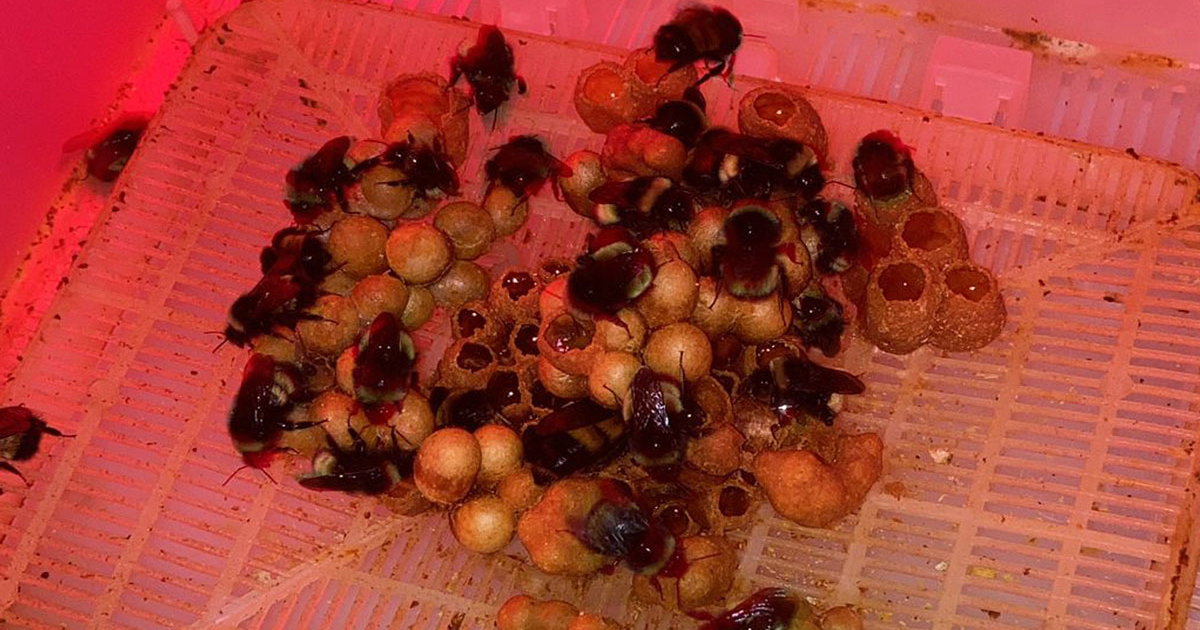
The largest yellow-banded colony to date (photo taken before the peak of 78 workers). Photo by P. Smale
Along with the yellow-banded, we also reared brown-belted bumble bees, Bombus griseocollis, which is a common species that we use to increase sample sizes and compare needs of common versus declining species. We had been breeding brown-belted bumble bees for two years prior (2019 and 2021) and had a high success rate in 2021. The 2022 yellow-banded breeding season saw multiple exciting accomplishments, including the lowest number of early-season queen losses. Some level of mortality is to be expected with any conservation breeding program, so we were happy to see our methods minimizing that as much as possible this year.
Most of the queens produced eggs (75%), which is the second-highest proportion compared to all previous years breeding this species. However, only a few colonies (17%) produced workers and one colony produced males and new queens (gynes). Although these proportions may not seem high in terms of colonies producing offspring, it was a big win for our team as it marked the first time since 2018 that workers were produced and the first time males and gynes were produced since 2017. Last season we also had our biggest colony to date, with 78 workers.
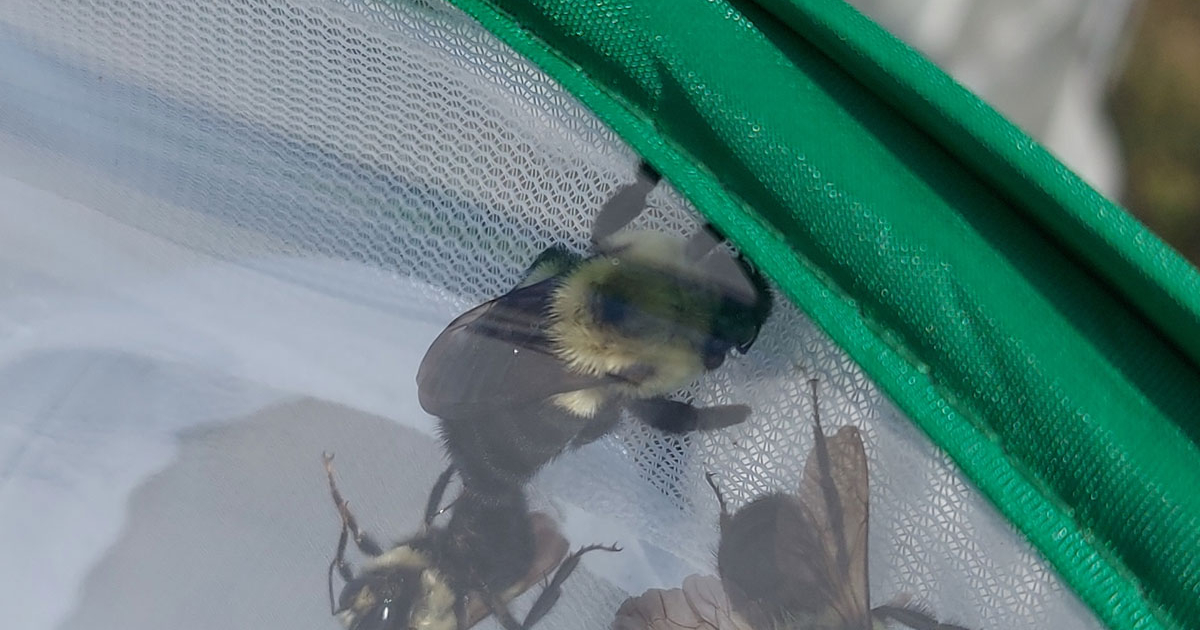
First observed successful mating of brown-belted bumble bees. Photo by S. MacKell
We also had a record-breaking year breeding brown-belted bumble bees, with about four times the number of new queens (gynes) and two times the number of males produced compared to 2021. From this many males and gynes we were able to run extensive mating trials and finally observed our first successful mating of this species, which gives us a lot of hope that our current set-up will work for mating other bumble bee species!
We think that temperature and colony disturbance might have been the main issues with breeding yellow-banded bumble bees previously, and in 2023 we plan on keeping the colonies at a higher temperature (approximately 28-30C) and decreasing colony disturbance, especially during early establishment. Small changes like this each year will help us perfect the ideal breeding conditions for bumbles.
We have made great improvements for breeding both species in 2022, and have come a long way from where we started in 2017. The whole bumble bee recovery team is looking forward to a successful and record-breaking 2023 season!
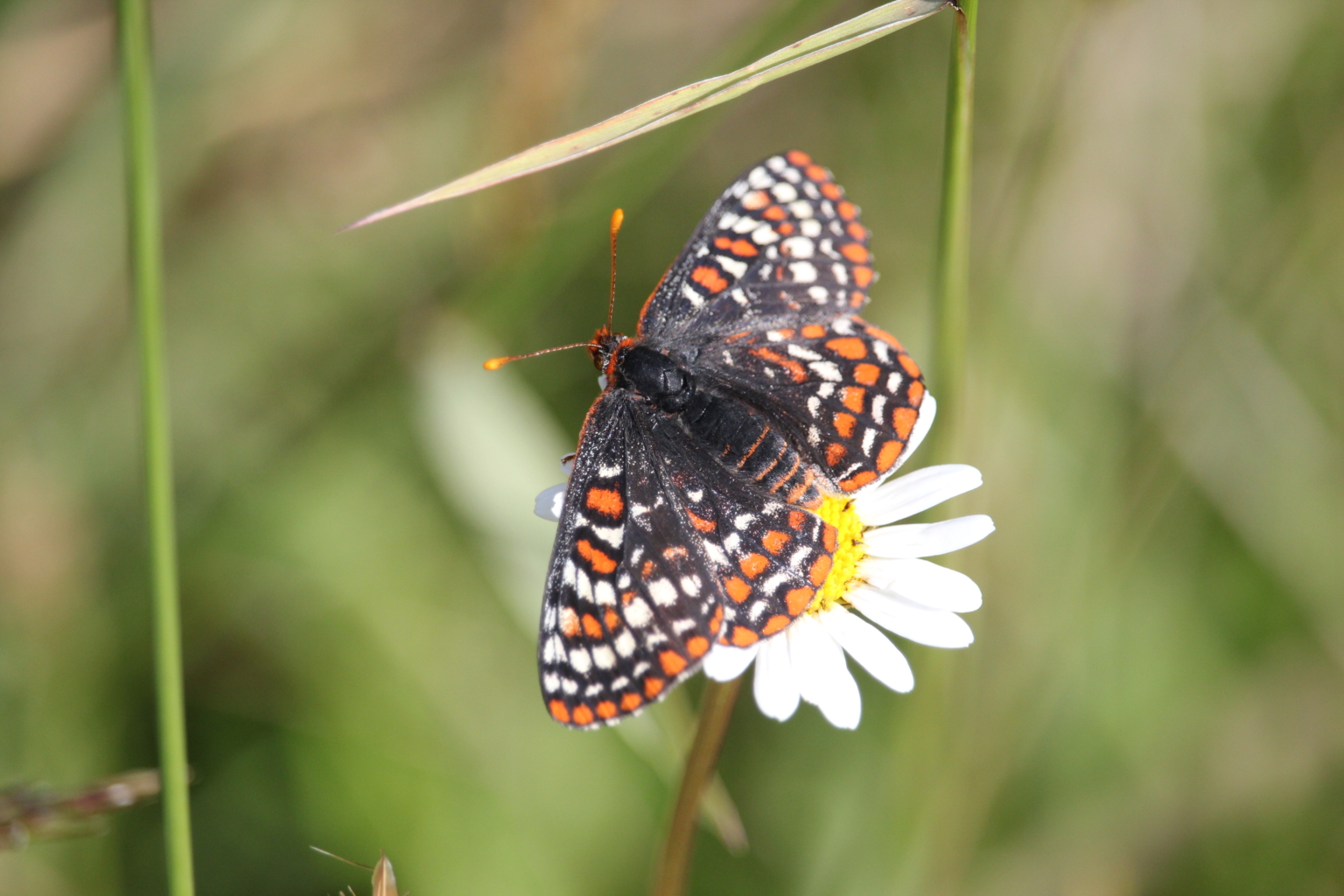
Taylor’s checkerspot butterfly
(Euphydryas editha taylori)
Status: Endangered in Canada
WPC’s recovery program for the Taylor’s checkerspot butterfly challenged the team to pioneer techniques in breeding and release for butterflies – an approach highlighted in the recovery strategy for this and other butterflies in Canada.
Native Pollinator Initiative

As the butterfly expert among my family and friends, I periodically get questioned: “Why conserve butterflies?” – and this has caught me off guard. I find that most people automatically support conservation of one kind or another, so while I get questions about technical aspects of my work, I am not often called upon to justify the work itself.
For some species, this question is easier to explain. Most people see the value of reintroducing wolves into Yellowstone or the long extirpated European beaver into the UK. This might be because they are large mammals, which make them charismatic mascots for conservation. Or maybe these species have an evident positive impact to humans. Wolves for example control the populations of herbivores, keeping grazing in check, allowing vegetation to prosper. Beavers dam waterways, creating ponds and wetland habitat.
So why do we want to conserve butterflies?
1. Butterflies signal a healthy environment.
Butterflies are bioindicators. A diverse habitat of native plants will also contain the butterflies that rely on them. In this sense, butterflies are the canary in the coalmine, disappearing in a declining environment.
2. Butterflies help maintain ecosystems.
Native butterflies pollinate native plants. Rare ecosystems with unique plant communities require specialist pollinators such as butterflies that are distinctly suited to certain plants. Without these specialists, many native plants are unable to reproduce and ecosystem biodiversity is threatened. By doing the work to protect and recover butterflies, we are protecting the broader ecosystem that supports them.
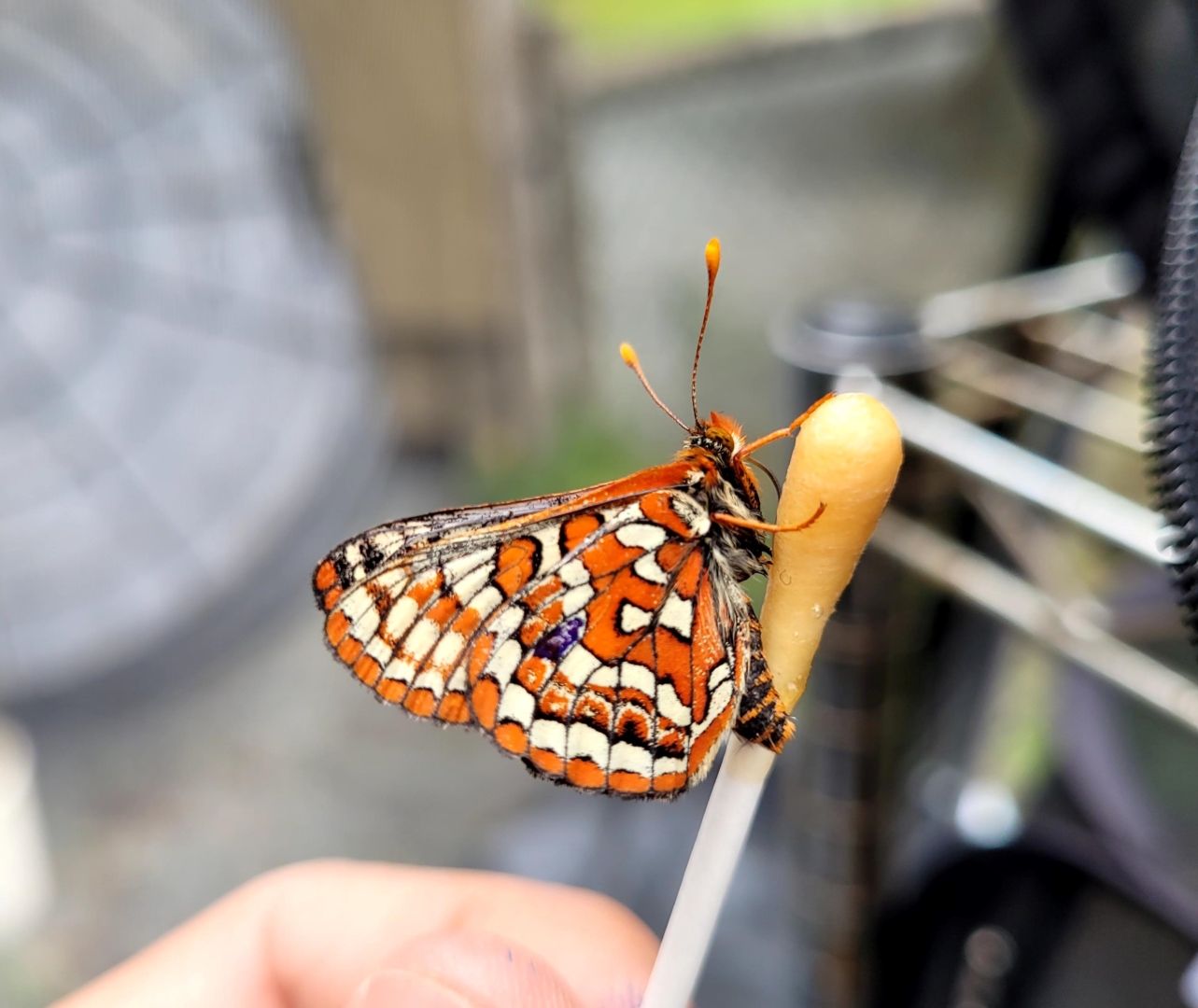
A Taylor’s checkerspot butterfly from the recovery program in British Columbia.
3. Butterflies are underrepresented in conservation efforts.
When you think of conservation projects what do you think of? Pandas? Whales? Tigers? Invertebrates make up at least 77% of the species (possibly more) on the planet, and we know the conservation status of 31% of them. Yet studies suggest that invertebrates only make up 9% of all reintroduction projects. Native pollinator initiatives, such as those for the Taylor’s checkerspot in BC and the mottled duskywing in Ontario bring desperately-needed resources and attention to this understudied group.
4. It is our obligation.
Above all else, it is our human obligation to slow down the current rate of biodiversity loss. Humans represent the number one threat to most at-risk species. We are directly or indirectly tied to their decline in one way or another. It is our duty to address the damage human activity has done to the planet, and save the beautiful creatures who share their homes with us.
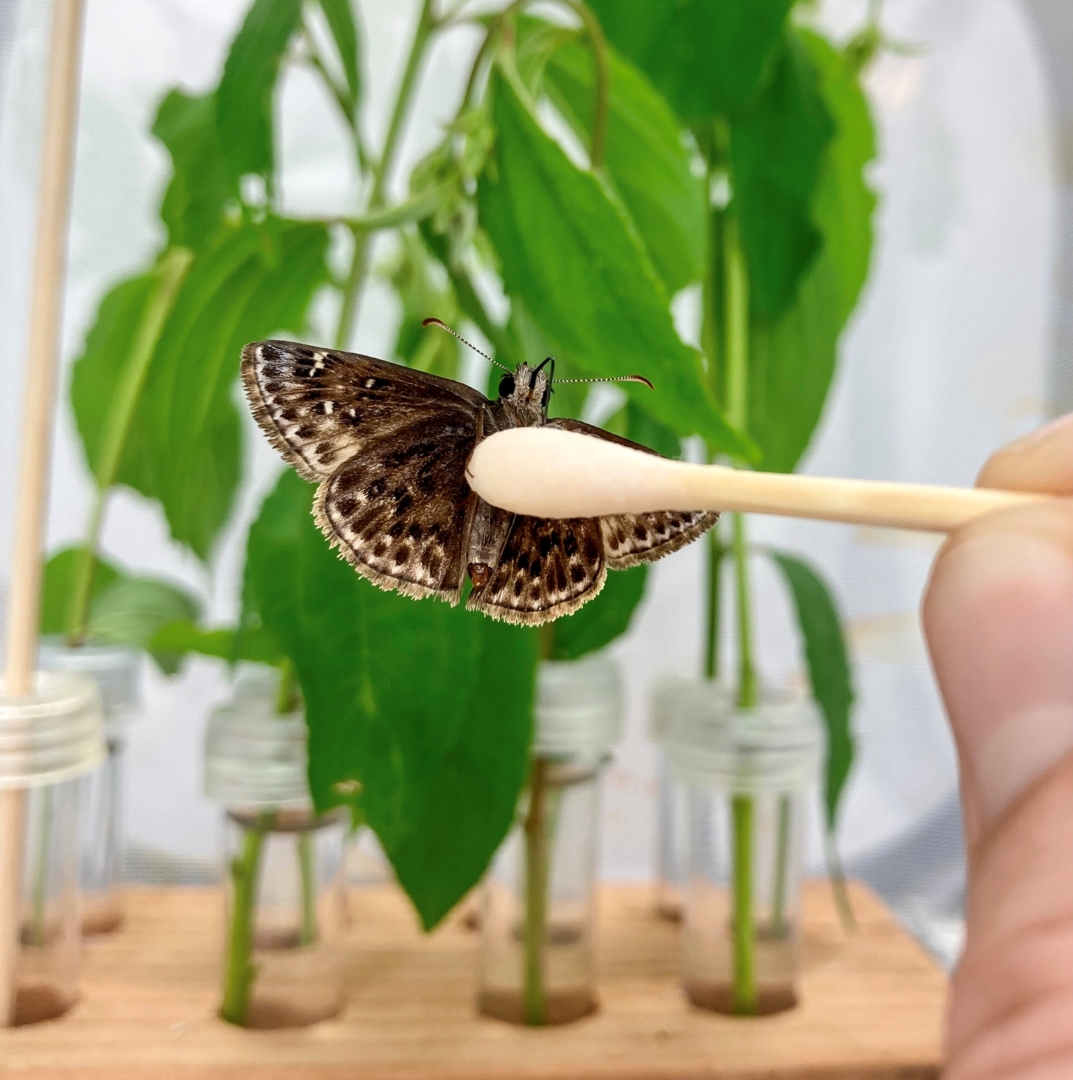
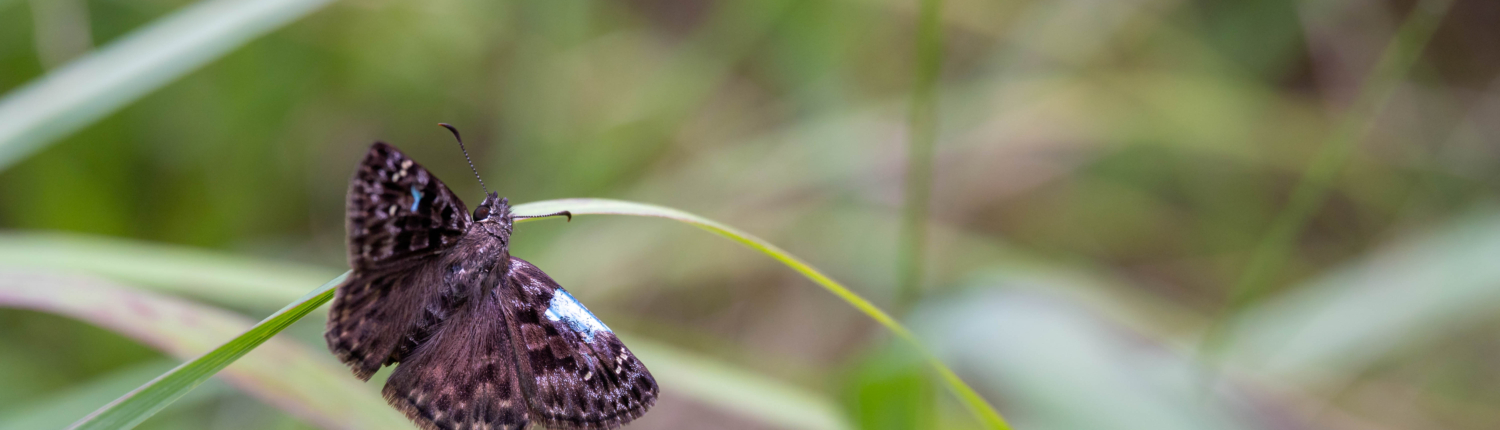
A mottled duskywing butterfly (Erynnis martialis) from the reintroduction project that WPC is a part of in Ontario.
What is WPC doing to contribute to butterfly conservation?
The Taylor’s checkerspot butterfly recovery program in BC is a collaborative effort WPC is proud to have been part of since 2005. Our teams have been working tirelessly to bolster the wild population of checkerspots in the channel islands between Vancouver island and the mainland. Our efforts are paying off with each new wild butterfly we see in the spring, the result of previous years’ releases.
As part of the conservation breeding and release program, each spring we release caterpillars into wild habitat with the hope that they will become breeding adults. This spring we released over 1,500 caterpillars on Hornby Island, keeping 200 back for our conservation breeding program. In a few weeks we’ll check back to see if any adults are flying in the hopes that a new generation will come from the individuals we kept in our care over winter.
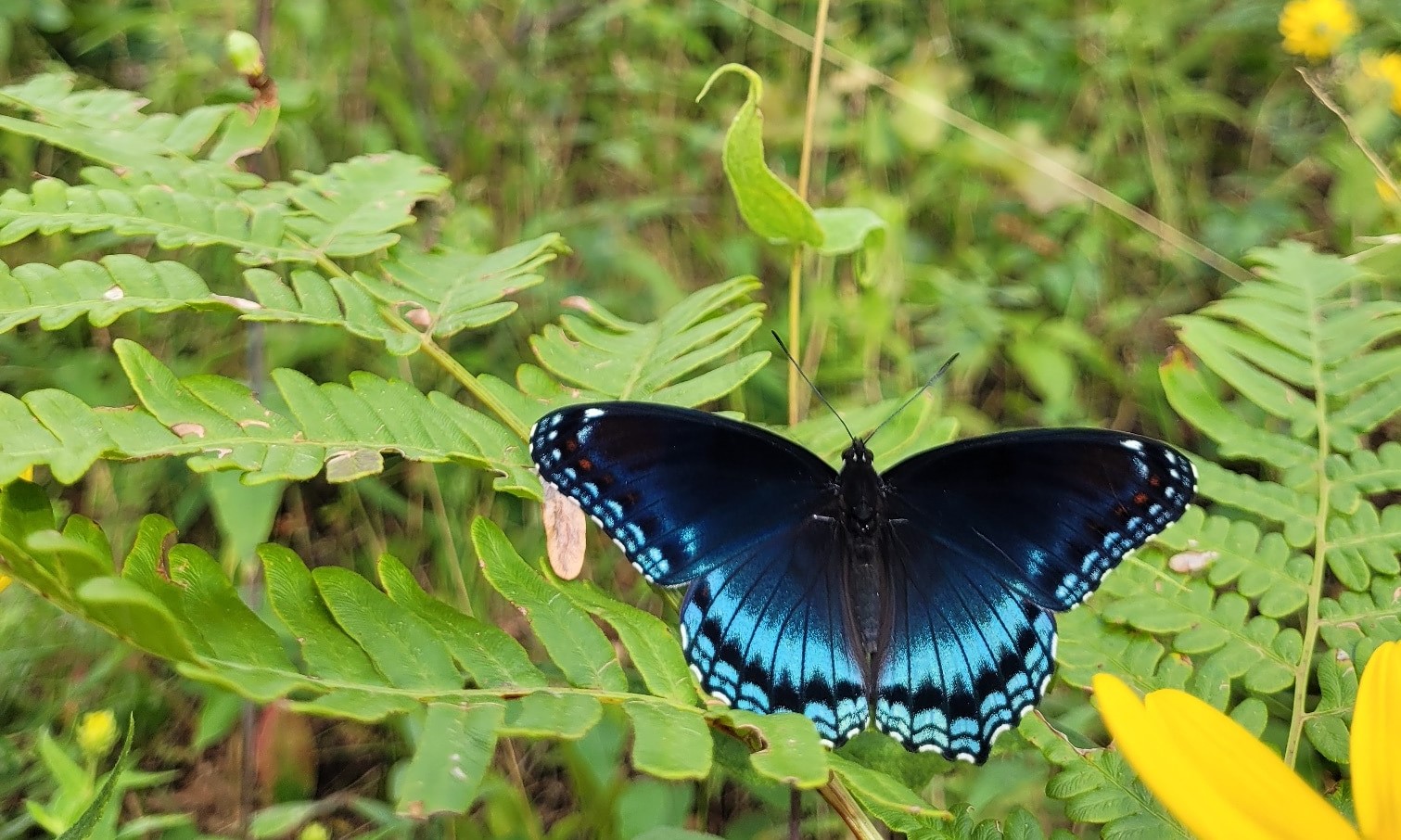
Butterflies such as the red-spotted purple (Limenitis arthemis) help ecosystems by pollinating native flowers.
Founder
Gerald M. Durell OBE
President
Shripal Doshi
Past President
Bridget Stutchbury, Ph.D.
Secretary
Randal Heide
Treasurer
Stephen Brobyn
Directors
Christopher Boynton
Jocelyn Brodie
Jay Bryant
Ron Cuthbertson
Tanya Davis
Ian Glen
Douglas Hart
Julie Wood
Honorary Directors
Chris Von Boetticher
Michael Chisholm
Eleanor R. Clitheroe
Kathyrn B.P. Dempster
Lee Durrell, Ph.D.
W. Paterson Ferns, C.M.
Louise Gervais
Craig Gilpin
Graham F. Hallward
Peter Karsten
Anson R. McKim
Stephanie McLarty
Stephen T. Molson
H. Alec B. Monro
William Noble
Pinar Ozyetis
Thomas C. Sears
Charitable Registration No.
89171 0535 RR0001