Even giants start small: life of the Aldabra giant tortoise
Posted onJune 26, 2015byPatrick Moldowan|Canada's New Noahs, News and EventsAll photos courtesy of Michael Alexander
What is the Canada’s New Noah Program? Since 1988, the Canada’s New Noah program has provided young conservation biologists in Canada the opportunity of a lifetime. Each year, WPC selects a dedicated biologist from applicants across Canada to undertake a 3-month course at the Durrell Conservation Academy in the U.K. followed by a 6-month internship on the islands of Mauritius and Madagascar in the Indian Ocean. This is an opportunity unlike any other for young Canadians to learn firsthand how the world’s most successful conservation recovery programs are managed and to bring this knowledge and experience back to improve Canada’s conservation capacity. The Canada’s New Noah Program is generously supported by the Alan & Patricia Koval Foundation.
This past week I found myself back on a little green jewel that dots the southeastern coastline of Mauritius, Ile aux Aigrettes. The island serves as a refuge for endemic Mauritian flora and fauna, but there are some rather large, conspicuous introduced inhabitants that are honourary members of the ecological community.
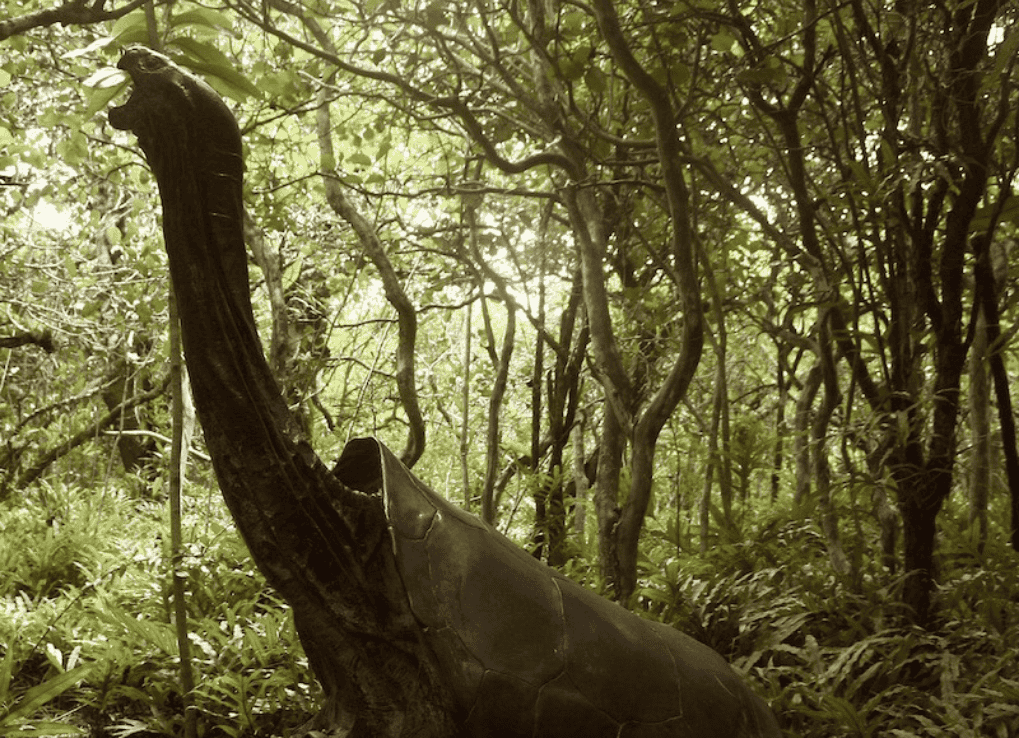
Bronze commemoration of extinct Mauritius giant tortoises (ca. 1730), the domed (Cylindraspis inepta) and saddle-back species (C. triserrata; shown), on Ile aux Aigrettes. Photo by P. Maldowan.
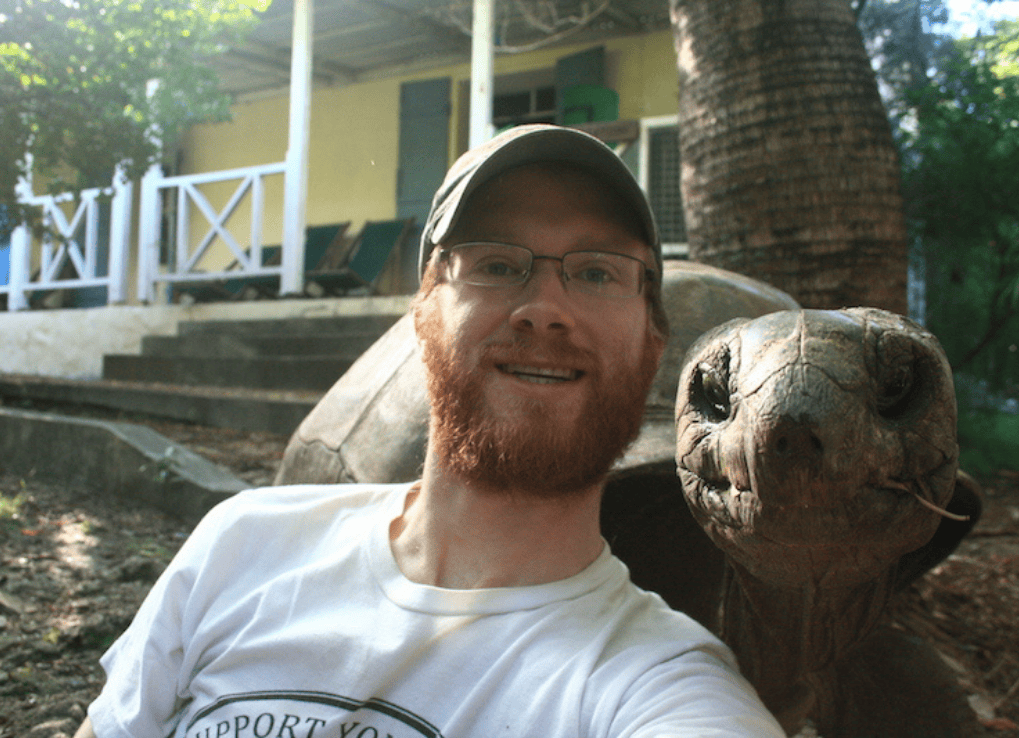
Aldabra Giant Tortoises (Aldabrachelys gigantea), the only remaining native tortoise species in the Indian Ocean, were introduced to Ile aux Aigrettes in 2000 as an analogue species to the extinct Mauritian giant tortoises. Consistent with their long lost relatives, the Aldabra Giant Tortoises browse on vegetation and serve in native seed dispersal, restoring lost ecosystem functions. The introduction initiative has been very successful and many of the tortoises are now mature and reproducing.
During my time on Ile aux Aigrettes I have been fortunate enough to witness three nesting Aldabra Giant Tortoises. Experience from my involvement in the Algonquin Park Turtle Research Project tipped me off to the early nesting behaviours of females, such as soil ploughing, sniffing of the soil, and ‘staging’ at the nest sites. These females have it difficult nesting on a coralline island with very few suitable nest sites and many are forced to abandon test digs because the substrate is too shallow – they truly hit rock bottom!
I watched in awe as one tortoise (female R05, pictured below) dug, laid, and covered her eggs over the course of 4 hours – spectacular!
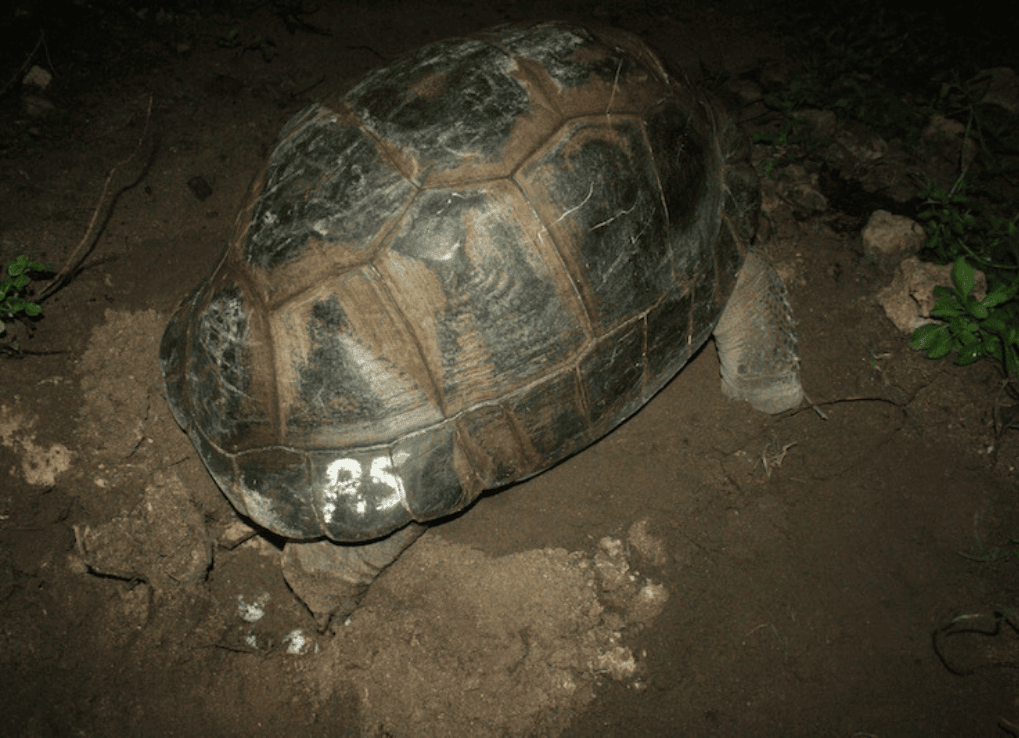
All her eggs in one basket.’ Female R05 deposited a total of 19 eggs in her carefully constructed nest chamber. Despite having spent hours carving a cavity into the earth and laying each pearly orb, she will never (literally) see the fruits of her labour – it’s all done behind her back! Photo by P. Maldowan.
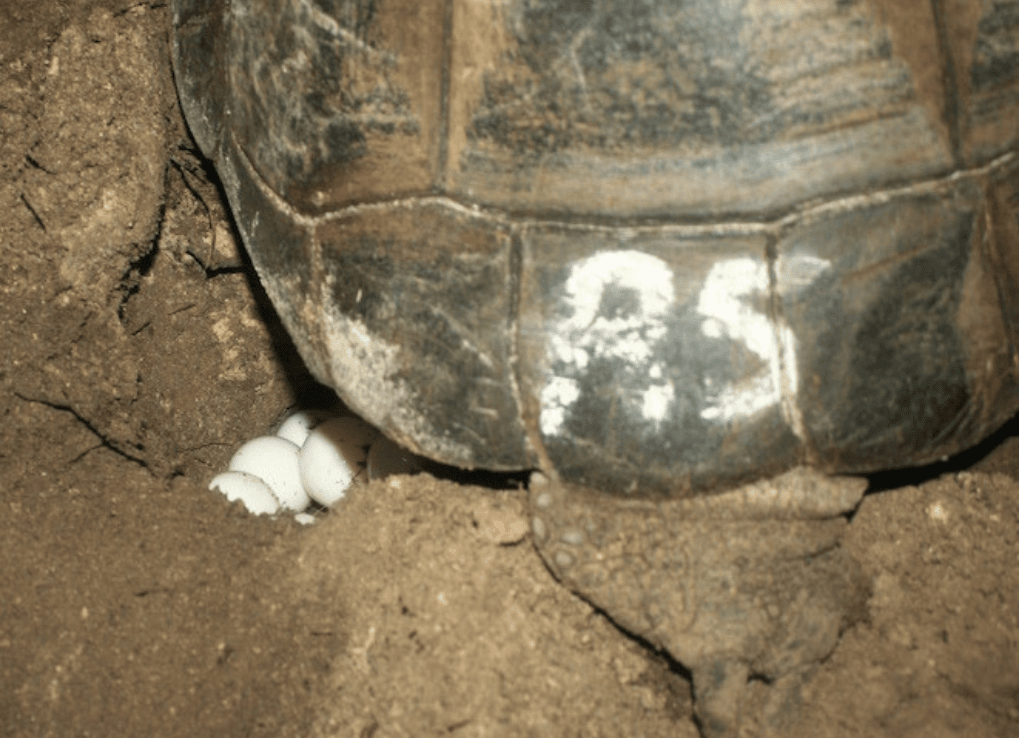
‘A Mother’s Pride.’ Female R05 paused briefly to take a rest before the arduous task of backfilling her nest began. Photo by P. Maldowan.
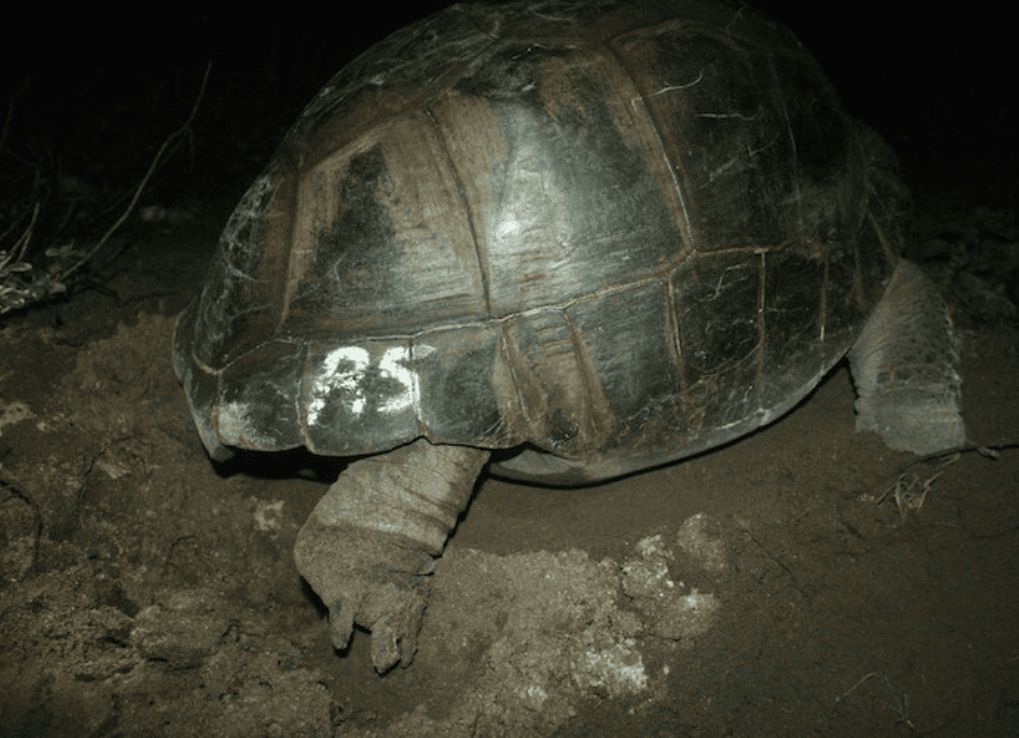
‘Packing it in for the night.’ Nesting female collects up soil displaced during the digging process and begins packing it firmly over the eggs. Photo by P. Maldowan.
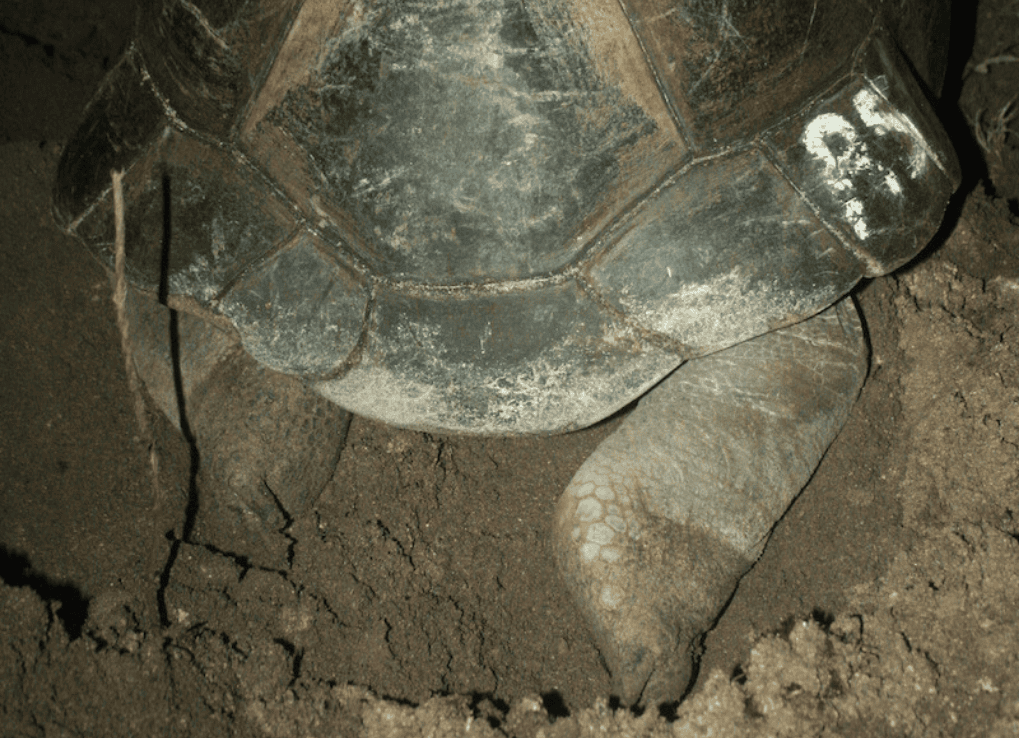
Covering continues with the rhythmic tamping down of soil over the nest cavity by alternate use of the left and right hindlimbs. Photo by P. Maldowan.
I estimate that the eggs of these Aldabra Giant Tortoises are ~3x the size of Snapping Turtles (Chelydra serpentina), by overall size and mass, and at least 6x that of Painted Turtles (Chrysemys picta), both familiar Canadian species!
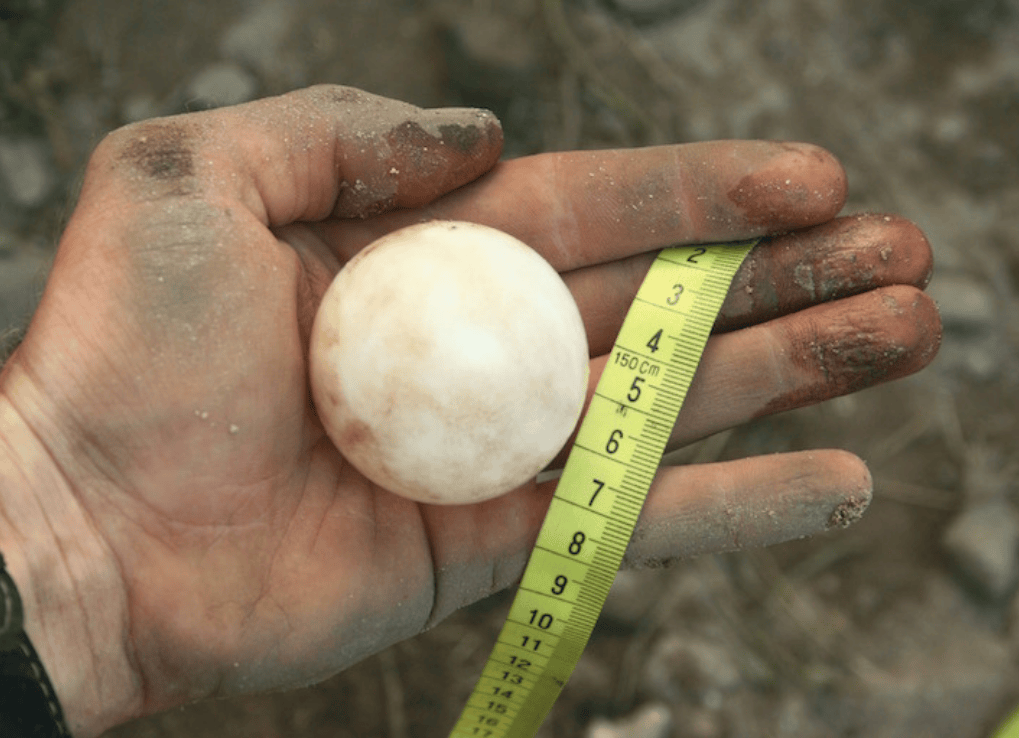
‘Tres gros!’ Egg of Aldabra Giant Tortoise. Photo by P. Maldowan.
Incubation is a lengthy at ~100-250 days so I am unlikely to see the young hatch and break ground during my stay in Mauritius. Luckily I still got my fix! I caught up with a free-roaming, wild hatched juvenile on the island as well – adorable and shy little fella.
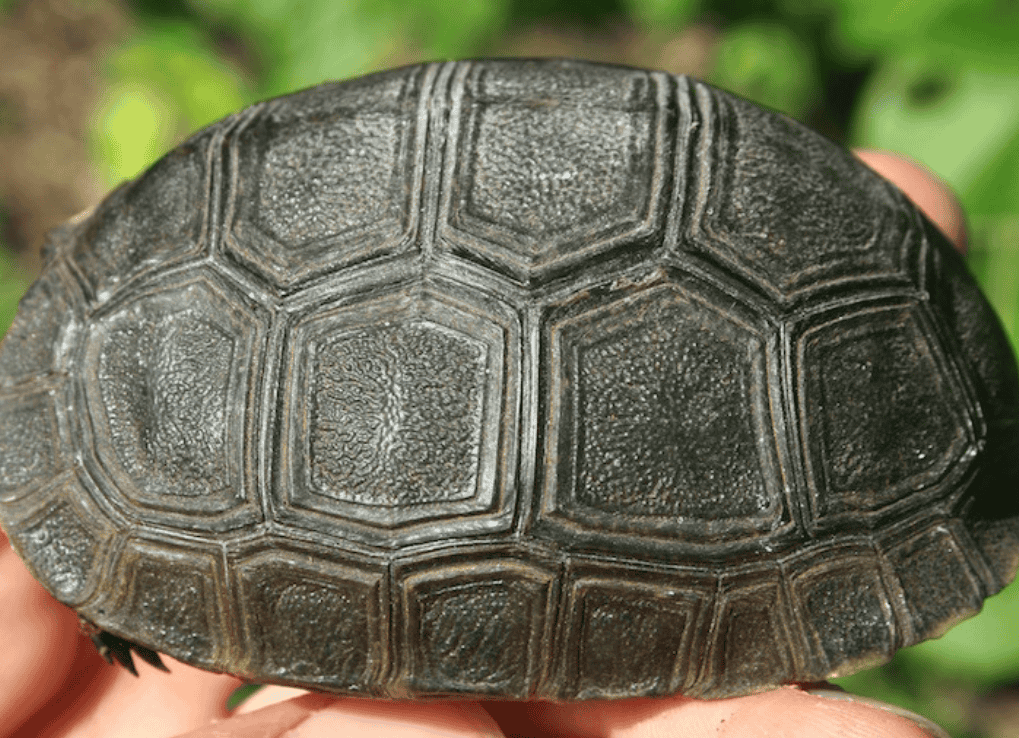
‘Giant To Be.’ Young Aldabra Giant Tortoise (Aldabrachelys gigantea). Photo by P. Maldowan.

‘Defence is the best offence.’ Young Aldabra Giant Tortoise retracts into shell when feeling threatened by inquisitive researcher. Photo by P. Maldowan.
It is not too often that you get so many life stages and events of a chelonian in a single week!

Roll the Barry White! Photo by P. Maldowan.
Relevant reading on the use of giant tortoises in ecological restoration in Mauritius:
Happy trails!
It is an incredible honour to be Canada’s New Noah. Working collaboratively with Wildlife Preservation Canada, Durrell Wildlife Conservation Trust, and Mauritius Wildlife Foundation will provide an invaluable opportunity in training and field research in one of the world’s greatest biodiversity, endemism, and conservation hotspots!

We need your help