As you may know, our conservation breeding lab rears yellow-banded bumble bee colonies from wild-caught queens. Not only does this allow us to gain more information about the lifecycle and environmental requirements of this at-risk species, but it also helps us reach our goal of releasing lab-reared gynes (queens) into the wild in order to supplement depleted populations. But before we can effectively send bees back to the wild, there are many hurdles we need to overcome. Let’s talk about the challenges we’ve addressed this past season and the ones we’re working on next!
Mating
In 2022, we had our first successful mating of the brown-belted bumble bee: a common species that we reared alongside yellow-banded bumble bee colonies. This year, after switching from mating bees outdoors to mating them indoors, where we’re able to control environmental variables more easily, we’re happy to announce that we had our first successful yellow-banded bumble bee copulation! And we didn’t see just one last summer: we saw 12! With 77 yellow-banded gynes participating in mating trials, that’s a 16% success rate. That number may seem humble at first, but that’s an infinite jump from the 0% we saw in previous years!
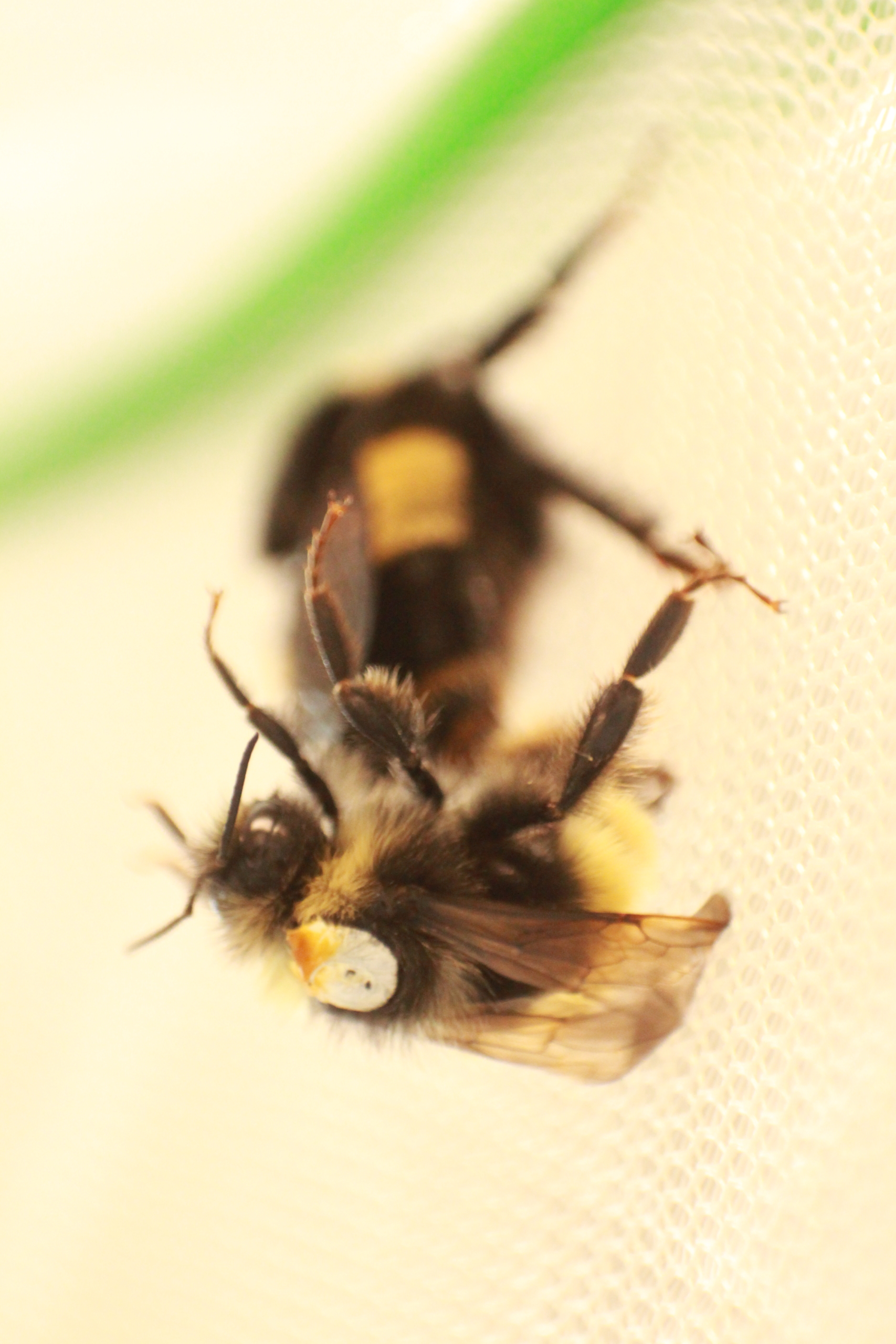
Pair of mating bumble bees. Photo: P. Smale.
Overwintering
Once gynes have mated, they need to overwinter to prepare to start new colonies in the spring. In the wild, new bumble bee queens will bury themselves in soil or leaf litter to sleep until the spring; in our lab, they bury themselves in soil in the fridge! We tried out a new overwintering method devised by Sabrina Rondeau as part of her PhD at the University of Guelph. By providing our queens with rehydrated soil, we are more easily able to keep humidity high for them as well as better-simulate their natural overwintering environment. And the change has paid off! In previous years we had 0% survival for our overwintering queens, however, this year we’re on track to wake up 43 yellow-banded queens, including 10 that we observed mating. This marks the first year we’re able to start multiple colonies from lab-reared queens, reducing the number of wild-caught queens we need for the lab. This is the first big step in developing self-sustaining lab lineages.
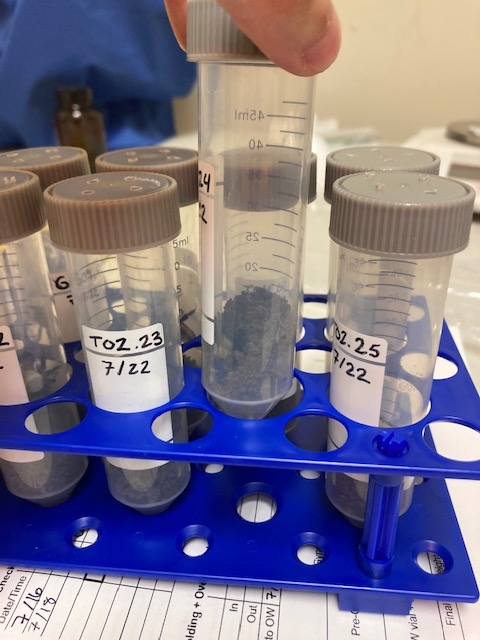
Our overwintering gynes resting in soil. These tubes are placed in our overwintering fridge, where they sleep until spring. Photo: P. Smale.
Self-Sustaining Lab Lineages
Ideally, our lab will be able to minimize the number of queens we adopt from the wild by maintaining lab-bred lines – bee lineages produced from queens we caught in previous years. Lab lines would provide access to more information on our colonies’ genetics, life histories, and any pathogens/parasites they might carry. It would also allow for the possibility of selectively breeding gynes and males in order to preserve/maximize genetic diversity, or even artificially select for desirable traits, allowing us to create populations better equipped to thrive in changing environments! This could ensure their survival in the wild for generations to come. While we’re not quite there yet, we’re thrilled to have taken the first step towards this goal.
Next: Parasite and Pathogen Detection
Disease management and biosecurity protocols are paramount to prevent the spread of pathogens within colonies and minimize the risk of introducing harmful agents into the wild. In order to successfully carry out releases, we need to screen our bees for the presence of common parasites and viruses. For 2024, we’re continuing our usual fecal sampling to identify the presence of common gut-parasites in incoming queens, plus we’ve embarked on a new project to explore the efficacy of fecal sampling methods, sample lab colonies throughout the season to track infection intensity, as well as investigate parasite prevalence in wild populations. This will help immensely to prepare for releases.
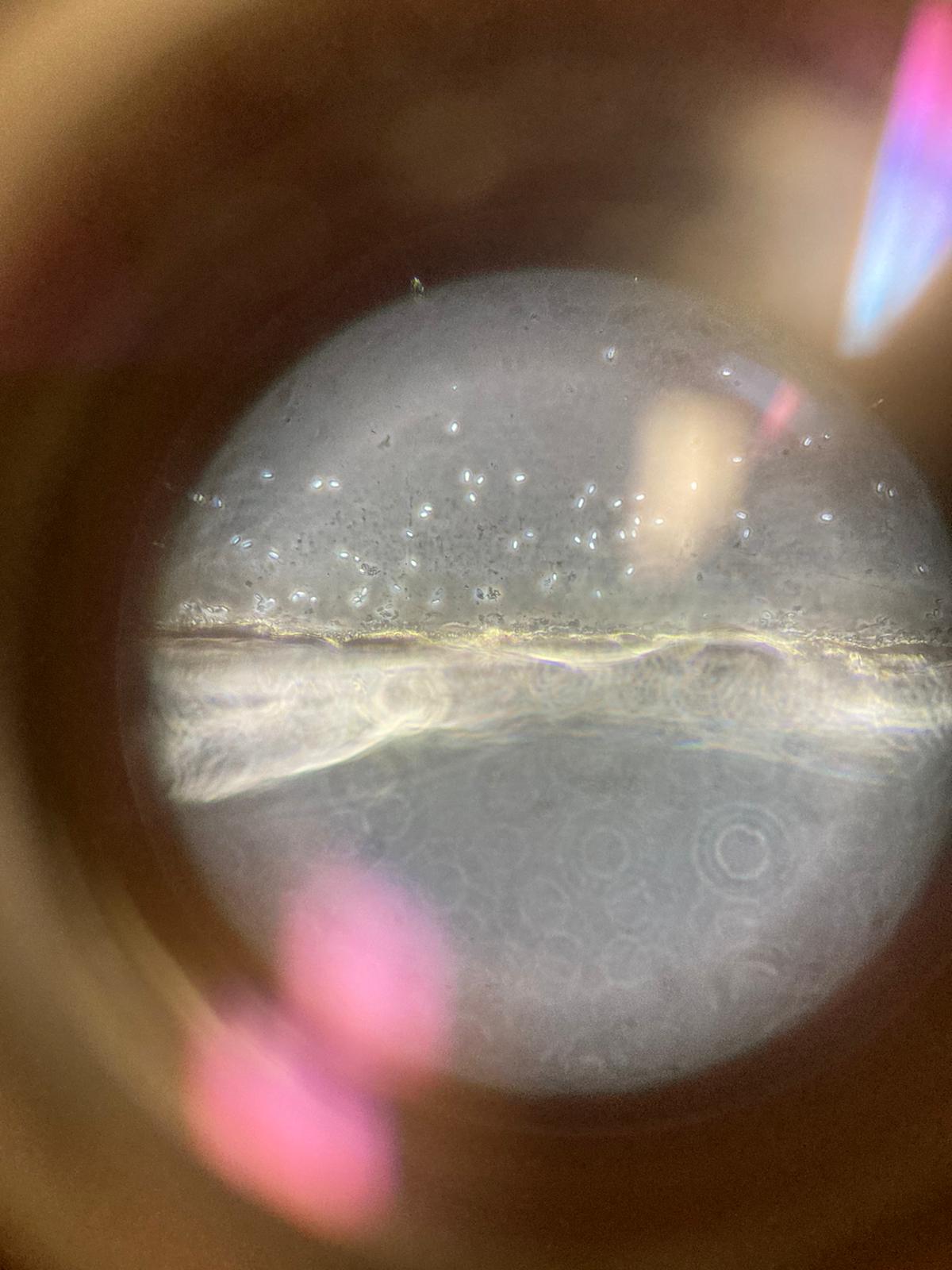
Microscopic view of bumble bee feral matter that contains parasites. These parasites are captured as little white dots in this image. Photo: C. Blair.
Looking to the Future
By integrating lab-reared colonies with broader conservation strategies, including habitat restoration and pesticide regulation, we are working towards a future where bumble bees thrive in their natural environments. Ultimately, our success hinges on our commitment to preserving these vital pollinators for generations to come. Although there are still challenges on our path to releases, our newfound ability to successfully produce, mate, and overwinter new queens means that we’re closer than ever, and we’re excited to see how our first cohort does when it comes to starting their own colonies this spring!