A new kind of snowbird?
Posted onMarch 26, 2026byHazel Wheeler|Eastern Loggerhead Shrike, Eastern Loggerhead Shrike, Eastern Loggerhead Shrike Recovery, News and EventsPhoto by Taylor Higgins.

What is the Eastern Loggerhead Shrike Recovery Program? After a precipitous drop in the wild eastern loggerhead shrike population in the 1990s, Environment Canada invited Wildlife Preservation Canada to join the multi-partner recovery effort in 2001. Since then, the wild population size has fluctuated. Studies have shown that although the recovery effort has prevented the species from disappearing from Canada, more work is required to identify and address the causes of the species’ decline. WPC works to prevent the endangered eastern loggerhead shrike from disappearing by building the wild population in Ontario, and studying the species to learn more about the threats they face.
There are plenty of birds whose white plumage helps them blend in with their snowy surroundings: snowy owls, tundra swans, snow buntings… and loggerhead shrikes?
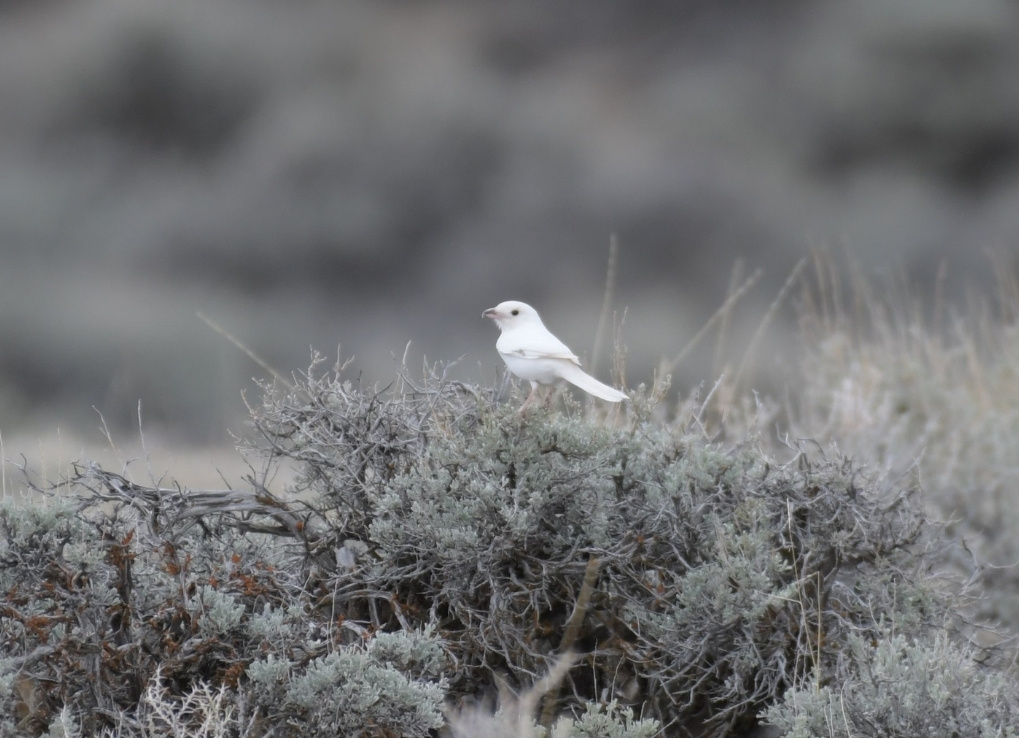
Last year we were sent a striking picture: a completely white loggerhead shrike against a backdrop of sagebrush in Sweetwater County, Wyoming (courtesy of Taylor Higgins). Of course this plumage doesn’t help the shrike blend in—in fact it sticks out quite dramatically—but unlike the other birds that inhabit snowy landscapes to which their plumage is perfectly adapted, this tundra shrike’s colouring comes from an atypical lack of pigment.
There are two possible causes for this: albinism and leucism. Albinism arises from a genetic mutation that prevents an animal from creating the pigment melanin. In birds, this is the pigment that produces earth tones: grays, blacks, browns, and buffy colours. Birds do have other pigments, so it is possible for an albino bird to have other colours (yellows, oranges, reds, and some blues and greens), though typically albino birds are completely white.
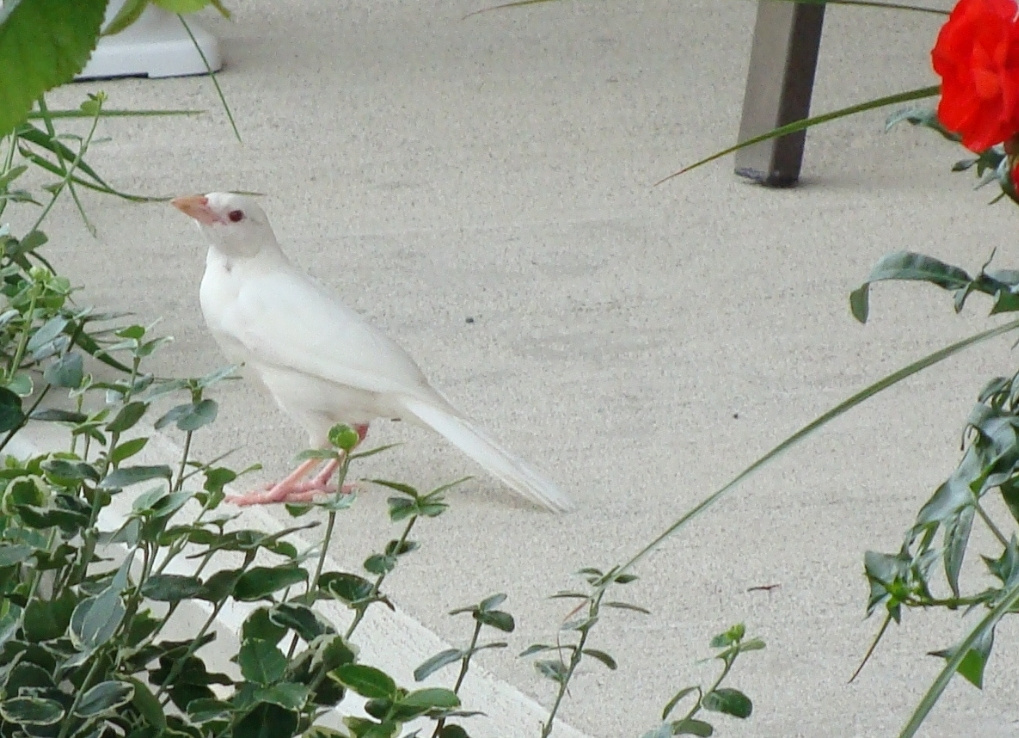
Albino grackle in Peterborough, Ontario. Photo by Slepkov
A leucistic bird, on the other hand, can make all the pigments that would lead to the typical colouration, but there is some disruption in how the pigments are deposited. This can lead to birds that could have some colour, but appear faded or washed out. You may also encounter partially leucistic birds that have some normal colouration, but with white or faded patches in their plumage. On the flip-side, there are also melanistic birds and animals that overproduce melanin, leading to them having darker colouration (Fun fact: did you know that black squirrels are just melanistic eastern gray squirrels? The black squirrels may have become more common in Canada because they have better cold tolerance than their gray counterparts!)
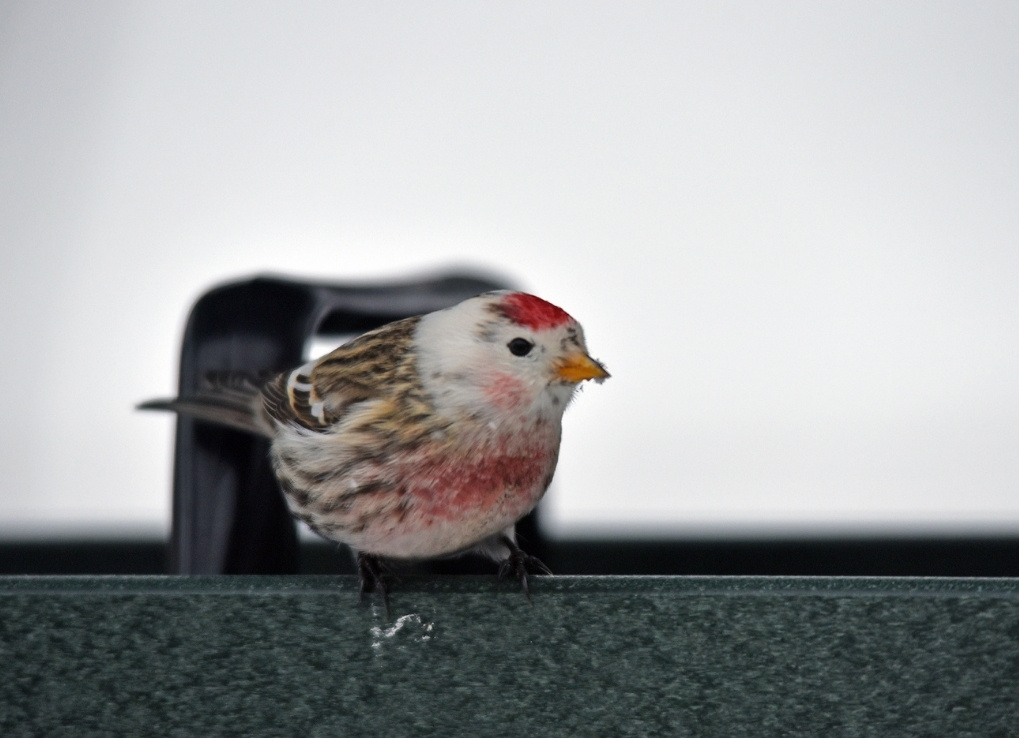
Partially-leucistic common redpoll. Photo by USFWS.
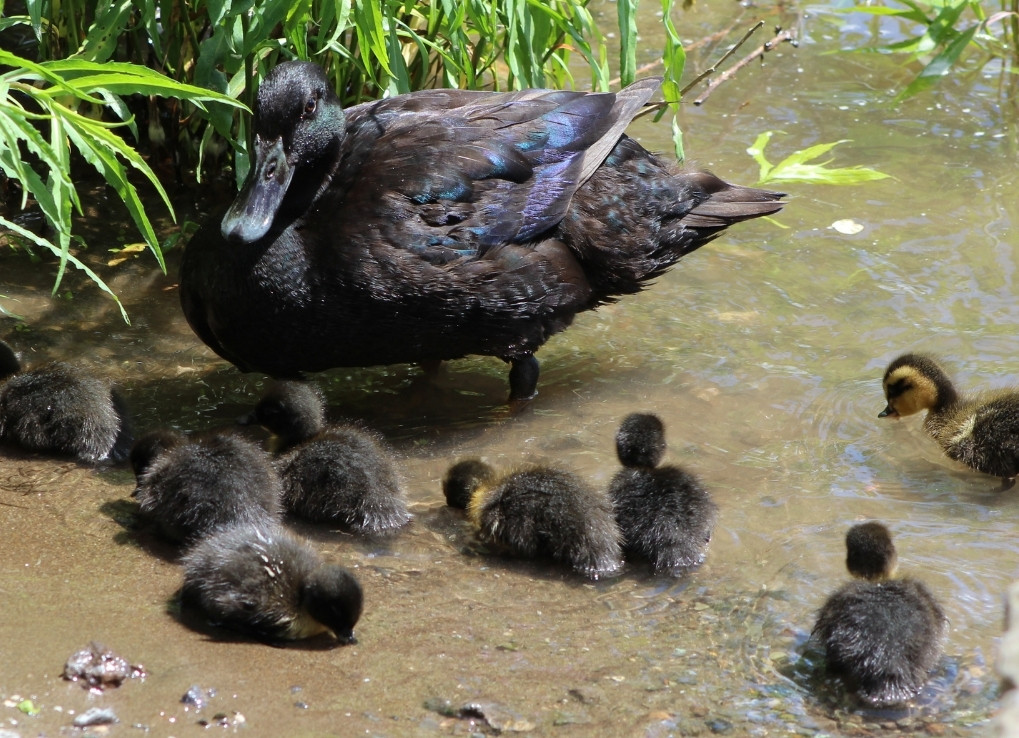
Melanistic mallard female and ducklings. Photo LittleLeafSheep.
The key to differentiating albinism and leucism is in the eyes. Albino birds (and other animals) will have a red eye, with the colour coming from the blood vessels within rather than any pigments, whereas leucistic birds will have an eye colour typical for their species.
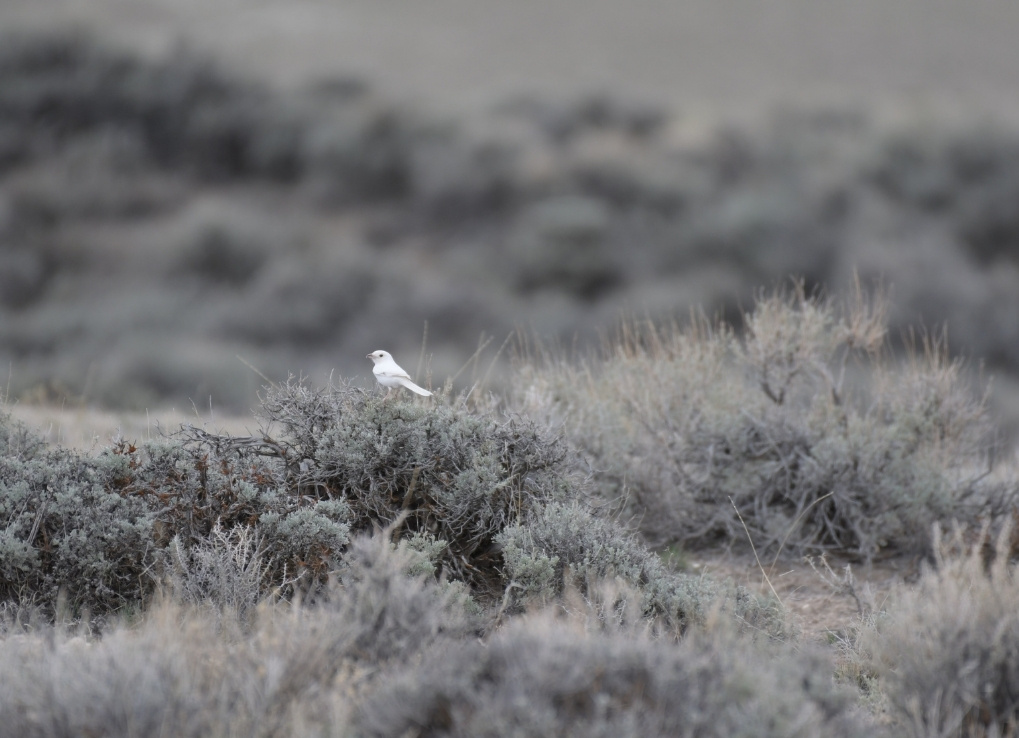
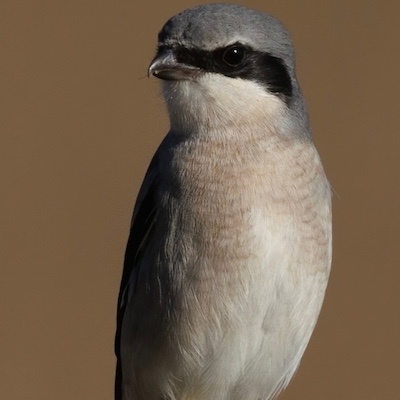
Loggerhead shrike. Photo Taylor Higgins.
Is this an albino or a leucistic shrike then? It’s hard to tell from this picture, but zooming in the eye does appear to be dark which points to leucism.
Regardless of the cause, this is doubtless a special sight to see; there is something about these animals that captures the attention. Any wildlife sighting can help connect us to nature, but catching a glimpse of something rare like this really brings to light the surprising variety and complexity of the world around us. This is a complexity worth protecting.
Hazel has been with Wildlife Preservation Canada since 2013, starting as a contract biologist with the Loggerhead Shrike Recovery Program before stepping in to the role of Lead Biologist. After a decade of shrike, they moved in to the role of Conservation Programs Director, where they oversee all of our recovery programs. Hazel has been working with species-at-risk since the mid-2000s, and has a Master’s degree from Trent University, where they studied the habitat preferences of chimney swifts in Ontario.

We need your help