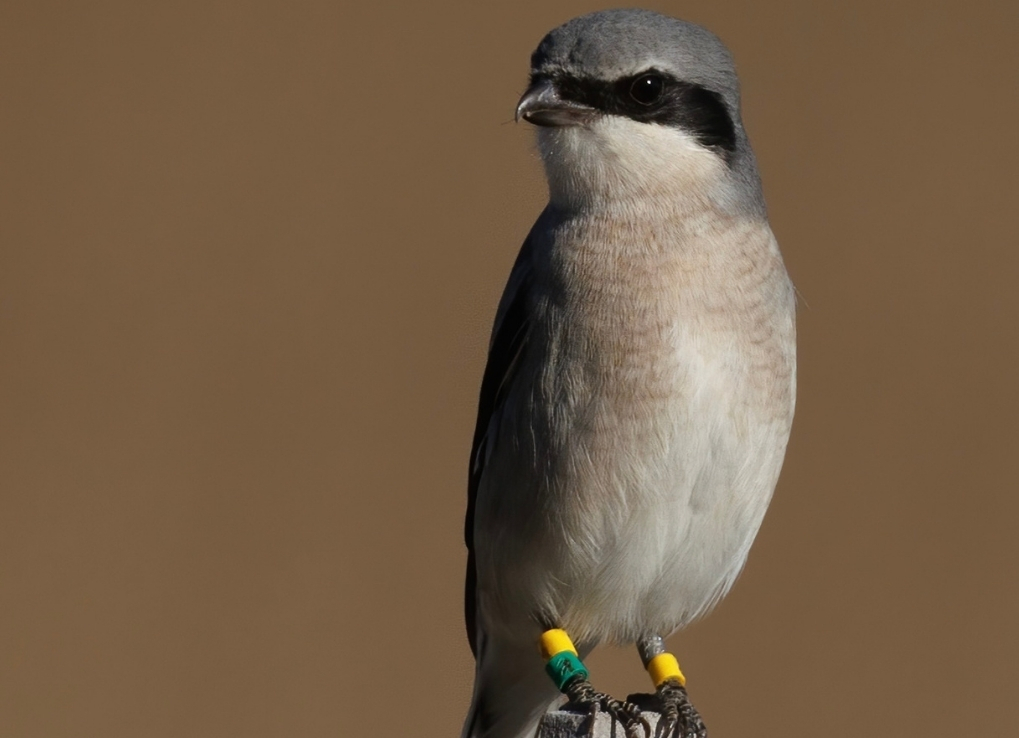
How to ID a loggerhead shrike
Posted onApril 9, 2026byJane Spero|Eastern Loggerhead Shrike Recovery, Loggerhead Shrike, News and EventsPhoto: Matthew Felperin
What is the Eastern Loggerhead Shrike Recovery Program? After a precipitous drop in the wild eastern loggerhead shrike population in the 1990s, Environment Canada invited Wildlife Preservation Canada to join the multi-partner recovery effort in 2001. Since then, the wild population size has fluctuated. Studies have shown that although the recovery effort has prevented the species from disappearing from Canada, more work is required to identify and address the causes of the species’ decline. WPC works to prevent the endangered eastern loggerhead shrike from disappearing by building the wild population in Ontario, and studying the species to learn more about the threats they face.
Early spring is here and with it comes the return of one of Wildlife Preservation Canada’s most iconic migratory songbirds: the eastern loggerhead shrike! After months spent on their southern overwintering grounds, these striking birds will soon make their way back to Ontario, seeking out the rare alvar landscapes where they breed.
While the eastern loggerhead shrikes are on the move, our Shrike Team is emerging from a winter of report writing and data entry, and turning our focus back to the field. With scopes and binoculars at the ready, we’re preparing for a new season of tracking shrike movements, monitoring breeding success, and gathering the critical data needed to support this endangered subspecies.
Every shrike sighting matters. Observations from across Ontario (and beyond!) provide valuable insight into migration routes, habitat use, and population trends. If you spot (or think you spot) an eastern loggerhead shrike, the team would love to hear from you. Sightings can be reported to birds@wildlifepreservation.ca
So how can you tell if you’ve found one? And what exactly is the Shrike Team looking for when surveying this elusive songbird?
As shrikes move through southern Ontario, on their way to the very particular alvar grassland habitat they require for the breeding season, they aren’t overly picky as to where they’ll show up. There have been sightings of shrikes moving through the most unlikely places, like densely populated urban parks in the GTA! As long as there is a mid-sized field with short grasses and nearby hunting perches, there is a chance that a migrating loggerhead shrike could be observed.
Picture a scenario where the key landscape features described above are present in the habitat being surveyed. A bird pops into view and lands on a tree branch nearby. To identify it as an eastern loggerhead shrike, pay attention to these six key features:
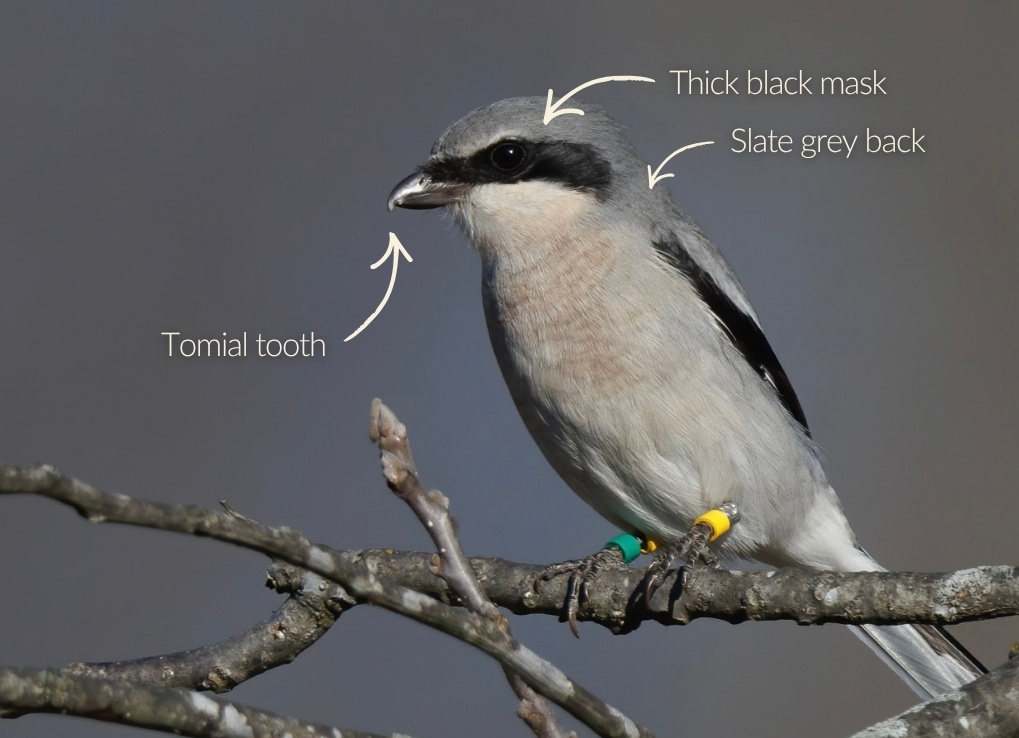
Eastern loggerhead shrike perches on a small branch. Notice the thick black face mask, tomial tooth on the beak and the slate grey back (photo by Matthew Felperin).
Size and Shape:
Loggerhead shrikes are about the size of a robin or blue jay, and have a “big-headed” appearance even from a distance (hence the name “loggerhead”). Shrikes will typically sit in a more horizontal position than other similar-sized perching birds.
Colour pattern:
Loggerhead shrikes have a thick black mask across their eyes and a slate grey back. In flight, white can be seen on the outer parts of their otherwise black tail feathers, and there is a characteristic white patch int heir otherwise black flight feathers.
Flight pattern:
When moving between perches, shrikes descend and fly low above the ground in an undulating type of flight, then when approaching a perch, they will characteristically swoop upward just before landing.
Behaviour:
The loggerhead shrike is a ‘perch and wait’ predator. It spends much of the day sitting on conspicuous perches from which it can scan the surrounding habitat for prey or predators.
Sound:
Once loggerhead shrikes have found a mate and have established breeding territories during the later spring and summer months, singing is kept to a minimum. While finding their way to their breeding grounds and before finding a mate, however, shrikes certainly can be heard singing their hearts out. Their song is quite a bit more simplistic than many other songbirds, mainly a clear, uncomplicated whistle or trill.
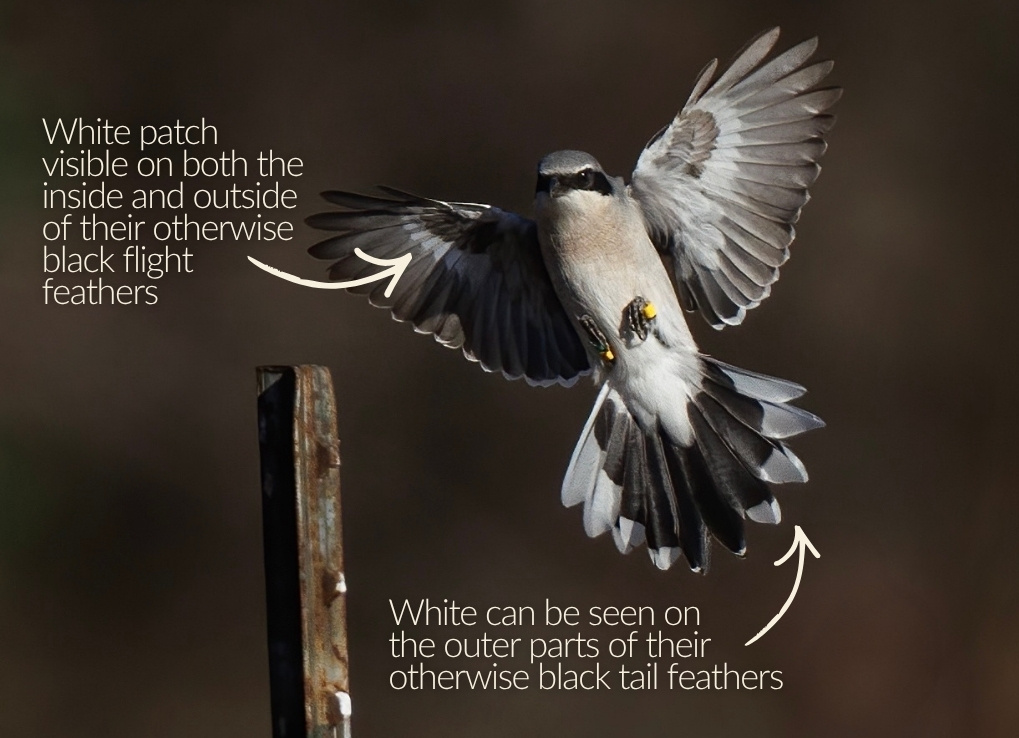
Eastern loggerhead shrike swoops in to land. Notice the white markings on the flight and tail feathers (photo by Matthew Felperin).
Look out for those lookalikes!
When trying to ID loggerhead shrikes, you may run into a few other birds that share habitat, features and even behaviour!
Northern shrike
During March and April, it is possible to view both loggerhead and northern shrikes in the same areas. The northern shrike breeds in northern Canada, and winters further south. They are difficult to distinguish from loggerhead shrikes but there are a couple of reliable differences: The black mask of the northern shrike does not extend over the top of the beak, and they usually have a longer beak and more light brown barring on the breast (although this can vary). While northern shrikes can occupy the same habitat as loggerheads early in the season, they have usually travelled north by the end of April and do not share habitat during late spring and summer months.
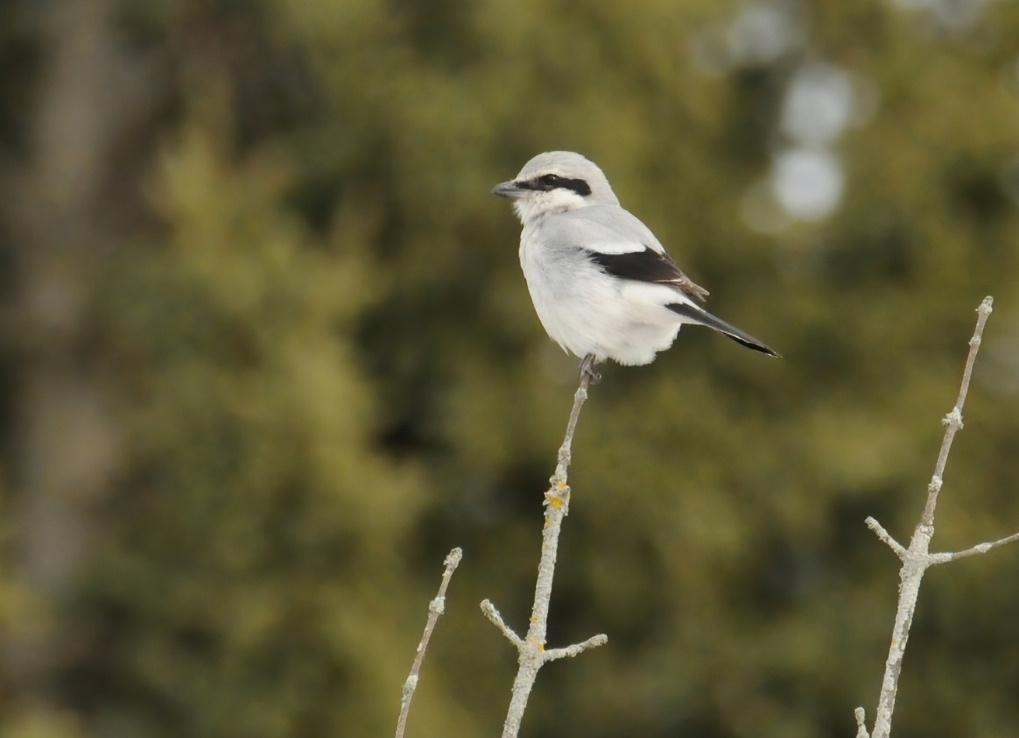
A northern shrike (photo by A. Wilcox).
Northern Mockingbird
The northern mockingbird is of similar size and coloration, including the white wing patches visible during flight, and is often found in similar habitat, but it is overall a more slender bird and lacks the big-headed appearance of the shrike.
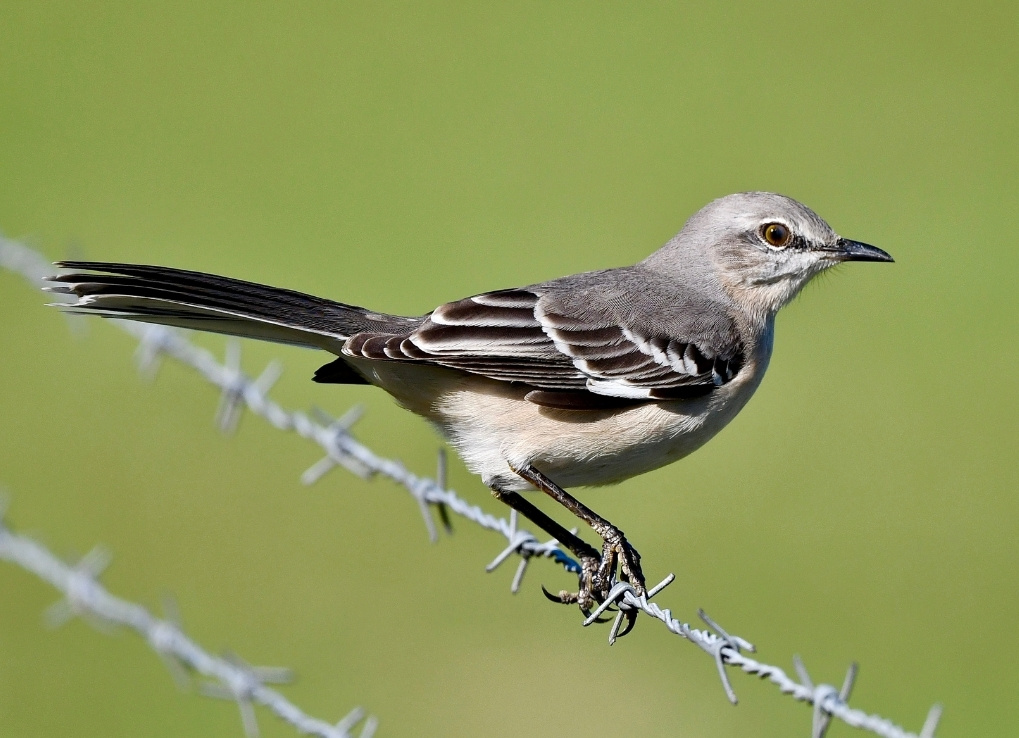
A northern mockingbird (photo by P. Accordino/Getty Images).
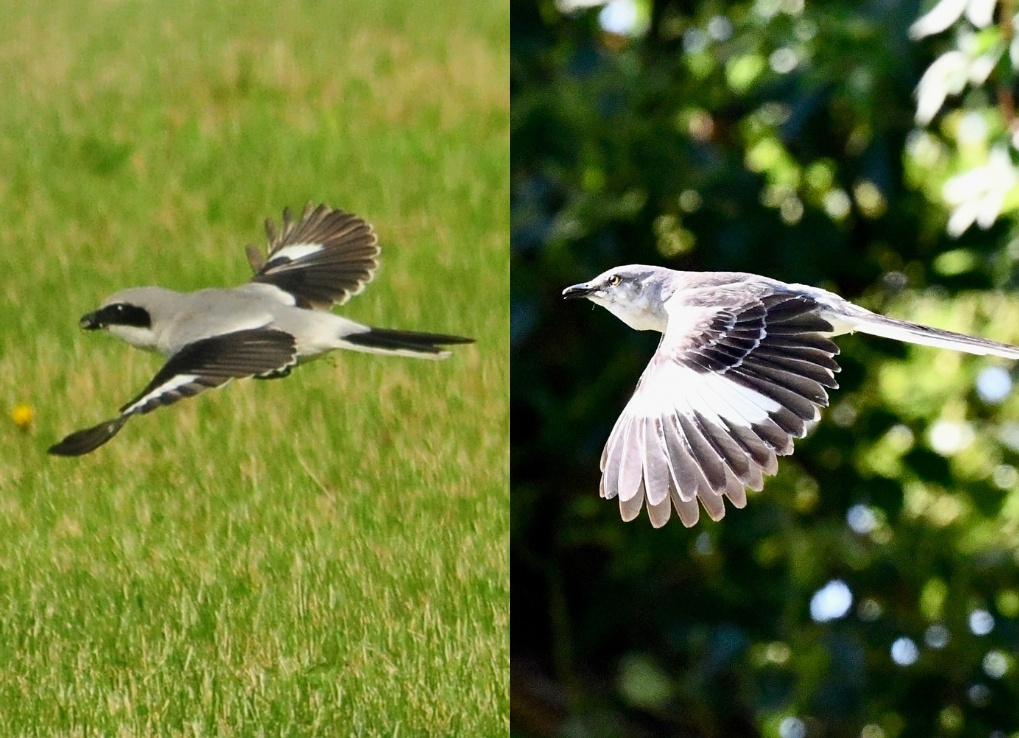
(Left) Eastern loggerhead shrike, compared to the northern mockingbird (right). Notice how similar they look mid-flight, especially at a quick glance (photo by P. Accordino/Getty Images)!
Eastern Kingbird
While very distinct from a loggerhead shrike up close, eastern kingbirds are of similar size and shape and have a similar habit of perching conspicuously on wires and posts. It is always best to give any bird perched on an elevated snag or wire a closer look.
Blue Jay
This bird is also distinct when looking at colouring up close, but is of similar size and shape as a Loggerhead Shrike and has the same flight pattern with bursts of quick wing beats.
Eastern Meadowlark
This bird is also quite different upon closer inspection, but has the same white outer tail feathers as loggerhead shrikes, which can fool the keenest of observers if all they see of a bird is a flash of white tail!
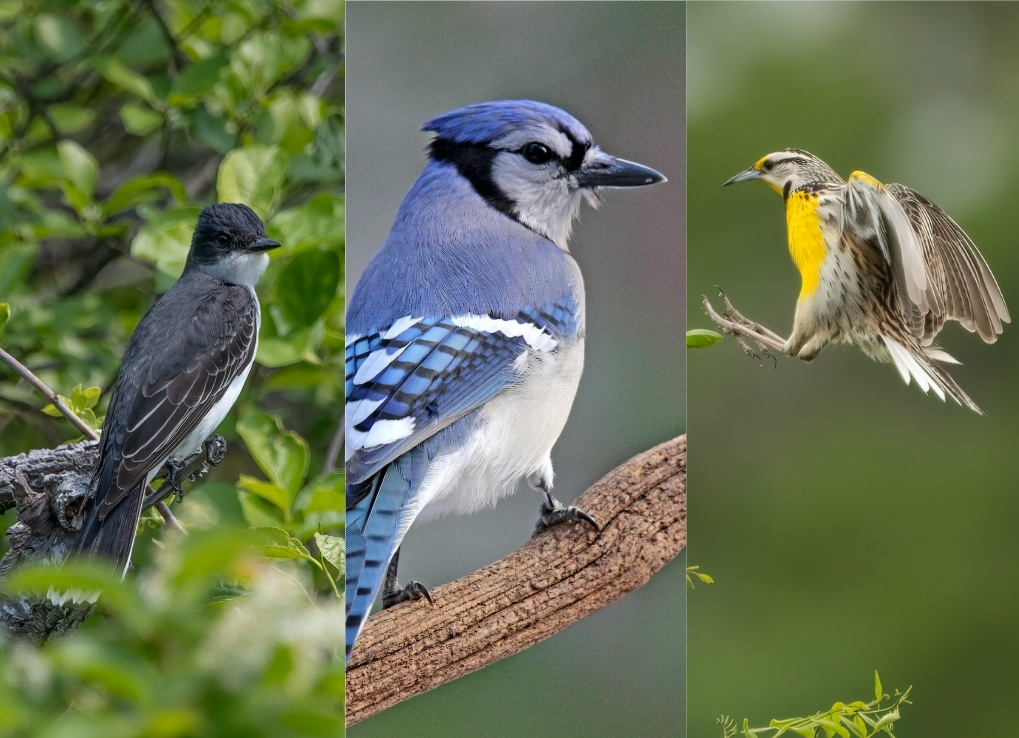
(Left) Eastern kingbird (photo by J. Goddard/Getty Images). (Middle) Iconic blue jay (photo by Getty Images). (Right) Eastern meadowlark (photo by I.A. Gaffney/Getty Images).
With these key features (and lookalikes) in mind, identifying a loggerhead shrike becomes much more approachable, even for beginner birders and naturalists.
Every reported sighting plays an important role in the conservation of this endangered subspecies. Even uncertain observations can provide valuable clues, helping the team build a clearer picture of shrike movements across their full annual cycle.
By keeping a watchful eye on the landscape this spring, you can be part of that effort. Together, these shared observations help inform conservation actions- and bring us one step closer to ensuring that the eastern loggerhead shrike continues to return to the grasslands of Eastern Canada for years to come.
Jane holds a Master’s degree in animal biosciences from the University of Guelph, where she studied building collision injuries in migratory songbird species. Jane worked as a rehabilitation supervisor, where she was responsible for the care, treatment, and reintroduction of injured and orphaned wildlife, including many species at risk.
We need your help