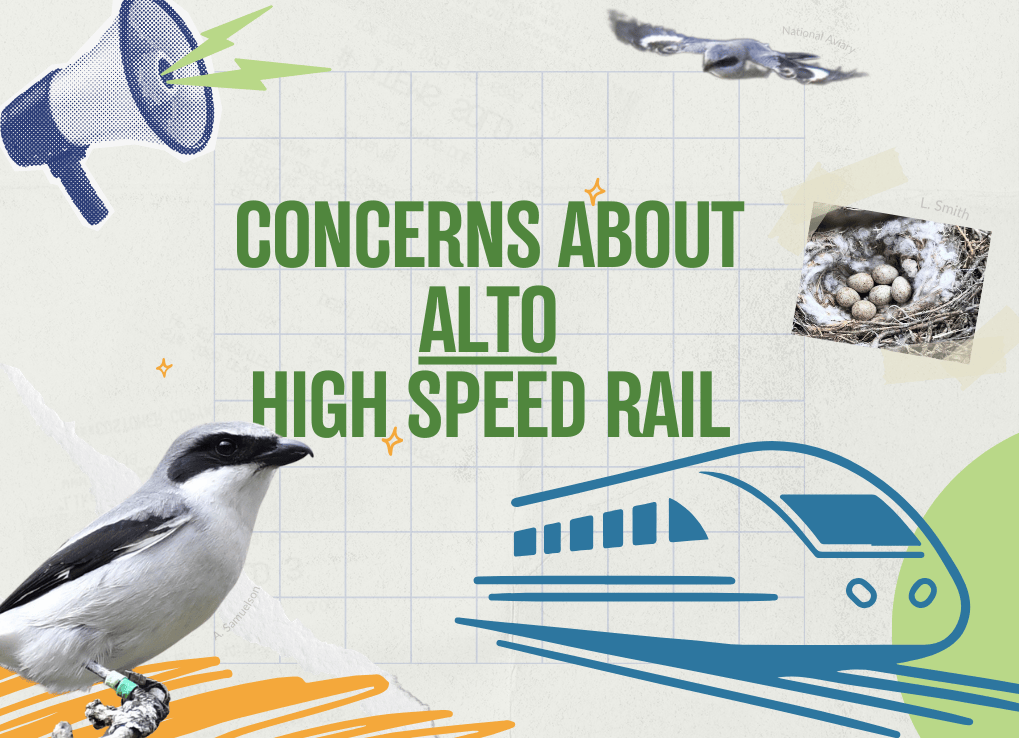
Speak up for wildlife: let’s talk Alto high-speed rail
Posted onMarch 13, 2026byWildlife Preservation Canada|News and Events, Species at Risk

FROM WILDLIFE PRESERVATION CANADA
13 March 2026, Guelph ON – Alto is a high-speed train project that would connect Toronto, Peterborough, Ottawa, Montréal, Laval, Trois-Rivières and Québec City. The electrified rail line would span approximately 1,000 km and could travel at speeds of 300 km per hour (or more).
Wildlife Preservation Canada is deeply concerned about the potential negative impacts this project could have on the many wildlife species that inhabit this region, the habitat it would bisect, and the communities that live there. One of the proposed Alto routes is of particular concern to WPC as it would run through a globally rare alvar grassland habitat—the Napanee Limestone Plain—that is home to an endangered species we have been saving from extinction in Canada: the eastern loggerhead shrike. This region is one of only two remaining breeding sites for this critically endangered songbird, and is in fact the strongest remaining population of eastern loggerhead shrikes in Canada. Shrikes in Ontario are reliant on alvars, and they will return to the same areas year after year to breed. Habitat loss is already a known threat to the species, and further development, as proposed by the Alto project, will greatly reduce the amount of suitable habitat in the province. This will put further pressure on an already precarious shrike population. For 25 years we have been working with local landowners in the region to protect and enhance habitat, and for the past 14 years this has been one of our release sites for juvenile shrikes that were bred in captivity to help support the wild population. This area is crucial for the recovery of the species in Canada, and has seen enormous investments to that end.
Until April 24, 2026, Alto is inviting the public to comment on the proposed rail network. With options to attend consultations in-person or virtually, this is an opportunity for the community to learn about the project, speak up, ask questions and have their voice heard. Wildlife Preservation Canada encourages everyone to participate in the public consultation.
Please find a suite of resources below to get informed, ask questions and find out what you can do.