
Nothing Found
Sorry, no posts matched your criteria
What is the Oregon Spotted Frog Recovery Program? Since 2010, WPC has been breeding the endangered Oregon spotted frog at the Greater Vancouver Zoo, and reintroducing thousands of tadpoles and froglets back into wetlands in B.C.’s Fraser Valley. It takes years of careful observation, collaboration, ingenuity and sometimes a little luck to crack the code to breeding specific species. For several years, our progress was very limited. But our team persevered. Today, WPC has pioneered breeding techniques that are turning the tide for this species.
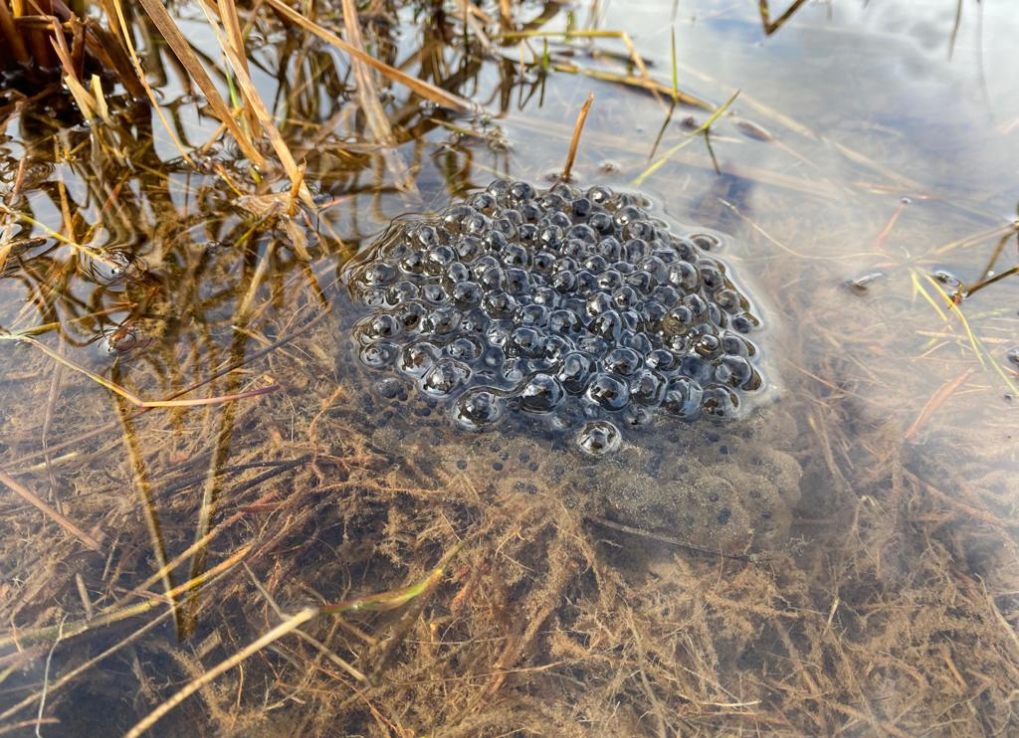
World Frog Day is celebrated on March 20, but at WPC, every day is frog day! Especially when it comes to breeding season. Right now, the Oregon spotted frog, the most endangered frog in Canada is right in the middle of breeding here at WPC’s conservation breeding program in BC, producing egg masses as pictured above.
Breeding begins
These shallow, warm water specialists breed as soon as the ice comes off the water, in order to maximize the time for their tadpoles to grow and metamorphose before fall. Breeding season begins with males moving to the breeding and egg laying sites in search of females. The males vocalize to the females, but not with a traditional “ribbit” but with a very percussive call that sounds exactly like someone knocking at a door. This call sounds so similar to a door knock that biologists in the field joke and say “come in!” when they hear the unique call. Take a listen below – what do you think?
Fertilization
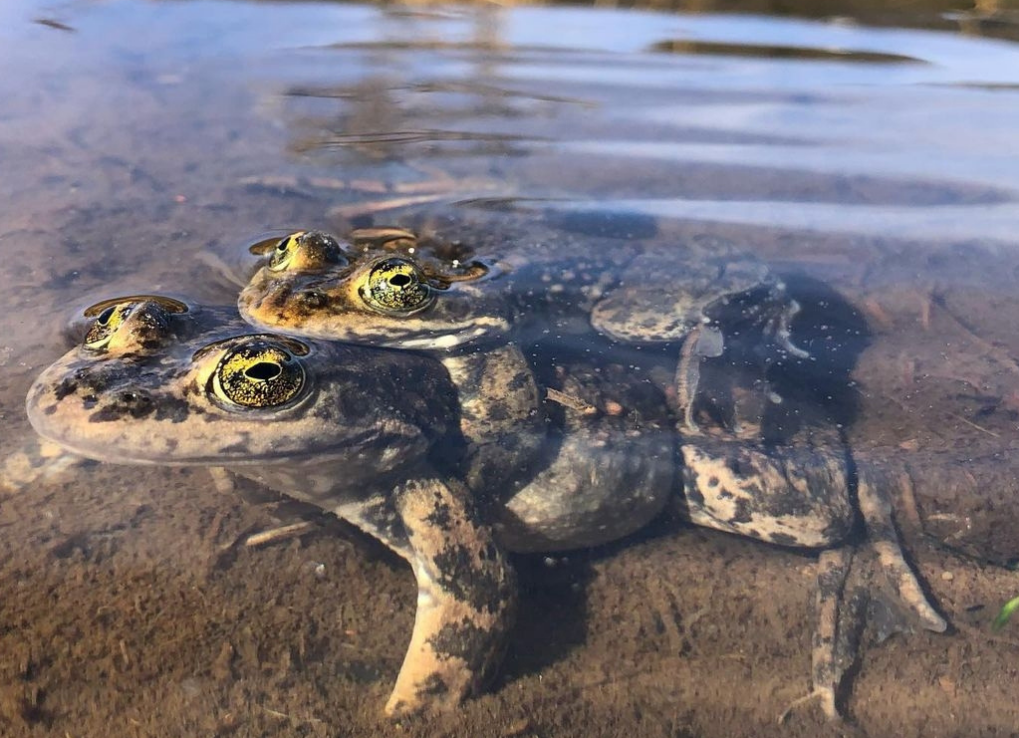
Once males find a female they get into breeding position called amplexus, as pictured above. The male grabs the female around her neck, or waist and becomes her little backpack until breeding is over. Spotted frogs are external fertilizers; meaning that the female releases her eggs and the male fertilizes them external to her body. Their egg masses have approximately 800 eggs each. Egg masses are laid in communal laying sites, with many females coming together to lay their eggs all in one area, often with all masses touching and forming a large matt.
Hatching
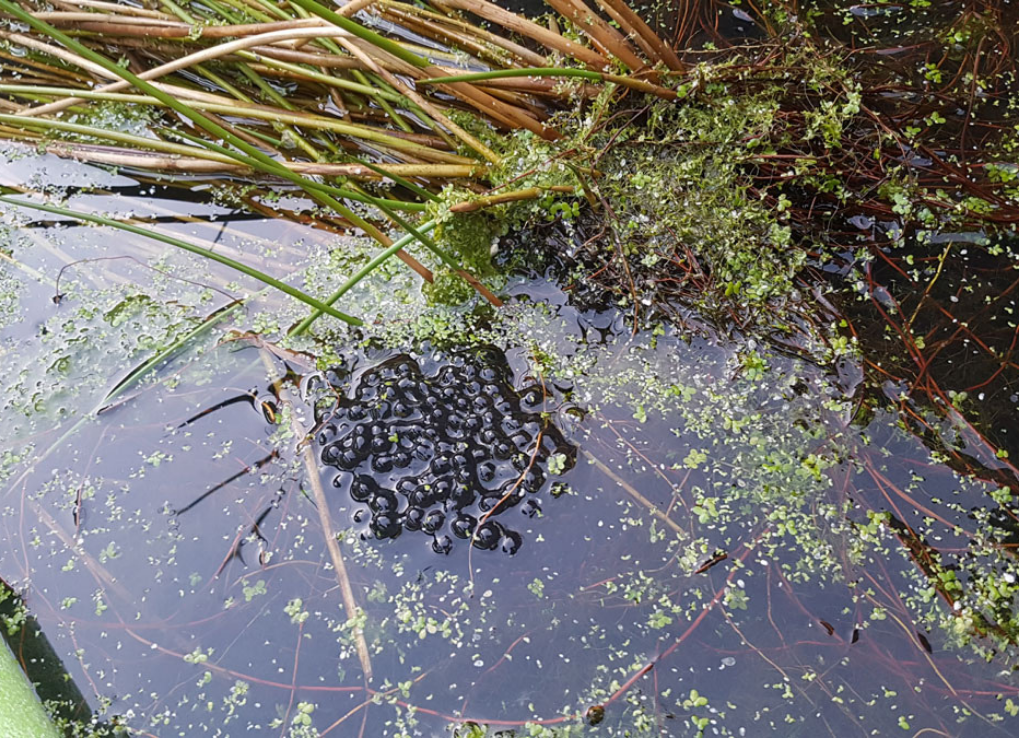
Eggs take about a month to hatch, depending on temperature and can take over 100 days to metamorphose. When they hatch, tadpoles sit on top of the egg mass, where there is just a small amount of water. This water is heated by the sun and insulated by the egg mass, making it the warmest place for the tadpoles to bask, grow and eat their way through the remaining egg jelly before they become free swimming.
WPC’s breeding program
In the head starting and captive breeding program we are working on figuring out exactly what Oregon spotted frogs need in order to optimize breeding success. We investigate diet, egg volume and even sperm production in order to find the answers we need to most effectively help this species.
We have some interesting programs and discoveries made already this breeding season, so keep an eye out for exciting news in the next couple of weeks. And, follow us as we follow the development from eggs into tadpoles and finally into frogs, to build the population of this endangered species in the wild.
Andrea manages WPC’s captive breeding and release programs for the Oregon spotted frog and the coastal western painted turtle. Andrea has studied at-risk reptiles and amphibians in Canada and abroad, including a term at the Durrell Wildlife Conservation Trust in Jersey. Andrea also manages the Taylor’s checkerspot butterfly recovery program in BC.

Sorry, no posts matched your criteria
We need your help