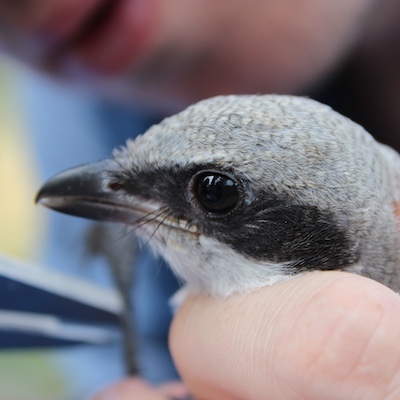
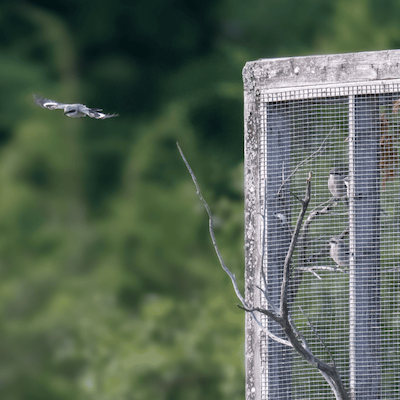
Some incredible news was reported to the Loggerhead Shrike Recovery Team a few weeks ago. A conservation-bred eastern loggerhead shrike, born and raised last year at the Nashville Zoo at Grassmere (one of the program’s partner breeding facilities in the U.S.) and released by Wildlife Preservation Canada from a specially-designed aviary in Carden in late August of 2019 has returned to Ontario!
What this means
This is a major milestone, not just for the shrike recovery program but for global songbird conservation, as it demonstrates that a bird that was born and raised in captivity in the southeastern U.S. can be transported across country, released in Canada and then migrate effectively and return to breeding grounds back near its release site the following year. If this can work for a shrike, our techniques could be adapted for other songbirds that need conservation intervention techniques like these to be brought back from the brink of extinction.
This sighting also provides further evidence that the Loggerhead Shrike Conservation Breeding and Release Program is having a major impact for the species here in Canada. Released birds made up over a third of the observed wild population in 2019, and half of the breeding pairs that were seen last year in Ontario contained at least one conservation-bred bird. This demonstrates the significant effect that the program is having on bolstering wild populations here.
Mating and nesting
This special shrike is currently with an unbanded wild mate in a suitable patch of grassland habitat near Ottawa and close to areas that were historically used by shrike. The pair has been carrying nesting material and spending a lot of their time bringing food to a large cedar tree, so it is quite likely that they have a nest. The “Nashville” shrike was recognized and identified by the coloured leg band combination that the Recovery Team put on the bird last year before it was released. The Recovery Team will continue to monitor this pair, which carries the promise of a full nest of young, and we will let you know how they do.
It is milestones like this that provide us all with energy and gratification for all of the hard work that goes into the shrike project each year to ensure that this attractive and unique songbird remains an important part of our Canadian landscapes.