Meet the recovery team: the farmer and the cow
Posted onJuly 19, 2021byHeather Polowyk
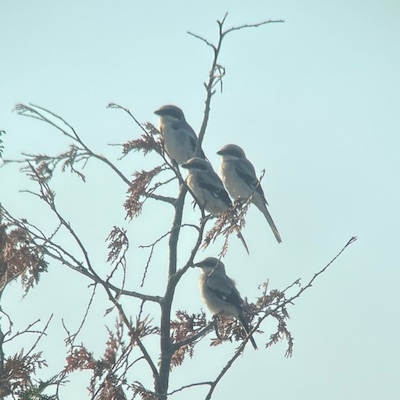
What is the Eastern Loggerhead Shrike Recovery Program? After a precipitous drop in the wild eastern loggerhead shrike population in the 1990s, Environment Canada invited Wildlife Preservation Canada to join the multi-partner recovery effort in 2001. Since then, the wild population size has fluctuated. Studies have shown that although the recovery effort has prevented the species from disappearing from Canada, more work is required to identify and address the causes of the species’ decline. WPC works to prevent the endangered eastern loggerhead shrike from disappearing by building the wild population in Ontario, and studying the species to learn more about the threats they face.

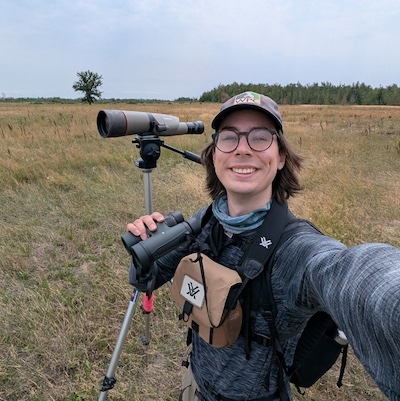
Hello from the loggerhead shrike core area in Napanee, Ontario. After surveying 112 sites across the Greater Napanee area, the research intern and I have located 11 breeding pairs of this endangered songbird, which produced approximately 31 fledglings so far. All but two of these pairs are on privately owned land. Working with the loggerhead shrike recovery program gave me the opportunity to see a positive connection between wildlife and people in action.
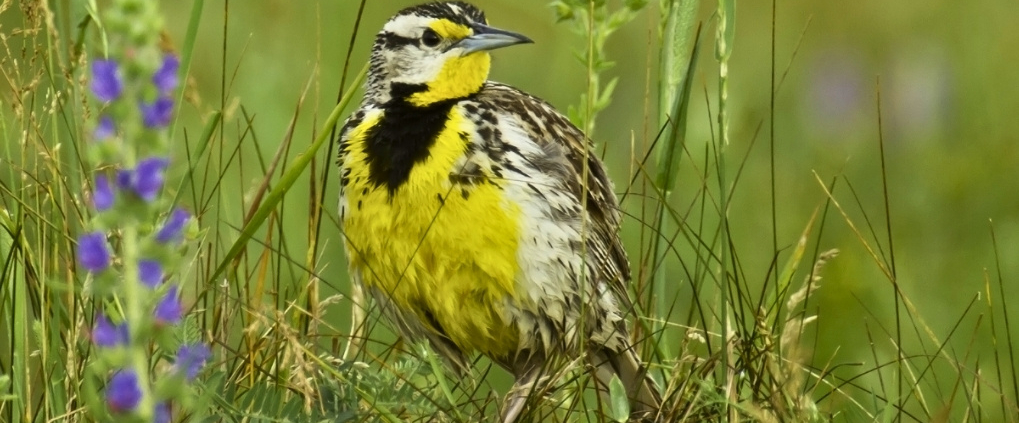
Loggerhead shrikes are grassland birds. As perch and wait predators, they benefit from short grasses that allow them to easily see prey. Some grasslands are naturally short. For example, alvar habitats (a favourite of shrikes) are characterized by exposed limestone and shallow soils. The rock and shallow soils prevent the grasses from growing too tall. Shrikes also need scattered shrubs and trees in the grasslands to provide perches and nest trees. Grasslands are an early successional habitat, which means, when bare ground is exposed, grasslands would develop first, eventually giving way to a forest without continual suppression of trees. In many places in Ontario, grasslands were seen as wastelands, often converted into agricultural fields or residential or commercial developments. In Napanee, there are two protected alvar habitats owned by Nature Conservancy of Canada. The rest of the shrike habitat is farmland. This is where farmers and cows come in.
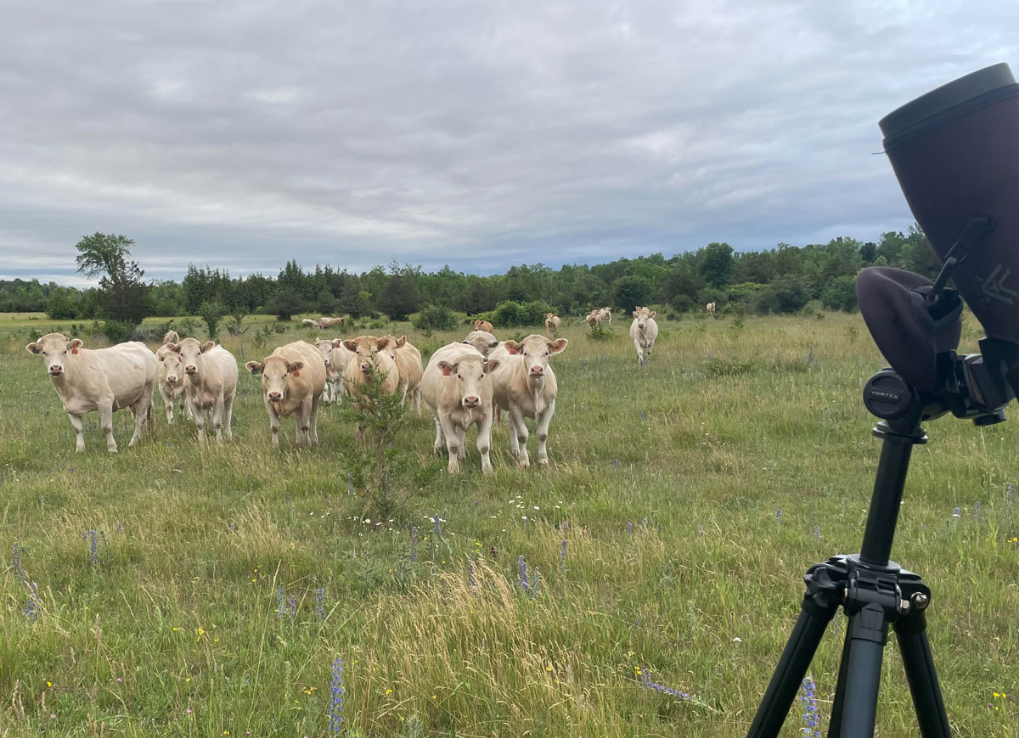
Wildlife Preservation Canada has been working with farmers in the Napanee area since 2001. The farmers allow the cattle to graze the grasslands which keeps the grasses short and suppresses the trees. Many of these farmers are enthusiastic about having species at risk on their properties. As I survey their properties weekly, many of the farmers stop to chat, discuss past shrike nesting areas and ask about the current status of any nesting pairs. Even the cows seem to enjoy the work WPC is doing in their habitat, often approaching me with curiosity while I am surveying.
Working in this field has many benefits such as getting to see the most beautiful protected areas, staying healthy from walking outside and getting to see species at risk. This field also has some down sides. For example, I remember learning about climate change for the first time, it became difficult to separate this knowledge from my everyday life, and that can get people down. So often, we hear how humans are the cause of habitat destruction, population declines, and countless other environmental issues. While our human world has some negative impacts on the natural one, humans and nature can work together for a positive outcome.
Heather completed her M.Sc. studying an endangered wetland plant at the University of Waterloo. She has worked with bird species at risk in forest, wetland and grassland habitats. Heather has volunteered at a wildlife rehabilitation centre as an intern and an animal care coordinator, assisting with volunteer training and the care and release of injured or orphaned Ontario wildlife.
We need your help