The ghosts of the highlands
Posted onAugust 16, 2026byDaryn Farrant
What is the Canada’s New Noah Program? Since 1988, the Canada’s New Noah program has provided conservation biologists in Canada the opportunity of a lifetime. Each year, WPC selects a dedicated biologist from applicants across Canada to undertake a 3-month course at the Durrell Conservation Academy in the U.K. followed by a 6-month internship on the island of Mauritius in the Indian Ocean. This is an opportunity unlike any other for young Canadians to learn firsthand how the world’s most successful conservation recovery programs are managed and to bring this knowledge and experience back to improve Canada’s conservation capacity.
For the first time ever, WPC is offering this placement to two biologists. Our 2026 New Noahs are Jenna Kissel – WPC’s 35th Canada’s New Noah, and Daryn Farrant – WPC’s 36th Canada’s New Noah. Both report on their experiences and how they will apply them upon return to Canada. Thank you to the Alan & Patricia Koval Foundation for their many years supporting the Canada’s New Noah Program and for going above and beyond supporting two Koval Foundation New Noah Internships in 2026.
Due to a delay in approval in my Mauritian work Visa, I was able to spend some time exploring other conservation projects on my way to Mauritius. Thank you Pat and Alan Koval for supporting my journey and helping me see the amazing projects we talked about in the DESMAN course.
Scotland felt familiar in all the wrong ways.
The rolling hills, the wetlands, the forests creeping up the valleys. At times it looked so much like parts of home in Canada that my brain kept expecting something else to be there too. A bear moving through the trees. Wolf tracks on a muddy trail. Some sign that there was still a large predator somewhere out in the landscape.
But there was nothing.
That strange feeling, combined with driving on the opposite side of the road, made the whole experience feel vaguely like the Twilight Zone. Everything looked almost right, but not quite.
It took me a while to understand what felt so eerie.
Something was missing.
At the Dalnacardoch Estate and throughout much of the Highlands, we learned about the long history of predator persecution and deforestation across Scotland. Wolves were hunted to extinction centuries ago. Forests were cleared for timber, agriculture, and later managed as sporting estates for deer stalking and grouse hunting.
Without large predators, deer populations expanded far beyond what the recovering forests could support naturally.
And deer love eating baby trees.
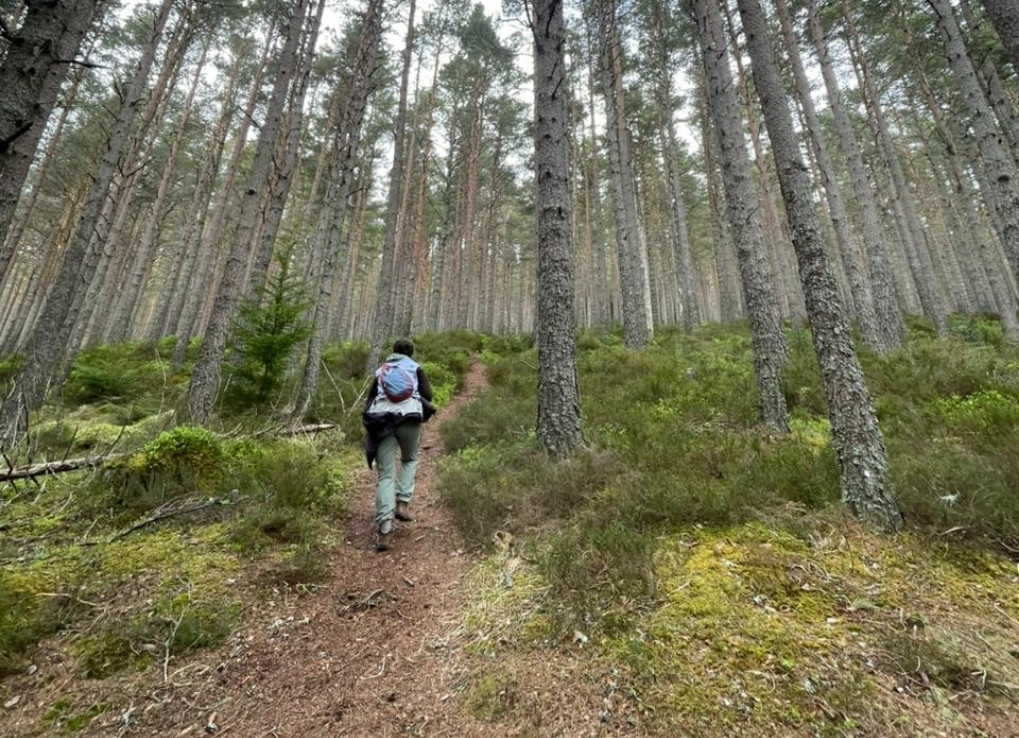
In many parts of the Highlands, seedlings barely get the chance to grow before being browsed down. You can walk through areas that seem wild at first glance, but once you start paying attention, you notice missing age classes in the forest. Old trees remain, but very few young ones survive long enough to replace them.
The landscape begins to feel paused.
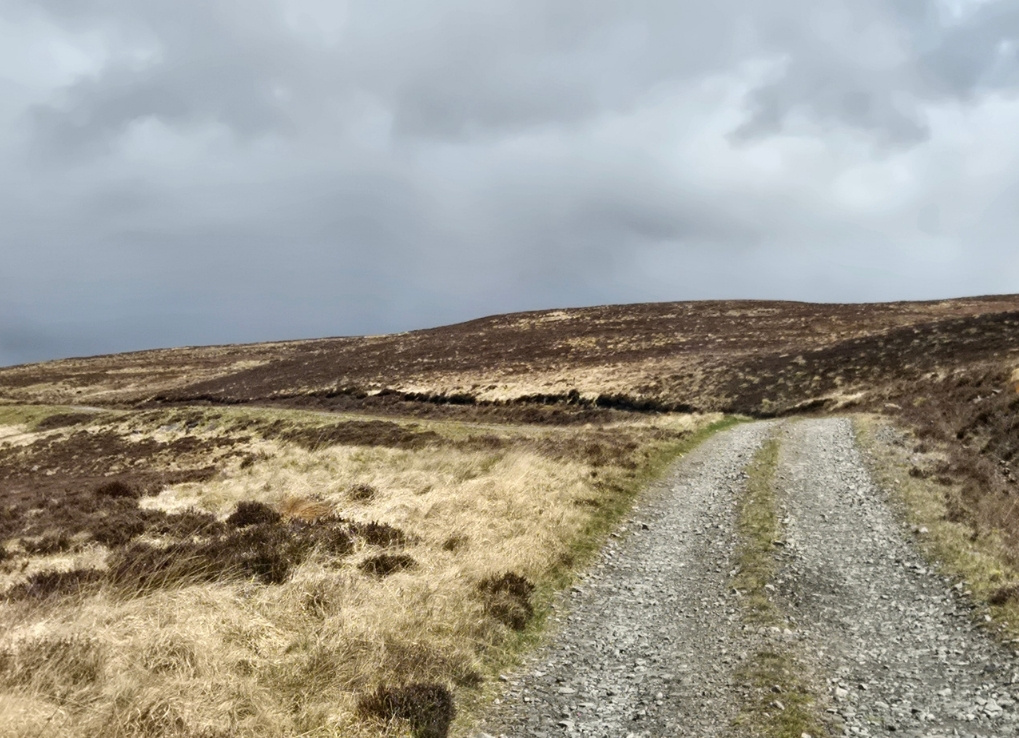
Dalnacardoch landscape. Photo by D. Farrant.
That was one of the most interesting things about Scotland for me. Coming from Canada, I am used to thinking about forests as systems shaped by disturbance, predators, and constant change. In Scotland, you can still see those processes trying to happen, but many of the pieces are gone.
And yet, there are people working to bring some of that balance back.
Across the Highlands, rewilding projects are attempting to reconnect fragmented habitats, reduce browsing pressure, restore peatlands, and allow forests to regenerate naturally again. Not by trying to recreate some perfect untouched wilderness, but by rebuilding ecological processes that have been missing for centuries.
It is slow work.
Sometimes it looks dramatic in headlines, but on the ground it often looks much quieter. A deer fence. A camera trap. Tiny tree seedlings protected long enough to finally grow taller than browsing height.
The Highlands still carry the marks of what was removed from them. You can still see the scars from the dregs used to drain the peatlands on the hills, even in restored areas. But for the first time in a long time, they also feel like a place where something is beginning to return.
And who knows, maybe in a 100 years time the wildcats, and red squirrels will find their way back to Dalnacordoch.
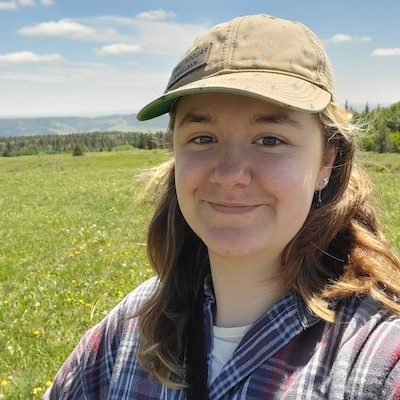
Daryn is a conservation biologist and the 36th Canada’s New Noah. She holds an Honours Bachelor of Science in Biological Sciences from the University of Manitoba, where she focused on restoration ecology and prairie ecosystem recovery. Prior to joining WPC, Daryn worked with Parks Canada at Grasslands National Park, leading monitoring programs for Burrowing Owls and riparian health, and coordinating fieldwork, data management, and species-at-risk surveys. She brings a range of field experience in invasive species management and ecological monitoring, and is passionate about long-term stewardship and making science accessible to diverse audiences. Daryn is bilingual in English and French and is excited to contribute to endangered species recovery in Canada through her work with WPC.
We need your help