Fall Newsletter 2025

ON THE EDGE

WPC is Canada’s last defence for endangered species. is Canada’s last defence for endangered species.

In This Special 40th Issue:

Photo: A. Bowman

Letter from Lance

Conservation that works

For the last 40 years, Wildlife Preservation Canada has remained steadfast in our mission to save Canadian species from extinction through direct, hands-on conservation action. This unwavering commitment has not changed and for good reason…

It works.

WPC steps in when species are on the very edge—when habitat protection alone is no longer enough to ensure survival. Proven hands-on, science-based action such as conservation breeding, nest protection, head-starting and releases allow us to act quickly and provide endangered wildlife with a second chance.

Because we focus our on-the-ground efforts on individual species, many people see our work as “single-species” conservation, but that misses the bigger picture: each species is intricately intertwined, woven together into a living network Every successful reintroduction revitalizes populations and ecosystems to thrive long-term because restoring a species is never just about that one species.

Achieving this wider impact is only possible through close collaboration with a range of partners—academic institutions, Indigenous Peoples, landowners, managers, governments, and local volunteers—to protect the landscapes that make these recoveries possible. Where others safeguard the land, we replenish it with the species that once called it home.

No other organization has saved more endangered species across the country through intensive, direct, hands-on action than Wildlife Preservation Canada.

Over the last four decades WPC has released more than 97,000 animals from 21 species back into the wild. Amazing creatures like the swift fox, Taylor’s checkerspot butterfly, and eastern loggerhead shrike that would otherwise have disappeared from Canada—proof that conservation breeding and reintroductions work.

Across Canada, we’re the first to develop innovative conservation techniques—like artificial hibernacula for snakes or love tubs for frogs, leading the way for conservation breeding and release of songbirds and bumble bees, butterflies and turtles—so that these animals aren’t just surviving but thriving.

Adaptation is at the core of everything we do. For forty years, WPC has refused to accept “it can’t be done”. We meet new challenges as problem-solvers, adjusting and improving each step of the way. Every moment teaches us something new—and we use each discovery to improve techniques and overcome obstacles. If something isn’t working, we find out why.

WPC’s mission doesn’t end with saving species. We invest in Canada’s future as a global conservation leader by training others. The demand for training is accelerating, particularly
among communities and land-stewards committed to protecting their natural heritage. WPC has mentored hundreds of early-career conservationists, students, and partners who have gone on to lead successful programs of their own, increasing Canada’s collective ability to save endangered species from extinction.

We have ambitious but achievable plans for the future, to work with more species in more places with more partners. We’ve identified these species that need our help, now what we need is your support.

As you read through this edition of On Th e Edge, I hope you feel the passion, determination, and unwavering dedication that drives everything we do. WPC has endured because it is grounded in results, rooted in science, and is guided by a powerful conviction: Extinction is not an option.
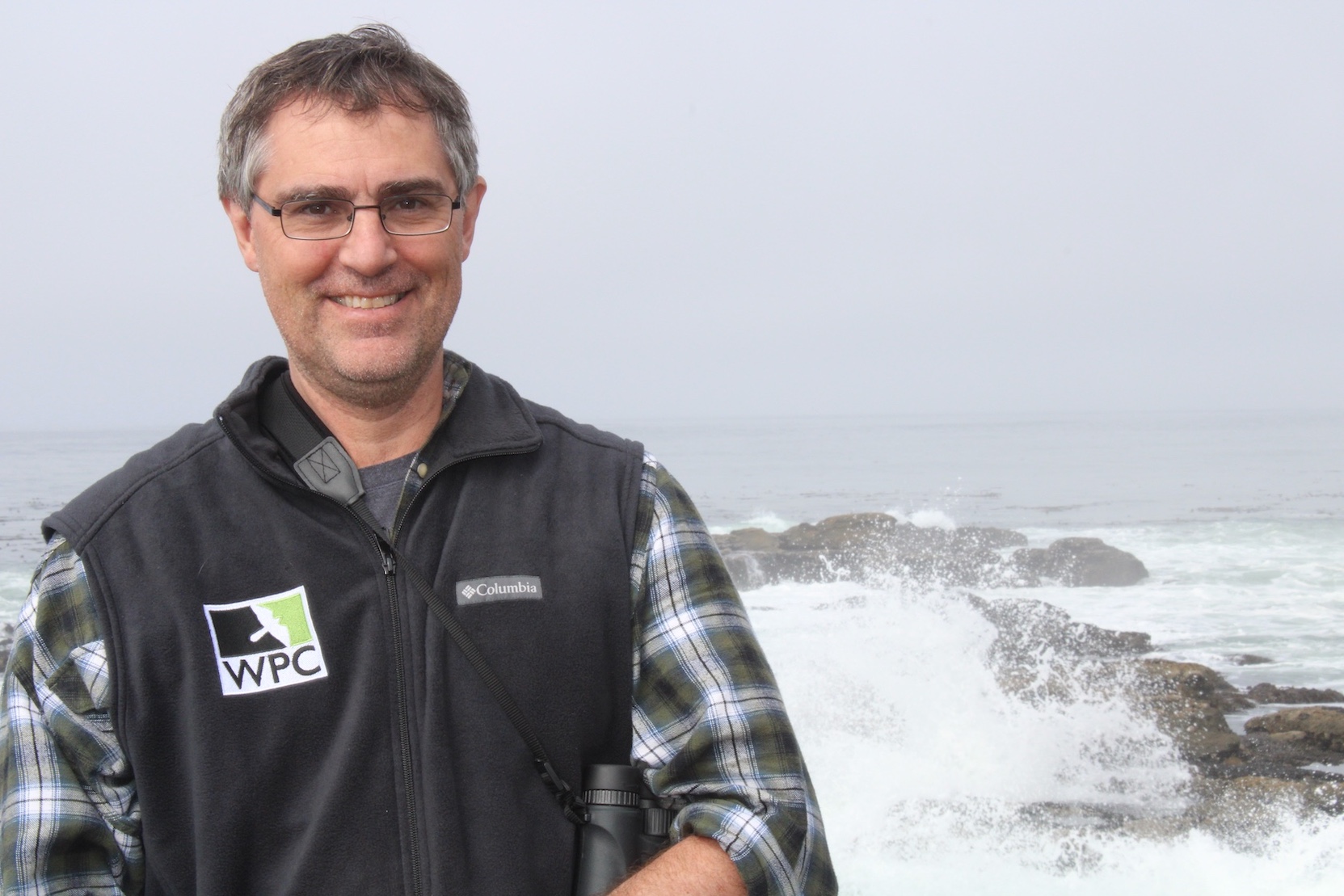
Lance Woolaver Jr.
Executive Director, Wildlife Preservation Canada

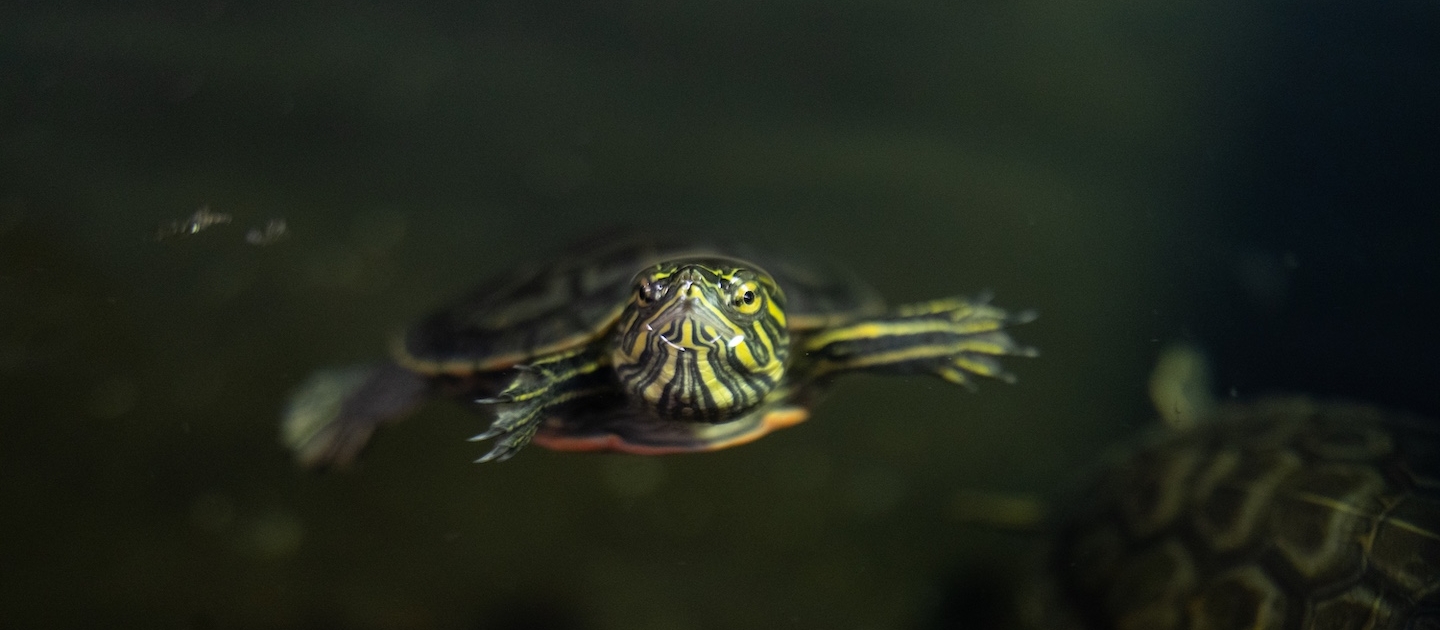
What began in 2011 as a single nest of 11 turtle eggs, has grown into one of our most successful recovery programs.

1
1

Western painted turtle
(Chrysemys picta bellii)

Status: Endangered on the Pacific Coast of Canada

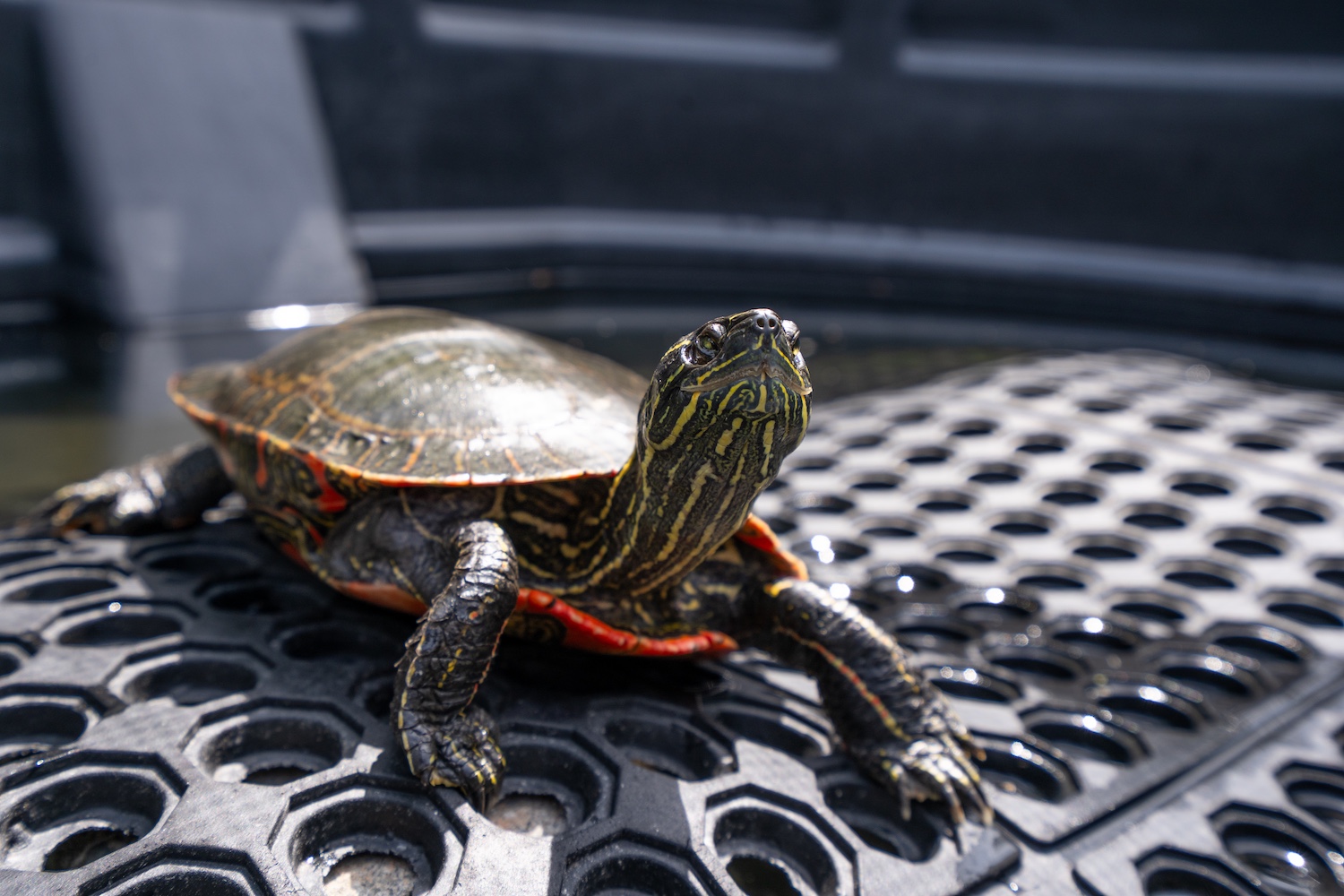
The western painted turtle can live to well over 50 years old, if they can survive their most defenseless first years. Turtles face a number of threats from habitat destruction to hungry predators. WPC’s head-starting and release program ensures that young turtles survive beyond their most vulnerable development stage, to thrive in B.C.’s wetlands.

Photo: A. Bowman

Fraser Valley Recovery

Turtle turning point

As we wrap up another busy field season and step into our 15th year of western painted turtle recovery, I find myself reflecting on the many milestones and lessons that have shaped our journey.

What began in 2011 as a single nest of 11 turtle eggs, has grown into one of our most successful recovery programs. This year we set a new record, incubating the most eggs ever in our program with 698 eggs in total. This was largely due to the first major expansion of our nest monitoring program, which now includes the Sunshine Coast, whose western painted turtle populations are experiencing an increase in predator activity. With new funding and incredible staff local to the area, we collected eggs from sites at risk of high predation, to protect them and gradually train the ravens to learn that turtle nesting beaches are not a great source of food! Because predation from the nest is the main concern at these sites, turtles hatched from these eggs have already been returned to the wild via hatch and release, as opposed to our other commonly used technique of prolonged head-starting.


Tutu basks on her floating mat while in her enclosure. She is one of many injured, ill or confiscated turtles we receive each year and is now in our care forever. Photo: A. Bowman.

Another key milestone was the establishment of our rescue and rehabilitation program for injured and surrendered painted turtles. Thanks to collaboration with our partners, we routinely receive injured or sick turtles, as well as those confiscated from the illegal pet trade or victims of pet dumping. These animals are assessed, treated and genetically screened to match them with their most suitable site for release. This year we released eight adult turtles who had been with us for various amounts of time, back to the wild to continue contributing to wild populations. We are caring for an additional ten turtles awaiting genetic results, for release in 2026.


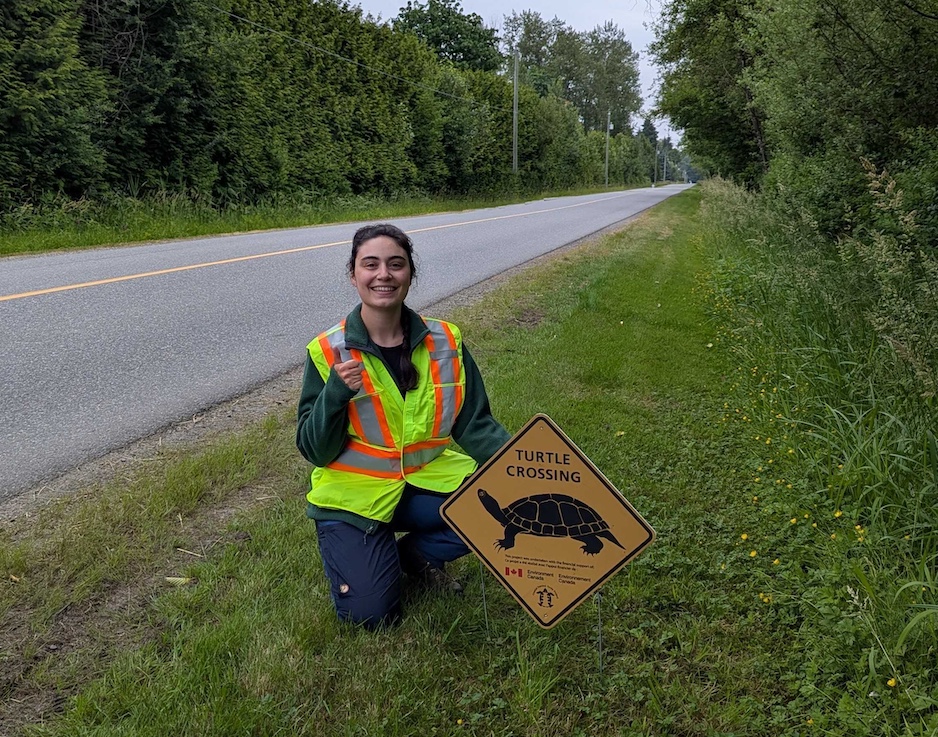
Jenna Kissel, Conservation Programs Assistant, poses next to a turtle crossing sign while she is on-site monitoring crossings. Photo: M. Epp.

Our team has also conducted mark-recapture population assessments, telemetry tracking studies, and participated in more community events and classroom presentations than we can count! We continue to build relationships with local First Nations, universities, community groups and other animal care facilities, as we know we only grow stronger with more partners.

Growth and development also comes with challenges, which we meet head on. When our turtles were suffering from unexplained soft shell, we persisted through inconclusive lab tests to determine the cause and develop an effective treatment which was shared internationally for the benefit of global animal care programs.

And finally, and what I often reflect on most positively, is our strength in supporting and empowering young conservation biologists. This year we were able to hire 12 summer staff for turtle monitoring, some returning staff and some brand new, all amazing. For many of them this job provides them with their “first time I got paid for it” position in their careers. Over the years staff have also completed Masters and PhD programs, both within our programs and after they have completed their work positions. Students have studied in New Zealand, United States and locally through our partnerships with Simon Fraser University and University of British Columbia.

Whether measured immediately through more turtles on the landscape or more indirectly through the future conservation actions of an inspired generation, each and every one of these achievements contribute to sustained and consistent conservation work that is making a difference.

WPC’s involvement in this species’ recovery is a perfect case study which showcases what conservation breeding and release efforts really achieve.

Native Pollinator Initiative

A butterfly finding its wings

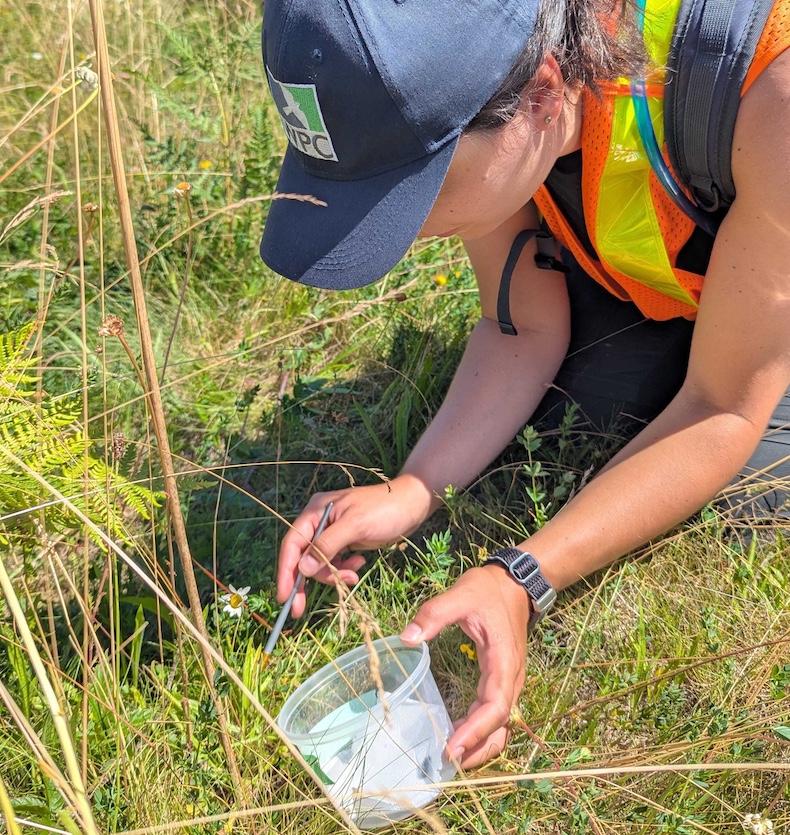
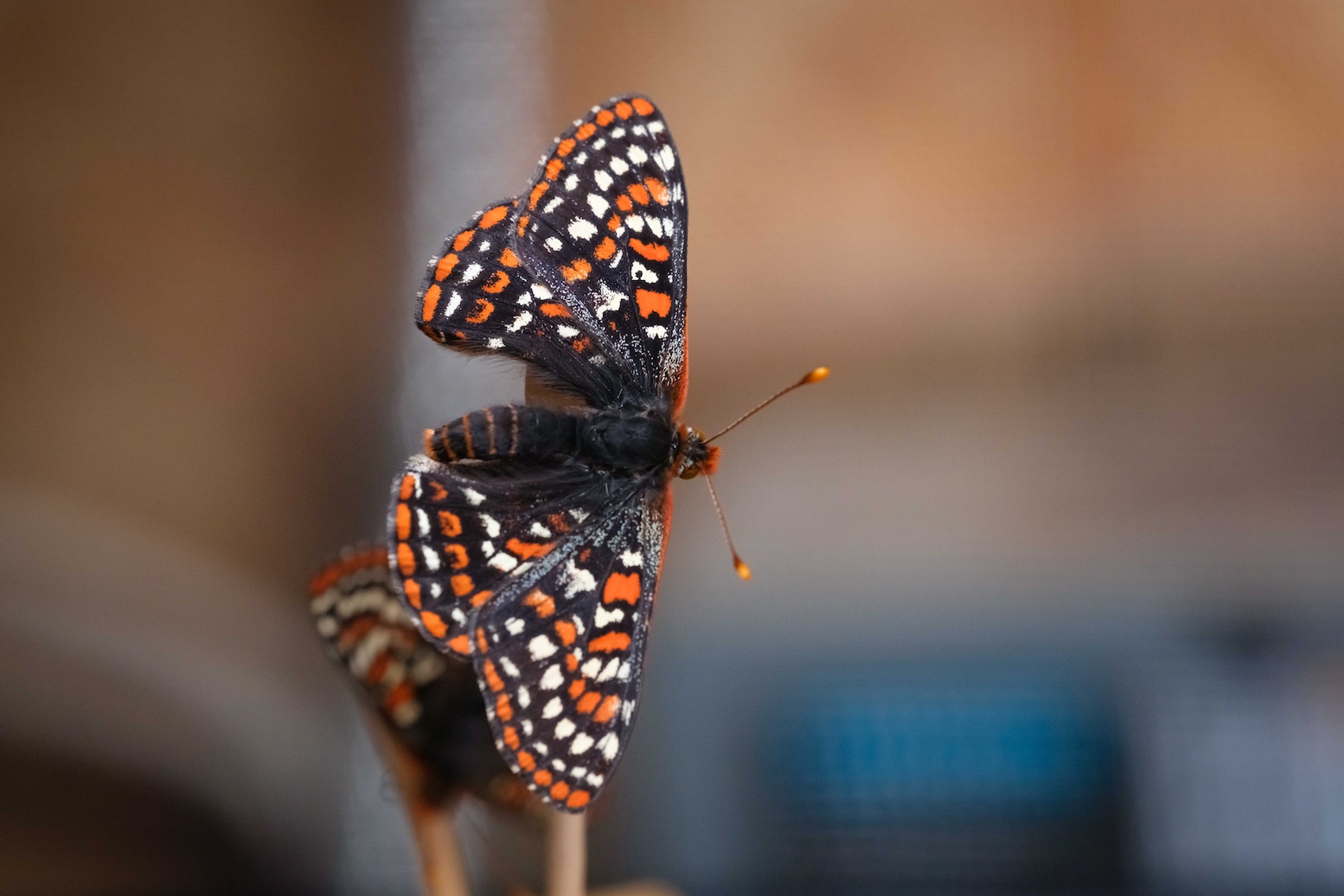
Not long ago, biologists thought the Taylor’s checkerspot butterfly had disappeared from Canada. Ever since a tiny, remnant population was found on one of B.C.’s Gulf Islands in 2005, this small, checkered orange butterfly has been making a comeback on Vancouver Island. WPC’s involvement in this species’ recovery is a perfect case study which showcases what conservation breeding and release efforts really achieve.

Last year, our staff collected pre-diapause (winter hibernation) caterpillars from one of the remaining wild populations. Each family line we bring in to our care is critical — it means we can preserve and reintroduce genetic diversity that wild populations need. From those few caterpillars, we raise thousands in our conservation breeding program. Later, they’re released into meadows that our partners have restored and prepared with the right host and nectar plants.


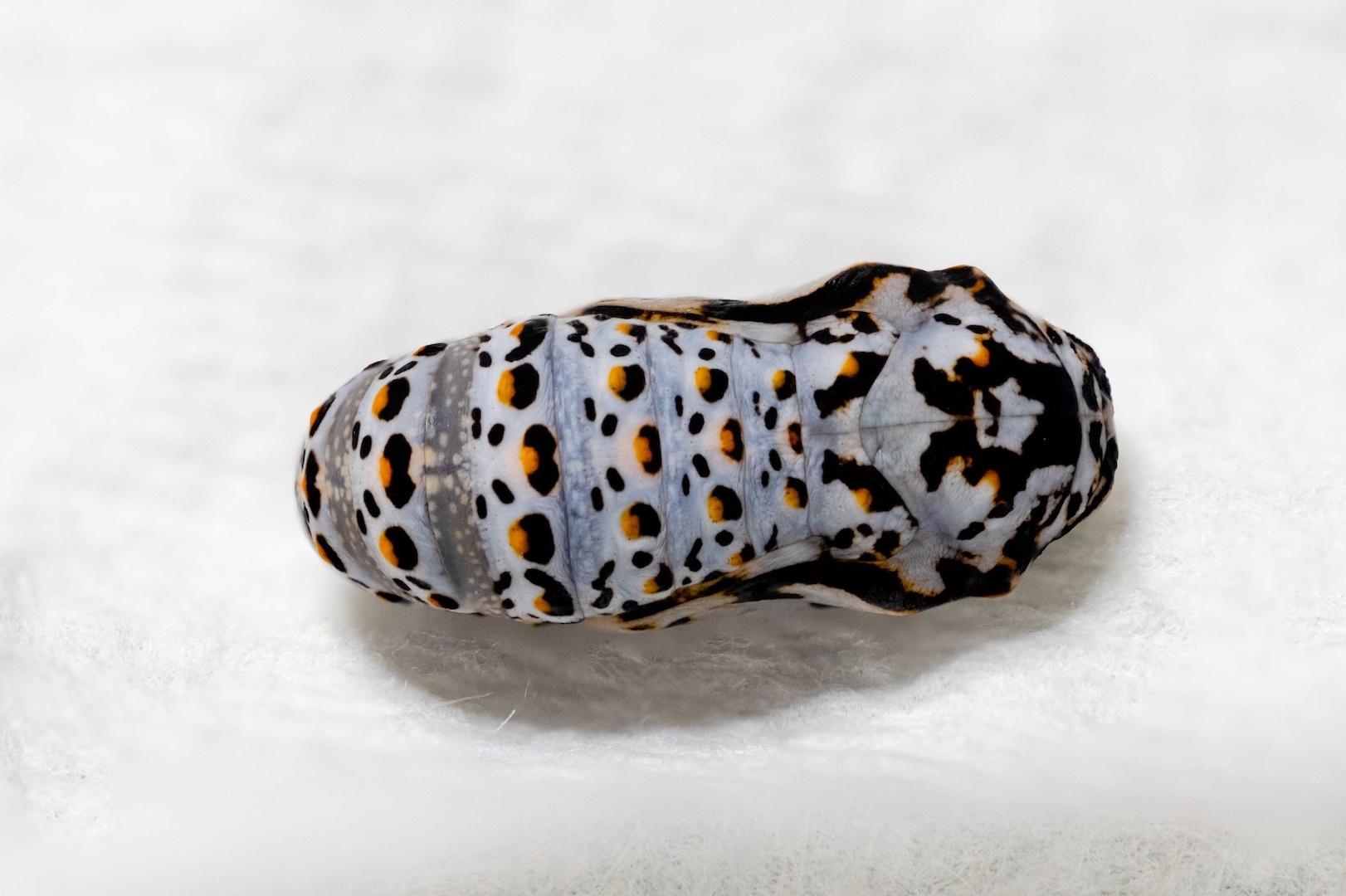
A Taylor’s checkerspot pupa. Photo: J. Athwal.

This past year brought some of our biggest milestones yet: we collected caterpillars from nine different matrilines from a broad geographic range, our colony produced over 3,000 eggs across those nine family lines and more than 2,500 caterpillars went into diapause. On Hornby Island, we recorded our best overwinter survival so far — more than 70% of released caterpillars made it through the cold months. Our released Taylor’s checkerspots have confirmed to be breeding on Hornby Island, something not seen in Canada since the 1990s! These efforts are all critical steps in developing a self-sustaining population on Hornby Island (and beyond). Seeing caterpillars that are descendents of animals we released, is proof that the population is finding its footing again.


Jenna Kissel, Conservation Programs Assistant, collects wild checkerspot caterpillars. Photo: K. Yoon-Henderson.

While our focus is on the butterflies themselves — from breeding to release — this work fits into a much larger effort. Our partners are restoring and protecting Garry oak meadow habitats, ensuring that when we release butterflies, they have a home where they can thrive. Together, these efforts are bringing back not only the Taylor’s checkerspot, but also the many other pollinators and plants that make up one of the most endangered ecosystems in Canada.

My work with the Taylor’s checkerspot butterflies has been the most rewarding conservation work I’ve had the privilege to be a part of. Caring for and understanding the needs of this species — being there from caterpillar collection, through winter diapause, and even mate selection — makes you feel deeply invested in their survival. It’s not just science; it’s a relationship with a species that depends on us.

Wildlife Preservation Canada is celebrating 40 years this year, and the Taylor’s checkerspot program is a clear reflection of what “extinction is not an option” really means. From humble beginnings to now being at the forefront of multi-species recovery in Canada, WPC has grown into an organization that doesn’t just talk about conservation — it takes action.

For Taylor’s checkerspot, that action has already brought this butterfly back from the brink. The goal now is clear: thriving populations across multiple meadow sites. It’s ambitious, but after decades of persistence and innovation, we know ambition is exactly what works.

1
1

Taylor’s checkerspot butterfly
(Euphydyas editha taylori)

Status: Endangered in Canada.

WPC’s recovery program for the Taylor’s checkerspot butterfly challenged the team to pioneer conservation breeding and release techniques for butterflies – an approach highlighted in the recovery strategy for this and other butterflies in Canada.

Photo: J. Athwal.

This was the second summer of the mottled duskywing re-integration project in Norfolk, but it’s the first pivotal year for re-sight surveys.

1
1

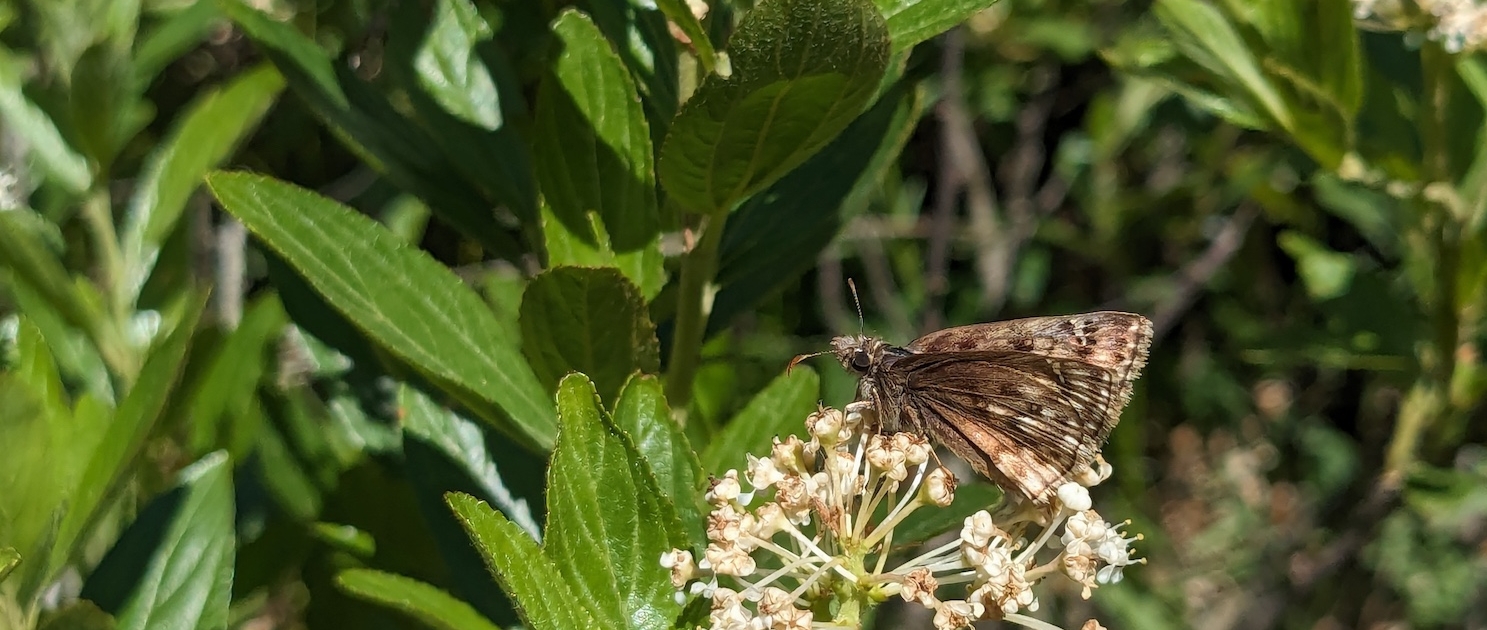
Mottled duskywing butterfly
(Erynnis martialis)

Status: Endangered in Canada; Endangered in Ontario.

The yellow-brown spots on the wings of this medium-sized butterfly give this endangered species its mottled appearance. In Canada, these butterflies once extended from Quebec to Manitoba. However, mottled duskywings have not been seen in Quebec since the 1950s, and in Ontario, they are only found in small, isolated populations. In Manitoba, they are limited to a small area of pine woodland in the southeast.

Photo: S. Underwood.

Native Pollinator Initiative

First time calling this place home

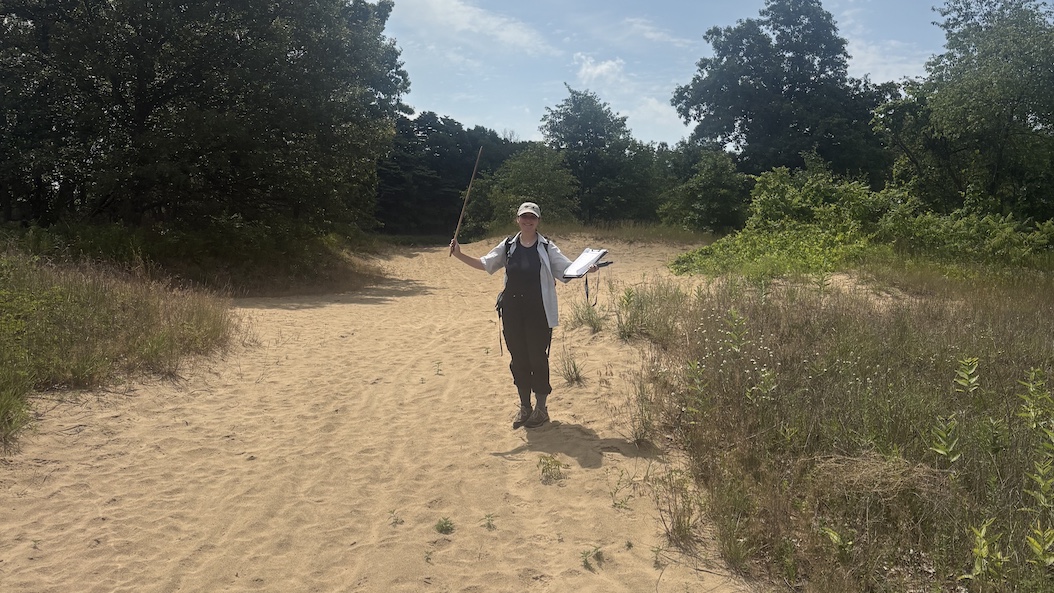
The smell of wild bergamot mixes with the warm morning air as we walk toward our first survey site of the day, with one mission in mind: to continue the introduction of mottled duskywings in Norfolk County.

This was the second summer of the mottled duskywing re-integration project in Norfolk, but it’s the first pivotal year for re-sight surveys. As crew members, we were tasked with releasing an ambitious 800 adult butterflies this season (each one carefully marked before release, allowing us to determine which butterflies are part of this year’s release) then tracking and re-sighting them along mapped trails in the dynamic oak savanna habitats across four release sites. The goal? To monitor the early stages of this emerging population and understand how these butterflies are adapting to their restored environments.


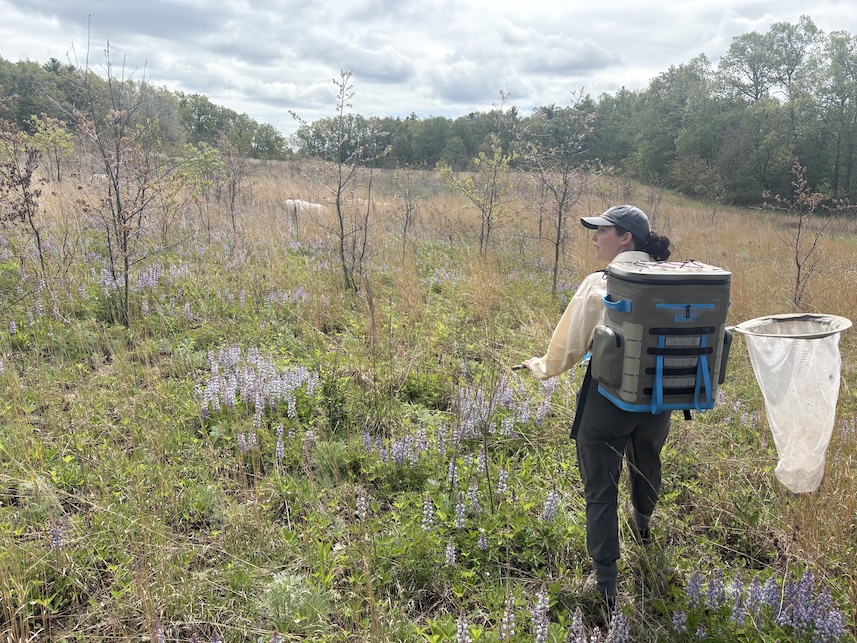
Lead Biologist, Klara Jones, surveying the Norfolk release site. Photo: O. Tapia Daly.

This summer also brings a brand-new release location into the mix! Conveniently named the “Stead Site” (a nod to Ken Stead and the Land Trust for use of the land), this is the first time adult mottled duskywings will be calling this place home. From the endless tall grass fields and carpets of purple lupine in Butterfly Blocks one and five, or the milkweeds sprouting around the dramatic sand dunes at the Manestar location in the St. Williams Forest, or even the cozy forest trail that leads to the ‘mother patch’ of New Jersey tea at the Stead Site, a patch so large we have to walk right through it… each of our field sites, has its own unique feel, but all of them share one thing in common: butterflies relying on New Jersey tea, the host plant essential to their survival.


Field team at the Manestar location sand dunes – all part of the unique Oak Savanna habitat. Photo: O. Tapia Daly.

New Jersey tea is more than just a backdrop to our surveys, it is the lifeline for this butterfly. Female mottled duskywings lay their eggs exclusively on New Jersey tea, providing caterpillars with both their only known food source and shelter as they grow. Later, adults return to the plant for nectar, making it a year-round cornerstone of their life cycle. Without thriving patches of New Jersey tea, our reintroduction efforts simply wouldn’t be possible, and its abundance at Stead gives us confidence in the site’s potential.

Some of the biggest highlights of this field season include:

  • Watching our first pupae eclose into adults before releasing them into the wild
  • Witnessing a surprise mating pair between one of our freshly released butterflies and a second generation individual from the prior year’s releases
  • Tracking the journey of a tiny, marked female who traveled so far she was found almost 500m from where she was released
  • And connecting with butterfly lovers and nature enthusiasts along our trails, including some large, interactive public releases with the Nature Conservancy of Canada, and Land Trust groups who’ve been incredibly supportive of our efforts.

As we reflect on this past summer’s work, there’s a growing sense of excitement for what comes next. Each sighting is a reminder that these reintroductions are laying the groundwork for a self-sustaining population, and the mottled duskywing is beginning to reclaim its place in Norfolk County! We look forward to seeing how these early generations expand their range, adapt to their habitats, and thrive for years to come.

What’s next?

Without our work, Ontario’s populations would be extinct by now.

1
1

Eastern loggerhead shrike
(Lanius ludovicianus migrans)

Status: Endangered.

WPC’s longest running program, the recovery of the eastern loggerhead shrike demonstrates the time and effort required to save a species from extinction. Since 2001, WPC has been reintroducing loggerhead shrikes back to alvar grasslands in Ontario to bolster wild populations.

Photo: H. Hess.

Eastern Loggerhead Shrike Recovery

Preventing an extinction vortex

Grassland birds have faced the steepest declines of all groups of birds in Canada, and unfortunately the eastern loggerhead shrike is one of these birds. Shrikes rely on particular alvar and prairie grasslands that are dwindling. As less and less of this special habitat remains, our Eastern Loggerhead Shrike Recovery Program becomes more and more crucial for the survival of this species in Canada. The program has kept loggerhead shrikes on the landscape, through a hands-on repopulation effort which has released birds into the wild since 2001. Without our work, Ontario’s populations would be extinct by now. Though we have slowed the downward trajectory, loggerhead shrike populations continue to be in flux, with unexpectedly few wild shrikes spotted some years. This year was one of those years.

After upwards of 900 WPC staff survey hours, and countless hours contributed by volunteers and members of the public, the wild population of eastern loggerhead shrikes in Canada in 2025 was conservatively estimated at 27 adults which produced 22 fledglings. In contrast, in 2024 we estimated 51 adults producing 43 fledglings. Low numbers such as these can quickly drop into an extinction vortex (called the Allee effect), where individuals exist but cannot find each other to mate. This is why the conservation breeding and release program is essential. By adding shrikes into areas where wild shrikes still exist (namely the Carden Alvar and Napanee Plains), we can ensure that wild birds continue to find mates.

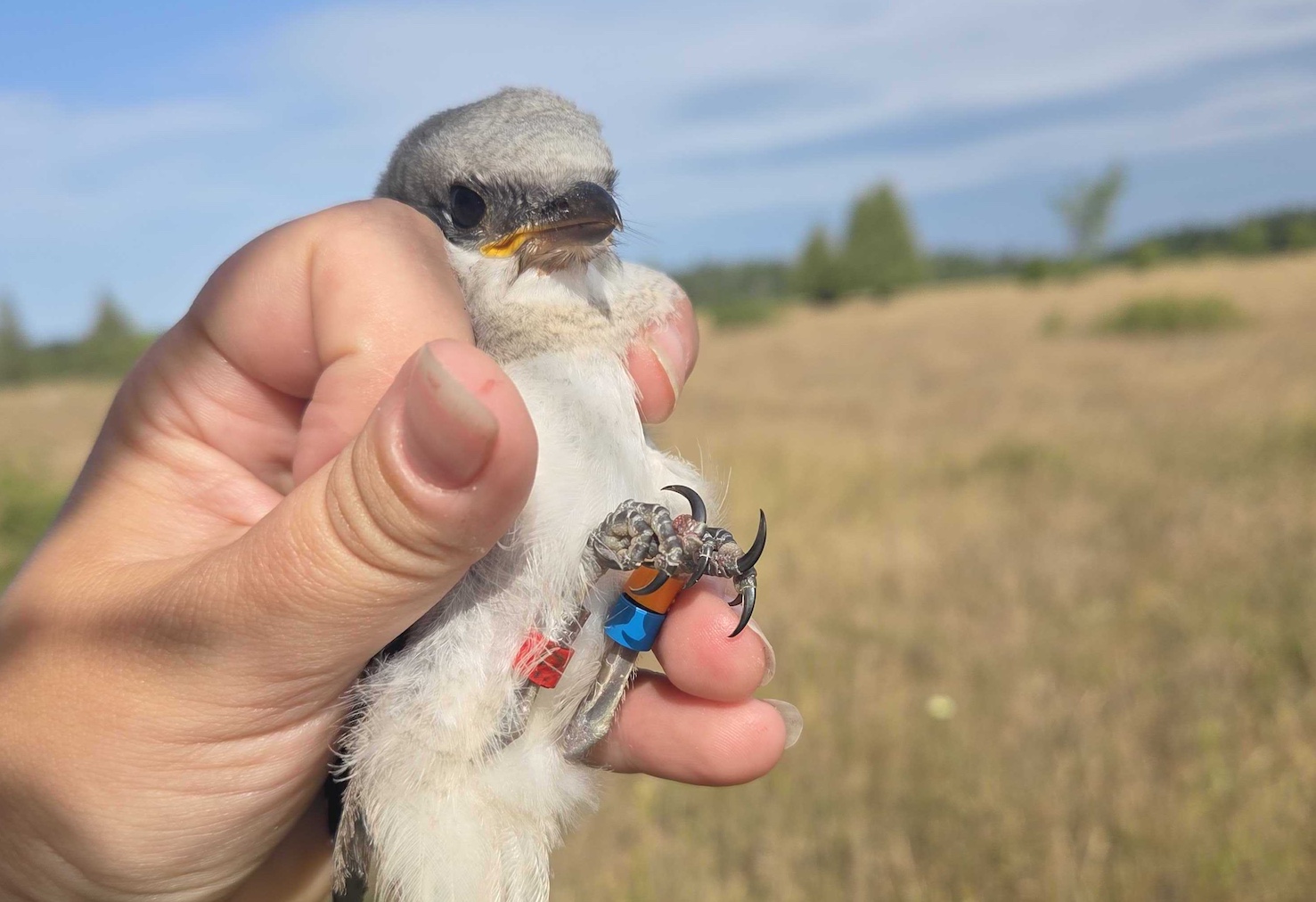
This year, we released 47 juvenile loggerhead shrikes into Carden and Napanee. This is incredibly powerful since much of the reproductive success of the population relies on these birds of conservation-bred origin. Depending on the year, between three to fifteen per cent of these birds will return to the Ontario breeding grounds and integrate with the wild population. Over the past 20 years, the conservation-bred birds have made up an annual average of more than 13 per cent of the total adult population in the wild! They have proven themselves to be successful in producing young, parenting an annual average of 30 per cent of all offspring counted in the wild since 2016.


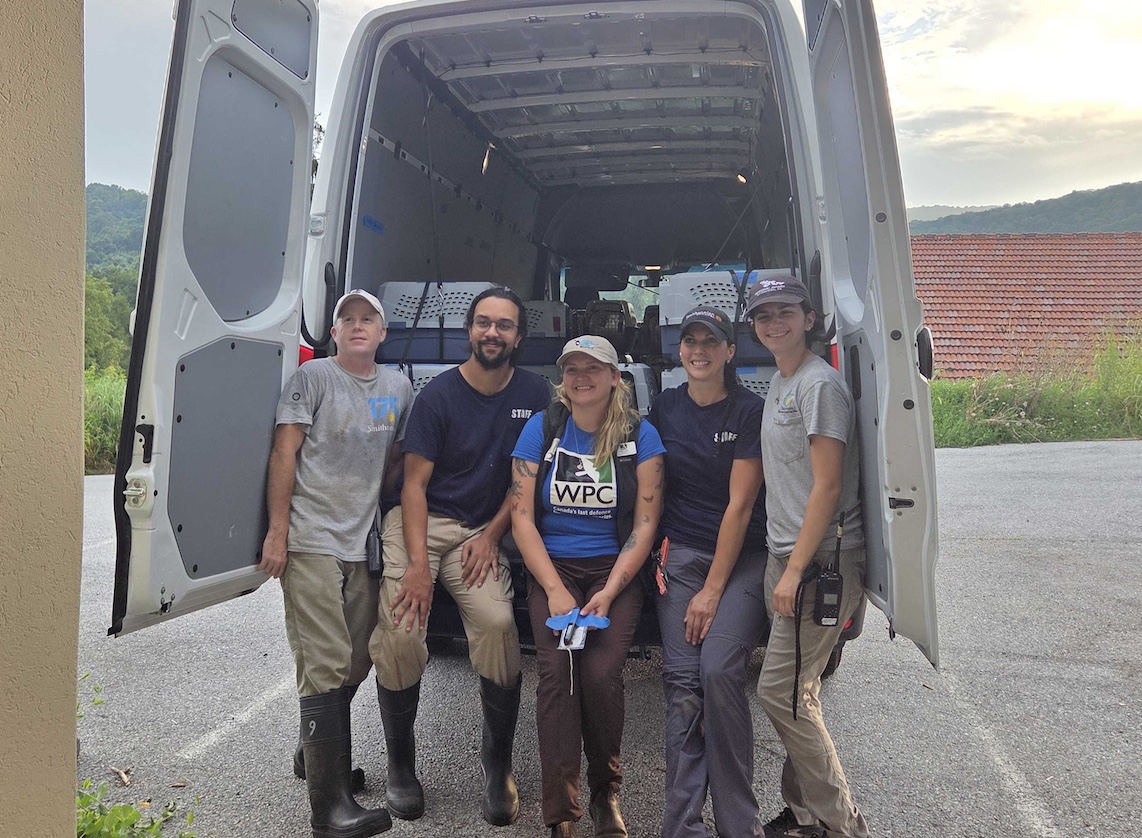
Helmi Hess with the shrike team at Smithsonian’s National Zoo and Conservation Biology Institute, picking up 40 shrikes! Photo: H. Hess.

Often the assumption is that shrikes are collected each year from the wild, brought into captivity and bred. That is, in fact, a common misconception! Shrikes are only recruited from the wild in emergency situations, such as an injury that will likely prevent it from surviving. All of the current breeding population across partner facilities hail from generations of conservation breeding. The shrike breeding partner facilities work hard to ensure that produced young are fit for release, while keeping them as wild as possible. The young are raised by their parents, with no human contact until after they fledge the nest and are independent.

Each of the breeding facilities exists within the natural range of the eastern loggerhead shrike. Canadian facilities include African Lion Safari, Toronto Zoo and Parc Omega, and are situated close to suitable breeding habitat in Ontario and Quebec. U.S. partners including the Smithsonian’s National Zoo and Conservation Biology Institute, Nashville Zoo at Grassmere and National Aviary all exist along the migratory route or wintering grounds. Young birds from all six facilities are released in Ontario at the wild breeding grounds, which encourages them to return after migration to breed. Interestingly, some released birds even migrate very close to where they hatched! One bird that was released in Napanee last August, was spotted in March, 65 kilometres from the Smithsonian, having hatched there the previous spring! This year, forty young birds were transferred to Ontario from the Smithsonian and we can’t wait to see where they end up!


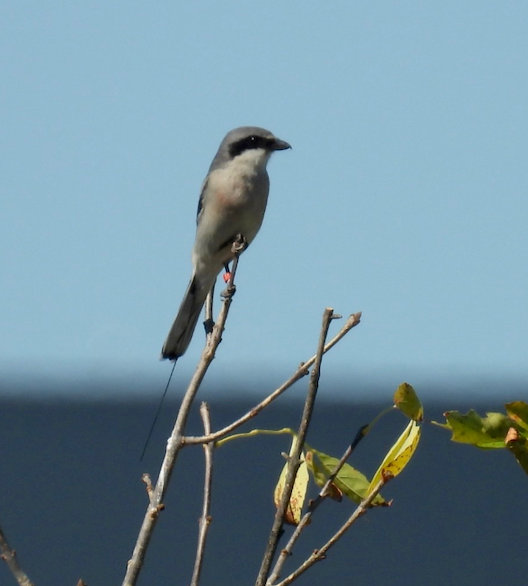
A radio-tagged loggerhead shrike released by WPC, photographed at Etobicoke Creek near Toronto Pearson International Airport. Photo: P. Landry.

We keep track of the released birds in two ways – by fitting them with a unique combination of coloured leg bands which can be seen from afar, and by radiotagging some birds to be tracked on the Motus network (a wildlife tracking system for birds, bats and insects). This year, with funding support from Birds Canada, WPC deployed 14 radiotags on released birds. So far, we have confirmed that one of our tagged birds travelled 100 kilometres south in one day! – from its release in Carden on August 30 to near Oshawa where it was seen on August 31.

Like this radio-tagged shrike, the rest of the shrikes have begun migrating south for the winter. We are crossing our fingers that they will survive this journey and return to the Ontario breeding grounds!

1
1

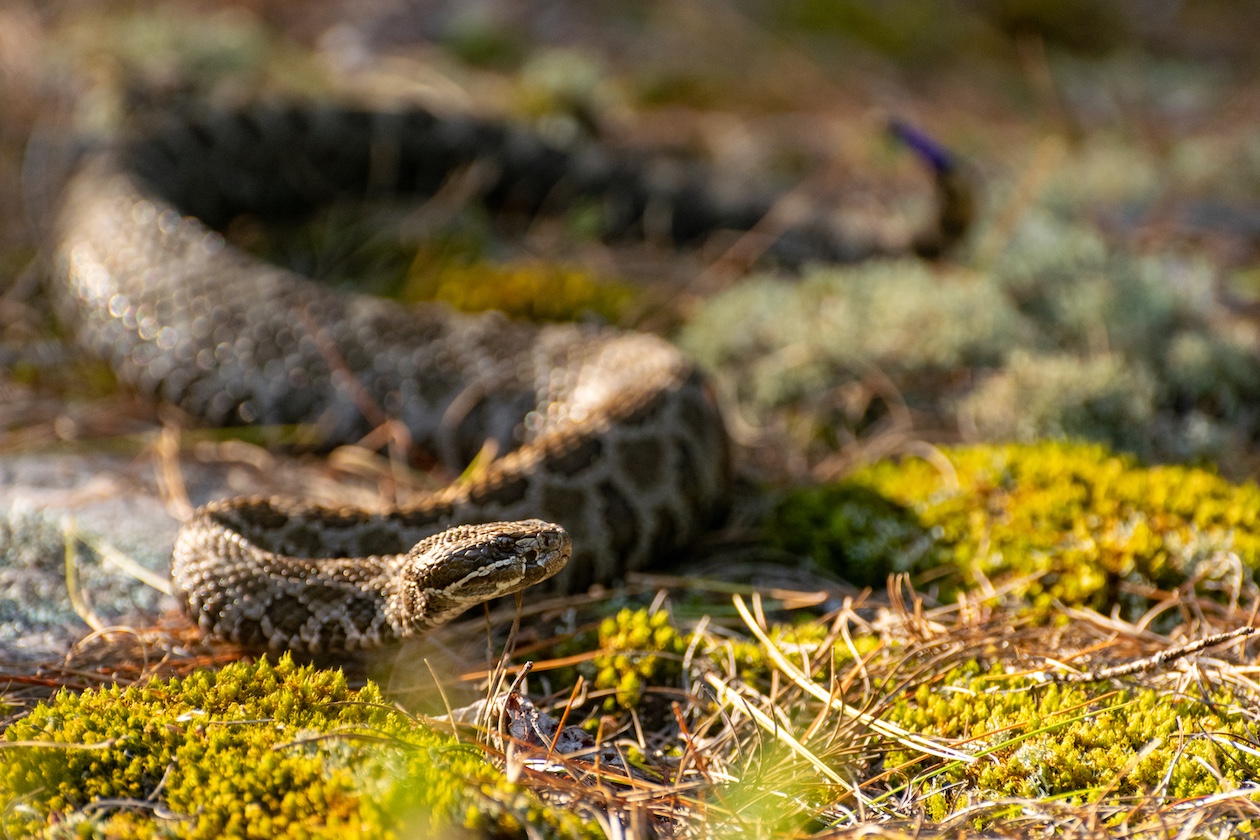
Massasauga rattlesnake
(Sistrurus catenatus)

Status: Endangered (Carolinian population) and Threatened (Great Lakes/St. Lawrence population) in Canada.

As Ontario’s only remaining venomous reptile, the massasauga rattlesnake has faced widespread persecution, despite the fact that it poses little threat to public safety. In 2021, WPC was asked to lead a province-wide recovery implementation team for the massasauga.

Photo: M. Kent.

Ojibway Prairie Reptile Recovery

Massasaugas return to Ojibway Prairie!

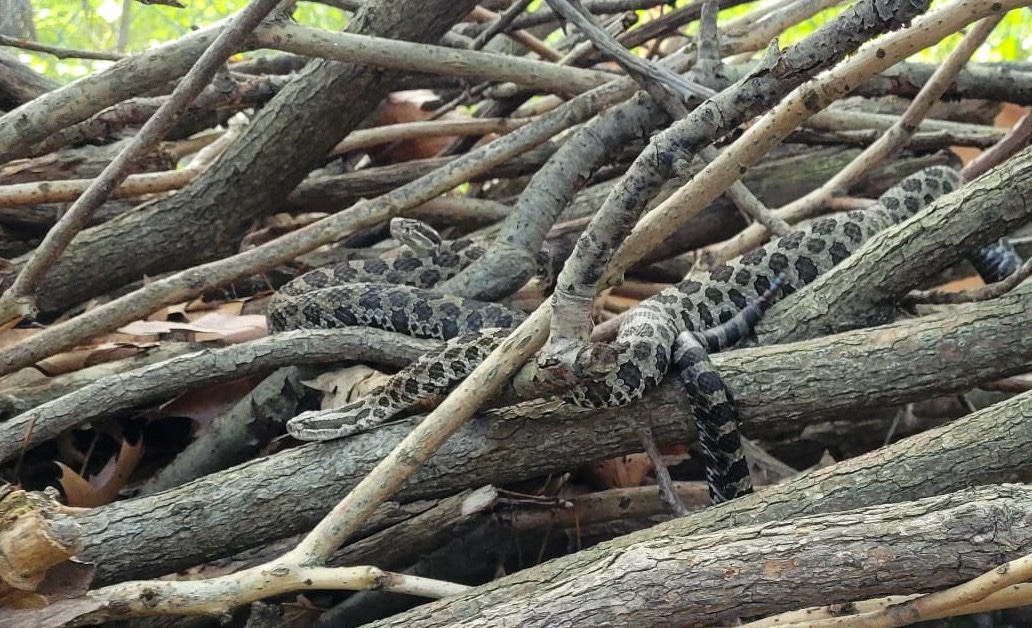
If you have been following the Ojibway Prairie Reptile Recovery program over the last few years you will have noticed a massive amount of pre-release research was completed on release site selection, design and testing of artificial hibernacula, and identification of preferred release methods. After many years of hard work and unwavering determination, WPC conducted its first experimental conservation translocation of eastern massasaugas at Ojibway Prairie alongside a dedicated group of partners and supporters. The release occurred in the summer of 2024 with 21 two-year-old rattlesnakes, all born in captivity. Toronto Zoo and Little Ray’s Nature Centre provided expert care for the young snakes prior to release, and the zoo’s experienced veterinary team implanted each of the snakes with a small radio transmitter so they could be followed every other day after being released. Dr. Trevor Pitcher from the University of Windsor, an expert in reintroduction biology, provided invaluable advice and guidance from start to end of the translocation study.


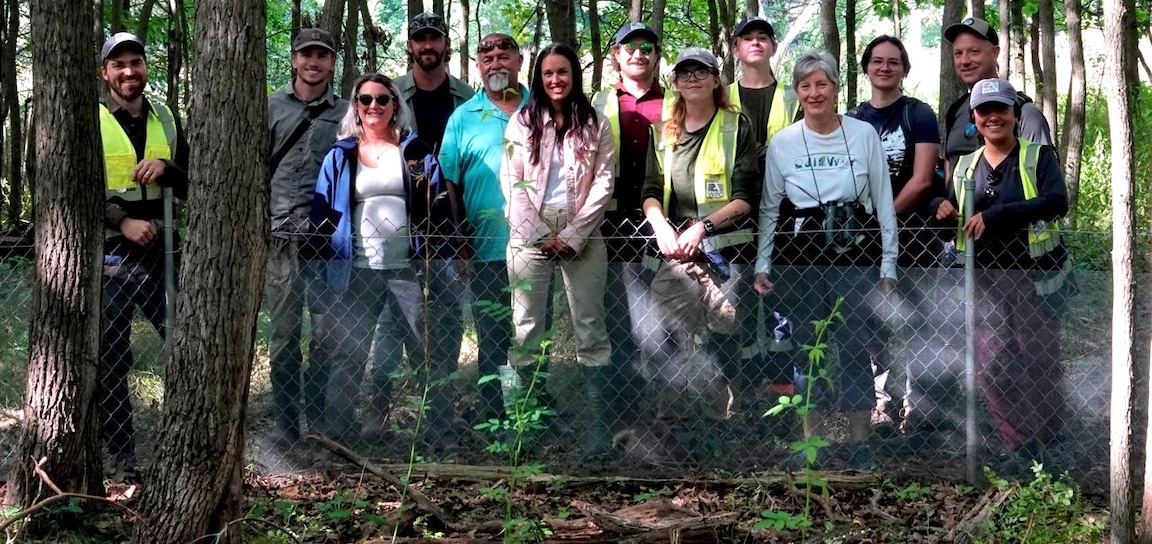
Representatives from six organizations (First Nation, government, NGOs, and university) were present at the 2024 release. Photo: R. Jones.

The Ojibway Prairie Reptile Recovery team radio-tracked the 2024 cohort of massasaugas, from their release in the late summer until spring emergence. Hibernation sites were monitored weekly throughout the winter, and then almost daily in spring to confirm the date of emergence. Radio transmitters allowed us to track each snake closely to determine survival, movement behaviour and site fidelity. More is learned during the initial months of a program’s first release than at any other phase of a reintroduction and this was certainly the case for massasaugas. We were encouraged that more than a third of the massasaugas survived the winter and emerged the following spring, including two snakes that chose to use artificial hibernacula we had installed at the release site. While our aim is always to maximize the survival of released animals, it is important that we place our results within the context of “normal” survival rates in the wild. Also, snake reintroductions in northern climates have historically been challenged by unnaturally high levels of overwinter mortality. For example, prior to WPC involvement, an attempt to release massasaugas at Ojibway Prairie in 2006 resulted in zero snakes surviving the winter. Clearly, the sheer amount of pre-release research carried out by WPC over the last few years played a critical role in the success of the 2024 release. One of the more important things we learned in 2024 was that the number of winters the snakes spent in our artificial hibernacula was important. Snakes that experienced two winters in artificial hibernacula before being released had a higher survival rate and larger home ranges similar to wild massasaugas, compared to snakes that were hibernated for only one winter.


In 2024 snakes were temporarily kept in fenced enclosures at the release site and then released as groups into a brush pile. The snakes were then held for 30 hours prior to opening the enclosure doors (i.e., this was a delayed release). Photo: WPC.

Although snakes in the group that overwintered twice performed better, their survival rate and site fidelity were still lower than what we would like to see in future release groups. A successful snake translocation should aim for survival rates and site fidelity of 50% or more. Thus, there is still room to improve techniques before larger-scale releases are conducted. Successful conservation translocations most often rely on multi-year efforts and adaptive management so that techniques and outcomes can be improved with time. Since we are one of only a small number of conservation organizations reintroducing snakes in the northern hemisphere WPC’s work with these massasauga translocations is truly pioneering — so there is no established protocol or playbook to follow apart from the one we develop ourselves!


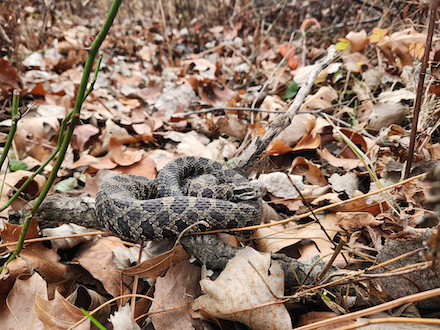
One of the translocated Massasaugas, named “Gordo”, settling into his new territory. Almost all of the massasaugas released in 2024 were the descendants of two snakes that were rescued from a development site in the Ojibway Prairie area in the early 2000s, and then incorporated into an existing conservation breeding population. Photo: A. Dell.

After everything we learned in 2024, we conducted our second trial translocation this summer with a smaller number of three-year-old snakes, using a modified release technique to improve site fidelity and survival. This learning and adaptation phase of a reintroduction program is one of the most important approaches required for success. We translocated snakes directly into artificial hibernacula and held snakes for much longer in pens after a summer release. We were grateful to again have a dedicated group of partners and supporters attend the release. One very interesting outcome so far is that we observed mating in the release enclosures within the first week post release! A likely unintended benefit of a longer delayed release was that it kept the animals close together for longer, and gave them more time to acclimate to the release site, perhaps increasing the likelihood of mating behaviour and group survival. This marks the beginning of a long-term ground-breaking reintroduction program, alongside dedicated partners to bring this fascinating reptile back to its homeland. We can’t wait to share the results from this fall and winter’s work with all of you later in the year!

Canada’s New Noah

A cog in the conservation wheel

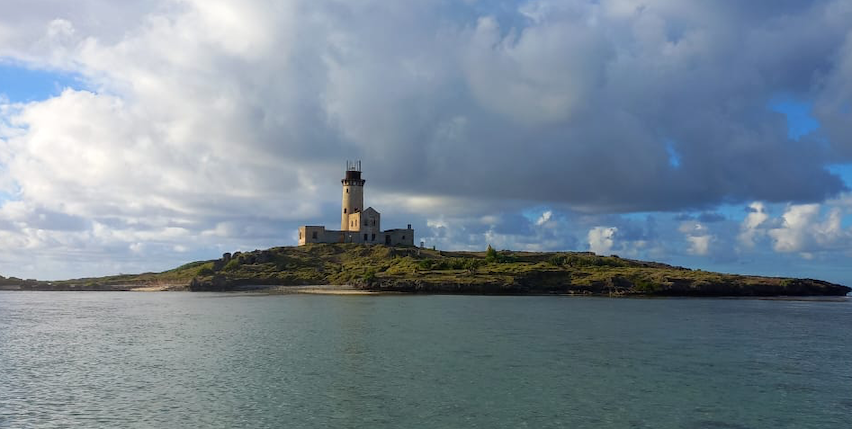
On a tiny Mauritian islet, nestled at the border of the Southern reef lives an old lighthouse. The lighthouse ruins, a remnant of British occupation, is not the only piece of history the small islet of Ile Aux Fouquets has witnessed. It has sheltered Hugeunot refugees after a failed attempt to establish a Protestant republic on Rodrigues; it watched the French win their naval battle of Grand Port against the British; and in 2020 Ile Aux Fouquets, along with its neighbouring islets, were poisoned by a devastating oil spill.


The lighthouse ruins on Ile Aux Fouquets. Photo: M. Terebiznik.

Ile Aux Fouquets is named after the Wedge-tailed Shearwaters that fill it with their haunting call. Along with the Shearwaters and daily stream of tourists, the islet and its neighbours are home to some of the world’s most threatened reptiles, like the Bojer’s Skink and the Lesser Night Gecko, along with the endemic Bouton’s skink. And for two glorious weeks, I got to call the islets home too. 

As Canada’s New Noah, I was sent to Mauritius to work with Durrell Wildlife Conservation Trust and the Mauritian Wildlife Foundation (MWF) to not only learn first hand conservation, but to also assist in their efforts to save endemic Mauritian species, like these lizards, from disappearing… and from the impacts of the devastating oil spill. 

Each year, Durrell, MWF, and New Noahs have camped out on these small islets to survey the lizard populations. So, when the oil spill tragedy struck, they were quick to act. With the backdrop of COVID, Durrell, MWF, and the National Parks and Conservation Service of Mauritius rushed to collect healthy male and female geckos and skinks from across the islets to establish captive populations. This way, the wild populations could grow and recover genetic diversity with help from captive breeding. Those captive lizards were sent to Jersey Zoo where they could be cared for in a safe, bio secure facility.


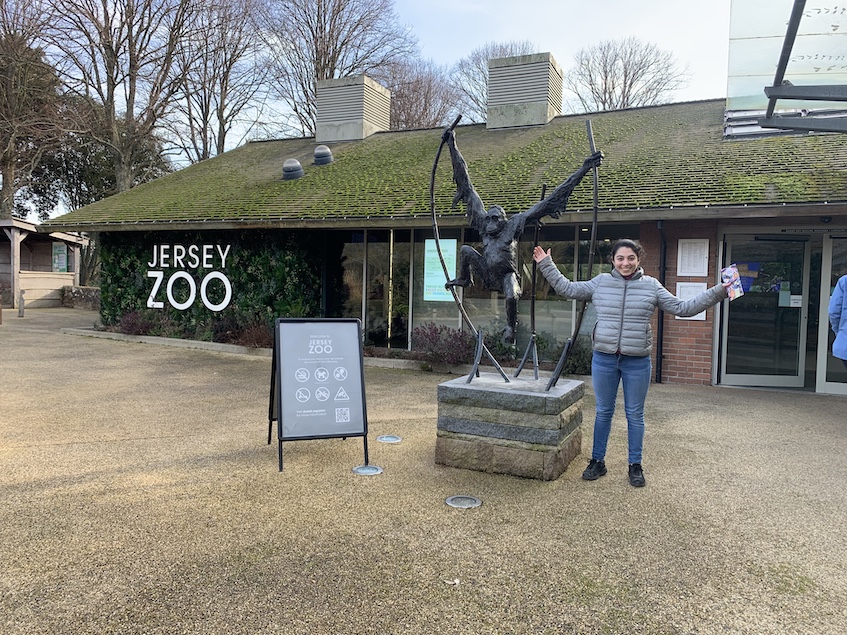
Mariel in front of Jersey Zoo sign where the three-month DESMAN course took place. Photo: T. Ta.

I met some of those lizards and their descendants in the first leg of my journey when I was in Jersey for the DESMAN (Durrell Endangered Species Management) course. One of the great benefits of the program was living next door to the Jersey Zoo. Our DESMAN instructors taught us all about the importance of maintaining genetic diversity. We studied how vulnerable small populations are to disturbances like oil spills. We discussed the role of captive breeding and preventing the spread of infectious diseases in conservation.  And we were reminded about the value of long-term monitoring. From the bio secure oil spill room in Jersey Zoo, I saw all of these play out in real time as the keeper walked me through the carefully developed husbandry and biosecurity protocols that made this captive breeding program a success. In fact, a few months before I flew out to Mauritius, some captive laid eggs made their way here first! They were returned to the islets so the baby lizards could hatch out in their natural homes and support the wild populations.

As I spent my two weeks camped out on these islets, my days consisted of capture-mark-recapture surveys of skinks. This data will help assess the size and health of the skink populations so we can make informed conservation decisions and understand the impact of the oil spill on these rare endemic reptiles. The power of this data comes from it being joined with data gathered by the conservationists that came before me and will be strengthened by all those that come after. The next New Noah to be serenaded by the haunting Shearwater calls as they camp by an old lighthouse on Ile Aux Foquets will continue this cycle. And if they are lucky, the lizards they see might even be the descendants of those I said hello to in Jersey.

Continue the work Gerald Durrell began

This year marks 100 years since the birth of Gerald Durrell – a visionary who was the first to focus on preserving endangered species. His dream didn’t end with him. It lives on in the hands of the biologists, donors and supporters who carry on his mission.

By including Wildlife Preservation Canada in your will, you can be part of that lasting legacy.

Protect Canada’s most endangered species for generations to come.

About our authors

  • Andrea Gielens

    Lead Biologist - BC Recovery Programs

    Andrea manages our captive breeding and release programs for the Oregon spotted frog, western painted turtle, and Taylor’s checkerspot butterfly in B.C. She is a global expert in endangered species reintroductions.

  • Jag Athwal

    Assistant Biologist - Taylor’s Checkerspot Recovery

    Jag started with WPC in 2023 as a nest monitoring technician for our western painted turtle recovery program. After graduating, he moved into checkerspot recovery, bringing a foundation in ecosystem management to the work.

  • Owen Tapia Daly

    Field Assistant - Mottled Dusykwing Recovery

    Owen joined WPC in 2025 as a Field Assistant for the mottled duskywing work in Norfolk County. Aiding in population surveys and documenting releases, Owen has a background in fungi network research and bat diversity in Ontario.

  • Helmi Hess

    Lead Biologist - Eastern Loggerhead Shrike Recovery

    Helmi joined WPC in 2023, coming from a background in wildlife biology, rehabilitation and education. She has worked in grassland and aquatic avian research across Canada, and co-authored peer-reviewed papers in avian physiology and ecotoxicology.

  • Jonathan Choquette, PhD.

    Lead Biologist - Ojibway Prairie Reptile Recovery

    Managing the program with the overall goal of recovering the Ojibway Prairie population of the eastern Massasauga, Jonathan’s work provides conservation benefits to many other at-risk reptiles. His research interests include urban herpetology, human-snake conflict management, and conservation biology.

  • Mariel Terebiznik

    Canada’s New Noah, 2025

    Mariel is WPC’s 34th New Noah. Coming from a background in ecology and evolutionary biology, she is building upon her knowledge that she has gained working in Ecuador with lizards, and in Algonquin Provincial Park with long-term wildlife monitoring projects. 

In the next ON THE EDGE

Wildlife Preservation Canada is growing. We‘re adding new endangered species recovery programs every year. This means that we are unable to highlight all of our programs in each edition of WPC’s ON THE EDGE.

The Spring 2026 edition will share stories from programs that were not mentioned in this newsletter, including: bumble bee recovery, Oregon spotted frog, conservation planning and so much more…

There are two easy ways to stay up to date on all our projects:

1. Sign up for our monthly email

2. Follow along on the WPC Blog

Don’t forget to share our newsletter

Established in 1985, Wildlife Preservation Canada is a non-profit charitable organization dedicated to saving critically endangered wildlife species from extinction.
Gerald M. Durell OBE

Shripal Doshi

Randal Heide

Stephen Brobyn

Tom Blackbird

Christopher Boynton

Jay Bryant

Tanya Davis

Gail Fraser, Ph.D

Rui Lin Guo

Douglas Hart

Kassidy Kennedy

Chris Von Boetticher

Michael Chisholm

Eleanor R. Clitheroe

Kathyrn B.P. Dempster

Lee Durrell, Ph.D.

W. Paterson Ferns, C.M.

Louise Gervais

Ian Glen

Graham F. Hallward

Peter Karsten, Ph.D

Anson R. McKim

Stephanie McLarty

Stephen T. Molson

H. Alec B. Monro

William Noble

Pinar Ozyetis

Bridget Stutchbury, Ph.D.

Lance Woolaver Jr., Ph.D

Lee Durrell, Ph.D

Carl Jones, Ph.D

Peter Karsten, Ph.D

89171 0535 RR0001

Photo: J. Dertinger.

Until we consider animal life to be worthy of the consideration and reverence we bestow upon old books and pictures and historic monuments, there will always be the animal refugee living a precarious life on the edge of extermination, dependent for existence on the charity of a few human beings. – Gerald Durrell