To bee or not to bee?
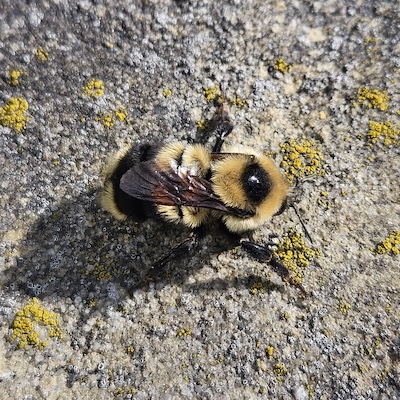
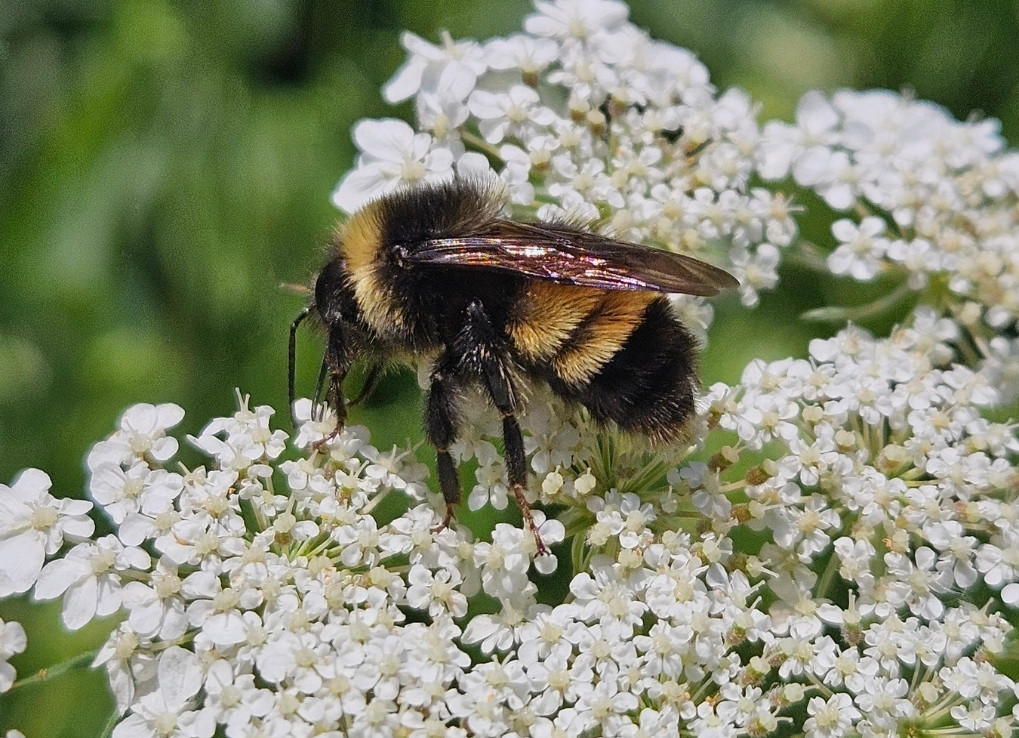
Posted onMay 5, 2026byAnnika Wilcox| Photo: yellow-banded bumble bee by A. Wilcox.
What is the Bumble Bee Recovery Program? Since the 1990s, bumble bee numbers have been plummeting and that spells ecological disaster. Here at Wildlife Preservation Canada, we work to save at risk species of bumble bee from disappearing by monitoring them in the wild, breeding them for release at our conservation lab in Ontario, and studying their poop for parasites! We even host special community science events across the province to track population sizes, locate declining populations and provide hands-on training programs with the goal of expanding our efforts across Canada. We are the only organization in the country working to rebuild at risk bumble bee populations through conservation breeding.
What makes a bumble bee a bumble bee?
For most of us, the image comes easily: a chunky body, soft fuzz, delicate wings, and bold stripes of black and yellow. Maybe you think of their low, steady buzz as they drift from flower to flower, carrying out their essential role as pollinators. Bumble bees are recognizable and familiar, even to young kids.
But nature is rarely that simple. Out in the field, even for those of us who spend years studying bumble bees, things can get…confusing. Because not everything that looks like a bee is a bee.
Many species have evolved to resemble bumble bees through a strategy known as mimicry, where a harmless species imitates one that predators know to avoid, usually because it stings, bites, or is poisonous.
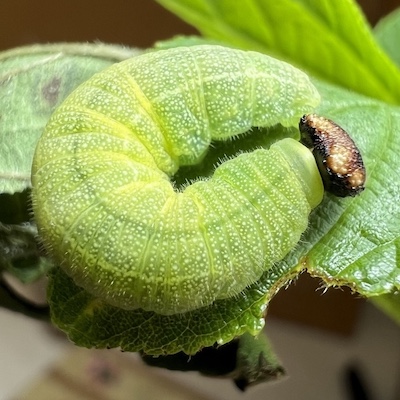
There are a few classic examples of mimicry in the insect world. Some caterpillars look shockingly like snakes, while stick bugs look just like twigs, both to avoid detection by predators. Bumble bees, with their ability to sting and their bold warning colours, also make excellent models. Because predators don’t stop to double-check, anything that looks yellow and black and fuzzy gets a bit of borrowed protection.
But here’s where it gets humbling (especially if you’re a bumble bee biologist!): mimicry works.
Even after years spent searching for and identifying bumble bees, there are moments in the field when I catch a glimpse of something that has to be a bumble bee, only to take a closer look and realize I’ve been tricked. So let’s meet some of the mimics that have given me a run for my money:
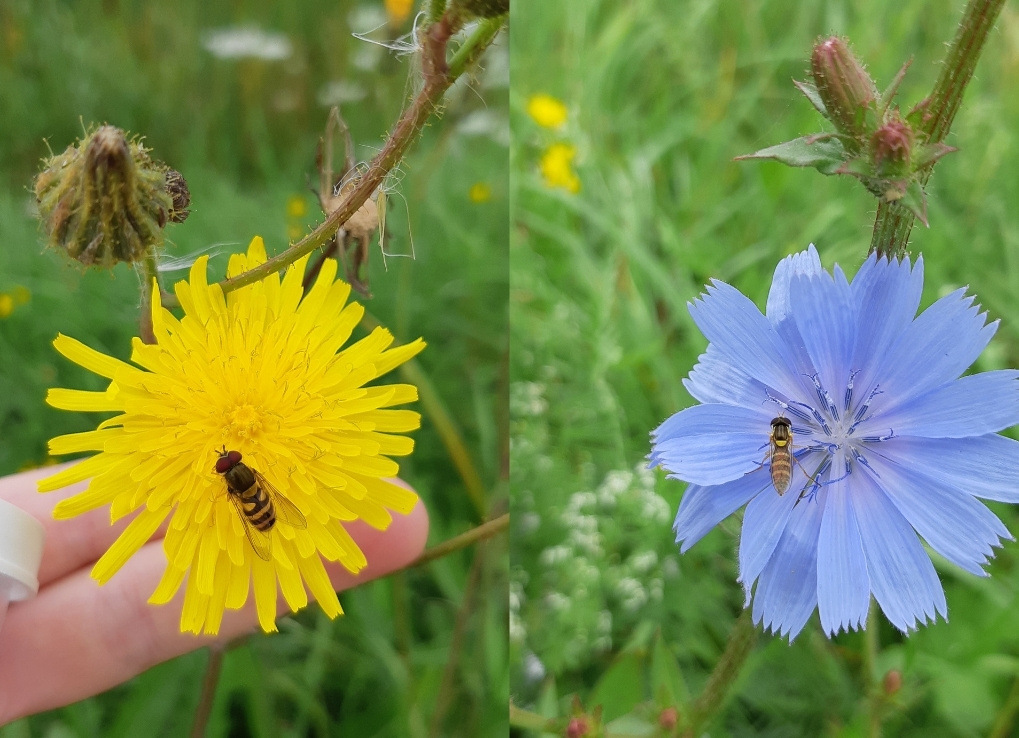
Two hoverflies on flowers. Photos by A. Wilcox.
Hoverflies are some of the most common imposters. At a glance, they can look remarkably bee-like, with striped abdomens and that classic ‘bee’ colour combination. But look a little closer and their disguise falls apart: they can hover effortlessly in place, are smaller-bodied and less fuzzy than bumble bees, and they only have one pair of wings instead of two.
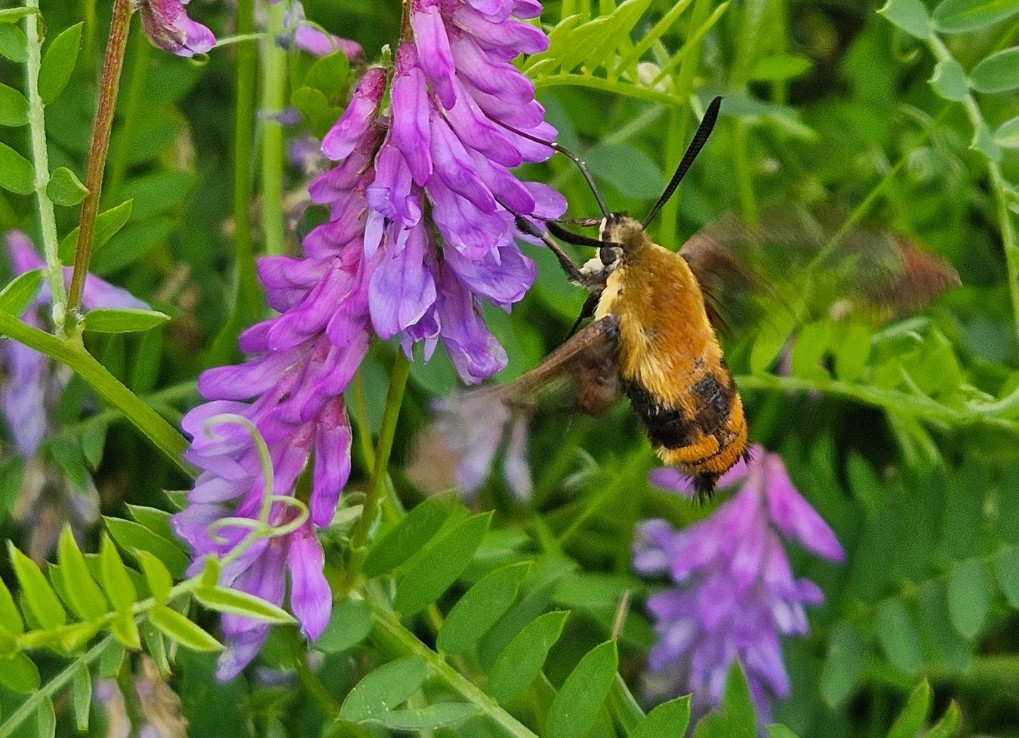
A snowberry clearwing moth visiting some purple flowers. Photo by A. Wilcox.
Snowberry clearwing moths are not like the moths you might imagine visiting your porch lights at night. These fuzzy daytime fliers can easily be mistaken for bumble bees, especially with their yellowish and black colouring. After all, they’re doing the same thing bumble bees do, zipping from flower to flower to drink nectar.
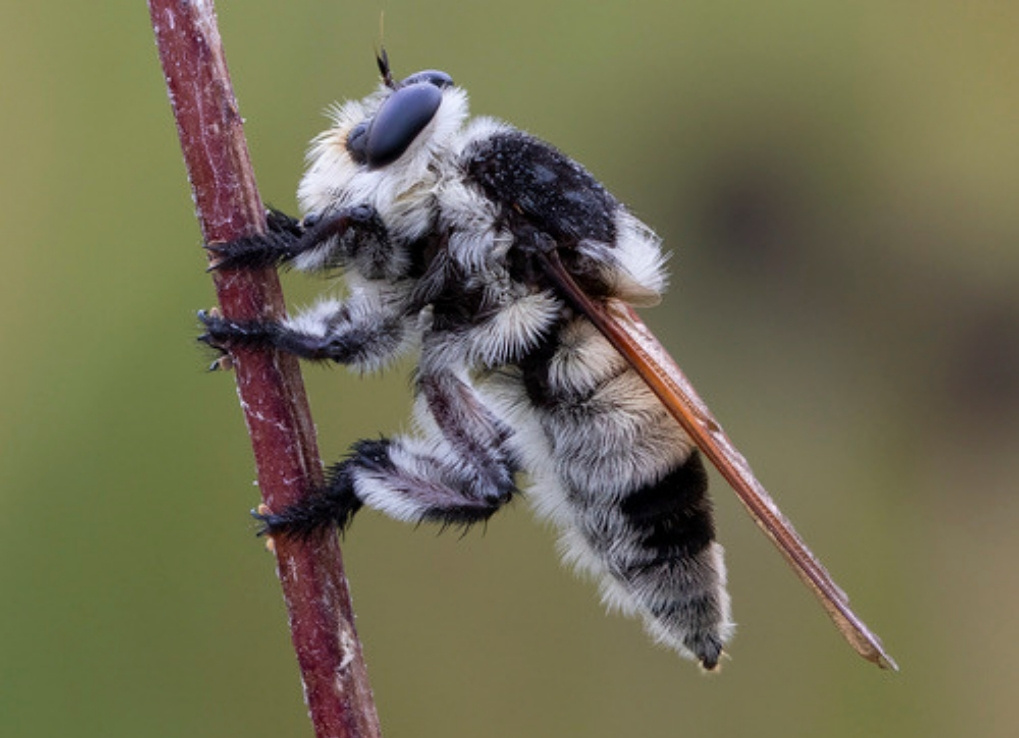
A Florida bee killer. Photo by Robert Epstein/iNaturalist.
Robber flies take mimicry to a whole other level. Some species, like the Florida bee killer, closely resemble bumble bees – and those same bees are often their prey. Perched on vegetation, they launch swift aerial attacks, snatching bees right out of the air. Their mimicry serves a dual purpose; it helps them avoid predators, and possibly allows them to get closer to unsuspecting prey.
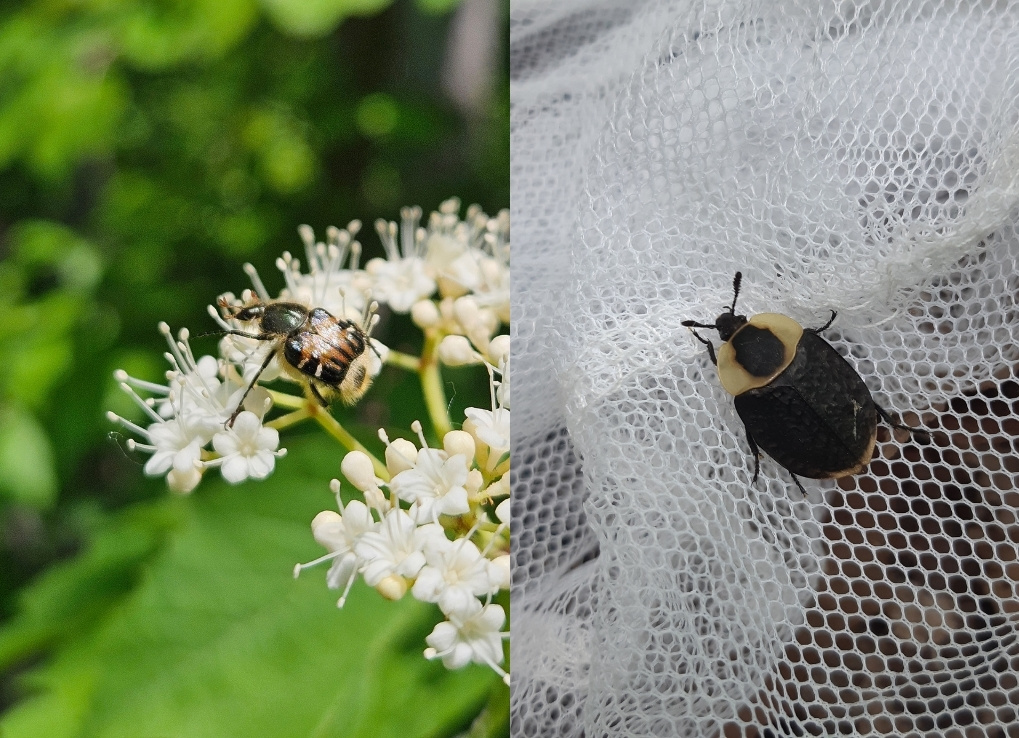
(Left) A bee-like flower scarab. Photo by A. Wilcox. (Right) An American carrion beetle. Photo by A. Wilcox.
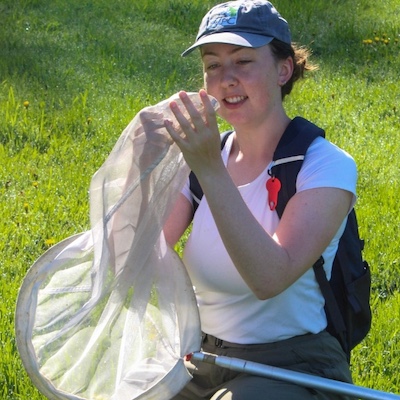
Beetles, including bee-like scarabs and the American carrion beetle, also do their best to fool would-be predators. I once heard what I thought was a bumble bee zip past my ear, turned around, and heroically swung my net. I looked in, ready to identify the beautiful bumble bee awaiting me, and was shocked to see a carrion beetle staring back at me. Touché, carrion beetle.
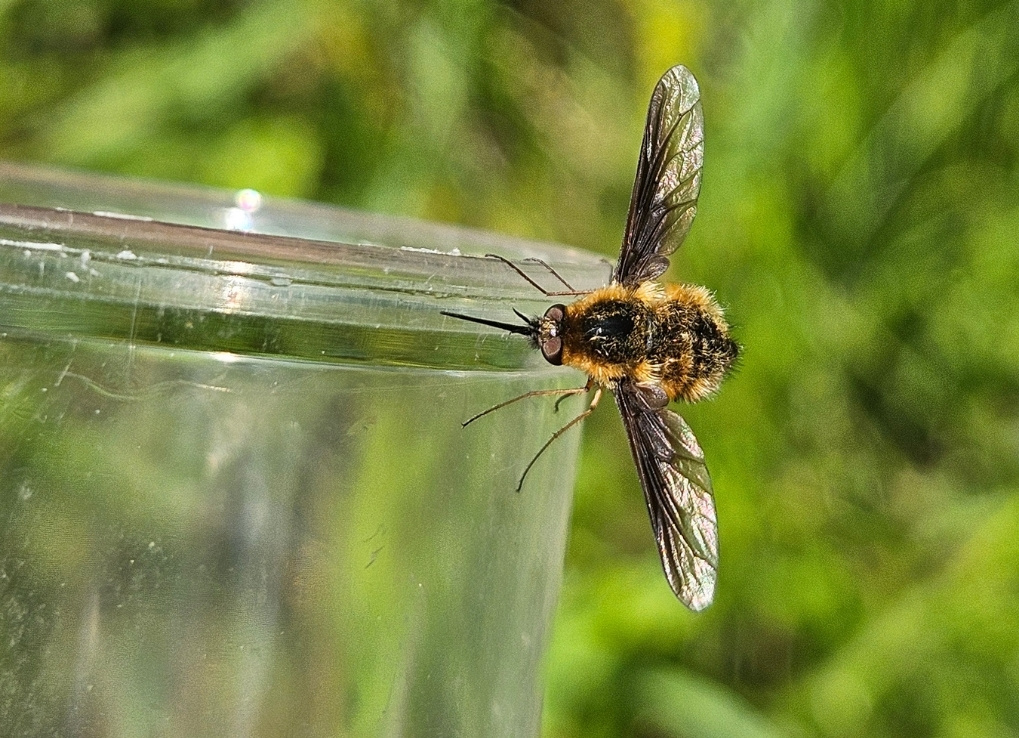
A bee fly. Photo by A. Wilcox.
And bee flies…well, to be honest with you, they aren’t really that convincing as far as bumble bee mimics go. But they’re fuzzy and round (arguably the two cutest traits of bumble bees), so I’d be doing you a disservice by not including a photo of one.
Mimicry in nature is remarkable. For the mimics, it can mean the difference between life and death. And for us? It’s a reminder to slow down, take a closer look, and appreciate that there’s often more to the natural world than meets the eye.
Annika joined the WPC Loggerhead Shrike team as a Research Biologist in 2025 before moving to the Native Pollinator Initiative as Ontario Programs Coordinator. She has ample experience in environmental outreach, wildlife rehabilitation, and the ecological monitoring of birds, at-risk amphibians, reptiles, and insects. Annika holds a Master’s degree in Integrative Biology from the University of Guelph, where she researched the limiting factors of restored agricultural wetlands as a breeding habitat for birds, with an emphasis on Species at Risk.

We need your help