Forest floors alive: spring ephemerals and their native pollinators
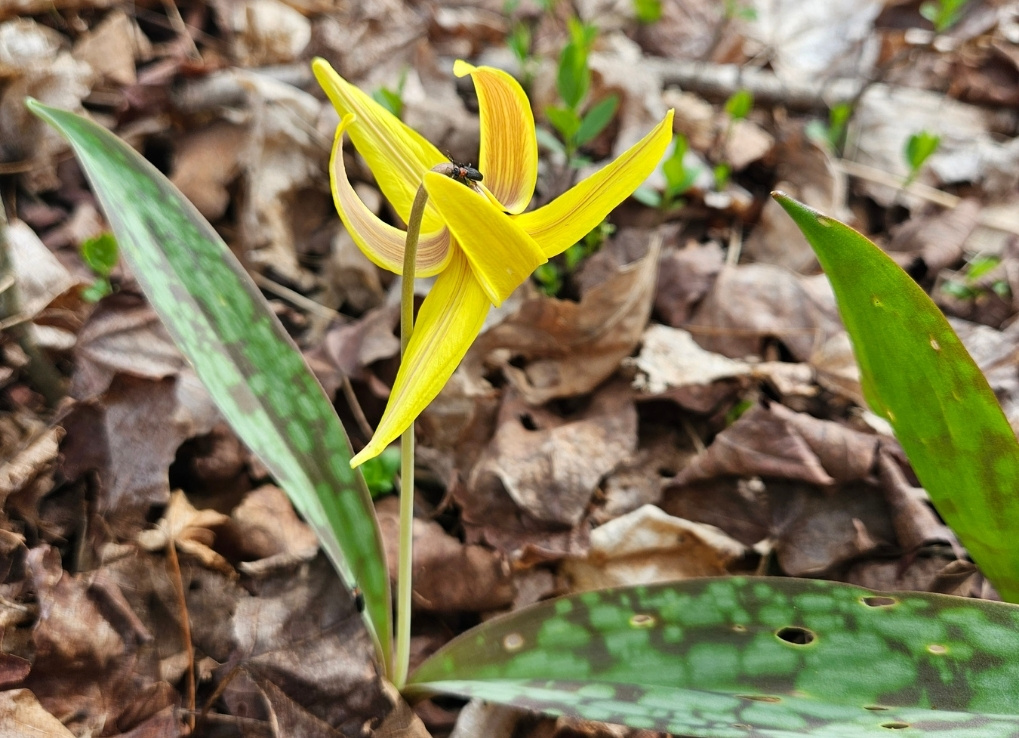
Posted onApril 2, 2026byAnnika Wilcox| Photo: yellow trout lily with beetle, A. Wilcox.
What is the Bumble Bee Recovery Program? Since the 1990s, bumble bee numbers have been plummeting and that spells ecological disaster. Here at Wildlife Preservation Canada, we work to save at risk species of bumble bee from disappearing by monitoring them in the wild, breeding them for release at our conservation lab in Ontario, and studying their poop for parasites! We even host special community science events across the province to track population sizes, locate declining populations and provide hands-on training programs with the goal of expanding our efforts across Canada. We are the only organization in the country working to rebuild at risk bumble bee populations through conservation breeding.
Happy wildflower season! Specifically, welcome to the wonderful time of the year where we get to share our forested areas with spring ephemerals, woodland wildflowers that take advantage of the brief window of sunlight after the snow melts but before the forest canopy fills in. In just a few short weeks, these flowers emerge, bloom, and set seed before disappearing again until next year.
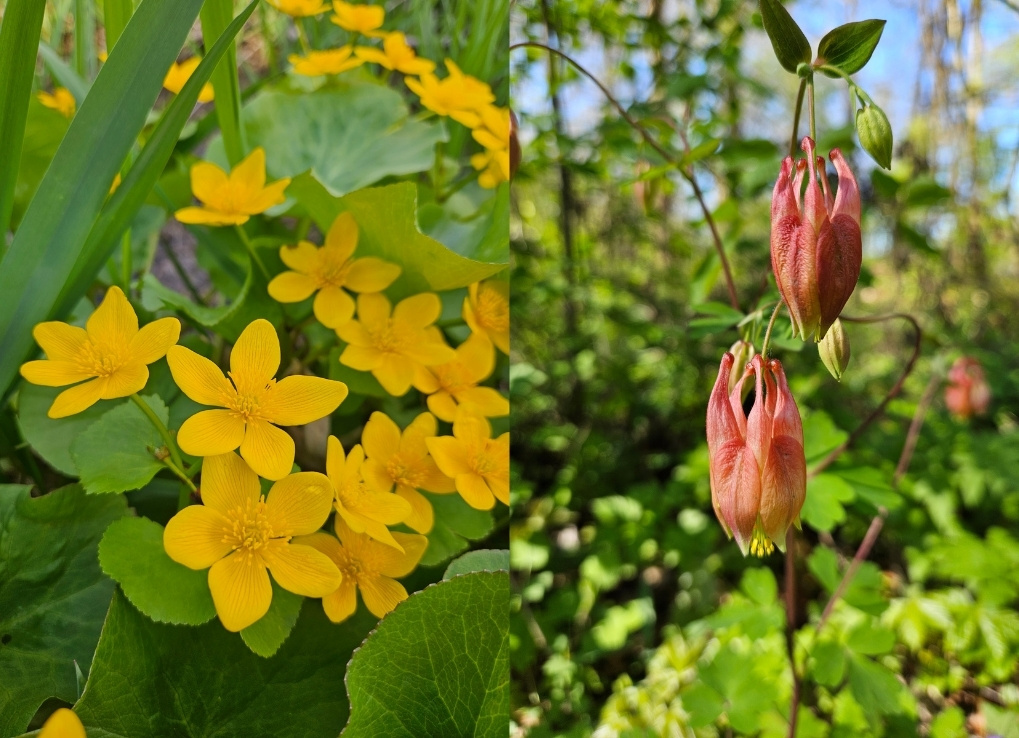
(Left) Marsh marigold (Caltha palustris), a spring ephemeral found in wet meadows, wetlands, and steam banks all across Canada and down into the United States. Marsh marigold is primarily pollinated by hoverflies, bee flies, and small native bees like sweat bees and mining bees. Photo by Annika Wilcox. (Right) Wild columbine (Aquilegia canadensis), a beautiful ephemeral flower whose primary pollinator is the ruby-throated hummingbird! Photo by Annika Wilcox.
Some of the most familiar spring ephemerals include the delicate white blossoms of bloodroot (Sanguinaria canadensis), the nodding yellow flowers of trout lily (Erythronium americanum), and the tiny pink-striped blooms of spring beauty (Claytonia virginica). While the exact mix of species varies from region to region, many of these early flowers can be found in woodlands across Canada. Their brief appearance transforms the forest floor into a patchwork of colour just as winter finally loosens its grip.
But as much as we may love to see them, these flowers aren’t blooming for us. Early spring is a challenging time for insects: temperatures are still cool, and nectar and pollen are in short supply. Spring ephemerals help to fill that gap, providing some of the first reliable food sources of the season.
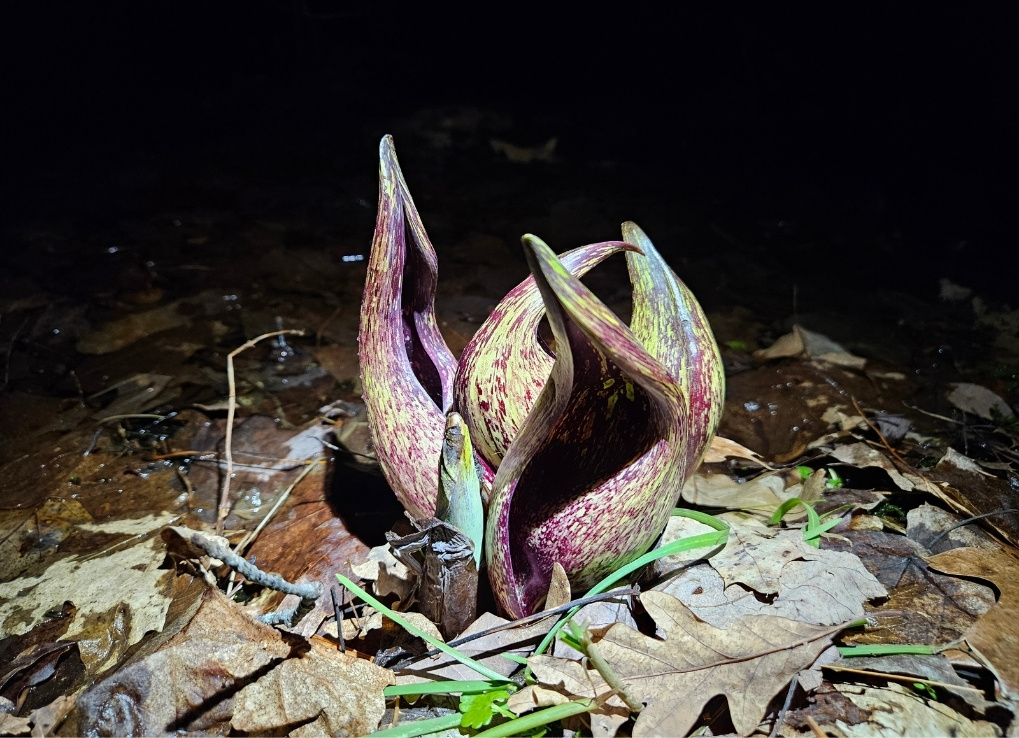
Skunk cabbage (Symplocarpus foetidus), an alien-looking eastern wetland specialist whose leaves smell like skunk when bruised. Photo by Annika Wilcox.
One of the earliest flowers to pop up here in eastern Canada is the wonderfully strange skunk cabbage (Symplocarpus foetidus). Long before most flowers appear, skunk cabbage pushes its way up through wet soil in swamps and woodland seeps. Its mottled purple hood surrounds a dense cluster of tiny flowers and releases a smell that many people compare to… well, a skunk. That smell is no accident, however. It attracts early spring pollinators like flies and beetles, which crawl inside the hood to investigate. Even more impressively than its stink, skunk cabbage can generate its own heat, sometimes melting the surrounding snow to make its flowers accessible to these cold-weather visitors.
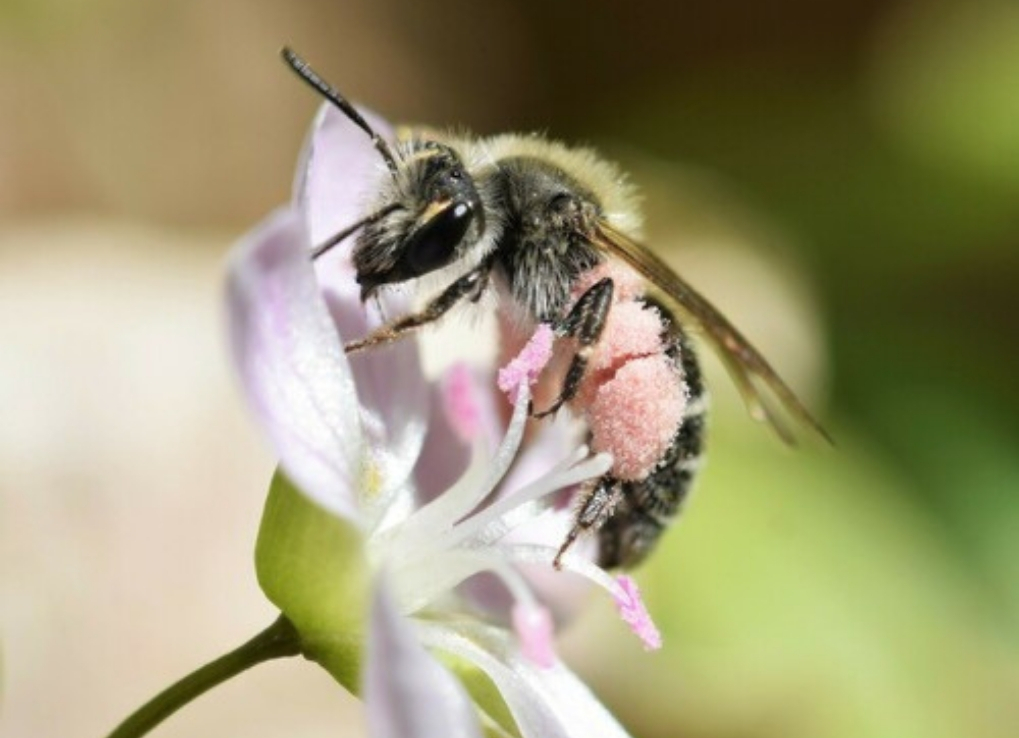
Spring beauty mining bee (Andrena erigeniae), a small native bee who has specialized on the spring beauty flower. Photo by Riley-Brendan Walsh on iNaturalist.
As the season warms slightly, bees begin joining the mix. One group that takes full advantage of the early bloom is the mining bees in the genus Andrena (mining bees). These small, ground-nesting bees emerge in early spring and are especially fond of ephemeral flowers, with some species being closely tied to particular plants. For example, certain mining bees specialize in collecting pollen from spring beauties, forming a partnership that has likely existed for thousands of years.
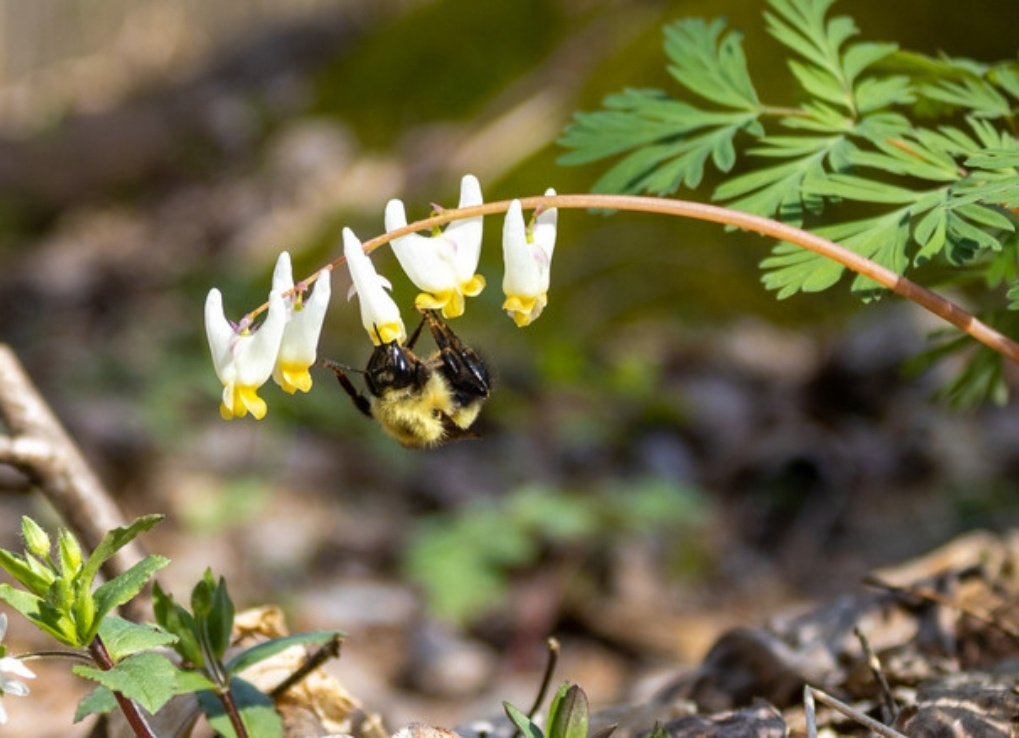
Dutchman’s breeches (Dicentra cucullaria), a beautiful woodland ephemeral that provides much-needed pollen and nectar to native pollinators like bumble bees. Photo by Karen D Wade on Shutterstock.
If you take a closer look at the forest floor, you might just find some dutchman’s breeches (Dicentra cucullaria), named for their upside-down white flowers that resemble tiny pairs of pantaloons hanging on a line. This species produces nectar deep within its blossoms, making it especially attractive to long-tongued pollinators. Early in the season, queen bumble bees are among the few insects able to reach that nectar, though they sometimes take a shortcut by nibbling a small hole in the flower, in a behaviour known as nectar robbing.
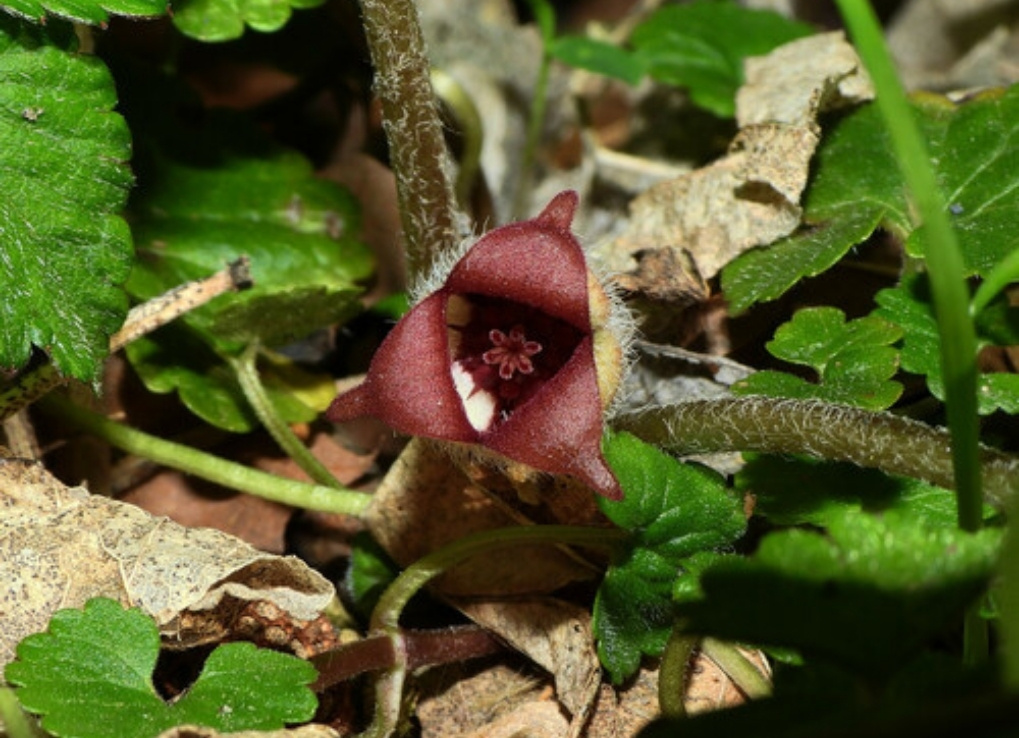
Wild ginger (Asarum canadense), a groundcover ephemeral flower whose roots smell and taste faintly of culinary ginger. Photo by Emilio Concari on iNaturalist.
In sunnier woodland edges, you might also find Wild Ginger (Asarum canadense), whose unusual maroon flowers hide beneath its leaves close to the forest floor. Rather than attracting bees, wild ginger relies mostly on flies and beetles that crawl into the flower. Later in the season, ants help disperse its seeds, carrying them away to their nests thanks to a nutritious appendage attached to each seed.
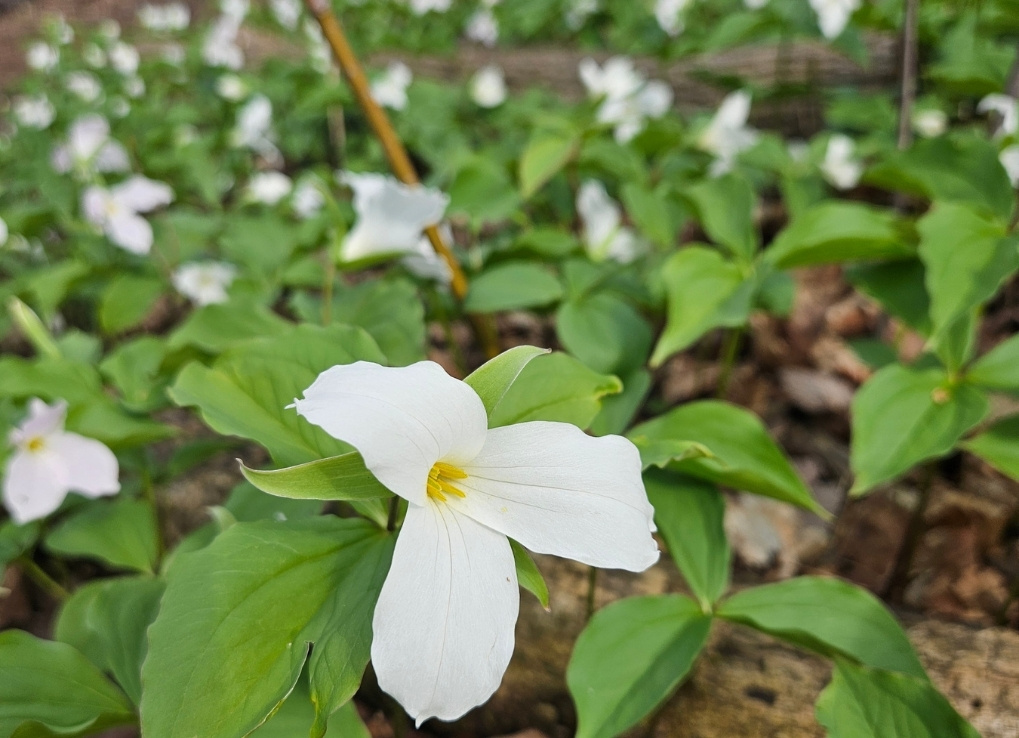
White trillium (Trillium grandiflorum). Though it is the official flower of Ontario, it is found across eastern Canada and the United States. Photo by Annika Wilcox.
Back under the forest canopy, the iconic white trillium (Trillium grandiflorum) may be opening its beautiful three-petaled flowers. Unlike most flowers that bumble bees visit, white trilliums don’t produce nectar. However, they make up for it with their abundant pollen, which is a valuable food source for early-flying insects like bumble bees. Interestingly, white trilliums are effectively pollinated through buzz pollination, a strategy where bees hold onto the flower and ‘buzz’, vibrating their flight muscles to shake the pollen loose.
As you explore your local woodlands this spring, look closely for flowers peeking up through the leaf litter, and keep an ear out for the low hum of bumble bees getting to work. The blooms of spring ephemerals are brief, but for enthusiastic flower-finders and hungry springtime pollinators alike, they are nothing short of magical!
Annika joined the WPC Loggerhead Shrike team as a Research Biologist in 2025 before moving to the Native Pollinator Initiative as Ontario Programs Coordinator. She has ample experience in environmental outreach, wildlife rehabilitation, and the ecological monitoring of birds, at-risk amphibians, reptiles, and insects. Annika holds a Master’s degree in Integrative Biology from the University of Guelph, where she researched the limiting factors of restored agricultural wetlands as a breeding habitat for birds, with an emphasis on Species at Risk.

We need your help