Fieldwork forays: a dramatic anecdote and thoughts on working outside
Posted onJune 16, 2026byCatherine Woo-Durand|Bumble Bee Recovery, Bumble Bees, Native Pollinator Initiative, News and EventsPhoto: E. Forrester

What is the Bumble Bee Recovery Program? Since the 1990s, bumble bee numbers have been plummeting and that spells ecological disaster. Here at Wildlife Preservation Canada, we work to save at risk species of bumble bee from disappearing by monitoring them in the wild, breeding them for release at our conservation lab in Ontario, and studying their poop for parasites! We even host special community science events across the province to track population sizes, locate declining populations and provide hands-on training programs with the goal of expanding our efforts across Canada. We are the only organization in the country working to rebuild at risk bumble bee populations through conservation breeding.
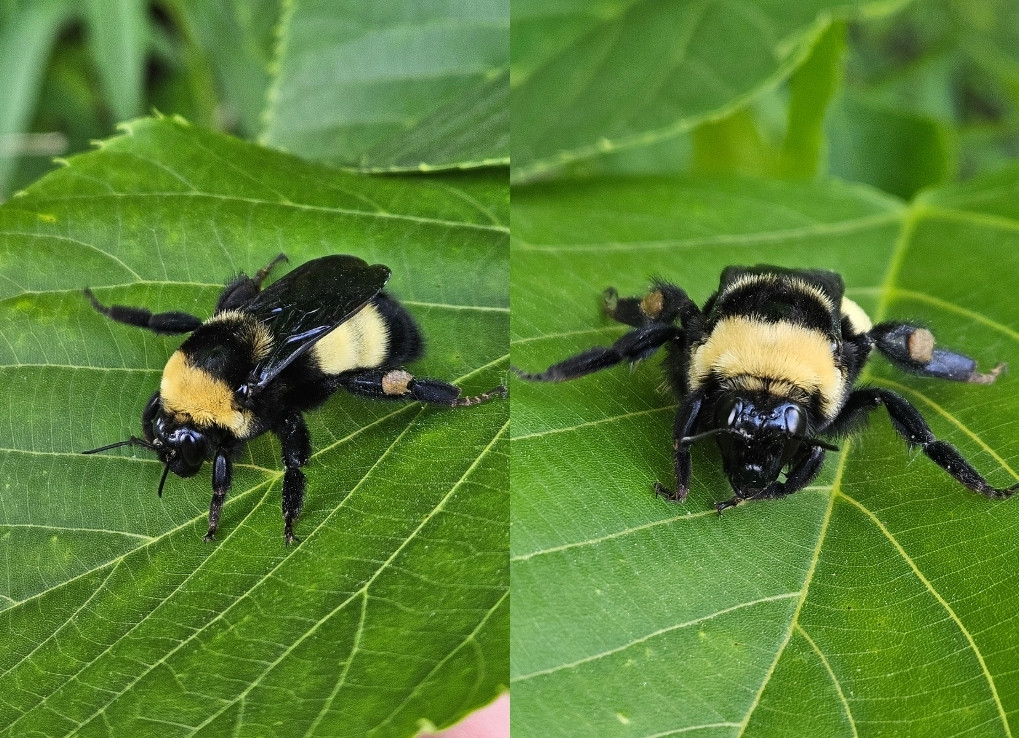
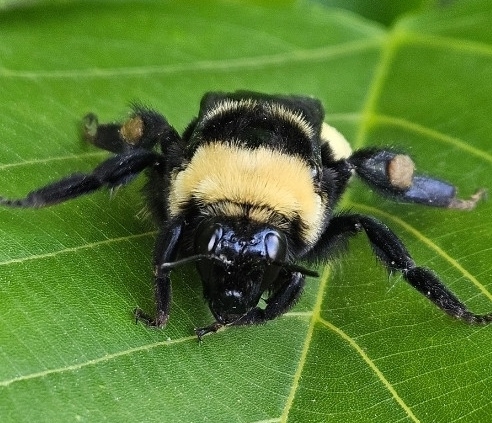
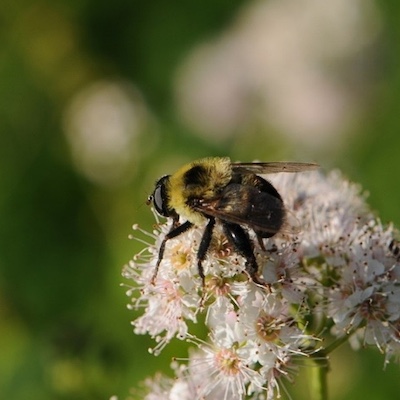
Bombus auricomus, aka the gold and black bumble bee. Side profile and front view to show it’s yellow “eyebrows”. Photos: A. Wilcox.
One afternoon in June, we drove to a municipal park in the GTA (Greater Toronto Area) that is historically known to have the black and gold bumble bee. This site was especially interesting because these bees almost exclusively show up at two large locust trees in the area. These trees have gorgeous vibrant pink flowers that cover the branches. My love for these trees is clearly shared by the bees because this is where the black and gold bumble queens were showing up. One showed up at the very top of the tree earlier in the survey but was unreachable, and then promptly left, leaving the team disappointed but hopeful that she would return (or spread the word!).
Staking these trees out for over an hour, craning our necks and fighting to see against the sun beaming down on us, lots of carpenter bees came and went. These bees can be distinguished from bumble bees even without a clear close-up view by their hairless, shiny abdomens paired with their erratic flight behaviour. These bees will actually chase off other bees, which did not bode well for our mission.
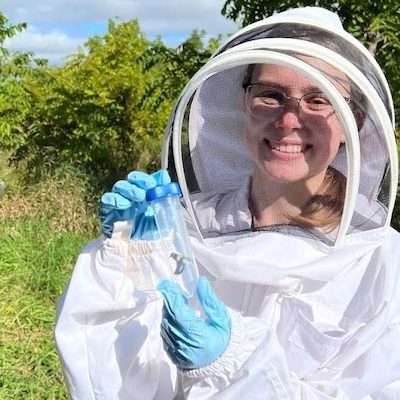
Finally, after over an hour of waiting and feeling defeated, the queen returned (or sent a friend over)! A black and gold bumble bee landed at the locust tree in front of me, very much within reach. I could see even from afar that this was the bee I was looking for, from the shear size of it, the darker wings and from the distinct patterning of yellow and black. I knew it was my chance to pounce. As I approached the tree and extended my net, she quickly flew to the other adjacent locust tree. Adrenaline kicks in as I ready to swing my net. I do not want to give her a chance to escape again so I swing and… got her! The joy of catching this one singular bee is unparalleled. I quickly signalled to Annika, our Ontario Programs Coordinator for the Native Pollinator Initiative, letting her know that our target had been acquired. As the bee was safely placed into the vial and her information noted down on the masking tape, we both rejoiced and took in the sight of this massive beautiful bee.
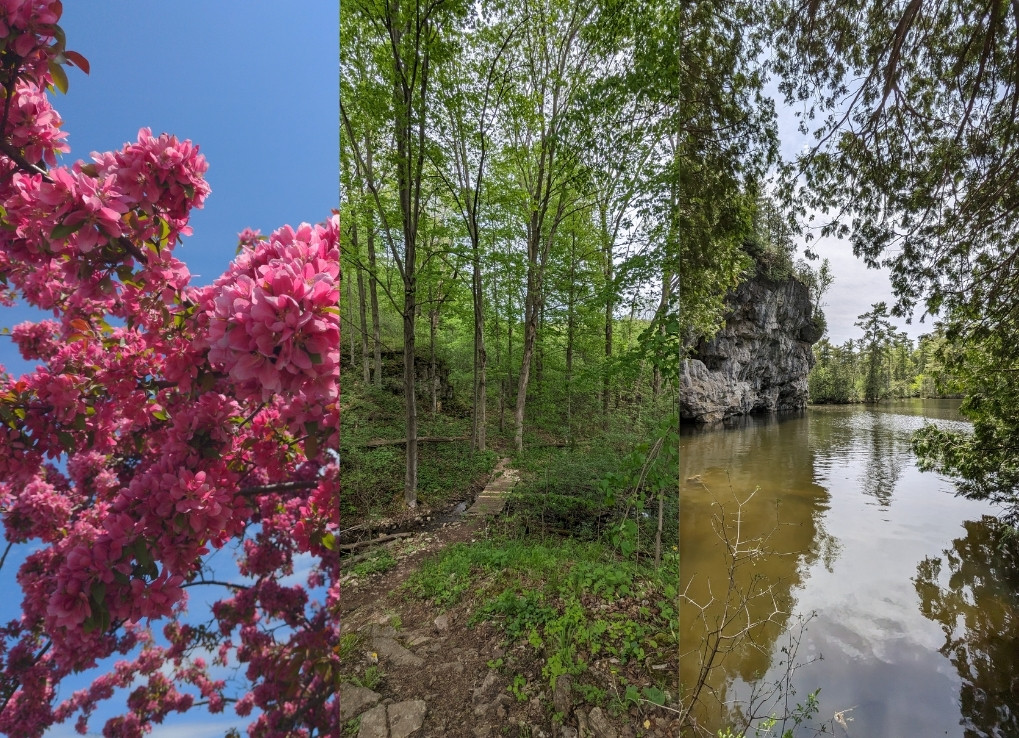
(Left) A flowering prairie crabapple tree, (middle) a winding forest path, (right) and a river. All taken during surveys. Photos: C. Woo-Durand.
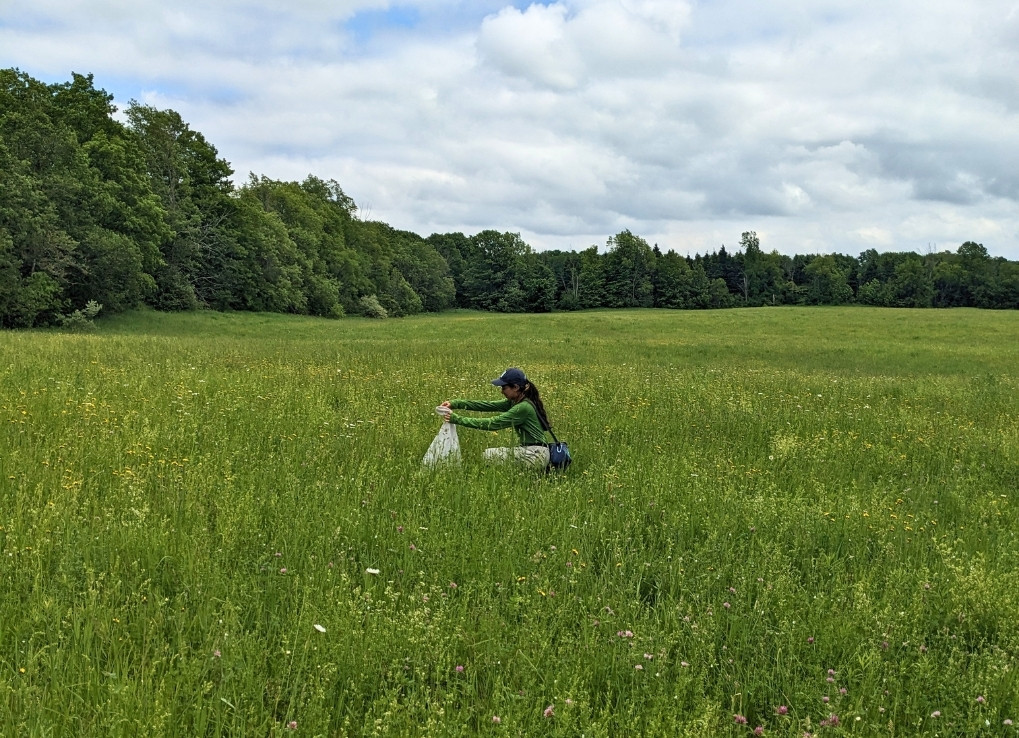
However, most days do not consist of staking out one particular spot (and usually do not invoke adrenaline rushes). Most days consist of wandering through parks or conservation areas and meandering along walking trails or along roadsides keeping watch for movement and listening for the familiar buzz of a bumble bee, catching as many as possible. Sometimes you stumble upon a meadow brimming with wildflowers and spend the time wandering through it, taking in the sights of bobolinks flying overhead and singing their song, and pollinators buzzing from flower to flower. Other times you walk along a forest path teeming with life, seas of trillium blooming, chipmunks running past your feet, mushrooms overtaking a fallen tree, and ovenbirds and eastern wood-pewees calling from every direction. Other times, you may walk past a river or pond and see a great blue heron catch a fish for lunch while dragonflies dart endlessly across the water and over your head. A couple of times, I seem to have found the bumble bees’ secret magical patch of flowers that they just keep showing up to. I have nearly managed to fill my whole cooler bag at one patch of flowers before, whereas other days it’s a struggle to find one bumble bee during a survey.
The surprise of each day and how different they all are will never fail to amaze me. Nature is so unpredictable and I constantly feel honoured to bear witness to the individual lives of each plant and animal playing out and intersecting in front of me. Just like we may reflect on the individual people we see on the subway (where they’re going, what they’re thinking, what struggles they may be dealing with), I often feel the same sense of awe about observing the plant and animal lives that I happen to intersect with on these surveys. Sometimes I wonder about the individual bees we catch and what they were up to… Field work is the best job in the world.
Catherine is a wildlife conservationist with a background in environmental science, ecology and zookeeping. Since graduating with a MSc in Natural Resource Sciences at McGill University in Montreal, she has worked with a multitude of species both in the wild and in a zoo setting. Catherine’s past experiences have focused primarily on insect and bird conservation but she continues to enjoy her time interacting with all things wild!

We need your help