Grassland birds: icons of an endangered landscape
Posted onJune 16, 2026byAnnika Wilcox|Eastern Loggerhead Shrike, Eastern Loggerhead Shrike, Eastern Loggerhead Shrike Recovery, News and Events

What is the Eastern Loggerhead Shrike Recovery Program? After a precipitous drop in the wild eastern loggerhead shrike population in the 1990s, Environment Canada invited Wildlife Preservation Canada to join the multi-partner recovery effort in 2001. Since then, the wild population size has fluctuated. Studies have shown that although the recovery effort has prevented the species from disappearing from Canada, more work is required to identify and address the causes of the species’ decline. WPC works to prevent the endangered eastern loggerhead shrike from disappearing by building the wild population in Ontario, and studying the species to learn more about the threats they face.
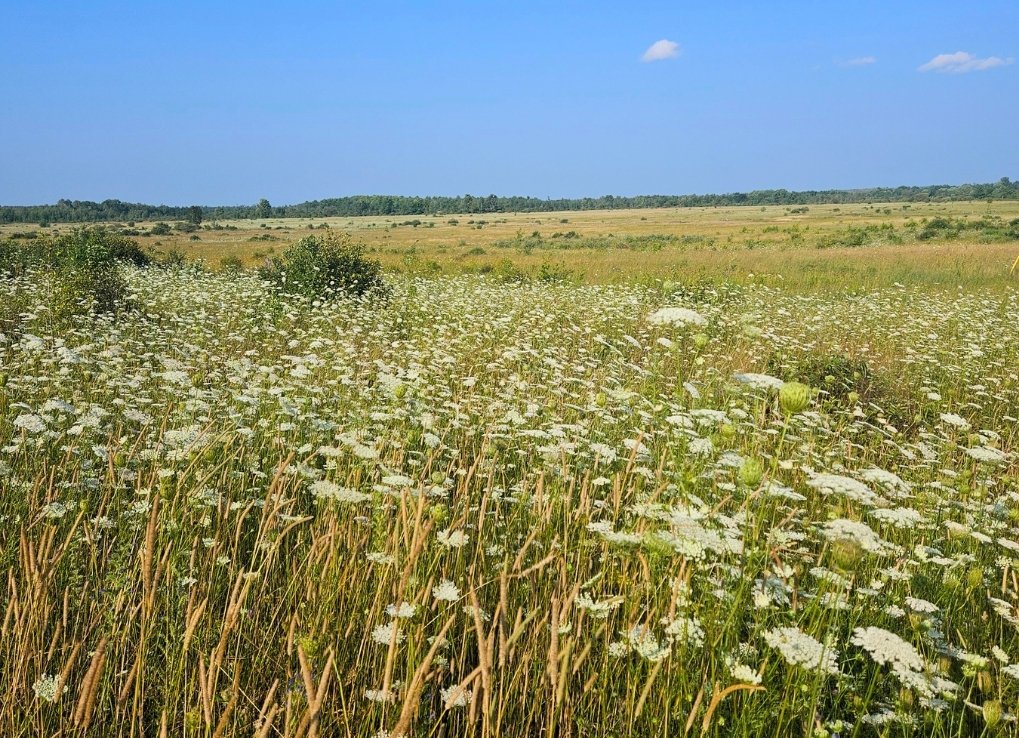
If you ask me, there’s a special kind of magic only found in Ontario’s open grasslands: the wind rustles through the grasses, insects hum all around you, and a chorus of bird songs fills the air. But this soundtrack is fading, and the birds behind it need our help. Let’s take a closer look at some of the remarkable grassland bird species whose stories embody the beauty and fragility of Ontario’s native grasslands.
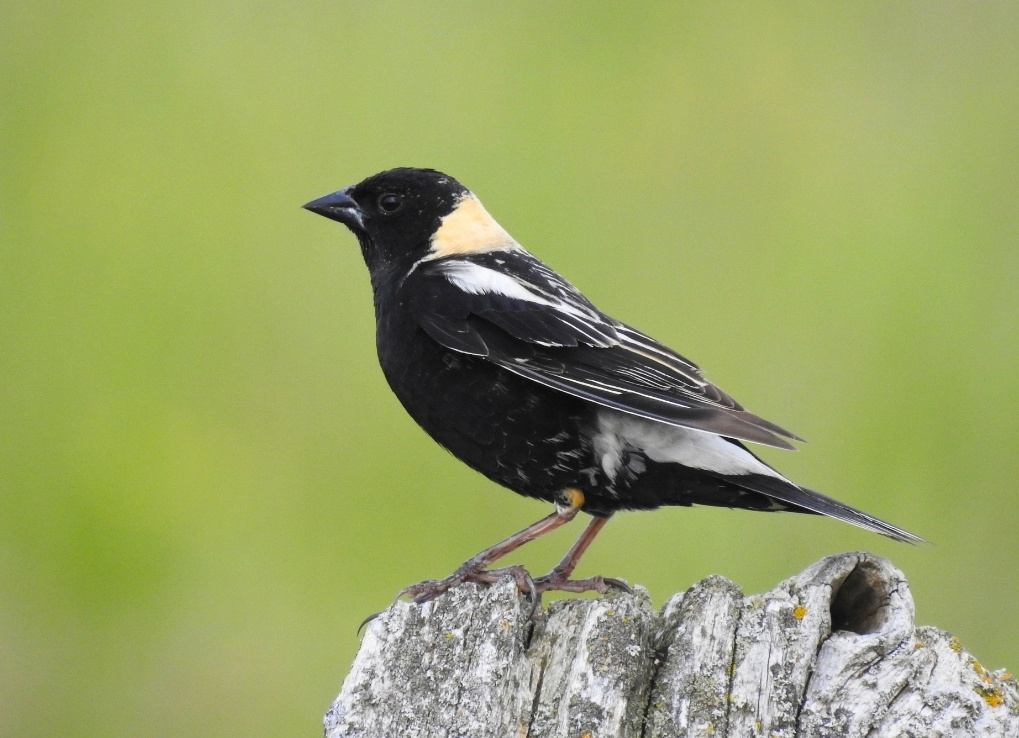
Bobolink. Photo by H. Hess.
Perhaps one of our grasslands’ most charismatic inhabitants, the bobolink (Dolichonyx oryzivorus) is simply unmistakable in the spring. Males in breeding plumage look like they’re wearing a ‘backwards tuxedo’, with striking black underparts and a creamy yellow nape of their neck. If you ask me though, their most impressive trait is their song. Bobolinks advertise their territory by singing out a burbly, R2D2-esque jumble of sounds that rings out over hayfields and pastures. This wacky robot-song is something I look forward to hearing every spring following their return to Ontario, and kept me laughing even during long, hot survey days.
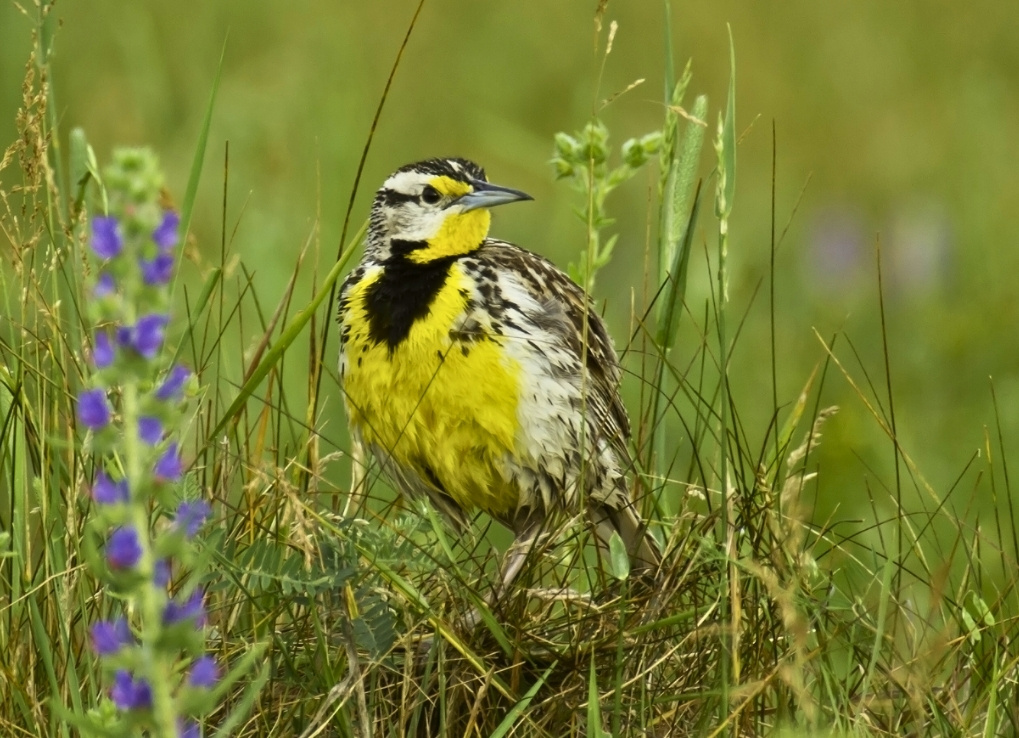
Eastern meadowlark. Photo by Larry Kirtley.
Few birds are as instantly recognizable as the eastern meadowlark (Sturnella magna). Their bright yellow breast, marked by a bold black “V” on its throat, flashes against the grasslands as they sing from fence posts and low shrubs. The meadowlark’s song – a clear, flute-like whistle – is one of the defining sounds of rural Ontario. Meadowlarks spend much of their time walking through grasses in search of insects and seeds, nesting in carefully concealed grass domes on the ground. There’s nothing quite like watching a meadowlark charmingly poke its beak around under clumps of cow manure to look for a tasty insect.
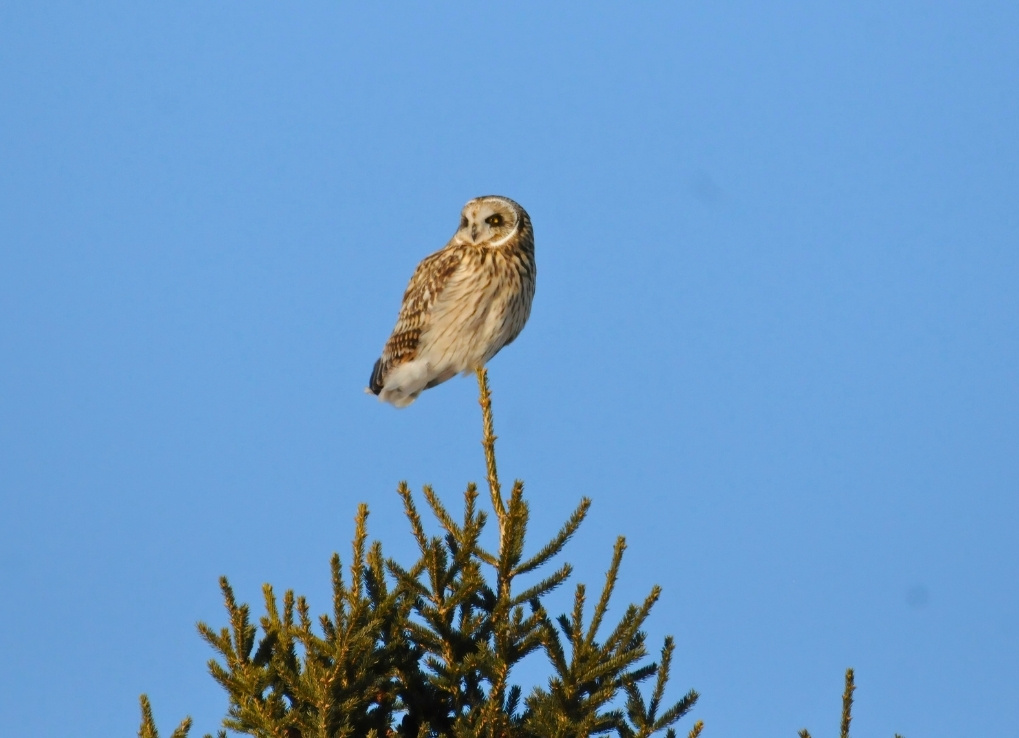
A short-eared owl perches atop an evergreen. Photo by A. Wilcox.
When the bobolinks and eastern meadowlarks begin to tuck themselves away into the grasses for the night, the short-eared owl (Asio flammeus) takes flight. Unlike many owls that stick to a strict nocturnal schedule, Short-eareds often go out hunting at dawn and dusk, flying low over open fields in a buoyant, moth-like flight. These beautiful owls rely on expansive grasslands where small mammals like voles and mice are abundant, and are a particular treat to see because of their nomadic nature – that is, because they are so closely-tied to the abundance of their prey, it isn’t uncommon to glimpse one where you’ve never seen one before, and then never see it again. Seeing one quartering a field at sunset is nothing short of breathtaking.
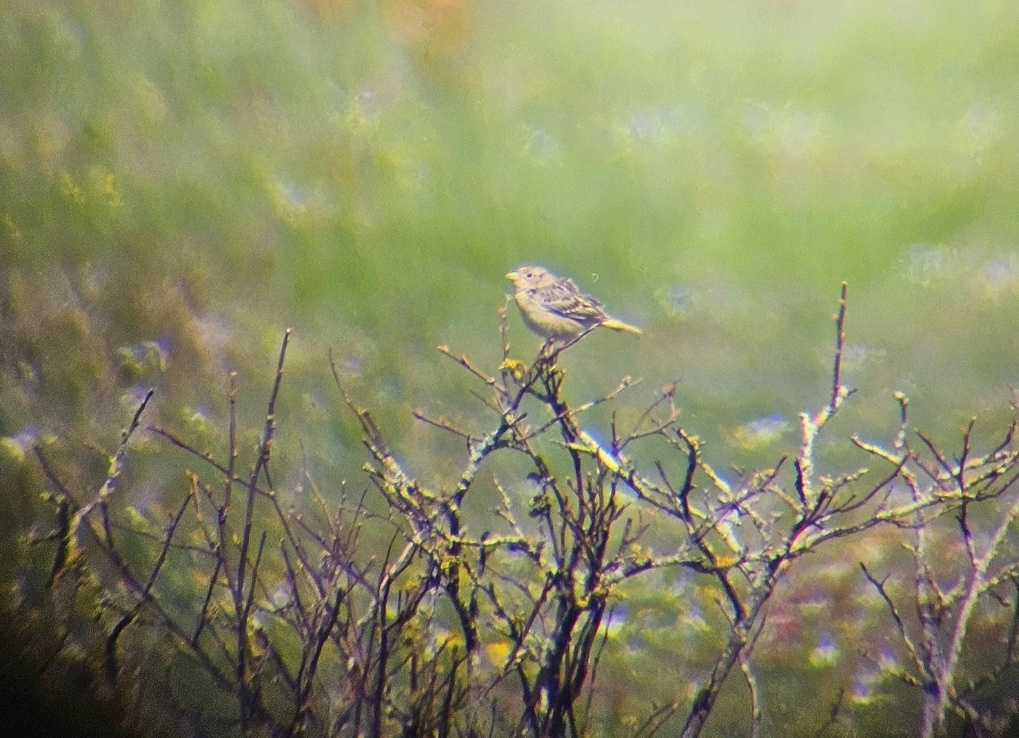
Grasshopper sparrow through a scope. Photo by A. Wilcox.
In contrast to the short-eared owl, the grasshopper sparrow (Ammodramus savannarum) is often overlooked – and that’s exactly how they survive. Small and subtly patterned, these sparrows blend seamlessly into their grassland environment. Their song, a short, buzzy trill reminiscent of an insect, is often the only clue you get to their presence. Grasshopper Sparrows prefer open fields with patches of bare ground, where they forage for insects and seeds. They spend most of their time running low through the grasses, emerging only briefly to sing, and then disappearing again – making them the most challenging bird to manage a through-scope photo of!
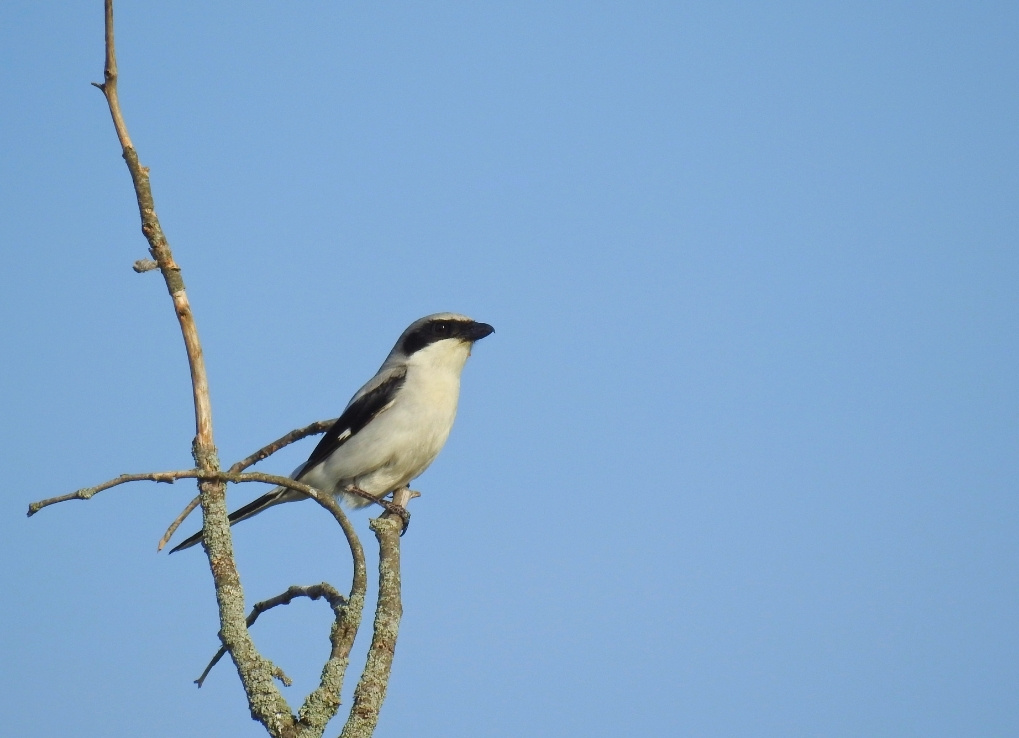
Eastern loggerhead shrike sits on a branch. Photo by H. Hess.
To no one’s surprise, the eastern loggerhead shrike (Lanius ludovicianus migrans) tops our list. With its bold black mask and strong hooked beak, it looks more like a miniature raptor than a songbird. Shrikes hunt insects, small mammals, and even other birds, often impaling their prey on thorns or barbed wire to help tear it apart and store it for later. These impressive predators favour open grasslands dotted with shrubs and small trees that provide suitable hunting perches. Fierce, intelligent, and unmistakable, the loggerhead shrike is a perfect symbol of the complexity of a grassland ecosystem.
Aside from relying on healthy grassland ecosystems to thrive, these birds all share one essential trait: they are all disappearing. Grassland birds are declining at an alarming rate, and their futures are closely tied to how well we understand, manage, and protect both these landscapes and these bird populations over time.
That’s where Wildlife Preservation Canada’s Adopt-A-Site program comes in. By helping to search for and monitor Loggerhead Shrikes and other important grassland birds, volunteers play a critical role in tracking long-term population trends and guiding conservation action. Why not get involved yourself? Email us at birds@wildlifepreservation.ca to be added to our mailing list, and keep an eye on our social media for a volunteer call-out in early 2027. Together, we can help ensure that the magic of Ontario’s grasslands exists for generations to come.
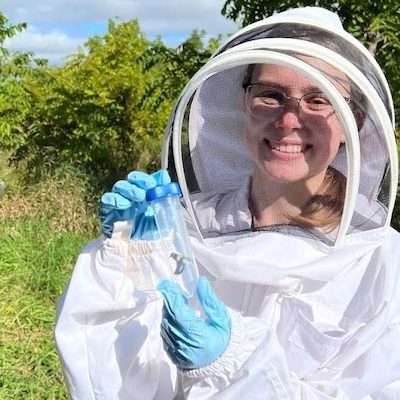
Annika joined the WPC Loggerhead Shrike team as a Research Biologist in 2025 before moving to the Native Pollinator Initiative as Ontario Programs Coordinator. She has ample experience in environmental outreach, wildlife rehabilitation, and the ecological monitoring of birds, at-risk amphibians, reptiles, and insects. Annika holds a Master’s degree in Integrative Biology from the University of Guelph, where she researched the limiting factors of restored agricultural wetlands as a breeding habitat for birds, with an emphasis on Species at Risk.

We need your help