A season in conservation
Posted onAugust 4, 2026byRion Dueck
What are the B.C. Recovery Programs? In the wetlands of B.C.’s Fraser Valley, western painted turtles face numerous challenges as eggs and hatchlings, with high predation rates, habitat loss and fragmentation, and no parental care once hatched leading to unsustainable populations. Since 2012, we’ve been improving their survival odds by protecting nests, collecting vulnerable eggs, artificially incubating them, and head-starting new hatchlings for release back into the wild. Similarly, the Taylor’s checkerspot butterfly, an endangered keystone species and environmental indicator, was once thought to have disappeared from Canada until its rediscovery in 2005 on Denman Island. Since then, WPC has focused on building its wild population in B.C. through conservation breeding and habitat restoration efforts.
Together, these initiatives aim to enhance the survival of both species in their ecosystems. The Greater Vancouver Zoo supports both of these programs through facilities and collaborative expertise.
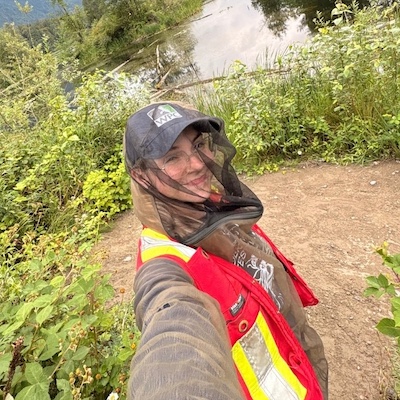
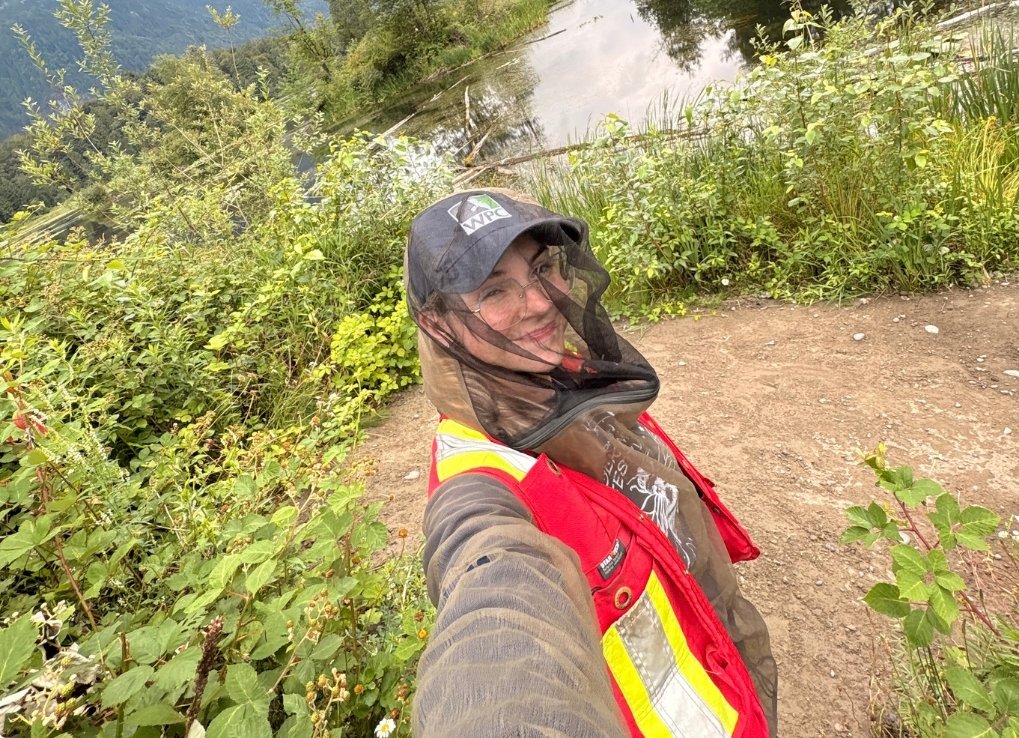
This summer I had the opportunity to directly contribute to wildlife conservation by working as a Turtle Nest Monitoring Technician and a Conservation Programs Assistant with Wildlife Preservation Canada’s B.C. Projects. These experiences gave me a firsthand look at the dedication, collaboration, and passion that goes into protecting Canada’s wildlife.
As a Turtle Nest Monitoring Technician, I monitored populations of western painted turtles (Chrysemys picta bellii) focusing on females during their nesting season from mid-May to mid-July. During this time, female western painted turtles leave the water and find a place to nest, and they may lay more than 1 clutch depending on how experienced they are. Accessible females are captured annually so morphometric data such as height, weight, shell length and tail length, can be collected to assess their health and monitor the population over time. After being measured, each turtle is marked with their individual number on its carapace so we can recognize the turtle and avoid recapturing them.
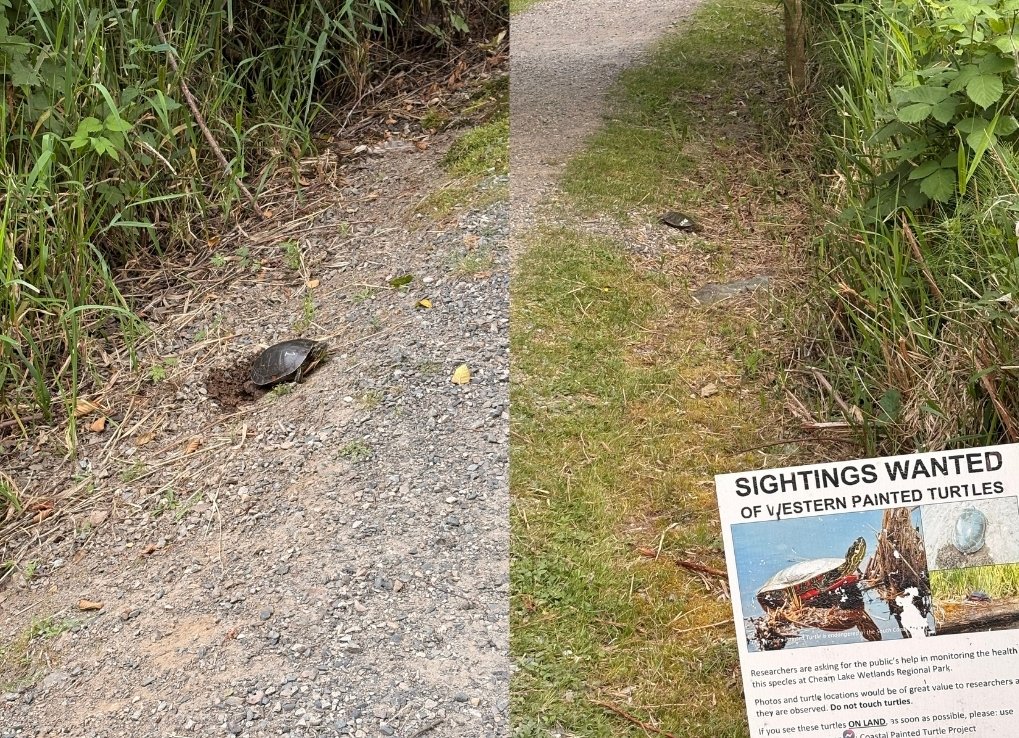
(Left) Western painted turtle using its back legs to dig a nest. (Right) Turtle on the move near a wetland, right near the turtle sightings sign! Photos by R. Dueck.
Once nests are located, they are protected from predators such as moles and raccoons which increases the likelihood that the hatchlings will survive. This was rewarding to know that we were giving the turtles a better chance of contributing to future generations.
Working in a public park while monitoring gave me the opportunity to connect with visitors and share the importance of turtle conservation. Whether explaining the reasons the turtles are at-risk, offering how people can help protect wildlife, or just sharing some fun facts about turtles to spark their interest! These conversations taught me how education plays a vital role in conservation.
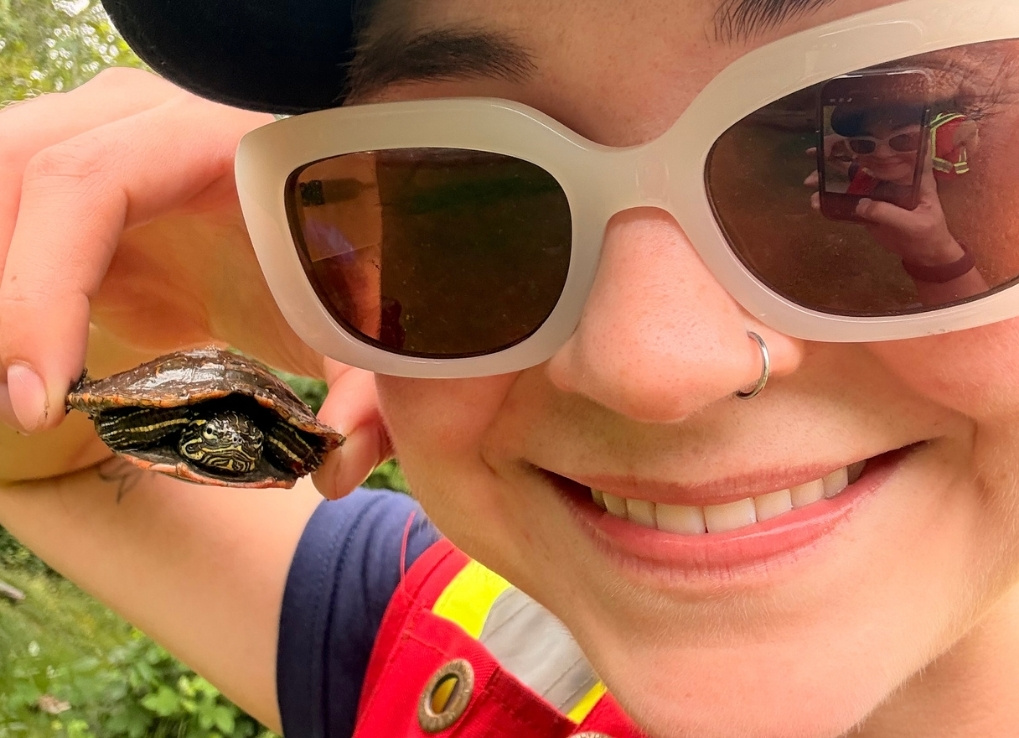
Rion and a small western painted turtle. Photo by R. Dueck.
In addition to turtle monitoring, I supported WPC’s conservation programs located at the Greater Vancouver Zoo as a Conservation Programs Assistant for western painted turtles, Oregon spotted frogs, and Taylor’s checkerspot butterflies. Breeding programs for Oregon spotted frogs and Taylor’s checkerspot butterflies produce thousands of tadpoles, froglets, and caterpillars each year to be released into the wild. At the zoo, some western painted turtle nests collected from various sites are artificially incubated, with many hatchlings released shortly after hatching. Others are head-started for approximately one year before being released, giving them a greater chance of surviving in the wild.
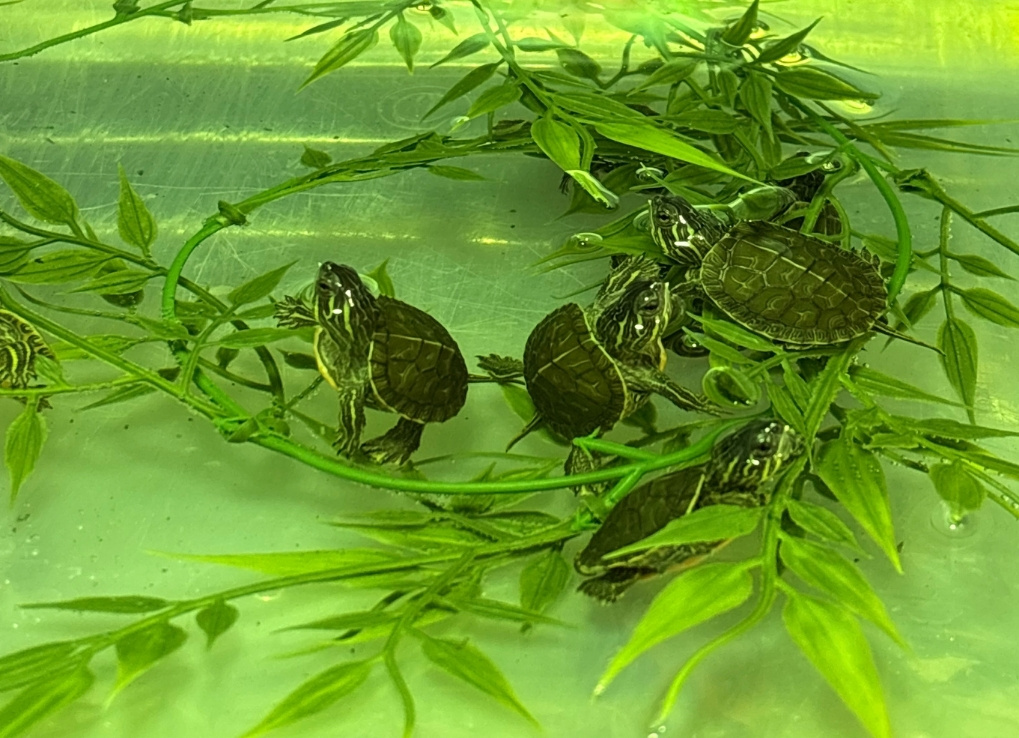
Western painted turtle hatchlings in our lab. Photo by R. Dueck.
These experiences increased my appreciation for Canada’s biodiversity and the dedicated people working to protect it. Conservation involves a large community working towards the same goal of recovering wildlife populations. I am so grateful to have contributed to these efforts and I hope to continue supporting wildlife conservation throughout my career.
My name is Rion and I recently graduated from Dalhousie University with a Bachelor of science in marine biology. I have always been passionate about working with and protecting vulnerable species, and I am pursuing a career in conservation and ecological restoration. I am excited to be working with WPC in helping out Western painted turtles this summer!

We need your help