Painting turtles for conservation
Posted onSeptember 7, 2026byAysha McConkey
What is the Western Painted Turtle Recovery Program? In the wetlands of B.C.’s Fraser Valley, western painted turtles face many challenges, especially as eggs and tiny hatchlings. With no shortage of hungry predators and no care from their parents once they’ve hatched, only a few young turtles survive to become adults. When you add human activity to the mix, the rate of survival can be so low that a population becomes unsustainable. Since 2012, we’ve been working to improve those odds. In addition to protecting nests, we collect eggs from vulnerable turtle nests, artificially incubate them and head-start new hatchlings at our conservation lab located at the Greater Vancouver Zoo, before releasing them back into the wild. To date we have released over 2,000 turtles back into the wetlands of B.C.
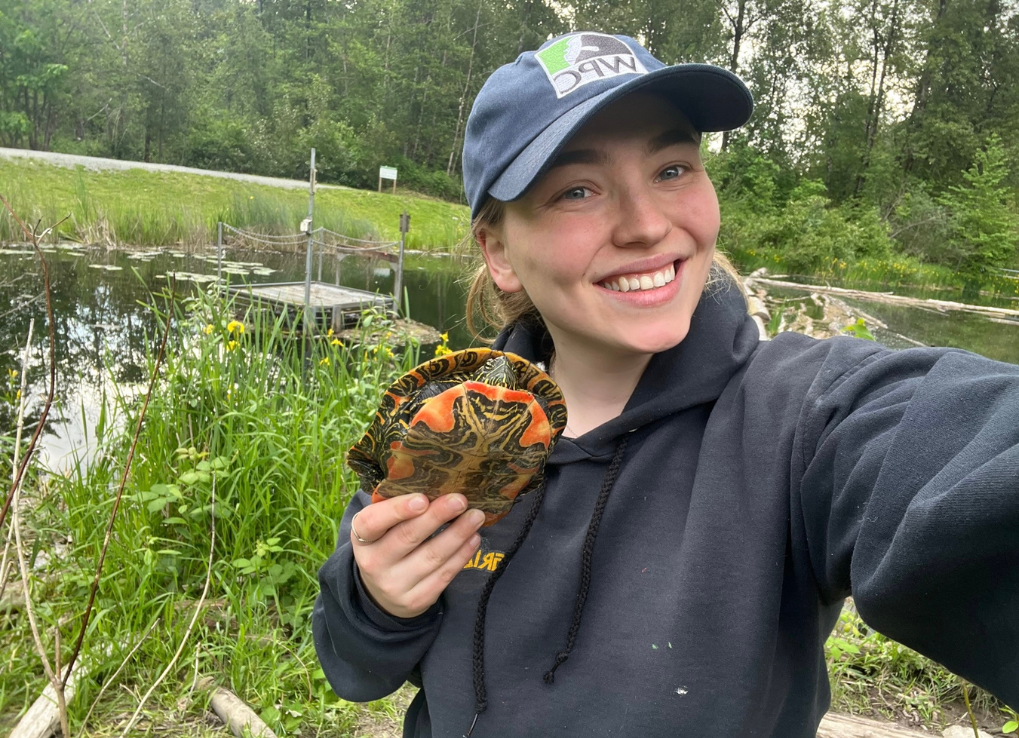
Ever since I was little, I have always been passionate about animals and wildlife conservation. I wanted to know about all types of animals and what made them unique and special. My head was always in large biology textbooks and watching shows like Zoboomafoo or rewatching Planet Earth for the 100th time when I was just a little kid. This interest had always shone through my art; ever since I could walk, I remember I was always painting and drawing. However, my love for art was put aside so I could pursue a career as a biologist, and since I was in middle school, my number one goal was becoming an RP biologist (registered professional). After graduating from high school, I jumped straight into university and got a bachelor’s in environmental studies and natural sciences at the University of the Fraser Valley. Throughout my time in university, I worked for many different co-ops doing a variety of environmental jobs. One summer I worked for the Fraser Valley Conservancy helping with the western toad migration and banding barn owls, and for almost 2 years I worked as a research assistant for AAFC and got to publish my first research paper in the Journal of the Entomological Society of British Columbia. During my 4th year of university, I had the pleasure of being a Turtle Nest Monitoring Technician for Wildlife Preservation Canada.
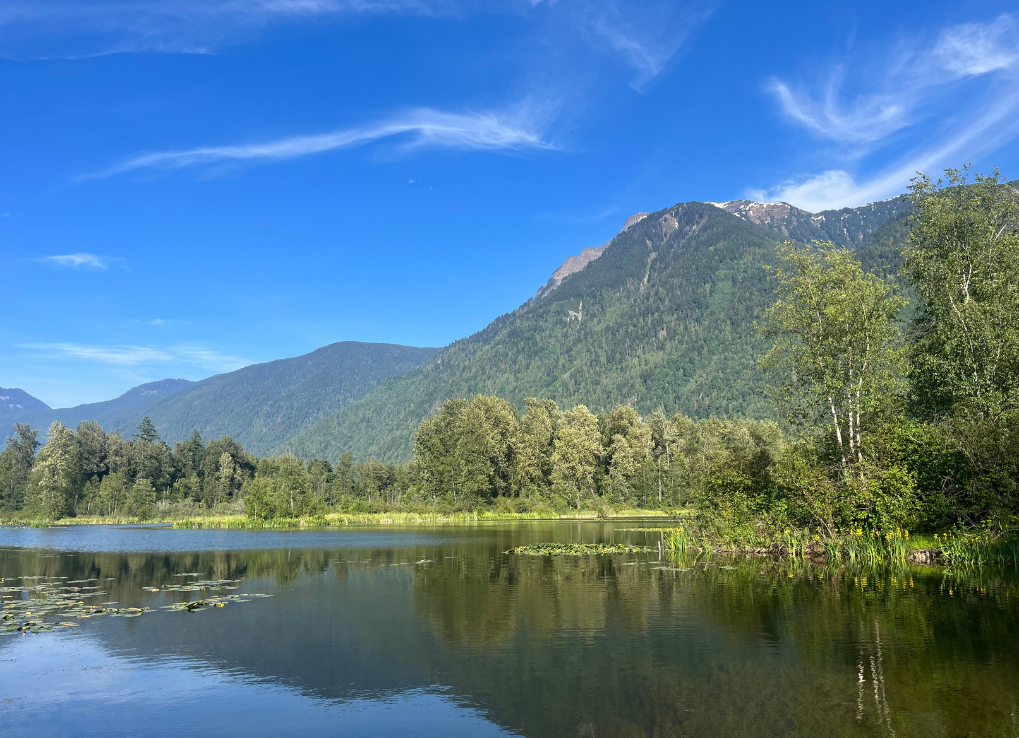
Cheam Lake wetlands, B.C. Photo by A. McConkey.
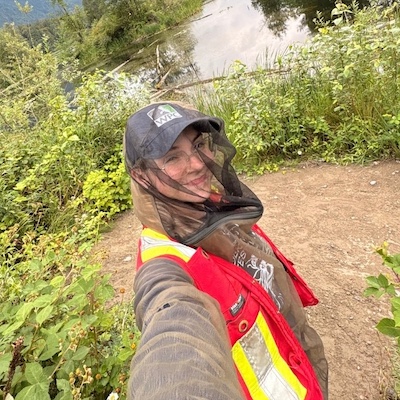
As a Turtle Nest Monitor, it was my job to monitor Cheam Lake wetland, a little oasis in the Fraser Valley of B.C. My tasks as a Turtle Nest Monitor were to observe and record western painted turtle behaviour, create notch ID codes for new turtles, take morphometric measurements of captured turtles (weight, length, etc.), find and monitor nests, and weed and maintain the protected beach. What was once an industrial marl mine was restored to a thriving wildlife habitat where the endangered painted turtle now calls home. This wetland, to this day, keeps a special place in my heart, representing the positive change we can make on the environment, and that is the life I want to lead. Working as a Turtle Monitor also allowed me to make friends and connect with other like-minded people, and even led me to pursue more conservation work in the Fraser Valley. However, I had noticed that a majority of the public was unaware of the painted turtle program at Cheam Lake Wetland, which then inspired me to combine my skills in scientific illustration and biology to come up with a means to bring attention to this endangered turtle.
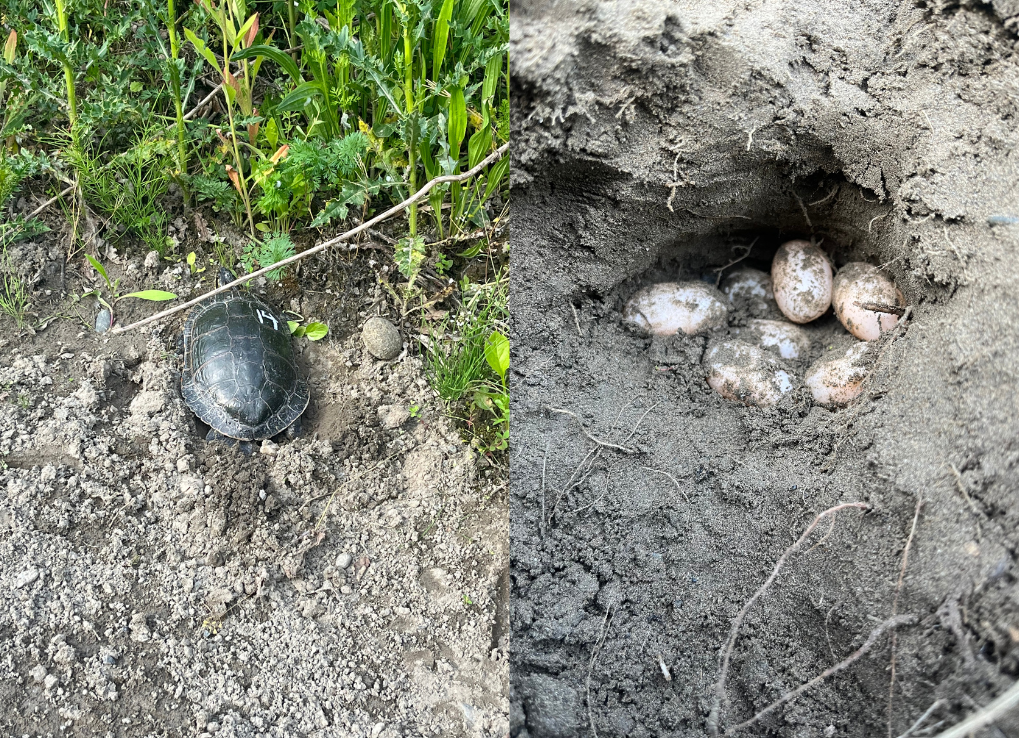
On the left, a western painted turtle with the number 14 on its carapace. On the right, a western painted turtle nest with eggs covered in sand. Photo by A. McConkey.
After graduating from University, I had a lot more time to return to my passion for art and science illustration. I began to not only work as a biologist in training but, on the side, started to paint murals, create illustrations for research papers and presentations, illustrate for botanical field guides, and so much more! My background in biology and talent in the arts had become my own voice to create illustrations that educated the public on species at risk and brought attention to the native species of British Columbia. Soon, being a science illustrator became full-time work for me, while working with BCBATS in the summer to conduct colony counts and help with bat outreach. In the back of my head, I wanted to find a way to create a turtle mural that reflected my work at Cheam Lake Wetland and the painted turtles. This wish soon came to be when I was selected as one of the muralists for the Chilliwack mural festival.
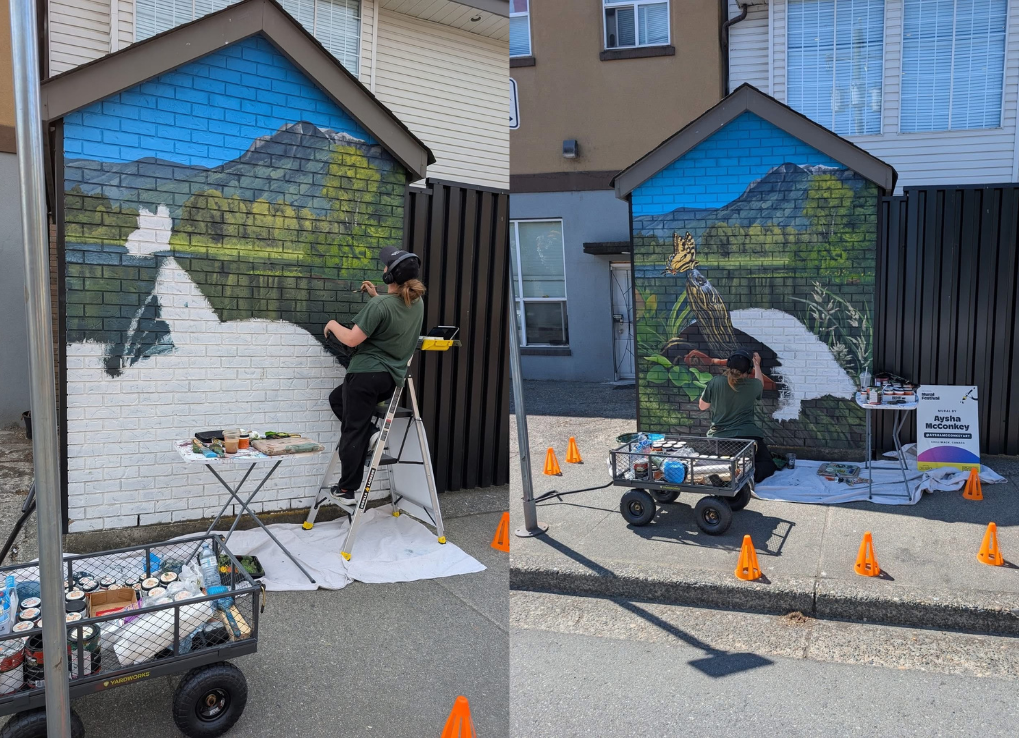
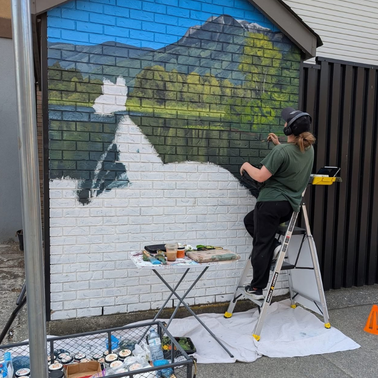
On the left, Aysha is on her ladder painting the landscape of the mural. On the right, she is on her knees painting the last of the western painted turtle carapace. Photos by A. McConkey.
In Spring of 2026, I received an email from the Chilliwack Arts Council that I had been selected as one of the muralists. Unlike other murals I had been hired for, this was an opportunity for me to paint whatever I wanted. I had full reign to paint something I was passionate about in any style, and being in Chilliwack, I knew the time had come to pour my heart into this project. Most photos I referenced were from my own camera while working at Cheam, with some extra photos I found using iNaturalist. I wanted to capture the powerful Cheam mountain (Lhílheqey), the lush forests around the wetland, and the scene of a painted turtle basking in the sun on a log with a western tiger swallowtail butterfly on its nose. The painting took me a total of 5 days to complete and can be found at 9311 Nowell Street, Chilliwack, BC, Canada. Currently working to have a plaque made to be put up next to the mural, where it will have a QR code to direct the community to learn about the “Coastal Painted Turtle Project” (which WPC is a partner) with Coastal Partners in Conservation and how you can help in the protection of these turtles. Since creating this mural, it has led me to more opportunities for mural work and commissions focused on illustrating wildlife.
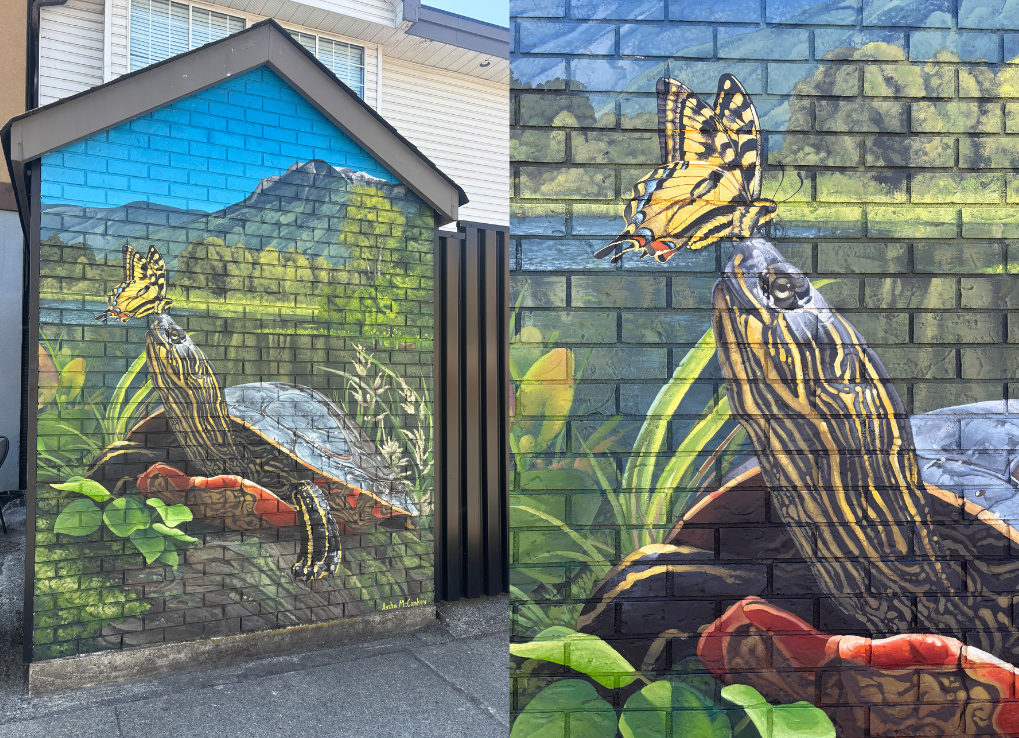
On the left, Aysha’s finished western painted turtle mural. On the right, a close-up of the turtle. Photo by A. McConkey.
With so many environmental threats like climate change, pollution, deforestation, wildfires, and more, I want to be the one to help people see the importance of nature and why we need to protect it. I hope to continue creating art as a means for science communication, illustrating species that don’t get the attention they deserve, illustrating species at risk, educating the public on biological and ecological topics, and inspiring others to care more about the environment.
Aysha has a bachelor’s degree in environmental studies and natural sciences from the University of the Fraser Valley. Her fieldwork has included turtle nest monitoring for WPC, western toad and barn owl research, and bat outreach with BCBATS. She now blends art and science full-time, creating murals, botanical field guide illustrations, and public-facing artwork to bring attention to and educate people about at-risk species and the native species of British Columbia.
We need your help